

Healthcare Education Market
Healthcare Education Market Research Report: By Provider (Universities, Educational Platforms, and Medical simulation), By Delivery Mode (Classroom-Based Courses and E-Learning Solutions), By Application (Cardiology, Internal Medicine, Radiology, Neurology, Pediatrics, Academic Education, and Other Applications), By End-User (Students, Physicians, and Non-Physicians), and Region (North America, Europe, Asia-Pacific, and Rest of the World) Global Industry Analysis, Size, Share, Growth, Trends, Regional Analysis, Competitor Analysis and Forecast
Market Overview
As per Econ Market Research analysis, the Global Healthcare Education Market accounted for US$ 11.07 Billion in 2026 and is expected to surpass US$ 19.25 Billion by 2035, witnessing a CAGR of 6.34% throughout 2026–2035. The analysis is based on 2025 as the base year.
Healthcare Education Market Size 2025-2035 (USD Billion)

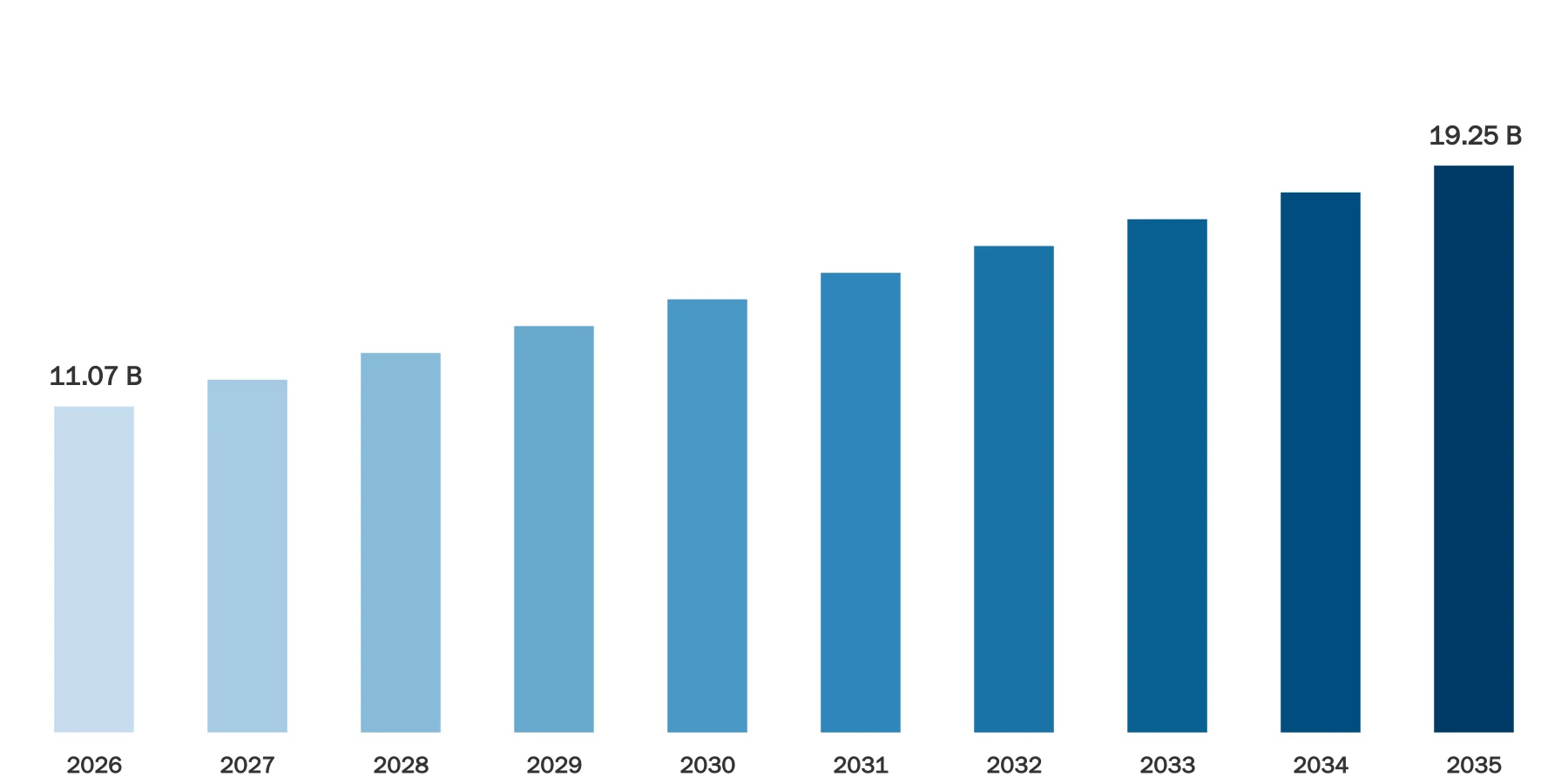
Source: Econ Market Research
Healthcare education plays a pivotal role in shaping the future of the medical field by imparting essential knowledge, skills, and competencies to individuals aspiring to become healthcare professionals. It is a dynamic and multidisciplinary domain that encompasses a wide spectrum of educational programs aimed at producing proficient doctors, nurses, technicians, administrators, and other healthcare experts. Healthcare education promotes a culture of lifelong learning and continual progress, from medical schools encouraging the growth of future doctors to nursing programs encouraging compassionate carers.
It embraces both conventional classroom settings and cutting-edge online platforms, adapting to the varied needs of students and the needs of a healthcare environment that is evolving quickly. The significance of healthcare education is becoming more and more clear as the world',s population increases and healthcare complexity increases. In order to provide comprehensive and patient-centered care, it enables people to make educated decisions, participate in evidence-based practices, and work together across disciplines. The quality, effectiveness, and sustainability of contemporary healthcare systems are essentially constructed on the foundation of healthcare education, ensuring a happier and healthier future for people all over the world.
Healthcare Education Dynamics
The healthcare education market is characterized by dynamic forces shaping its trajectory. Advancements in medical science and technology drive curriculum updates to align with current practices. Rising demand for healthcare services propels enrollment in diverse programs, while workforce shortages highlight the need for targeted training. Integration of technology enhances accessibility and interactivity, reshaping the learning experience. Quality assurance, accreditation, and interdisciplinary collaboration ensure program credibility and prepare graduates for teamwork.
Globalization fosters cross-border partnerships, enriching educational offerings. Financial considerations influence student choices and diversity in the healthcare workforce. Lifelong learning is essential, with continuing education supporting professionals in evolving practices. Ethical and cultural aspects are woven into education to produce socially aware providers. Overall, healthcare education navigates these dynamics to produce skilled professionals who address the ever-changing landscape of healthcare.
Healthcare Education Drivers
Rising Demand for Skilled Healthcare Professionals
The rising demand for skilled healthcare professionals is a significant driving force shaping the global healthcare education market. As the world',s population continues to grow and age, there is an escalating need for proficient doctors, nurses, allied health professionals, and administrators who can provide high-quality healthcare services. This demand is intensified by the increasing prevalence of chronic diseases and complex medical conditions that require specialized care. Furthermore, the rising demand for healthcare professionals extends beyond traditional clinical roles. The need for healthcare administrators, healthcare informatics specialists, and other non-clinical roles is also on the rise. As a result, healthcare education encompasses a wide range of disciplines to ensure a well-rounded workforce capable of addressing the diverse needs of the healthcare industry.
Technological Advancements and Digital Transformation
Technological advancements and digital transformation are playing a crucial role in shaping the global healthcare education market. As technology continues to evolve, it is revolutionizing how education is delivered, accessed, and experienced in the healthcare sector. The integration of advanced technologies such as virtual simulations, telemedicine platforms, and online learning management systems has brought about a paradigm shift in healthcare education. Virtual simulations allow students to engage in realistic medical scenarios, honing their diagnostic and decision-making skills in a controlled environment.
Telemedicine platforms facilitate remote learning and consultation, enabling students to access expert guidance and collaborate with peers across geographical boundaries. the incorporation of advanced technologies and digital tools in healthcare education raises an innovative, accessible, and learner-centered approach. It equips students with the digital literacy and skills necessary to boom in an increasingly technology-driven healthcare environment, contributing to the overall advancement of healthcare education on a global scale.
Restraints
Financial Limitations and Education Costs
The global healthcare education market faces challenges related to the cost of education, including tuition fees, textbooks, and specialized equipment. As healthcare education often requires extensive practical training and resources, students may be burdened with significant financial obligations. This can deter potential learners, particularly those from disadvantaged backgrounds, limiting access to education and potentially leading to a shortage of qualified healthcare professionals.
Lack of Faculty and Clinical Training Opportunities
A shortage of qualified faculty and limited clinical training opportunities can hinder the scalability and quality of healthcare education. The healthcare industry',s demand for skilled professionals may outpace the availability of experienced educators, leading to larger student-to-faculty ratios and potentially compromising the depth of education. Additionally, securing clinical placements for practical training can be challenging, impacting students', exposure to real-world healthcare settings.
Opportunities
Expansion of Online and Digital Learning Platforms
The expansion of online and digital learning platforms presents a transformative opportunity for the global healthcare education market. As technology continues to reshape educational paradigms, healthcare education providers can harness the power of digital tools to revolutionize how knowledge is imparted and accessed. Online learning platforms offer unprecedented accessibility and flexibility, enabling learners to engage with educational content from anywhere in the world. This is particularly advantageous for healthcare professionals seeking to enhance their skills while balancing demanding work schedules. Virtual simulations provide a safe and controlled environment for students to practice clinical scenarios, refine decision-making skills, and develop critical thinking abilities.
Global Collaboration and Cross-Border Education
The globalization of healthcare and the interconnectedness of healthcare systems create opportunities for international collaboration and cross-border education initiatives. Institutions can establish partnerships, exchange programs, and joint research projects to expose students to diverse healthcare practices, cultural perspectives, and innovative solutions. This nurtures a well-rounded global healthcare workforce capable of addressing complex healthcare challenges.
Segment Overview
By Provider
Based on Provider, the global healthcare education market is categorized into universities, educational platforms, and medical simulation. The universities and academic center category dominates the healthcare education market with the largest revenue share. Universities and academic centers offer extensive and structured curricula that cover a wide range of healthcare disciplines. Medical schools, nursing colleges, and allied health programs provide in-depth education, ensuring that graduates are well-rounded and equipped to address diverse healthcare challenges.
Also, educational platforms, determined by advancements in technology, are redefining healthcare education. Online learning, virtual classrooms, and interactive multimedia resources are becoming increasingly popular. These platforms provide flexibility and accessibility, enabling learners to access educational content remotely and at their own pace. Medical simulation technologies offer a hands-on and immersive learning experience for healthcare students and professionals.
By Delivery Mode
Based on the Delivery Mode, the global healthcare education market is divided into classroom-based courses and e-learning solutions. The classroom-based courses category leads the global Battery Management System market with the major revenue share. In healthcare education, these courses offer face-to-face interactions between students and instructors, enabling direct communication, immediate feedback, and hands-on practical training.
The physical presence raises real-time discussions, collaborative problem-solving, and interpersonal skill development &ndash, all crucial for effective patient care. Where e-learning platforms provide a variety of digital resources, including video lectures, interactive modules, online assessments, and virtual simulations. This modality caters to a diverse range of learners, accommodating different learning styles and preferences.
By Application
Based on Application, the global healthcare education market is segmented into cardiology, internal medicine, radiology, neurology, pediatrics, academic education, and other applications. The academic education segment dominates the healthcare education market. This segment encompasses a broad range of activities related to curriculum development, teaching methodologies, faculty training, and educational research. The academic education segment drives innovation in teaching methodologies and educational technologies. It explores effective ways to engage learners, promote critical thinking, and enhance practical skills. Incorporating interactive learning methods, simulations, and case-based discussions fosters a dynamic and engaging learning experience.
By End-User
Based on End-User, the global healthcare education market is categorized into students, physicians, and non-physicians. The student&rsquo,s segment leads the healthcare education market. This category includes individuals pursuing various levels of education, from undergraduate programs to advanced degrees in healthcare disciplines. Medical, nursing, dental, and allied health students seek comprehensive training to acquire the knowledge, skills, and competencies necessary for their chosen healthcare professions.
Students engage in foundational coursework, practical training, clinical rotations, and research projects to prepare for their future roles as healthcare practitioners. Where the physicians engage in specialized courses, conferences, workshops, and online modules to enhance their clinical knowledge, refine diagnostic skills, and learn about emerging treatment modalities. The non-physician category encompasses a wide range of healthcare professionals who contribute to patient care outside of the medical doctor role.
Healthcare Education Overview by Region
The global healthcare education market is categorized into North America, Europe, Asia-Pacific, and the Rest of the World. Asia Pacific emerged as the leading region, capturing the largest market share. The Asia Pacific region is home to a significant and rapidly growing population, which drives a substantial demand for healthcare services. As healthcare systems expand to cater to this demand, the need for a well-prepared and skilled healthcare workforce increases proportionally. Also, the economic growth in the Asia Pacific region has led to increased investment in healthcare infrastructure, including educational institutions. Governments and private entities are recognizing the importance of a robust healthcare education system to support the expansion of healthcare services.
Healthcare Education Competitive Landscape
In the global healthcare education market, a few major players exert significant market dominance and have established a strong regional presence. These leading companies remain committed to continuous research and development endeavors and actively engage in strategic growth initiatives, including product development, launches, joint ventures, and partnerships. By pursuing these strategies, these companies aim to strengthen their market position, expand their customer base, and capture a substantial share of the market.
Key Players
SAP SE
Adobe Inc.
Infor, Inc.
Oracle Corporation
HealthStream, Inc.
HealthcareSource (Symplr Talent)
Elsevier B.V.
Articulate Global, Inc.
PeopleFluent, Inc.
ADP, Inc.
GE Healthcare
Trivantis Corporation (Lectora)
Cerner Corporation (Oracle Health)
Koninklijke Philips N.V.
Siemens Healthineers AG
Healthcare Education Recent Developments
In June 2023, GE HealthCare Announces Collaboration with DePuy Synthes to Bring Advanced 3D Precision Imaging Innovation to Spine Practices in the United States. This new collaboration demonstrates GE HealthCare&rsquo,s ongoing commitment to bring exceptional imaging technologies to clinicians providing patient care through the practice of some of healthcare&rsquo,s most complex spine procedures.
In January 2023, HealthStream Acquires Electronic Education Documentation System, LLC. With this acquisition, HealthStream expands its ecosystem with an innovative, SaaS-based continuing education management system for healthcare organizations.
Healthcare Education Market Report Scope & Segmentation
| Attributes | Details |
|---|---|
Market Size (Current) | US$ 11.07 Billion in 2026 |
Market Size (Forecast) | US$ 19.25 Billion in 2035 |
Growth Rate | CAGR of 6.34% from 2026 to 2035 |
Forecast Period | 2026 – 2035 |
Base Year | 2025 |
Historical Data Available | Yes |
Regional Scope | Global |
Segments Covered | By Provider
By Delivery Mode
By Application
By End-User
|
Frequently Asked Questions
Common questions about this report
The study period covers historical insights and forecast projections for the period 2026-2035.
About the Author
Market research expert with years of industry experience

Dipali Bhingare serves as the Market Research Director at Econ Market Research. With a focus on translating complex global economic shifts into actionable business intelligence, she oversees the strategic direction of comprehensive market studies. Her work empowers organizations to navigate volatile industries through data-driven forecasting and deep-dive competitive analysis.
Related Reports
Explore more market insights from the same category