

Europe Greenhouse Horticulture Market
Europe Greenhouse Horticulture Market Size, Share, Trends, Growth, and Industry Analysis, By Product (Fruits andamp; Vegetables, Nursery Crops, Flowers andamp; Ornamentals, Others), By Type (Plastic Greenhouse, Glass Greenhouse), By Technology (Hydroponics, Aeroponics, Aquaponics, Vertical Farming, Others), Regional Analysis and Forecast Period 2026-2035
Europe Greenhouse Horticulture Market Overview
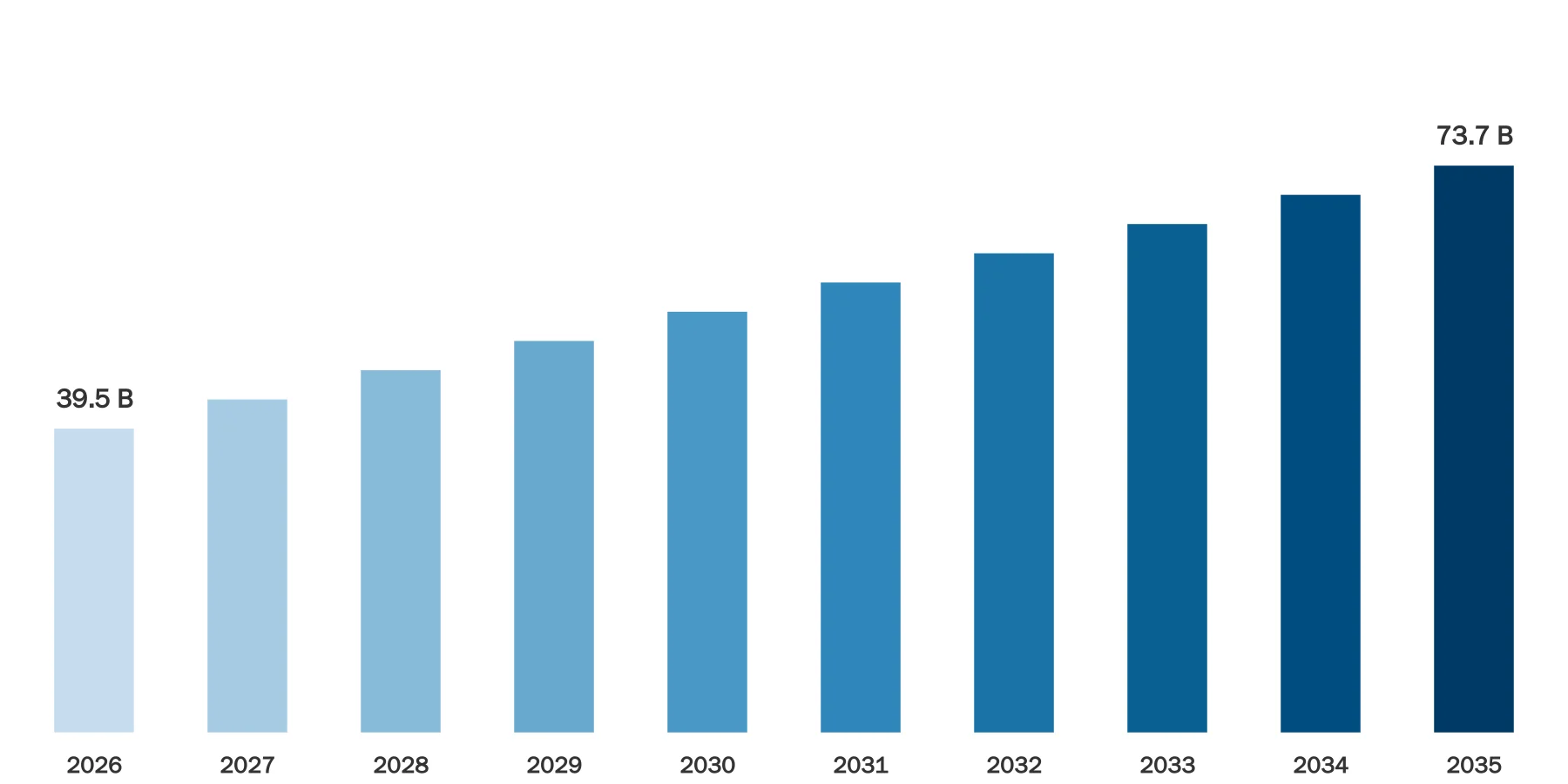
As per Econ Market Research analysis, the Europe Greenhouse Horticulture Market was valued at US$ 39.5 Billion in 2026 and is expected to register strong growth to US$ 73.7 Billion by 2035, with a CAGR of 8.1% throughout the forecast period. The base year considered is 2025.
Europe Greenhouse Horticulture Market Size 2025-2035 (USD Billion)

Source: Econ Market Research
Greenhouse Horticulture-market">Greenhouse Horticulture refers to growing plants in controlled environments (greenhouses) where factors like temperature, humidity, and light are carefully regulated to promote ideal growth. This method helps overcome challenges caused by unpredictable weather, enabling the continuous production of crops throughout the year. In recent years, the European Greenhouse Horticulture market has grown significantly due to factors such as increased demand for fresh and local produce, concerns about food sustainability, and improvements in greenhouse technology.
European countries like the Netherlands, Spain, and Italy are leading the greenhouse horticulture industry. Their expertise in greenhouse farming techniques and equipment gives them an advantage. As people become more concerned about the environment and choose organic farming, greenhouse horticulture is becoming more popular, which is helping the market grow and creating opportunities for companies in Europe.
Ongoing research and technological advancements in greenhouse cultivation, including investments in efficiency, environmental sustainability, and crop diversity, are expected to fuel expansion in the European Greenhouse Horticulture market. Government initiatives and incentives encourage sustainable farming, driving market growth. Consumers prefer locally sourced, fresh, and sustainably farmed produce, leading to increased demand for greenhouse-grown products. This creates opportunities for growers, suppliers, and industry players to satisfy this demand and contribute to Europe',s sustainability goals in horticulture.
Europe Greenhouse Horticulture Dynamics
The growth of the European Greenhouse Horticulture market is influenced by factors that drive demand and market trends. One key driver is the increasing demand for locally grown and fresh produce, driven by consumers', growing health and environmental awareness. This demand has LED to increased greenhouse horticulture activities, offering a way to produce fruits, vegetables, and flowers sustainably year-round. Moreover, food security concerns and the need to address climate change',s impact on agriculture have led to investments in greenhouse technologies and infrastructure.
Greenhouse technology has boomed due to automated systems, climate control, and new growing methods. These technologies help growers use resources better, hurt the environment less, and grow more crops. Government programs that support sustainable farming, like paying for greenhouses and energy-saving tech, are also helping the market grow. However, there are still some problems to overcome, such as the high cost to start up, the complicated rules, and the competition from traditional farming.
Europe Greenhouse Horticulture Drivers
Increasing Consumer Demand for Fresh Produce
As people become more health-conscious and concerned about food safety, they',re looking for locally grown food that',s fresh and safe to eat. Greenhouses provide a great way to grow fruits, vegetables, and flowers all year round, even when it',s not the right season outside. This lets people eat healthier food and reduces the need for chemicals, making it better for the environment too. Because of this, more and more people in Europe are buying fresh, local produce grown in greenhouses, and this is helping the greenhouse horticulture market in Europe to grow.
Advancements in Greenhouse Technology
Greenhouse technology has advanced significantly, leading to a transformation in the horticulture industry. Automated systems, sensors, and climate control technologies optimize resource usage and eco-friendliness. Growers can now finely tune factors like temperature, humidity, and lighting, creating optimal conditions for diverse crops. Hydroponic and aquaponic systems allow water-efficient farming, lowering dependence on soil-based methods. These advancements boost crop yields, enhance quality, and reduce costs, driving industry expansion.
Restraints:
Higher Investment Costs
Setting up greenhouses requires a lot of money upfront for things like building them, putting in systems to control the climate, and automating processes. These costs can be too much for small-scale growers or people just starting out in the market. Also, the greenhouse needs to keep running, which costs money for things like energy and maintenance. This financial burden makes it harder for the market to grow, especially for growers who don',t have much money or can',t get loans.
Complex Regulatory Requirements
The European greenhouse horticulture industry faces a maze of regulations affecting building design, environmental protection, and food safety. These rules make running greenhouses more difficult and time-consuming, as growers must juggle various permits, certifications, and inspections. Moreover, ever-changing regulations on pesticide use, water management, and waste handling can disrupt production methods and necessitate ongoing adjustments. These complex regulations, especially for smaller businesses, limit profitability, operational flexibility, and market expansion.
Opportunities:
Growing Emphasis on Sustainable Agriculture
The rising emphasis on environmental protection and the need to reduce the negative effects of farming on ecosystems offer chances for greenhouse horticulture. Greenhouses provide a more sustainable option by using less water, pesticides, and fertilizers, as well as reducing greenhouse gas emissions. Consumers are becoming more interested in sustainability and ethical sourcing, and greenhouse-grown produce can benefit from this trend by being marketed as an environmentally friendly choice. Growers can stand out in the market by highlighting environmentally friendly farming practices, meeting the growing demand for eco-conscious products, and fostering potential for expansion and increased sales.
Segment Overview
By Product
By Product Europe Greenhouse Horticulture is segmented into, edibles and ornamentals. Edibles include fruits and vegetables grown in greenhouses, meeting the demand for fresh, locally grown food all year round. Ornamentals, such as flowers, decorative plants, and foliage, primarily serve aesthetic purposes and play a significant role in the floriculture industry. Both edibles and ornamentals provide a range of opportunities for greenhouse growers, catering to essential dietary requirements and consumer preferences for enhancing the beauty of their surroundings.
By Covering Material
By Covering Material market is segmented into, glass and plastic. Glass greenhouses are strong, let in a lot of light, and last a long time, which makes them good for growing crops that are valuable and need to be grown for a long time. Plastic greenhouses, which are often made of polyethylene or polycarbonate, are flexible, cost-effective, and insulating, which makes them popular for smaller operations or growing crops for a short time. Growers choose the best covering material based on things like the weather, how much they have to spend, and what their crops need.
By Operation Methods
By Operation Methods market is segmented into, manual, automatic, and high-speed options. Manual doors require physical effort to open and close, suitable for smaller openings or applications where automation is not feasible or necessary. Automatic doors feature motorized mechanisms for convenient and hands-free operation, enhancing accessibility and efficiency in various environments. High-speed doors are designed for rapid opening and closing cycles, minimizing air infiltration and improving workflow in high-traffic areas or controlled environments requiring quick access.
By Applications
By Application Europe Greenhouse Horticulture is segmented into, windbreak and shelter nets, horticulture twines, greenhouse films, grow bags, and other specialized applications. Windbreak and shelter nets provide protection against adverse weather conditions, reducing crop damage and improving overall plant health. Horticulture twines are essential for supporting climbing plants, promoting upright growth, and maximizing space utilization within greenhouses. Greenhouse films act as a covering material, offering insulation, light diffusion, and UV protection to create optimal growing conditions.
Grow bags provide a convenient and portable growing medium for containerized cultivation, particularly for greenhouse-grown vegetables and herbs. Other specialized applications include irrigation systems, climate control equipment, and pest management solutions, all aimed at optimizing greenhouse operations and enhancing crop production efficiency. Each application segment plays a crucial role in greenhouse horticulture, contributing to the overall success and sustainability of the industry.
Europe Greenhouse Horticulture Overview by Region
The European greenhouse horticulture market varies greatly from country to country due to differences in climate, farming methods, and market trends. The Netherlands is a powerhouse in the industry, known for its cutting-edge facilities, innovative techniques, and mastery of growing crops in controlled settings. Dutch greenhouses specialize in high-profit crops like Tomatoes, cucumbers, and bell peppers, while also excelling in flower cultivation.
Additionally, Spain has emerged as a significant player in the European greenhouse horticulture market, leveraging its favourable climate and extensive greenhouse acreage to produce a wide range of fruits and vegetables for both domestic consumption and export. Italy also holds a prominent position in the market, particularly in floriculture and specialty crops, with a strong emphasis on quality and premium products.
Throughout Europe, countries like Germany, France, and the UK contribute to the greenhouse horticulture market by offering products that meet specific consumer tastes and demands. This market includes both well-established businesses and emerging ones, providing different possibilities and obstacles for businesses and individuals involved in the industry. Cooperation, new ideas, and environmentally friendly methods are major factors driving the evolution of Europe',s greenhouse horticulture industry.
Europe Greenhouse Horticulture Market Competitive Landscape
Industry giants such as Certhon, Dalsem, Hoogendoorn Growth Management, and Priva lead the market with their extensive experience, advanced technologies, and comprehensive solutions. These companies offer a wide range of products and services spanning greenhouse construction, climate control systems, irrigation solutions, and crop management technologies, catering to the diverse needs of greenhouse growers throughout the region.
Moreover, strategic partnerships, mergers, and acquisitions are common tactics employed by these major players to solidify their market position, expand their product portfolios, and enhance their competitive edge. Alongside these industry leaders, smaller-scale greenhouse operators and technology start-ups contribute to the competitive landscape, bringing innovation and specialization to niche segments of the market. With a focus on sustainability and eco-friendly practices gaining traction, companies are increasingly investing in green technologies and organic cultivation methods to meet consumer demand for environmentally conscious products.
Europe Greenhouse Horticulture Market Leading Companies:
Certhon
Dalsem
Hoogendoorn Growth Management
Priva
Richel Group
Kubo Group
Ridder
Van der Hoeven
AAB Greenhouse
HortiMaX
Europe Greenhouse Horticulture Report Segmentation
Europe Greenhouse Horticulture Market Report Scope & Segmentation
| Attributes | Details |
|---|---|
Market Size (Current) | US$ 39.5 Billion in 2026 |
Market Size (Forecast) | US$ 73.7 Billion in 2035 |
Growth Rate | CAGR of 8.1% from 2026 to 2035 |
Forecast Period | 2026 – 2035 |
Base Year | 2025 |
Historical Data Available | Yes |
Regional Scope | Global |
Segments Covered | By Product
By Type
By Technology
|
Frequently Asked Questions
Common questions about this report
The study period covers historical insights and forecast projections for the period 2026-2035.
About the Author
Market research expert with years of industry experience

Dipali Bhingare serves as the Market Research Director at Econ Market Research. With a focus on translating complex global economic shifts into actionable business intelligence, she oversees the strategic direction of comprehensive market studies. Her work empowers organizations to navigate volatile industries through data-driven forecasting and deep-dive competitive analysis.
Related Reports
Explore more market insights from the same category