

Greenhouse Horticulture Market
Greenhouse Horticulture Market Size, Share, Trends, Growth, and Industry Analysis, By Product (Fruits and Vegetables, Nursery Crops, Flowers and Ornamentals), By Type (Plastic Greenhouse, Glass Greenhouse), Regional Analysis and Forecast Period 2026-2035
Market Overview
As per Econ Market Research analysis, the Global Greenhouse Horticulture Market generated revenue of US$ 39.5 Billion in 2026 and is forecast to achieve US$ 73.7 Billion by 2035, at a CAGR of 8.1% during the study period 2026–2035. The base year considered is 2025.
Greenhouse Horticulture Market Size 2025-2035 (USD Billion)

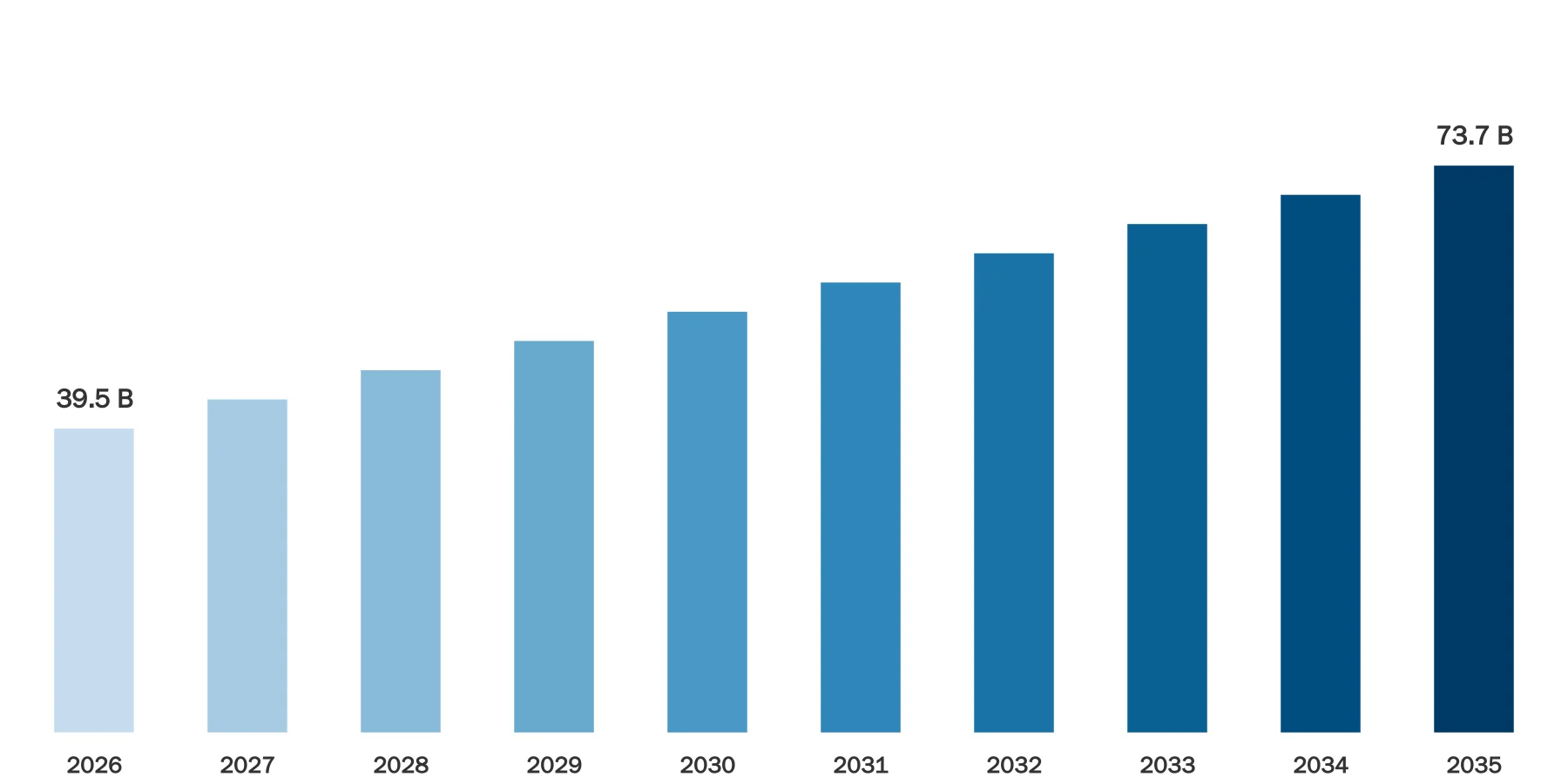
Source: Econ Market Research
Greenhouse horticulture involves growing crops in controlled environments like greenhouses to improve growth conditions. These structures regulate temperature, humidity, light, and other factors for year-round production. Various crops like fruits, vegetables, flowers, and herbs are grown in greenhouse horticulture to boost yield, quality, and sustainability. The market has expanded due to rising demand for fresh produce, innovations in greenhouse technologies, and worries about food security and environmental health.
One of the main factors driving growth in the global greenhouse horticulture market is the growing population, urbanization, and shifting dietary trends towards healthier and more varied foods. The demand for effective land utilization and water conservation in agriculture has also led to the increased use of greenhouse systems, which are more resource-efficient than traditional open-field farming methods. Furthermore, advancements in greenhouse technologies like climate control systems, hydroponics, and Vertical Farming methods have contributed to market growth by enhancing productivity and reducing environmental harm.
Small-scale farmers can face obstacles like expensive start-up costs, high energy expenses, and the need for specialized knowledge when trying to start greenhouse operations. Yet, the global greenhouse horticulture market is set to expand even further as individuals in the industry focus more on sustainable and productive farming methods to keep up with the rising need for fresh produce and address environmental concerns.
Greenhouse Horticulture Dynamics
The global greenhouse horticulture market influenced by several factors such as changing consumer preferences, advancements in technology, environmental issues, and regulations. Consumer desire for locally grown, pesticide-free, and sustainable fruits and vegetables is a key driver for the growth of greenhouse horticulture globally. Moreover, the rising urbanization and expanding middle-class population in developing countries have increased the demand for top-quality produce throughout the year, contributing to the market',s growth.
New technologies are very important in driving the market for greenhouse gardening. Innovations in how greenhouses are designed, automated systems, climate controls, and hydroponic growing methods have greatly increased how much can be grown, saving resources, and improving the quality of crops. These advances help farmers create the best growing conditions while also being kind to the environment by using less water and pesticides and reducing carbon emissions.
Additionally, using smart technology like the Internet of Things (IoT), Artificial Intelligence (AI), and data analysis has transformed how greenhouses are managed, allowing for better monitoring and decision-making in real time, leading to higher crop yields and profits. Despite the potential benefits of these technologies, barriers such as high costs and a lack of technical knowledge can impede their adoption by small-scale and resource-limited farmers. Nevertheless, with growing emphasis on sustainability and food security, the greenhouse horticulture market is projected to experience ongoing development and advancements in the future.
Drivers
Increasing Demand for Fresh Produce
The increasing world population and a shift towards healthier eating habits are driving the greenhouse horticulture market. People are now looking for locally grown, pesticide-free fruits and vegetables, which can be easily obtained through greenhouse farming. Urbanization has also changed the way food is consumed, with more individuals wanting access to a variety of produce all year round. Greenhouse horticulture addresses these needs by offering controlled environments for continuous production regardless of the season, meeting the rising demand for fresh produce.
Technological Advancements
Innovations in greenhouse technologies are crucial for the growth of the market. Advances in climate control systems, automation, and hydroponic cultivation methods have greatly improved productivity, efficiency, and crop quality. These technologies help growers optimize growing conditions, utilize resources efficiently, and reduce environmental impacts.
Additionally, the incorporation of smart technologies like IoT and AI allows for real-time monitoring and decision-making, leading to increased operational efficiency and yields. As these technologies become more available and cost-effective, they give growers the ability to overcome old limitations and promote the growth of greenhouse horticulture globally.
Restraints
High Initial Investments
Building a greenhouse facility involves a large amount of money upfront for construction, equipment, and climate control systems. For small farmers or those in areas with fewer financial resources, these initial costs can prevent them from entering or growing in the market. Ongoing expenses like energy and maintenance only make it harder for growers to use greenhouse horticulture methods.
Technical Expertise Requirement
Managing greenhouse operations effectively requires expertise in various areas such as crop cultivation, climate control, and pest management. Many small-scale farmers or those moving from traditional farming methods struggle to enter the industry due to lack of technical knowledge. Obtaining the necessary skills usually involves training and education, which can be difficult for some growers to access. As a result, the shortage of qualified personnel hinders the growth of greenhouse horticulture in certain regions.
Opportunities
Expansion of Urban Farming
As cities continue to grow and with limited space for traditional agriculture, greenhouse horticulture has a great chance to thrive due to urban farming efforts. Rooftop gardens, vertical farms, and community gardens offer urban farmers a way to grow fresh produce right in the city where consumers are. These projects help tackle issues like food security and logistics in the supply chain, while also supporting the environment by cutting down on the distance food travels and the carbon emissions from transportation.
Segment Overview
By Shape
By Shape market is segmented into, raised dome, sawtooth, Venlo, flat arch, tunnel, and modified Quonset. Each shape has its own advantages in terms of light distribution, ventilation, structural strength, and space usage. For example, Venlo-style greenhouses are known for their modular design, efficient use of space, and even light distribution, making them ideal for commercial growers who grow a variety of crops. On the other hand, tunnel-shaped greenhouses are inexpensive and simple to build, which is why they are favored by small-scale farmers and hobbyists.
By Type
By type Greenhouses Horticulture is segmented into, plastic film, glass, and rigid panel greenhouses. Plastic film greenhouses are affordable, lightweight, and customizable, perfect for temporary or seasonal crop cultivation. Glass greenhouses, on the other hand, provide superior light transmission, durability, and a pleasing appearance, making them great for high-value crops and research projects. Rigid panel greenhouses, made with materials like polycarbonate or acrylic panels, offer top-notch insulation and structural support, ensuring ideal growing conditions year-round.
By Crop Type
By Crop Type market is segmented into, nursery crops, flowers, ornamentals, fruits, vegetables, and herbs. Each type of crop has unique needs like temperature, humidity, light intensity, and nutrient levels, which can be effectively controlled in greenhouses. For instance, flowers and ornamentals need specific climate control and lighting for flowering and appearance, while vegetables and herbs can thrive with hydroponics or Aquaponics for nutrient delivery.
By End-User
The greenhouse horticulture market segmented into diverse end-users, including research and educational institutes, commercial growers, retail gardens, and others. Research and educational institutes utilize greenhouses for botanical studies, crop research, and educational purposes, requiring specialized facilities equipped with advanced climate control systems and research-grade instrumentation.
Commercial growers operate greenhouses on a large scale to produce crops for commercial sale, catering to regional or global markets with consistent quality and volume. Retail gardens utilize greenhouses for on-site production of plants and flowers, providing customers with a diverse selection of locally grown products. Overall, segmentation in the greenhouse horticulture market enables stakeholders to tailor solutions to specific needs, maximize efficiency, and capitalize on emerging opportunities across various segments.
Overview by Region
North America and Europe have well-established greenhouse industries with advanced technology, sustainable practices, and valuable crop output. These regions prioritize research and development, leading to the adoption of cutting-edge greenhouse technology and cultivation methods. On the other hand, Asian Pacific, Latin American, and African countries are seeing a rapid expansion in greenhouse horticulture due to urbanization, rising incomes, and a greater emphasis on food security.
These regions present significant opportunities for market expansion, particularly for low-cost greenhouse solutions tailored to small-scale farmers and local climatic conditions. Moreover, government initiatives promoting sustainable agriculture and investments in greenhouse infrastructure further support market growth in these regions. Overall, the greenhouse horticulture market exhibits a diverse regional landscape characterized by a mix of established markets and emerging opportunities, each with its unique challenges and growth prospects.
Competitive Landscape
Key players such as Certhon, Richel Group, and Hoogendoorn are renowned for their extensive product portfolios, technological expertise, and global presence, catering to the diverse needs of commercial growers, research institutions, and retail gardeners. These companies often invest heavily in research and development to innovate new greenhouse technologies, enhance crop yields, and improve resource efficiency.
Additionally, partnerships, mergers, and acquisitions are common strategies employed by major players to expand their market reach, broaden their product offerings, and strengthen their competitive position. Alongside established players, a growing number of startups and small-scale manufacturers are entering the market, offering niche solutions and disruptive technologies aimed at addressing specific market needs or catering to underserved segments. As competition intensifies, differentiation through product innovation, sustainability initiatives, and customer service will become increasingly crucial for companies seeking to maintain a competitive edge in the dynamic greenhouse horticulture market.
Greenhouse Horticulture Market Leading Companies
Certhon
Richel Group
Hoogendoorn
Priva
Netafim
Ridder
Top Greenhouses
Van der Hoeven
Agra Tech
Harnois Greenhouses
Nexus Corporation
Rough Brothers Inc.
Greentech
Heliospectra
Logiqs
Recent Developments
Oct 2022, Horticoop and StartLife teamed up to boost funding for horticultural tech startups and scale-ups, aiming to tap into innovative ideas for greenhouse technology.
Mar 2021, Netafim acquired Gak to meet the growing need for advanced greenhouse projects, offering comprehensive services for year-round farming with a focus on sustainability and profitability.
Greenhouse Horticulture Market Report Scope & Segmentation
| Attributes | Details |
|---|---|
Market Size (Current) | US$ 39.5 Billion in 2026 |
Market Size (Forecast) | US$ 73.7 Billion in 2035 |
Growth Rate | CAGR of 8.1% from 2026 to 2035 |
Forecast Period | 2026 – 2035 |
Base Year | 2025 |
Historical Data Available | Yes |
Regional Scope | Global |
Segments Covered | By Product
By Type
|
Frequently Asked Questions
Common questions about this report
The study period covers historical insights and forecast projections for the period 2026-2035.
About the Author
Market research expert with years of industry experience

Related Reports
Explore more market insights from the same category