

Insecticides Market
Insecticides Market Size, Share, Trends, Growth, and Industry Analysis, By Application Mode (Foliar Spray, Seed Treatment, Soil Treatment, Post-harvest), By Crop Type (Cereals and Grains, Oilseeds and Pulses, Fruits and Vegetables, Others), Regional Analysis and Forecast Period 2026-2035
Market Overview
As per Econ Market Research analysis, the Global Insecticides Market accounted for US$ 11.7 Billion in 2026 and is expected to surpass US$ 24.46 Billion by 2035, witnessing a CAGR of 8.54% throughout 2026–2035. The analysis is based on 2025 as the base year.
Insecticides Market Size 2025-2035 (USD Billion)

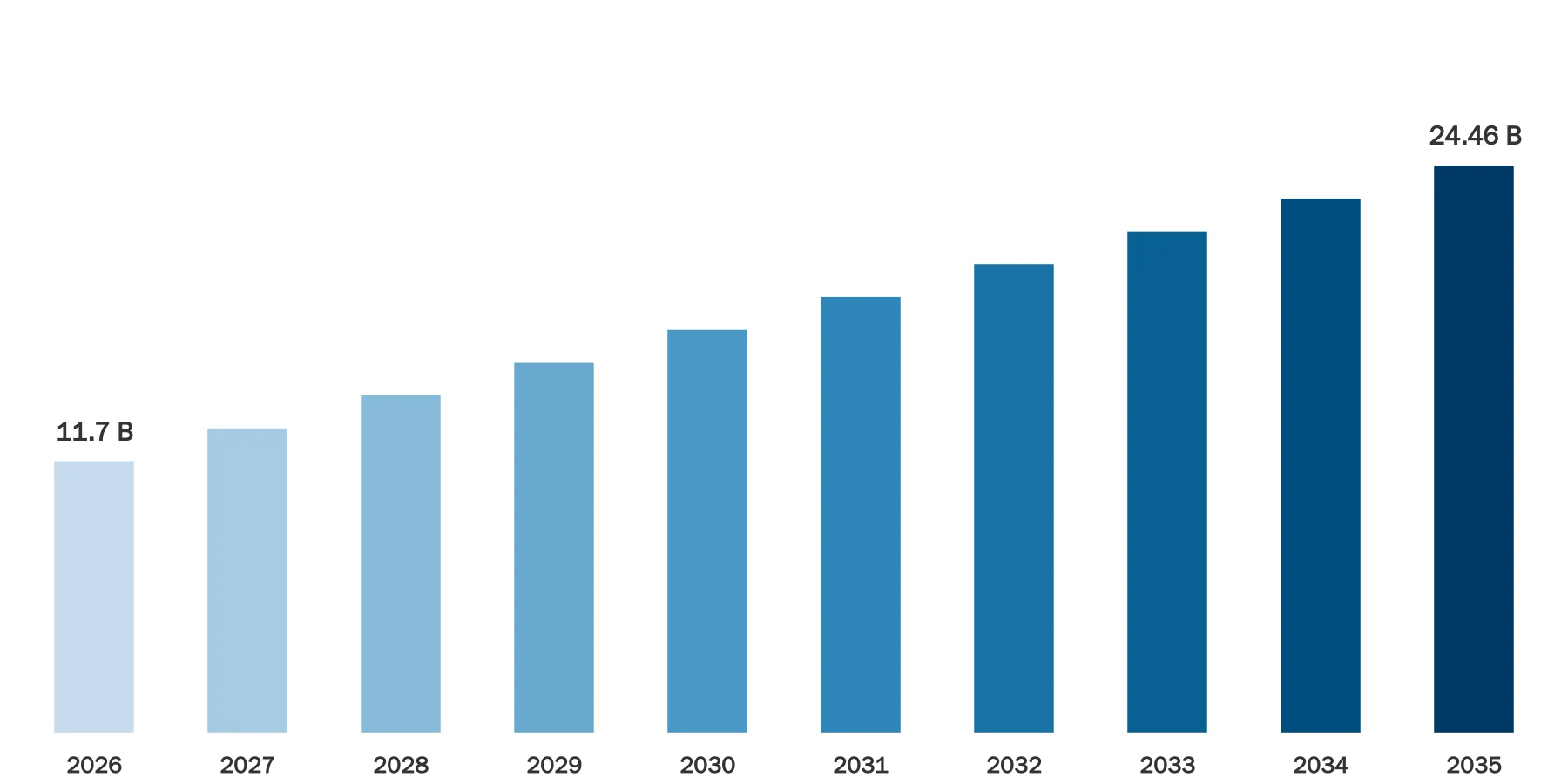
Source: Econ Market Research
The insecticide industry is a global business that produces chemicals to kill or stop insects that hurt crops, animals, or people. These chemicals protect crops, making sure people have enough food, and stopping insects from spreading diseases. There are different types of insecticides, like chemical, natural, and organic ones, to meet different needs and choices.
Chemical insecticides are made to kill insects in a strong and effective way. Instead of chemical pesticides, biological insecticides use naturally occurring organisms like bacteria, fungi, or plant-based extracts to combat pests. Organic insecticides, obtained from natural sources, are often favoured by individuals who prioritize eco-friendly pest control methods.
Population growth, development in cities, new farming methods, and pest challenges resulting from climate change are all significant factors fuelling the growth of the global insecticide market. As the global population grows, there is an increased need for insecticides to safeguard crops from pests that could harm them. Due to habitat fragmentation and increased pest populations in urban areas, insecticides are required to effectively control pests. Moreover, climate change not only affects the distribution of pests but also raises the risk of pest outbreaks, prompting the use of insecticides to prevent severe crop damage.
Insecticides Dynamics
Global insecticide market trends are influenced by factors affecting production, consumption, and regulations. Population growth, city expansion, and evolving farming methods increase the demand for insecticides to shield harvests and guarantee food availability. Climate change alters pest patterns, heightening the necessity for effective pest management.
Meanwhile, concerns about the harm chemical insecticides pose to health and the environment are encouraging the adoption of safer alternatives and integrative pest control methods. Regulatory frameworks play a crucial role in shaping market dynamics, with increasing scrutiny leading to stricter regulations and restrictions on certain insecticides. Additionally, technological advancements and innovations in bio-based insecticides and precision agriculture solutions are reshaping the market landscape. Market competition intensifies as companies strive to differentiate their products through branding, efficacy, and sustainability attributes.
Insecticides Drivers
Population Growth and Food Security
The increasing global population is a significant driver for the insecticides market. As the population grows, so does the demand for food. Insecticides play a crucial role in protecting crops from pests, ensuring higher yields and food security. With more mouths to feed, farmers are under pressure to maximize their agricultural output, driving the demand for insecticides to combat pests effectively. Additionally, as arable land becomes scarcer due to urbanization and land degradation, farmers need to optimize their production, making insecticides essential tools in modern agricultural practices.
Climate Change and Pest Pressure
Climate change-induced shifts in temperature and precipitation patterns alter pest distributions and behaviour, leading to increased pest pressures in many regions. Rising temperatures and changing weather patterns create more favourable conditions for pest proliferation and infestation, posing significant challenges to crop production. Insecticides become indispensable in combating these pests and minimizing crop losses.
Furthermore, as climate change exacerbates pest problems, farmers are likely to increase their reliance on insecticides to protect their crops, driving market demand. Additionally, the emergence of new pests in previously unaffected regions creates opportunities for insecticide manufacturers to develop and market novel pest control solutions tailored to these evolving pest pressures.
Restraints:
Regulatory Constraints and Environmental Concerns
Insecticide companies face strict regulations because of worries about how chemical insecticides affect the environment and health. To reduce pollution and protect people, government agencies around the world are making tougher rules for using insecticides, registering them, and checking for residues in food. To follow these rules, manufacturers need to spend more money on research and development to make insecticide formulas that are safer and better for the environment. This raises the cost of doing business for the companies that make them.
Resistance Development in Pests
Pest resistance to insecticides makes it hard to control them. Using too many chemical insecticides can make pests more resistant over time, making the insecticides less effective. As pests get better at handling the effects of insecticides, farmers spend more money on pest control but get less in return, which leads to more crop loss and less profit. To deal with resistance, one need to come up with other ways to control pests, like integrated pest management, which mean changing how to farm and putting money into new technologies.
Opportunities:
Rise in Demand for Bio-Based and Organic Insecticides
Increasing consumer concern about the environment and their health is fuelling a growing need for safer and greener pest control. This trend creates a market opportunity for manufacturers to leverage the rising demand for insecticides made from organic and bio-based materials. Companies can tap into this niche by creating innovative formulas using natural sources like plant extracts, microorganisms, and botanicals. By doing so, they can address consumer preferences for eco-friendly pest management solutions and expand into new markets.
Segment Overview
By Type
By Type Insecticides market is segmented into, carbamates, organochlorines, botanicals, pyrethroids, organophosphorus compounds, and others. Carbamates act on insects', nervous systems, disrupting neurotransmission and leading to paralysis and death. Organochlorine insecticides, although less commonly used due to their persistence and environmental concerns, were historically popular for their effectiveness against a wide range of pests.
Botanical insecticides are derived from plant extracts and are favoured for their low toxicity to humans and non-target organisms. Pyrethroids mimic the effects of natural pyrethrins found in chrysanthemum flowers, effectively controlling a broad spectrum of pests while posing minimal risks to mammals. Organophosphorus compounds inhibit the activity of acetylcholinesterase, an enzyme crucial for nerve function, causing paralysis and eventual death in insects.
By Form
By form market is segmented into, bait, sprays and strips. Baits attract pests, which then eat the insecticide and die. Sprays contain liquids that farmers can spray on crops or surfaces to kill pests on contact. Strips are sticky and have insecticide on them. They are often used to stop pests from getting into stored products.
By Formulation
By Formulations market is segmented into, granules, wettable powder, suspension concentrate, oil emulsion in water, microencapsulated suspension, emulsifiable concentrate, and other formulations. Granular formulations are solid particles mixed with inert materials, suitable for soil application. Wettable powders are finely ground insecticide particles that can be dissolved in water for spray application.
Suspension concentrates contain finely dispersed insecticide particles suspended in water, ensuring uniform application and coverage. Oil emulsions in water consist of insecticide dissolved or suspended in oil, emulsified in water for spray application. Microencapsulated suspensions contain insecticide particles encapsulated in microscopic capsules, releasing the active ingredient slowly over time. Emulsifiable concentrates are oil-based formulations that can be mixed with water to form a stable emulsion for spray application.
By Crop Type
Different types of crops, such as oilseeds and pulses, cereals and grains, fruits and vegetables, and others, face different types of insect pests. To fight these pests, unique insecticides are made for each crop. These insecticides are designed to kill only the specific pests that attack a certain crop. This helps to keep the environment safe and make sure that the crop grows well.
Insecticides Overview by Region
In North America, the market is identified by a high level of technological advancement and a strong focus on sustainable agriculture, driving demand for safer and more environmentally friendly insecticide solutions. Europe follows a similar trend, with stringent regulatory measures promoting the adoption of integrated pest management strategies and bio-based insecticides. In Asia Pacific, rapid population growth, urbanization, and expanding agricultural activities fuel demand for insecticides to protect crops and ensure food security.
Due to concerns about pesticide contamination and environmental damage, some areas are turning to organic and plant-based insect control products. Latin America',s massive agricultural production and vast crop variety make it a major market for insecticides. Tropical climate-related pests demand effective pest management in the area. Opportunities for market growth exist in Africa and the Middle East due to increased agricultural investment and efforts to achieve food security. However, market expansion in these areas is hampered by infrastructural and technological barriers, as well as strict regulations.
Insecticides Market Competitive Landscape
Major multinational companies such as Bayer CropScience, Syngenta AG, BASF SE, and Corteva Agriscience lead the market with a wide range of insecticide products catering to various crop types and pest pressures. These industry giants leverage their extensive research and development capabilities, global distribution networks, and brand recognition to maintain a competitive edge.
Alongside these major players, numerous smaller companies and regional manufacturers also contribute to the market by offering specialized insecticide formulations tailored to local pest challenges and agronomic practices. Additionally, the market sees competition from generic manufacturers producing off-patent insecticides, offering cost-effective alternatives to branded products. The competitive landscape is further influenced by regulatory factors, as companies navigate evolving pesticide regulations and registration requirements in different regions.
In recent years, there has been a growing emphasis on sustainable agriculture and environmentally friendly pest management practices, leading to increased demand for biological insecticides and integrated pest management solutions. This trend has spurred innovation and competition among companies developing bio-based insecticides derived from naturally occurring organisms such as bacteria, fungi, and botanical extracts.
Insecticides Market Leading Companies:
Bayer CropScience
Syngenta AG
BASF SE
Corteva Agriscience
Sumitomo Chemical Co., Ltd.
Corteva Agriscience
ADAMA Agricultural Solutions Ltd.
FMC Corporation
Nufarm Limited
Mitsui Chemicals Agro, Inc.
UPL Limited
Insecticides Market Recent Developments
Jan 2023, Bayer has collaborated with Oerth Bio to bolster its crop protection technologies and develop environmentally sustainable solutions for crop protection.
Sept 2022, FMC has introduced Talstar Plus Insecticide to shield groundnut, cotton, and sugarcane crops from harmful sucking and chewing pests, offering Indian farmers effective pest management solutions tailored to their specific needs.
April 2022, BASF SE introduced Exponus insecticide, empowering Indian farmers to enhance crop protection and increase yields. This insecticide is authorized for use on various crops, including oilseeds, pulses, and vegetables.
Insecticides Report Segmentation
Insecticides Market Report Scope & Segmentation
| Attributes | Details |
|---|---|
Market Size (Current) | US$ 11.7 Billion in 2026 |
Market Size (Forecast) | US$ 24.46 Billion in 2035 |
Growth Rate | CAGR of 8.54% from 2026 to 2035 |
Forecast Period | 2026 – 2035 |
Base Year | 2025 |
Historical Data Available | Yes |
Regional Scope | Global |
Segments Covered | By Application Mode
By Crop Type
|
Frequently Asked Questions
Common questions about this report
The study period covers historical insights and forecast projections for the period 2026-2035.
About the Author
Market research expert with years of industry experience

Dipali Bhingare serves as the Market Research Director at Econ Market Research. With a focus on translating complex global economic shifts into actionable business intelligence, she oversees the strategic direction of comprehensive market studies. Her work empowers organizations to navigate volatile industries through data-driven forecasting and deep-dive competitive analysis.
Related Reports
Explore more market insights from the same category