

Organic Corn Market
Organic Corn Market Size, Share, Trends, Growth, and Industry Analysis, By Type (Organic Yellow Corn, Organic White Corn, Others), By Application (Animal Husbandry, Food andamp; Beverages, Industrial, Others), Regional Analysis and Forecast Period 2026-2035
Organic Corn Market Overview
As per Econ Market Research analysis, the Global Organic Corn Market was estimated at US$ 1.26 Billion in 2026 and is forecast to attain US$ 1.54 Billion by 2035, expanding at a CAGR of 2.28% between 2026 and 2035. The base year for the study is 2025.
Organic Corn Market Size 2025-2035 (USD Billion)

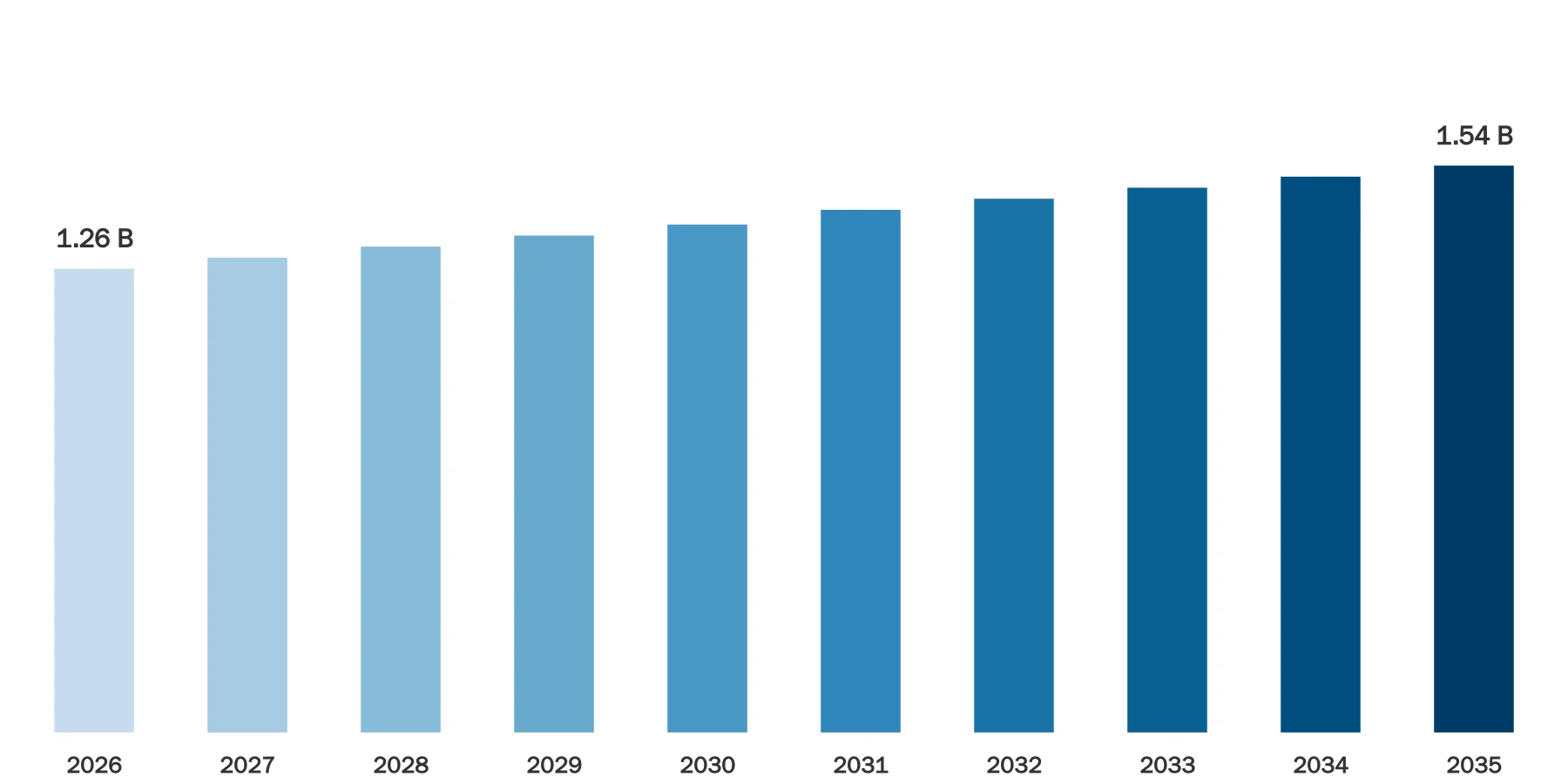
Source: Econ Market Research
Organic corn is grown using natural techniques that support soil health, diverse ecosystems, and environmental sustainability. This sector has experienced consistent expansion as consumers become more knowledgeable about the advantages of organic goods, worries about the environmental effects of traditional farming methods, and the growing desire for organic food items.
Over the past few years, the organic corn industry has been growing rapidly due to the increasing number of health-conscious consumers choosing organic food, stringent regulations promoting organic farming, and more investments in sustainable agriculture. New technologies in organic farming like precision agriculture and biological pest control are helping organic corn production become more efficient and productive. These advancements allow farmers to better use resources, reduce environmental harm, and improve crop resilience to pests and diseases. Even though there are challenges like higher costs and lower yields compared to conventional farming, the organic corn market is expected to keep growing as consumers focus on health, sustainability, and ethical consumption.
Organic Corn Dynamics
The global organic corn market is influenced by a variety of factors including consumer preferences, regulations, agricultural practices, and economic conditions. Consumer demand is a key driver, fuelled by a growing interest in health and environmental issues, as well as a preference for organic and natural foods. This demand has LED to increased investments in organic farming, resulting in higher production of organic corn globally. Moreover, efforts by regulatory bodies to encourage sustainable farming practices and uphold organic certification requirements have spurred an increase in the market. These initiatives motivate farmers to transition to organic cultivation techniques and maintain the authenticity of organic goods throughout the distribution process.
Even with challenges and uncertainties, the organic corn market continues to boom. Weather fluctuations and natural disasters can impact crop yields and production, leading to potential disruptions in supply chains and prices. Additionally, the higher production costs of organic farming, such as expenses for certification, labour-intensive practices, and reliance on organic inputs, can inhibit entry for farmers and constrain the scalability of organic corn production. However, consumer demand for organic food, advancements in sustainable agriculture, and supportive regulations are expected to drive the market',s growth.
Organic Corn Drivers
Increasing Consumer Awareness and Demand
Consumers are increasingly aware of health and environmental issues, which is a key factor driving the organic corn market. They are becoming more mindful of the potential health risks linked to conventional farming methods, such as pesticide residues and GMOs, prompting them to choose organic products instead. Additionally, worries about environmental sustainability and the urge to back ethical and transparent food systems are propelling consumers towards organic choices. This growing demand is encouraging food manufacturers, retailers, and distributors to broaden their selection of organic corn, thus stimulating market expansion.
Stringent Regulatory Standards and Certification
Regulatory efforts to support organic farming and guarantee the authenticity of organic products are a major factor driving the market. Governments and global organizations have established stringent regulations and certification procedures to validate organic claims, giving consumers trust in the genuineness of organic corn products. Moreover, financial aid, grants, and other rewards are encouraging organic farmers to embrace organic growing techniques, leading to market growth. These regulations not only boost organic corn production but also enhance the development and trustworthiness of the organic food sector.
Organic Corn Restraints:
Higher Production Costs
Organic corn faces a major obstacle due to the increased costs involved in organic farming practices. Methods like manual weed control and composting are more labour-intensive, which drives up production expenses. Organic inputs, like fertilizers and pest control measures, are also pricier compared to conventional options. These elevated costs make it difficult for farmers to scale up organic corn production, potentially resulting in higher prices for organic corn products in the market.
Limited Availability of Organic Seeds and Varieties
One of the challenges facing by organic corn market is the difficulty in finding organic seeds and varieties. Organic farmers struggle to find high-quality organic seeds that are suitable for their particular growing conditions. Additionally, organic corn varieties have limited genetic diversity compared to conventionally bred hybrids, which can lead to lower yields and increased vulnerability to pests and diseases. This lack of seed options hinders the growth of organic corn production and limits organic farmers', ability to meet the increasing demand for organic corn products.
Organic Corn Opportunities:
Expansion of Organic Food Retail Channels
The rise in popularity of organic food presents a great chance for organic food retailers to expand their reach. Supermarkets, specialty stores, and online platforms can benefit from the increasing consumer demand for organic corn by expanding their product selection and improving their organic food sections. By making organic corn products more accessible and visible, retailers can attract a wider range of customers and increase sales within the organic food market.
Segment Overview
By Type
By type, the organic corn market is segmented into organic white corn and organic yellow corn. Organic white corn is known for its versatility and is widely used in food products such as tortillas, chips, and breakfast cereals. Organic yellow corn is loved by both households and the food industry for its gentle taste and soft texture. In contrast, organic yellow corn stands out for its sweet and flavourful qualities, making it perfect for dishes such as cornmeal, polenta, and cornbread. Health-conscious shoppers seek out both varieties of organic corn for their nutritional value and preference for non-GMO and pesticide-free options.
By Application
By application, the organic corn market is segmented into households, food industry, and animal husbandry. Households purchase organic corn products for cooking, baking, and snacking, seeking healthier and environmentally friendly options for their families. The food industry often includes organic corn as a crucial component in a wide range of products, such as snacks, breakfast cereals, baked goods, and beverages. Moreover, organic corn is also utilized in animal husbandry to feed livestock, offering a wholesome and nourishing diet to animals raised in organic farming practices.
By Form
By form, organic corn is segmented into corn flour is finely ground and commonly used in baking, thickening sauces, and making dough. Organic corn granules are coarsely ground and can be cooked as a cereal or added to soups, salads, and casseroles for texture and flavour. Organic corn oil comes from organic corn seed',s germ and is used in cooking, frying, and salad dressings because of its mild flavour and ability to withstand high cooking temperatures. The different types of organic corn available provide flexibility and ease for a variety of cooking uses and food production requirements, meeting the needs of both consumers and businesses in the organic food industry.
Organic Corn Overview by Region
The organic corn market in North America, especially in the United States and Canada, is thriving due to strong demand from health-conscious consumers, stringent organic certification standards, and government policies supporting organic farming. Europe is also a major market for organic corn, with countries such as Germany, France, and the United Kingdom at the forefront of consumption and production.
The region',s established organic food industry, coupled with growing consumer awareness of sustainable agriculture and environmental issues, is driving the demand for organic corn products. Countries in the Asia-Pacific region, including China, India, and Australia, are experiencing a surge in interest in organic food. This trend is backed by increasing incomes, urbanization, and worries about food safety. Even with this, obstacles like difficulties obtaining organic certification, a lack of organic seeds, and infrastructure limitations are hindering market expansion in certain parts of Asia. Latin America and Africa show potential for growth in the organic corn market, with countries like Brazil and South Africa becoming important figures in organic farming.
Organic Corn Market Competitive Landscape
Major companies such as Cargill, Archer Daniels Midland Company (ADM), and Ingredion dominate the market with their extensive distribution networks, diversified product portfolios, and strong research and development capabilities. These industry giants leverage their resources to invest in sustainable agricultural practices, product innovation, and marketing initiatives to maintain their market leadership positions. Additionally, regional players and niche organic food manufacturers contribute to market competitiveness by offering specialized organic corn products tailored to local preferences and demand. Moreover, small-scale organic farmers and cooperatives play a vital role in supplying organic corn to local markets and supporting community-based agriculture initiatives.
Organic Corn Market Leading Companies:
Cargill Inc.
Archer Daniels Midland Company
Ingredion Incorporated
Tate &, Lyle PLC
The Andersons Inc.
Grain Millers Inc.
SunOpta Inc.
Organic Partners International LLC
Greenleaf Foods
Amy',s Kitchen Inc.
Bob',s Red Mill Natural Foods Inc.
Nature',s Path Foods Inc.
Cascadian Farm Organic
Clif Bar &, Company
Lundberg Family Farms
Organic Corn Recent Developments
Feb 2024, in a ground-breaking development, Origin Agritech Ltd., a leading Chinese agricultural technology firm, has announced a significant advancement in its commercial corn hybrid offerings. For the first time in the industry, the company has successfully incorporated a gene from wild corn into one of its elite commercial corn hybrids. This enhanced hybrid can now be planted at a density 10-15% higher than before, potentially resulting in a yield increase of over 10%.
July 2022, Albert Lea Seed House, a locally owned and independent farm seed company, finalized the acquisition of Blue River Organic Seed, a renowned organic seed corn brand. This strategic move aims to provide organic farmers with enhanced benefits and support in their agricultural endeavours.
May 2022, RW Garcia introduced a new line of organic chips, comprising four enticing varieties including Bar-B-Q, chili cheese, yellow corn, and blue corn. These snacks are crafted using ingredients verified by the non-GMO Project and certified organic by the U.S. Department of Agriculture (USDA).
Organic Corn Report Segmentation
Organic Corn Market Report Scope & Segmentation
| Attributes | Details |
|---|---|
Market Size (Current) | US$ 1.26 Billion in 2026 |
Market Size (Forecast) | US$ 1.54 Billion in 2035 |
Growth Rate | CAGR of 2.28% from 2026 to 2035 |
Forecast Period | 2026 – 2035 |
Base Year | 2025 |
Historical Data Available | Yes |
Regional Scope | Global |
Segments Covered | By Type
By Application
|
Frequently Asked Questions
Common questions about this report
The study period covers historical insights and forecast projections for the period 2026-2035.
About the Author
Market research expert with years of industry experience

Dipali Bhingare serves as the Market Research Director at Econ Market Research. With a focus on translating complex global economic shifts into actionable business intelligence, she oversees the strategic direction of comprehensive market studies. Her work empowers organizations to navigate volatile industries through data-driven forecasting and deep-dive competitive analysis.
Related Reports
Explore more market insights from the same category