

Electric Generator Market
Electric Generator Market Size, Share, Trends, Growth, and Industry Analysis, By Type (Gas Generators, Diesel Generators, CKD Generators), By End User (Mining, Oil and Gas, Construction, Residential, Marine, Manufacturing, Pharmaceuticals, Commercial, Others), By Application (Standby, Peak Shaving, Continuous), Regional Analysis and Forecast Period 2026-2035
Market Overview
As per Econ Market Research analysis, Global Electric Generator Market size stood at US$ 52.8 Billion in 2026 and is projected to reach US$ 107.6 Billion by 2035, growing at a CAGR of 8.2% over the forecast period 2026–2035. 2025 is taken as the base year.
Electric Generator Market Size 2025-2035 (USD Billion)

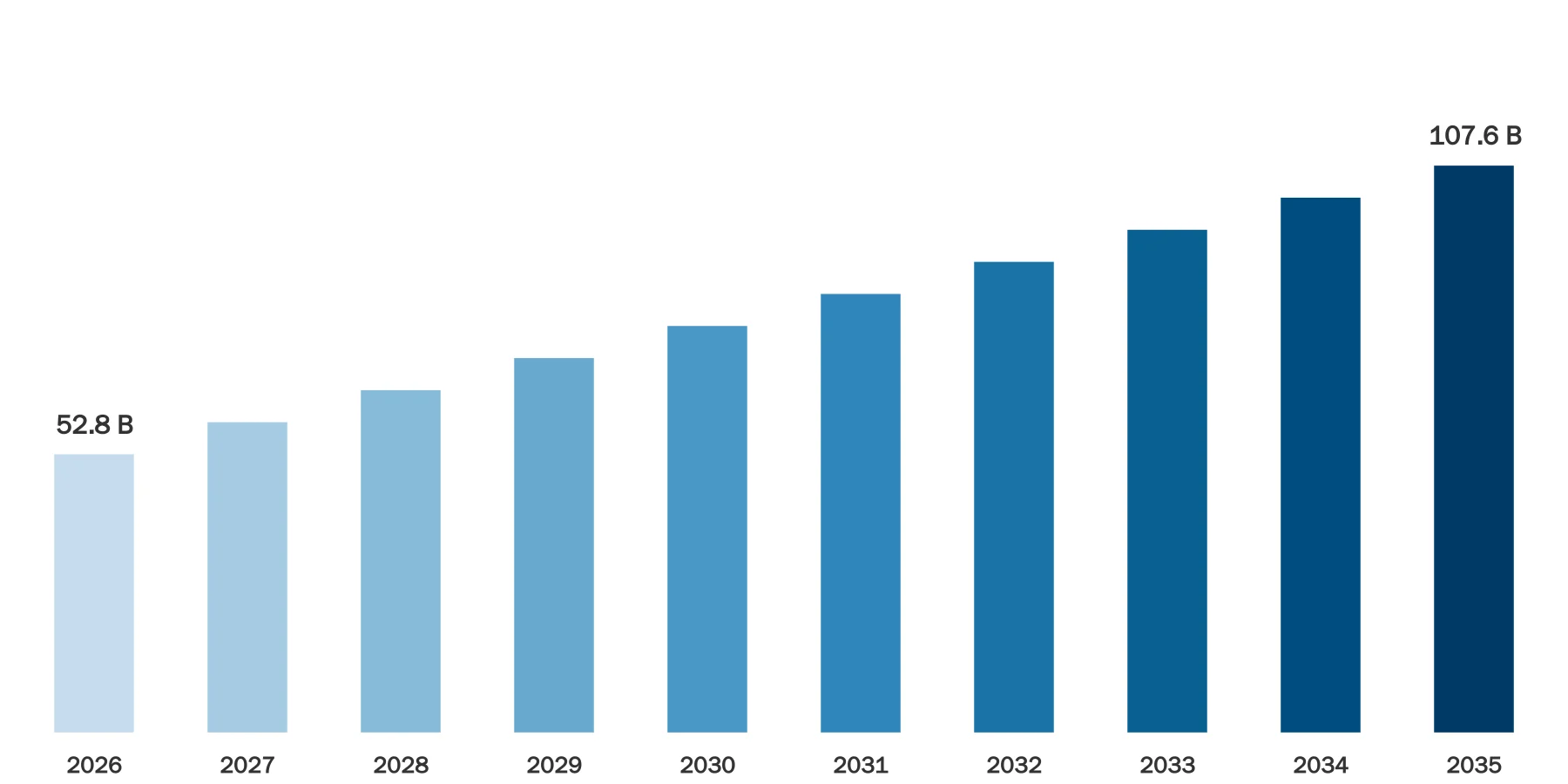
Source: Econ Market Research
The market for electric generators is diverse, and generators are used in various applications, including residential, commercial, and industrial settings. In addition to traditional generators that are powered by engines or turbines, the market for electric generators also includes renewable energy solutions, such as wind and solar generators.
The electric generator market is expected to grow due to various factors such as the increasing demand for reliable and uninterrupted power supply in different industries, the growing adoption of renewable energy sources, and the need for backup power solutions. Additionally, advancements in generator technology and a focus on energy efficiency and environmental sustainability are also expected to drive the market growth.
The demand for electric generators is also driven by the need for uninterrupted and reliable power supply in critical infrastructure and facilities such as hospitals, data centers, and telecommunications networks. These facilities require a continuous power supply, and electric generators serve as a backup power source in case of power outages or disruptions. Additionally, the increasing adoption of renewable energy sources such as wind and solar power has LED to a growing demand for electric generators to convert the intermittent power generated by these sources into stable and reliable electricity.
The COVID-19 pandemic has had both positive and negative impacts on the electric generator market. On the one hand, the increased demand for backup power solutions due to the pandemic has driven market growth. On the other hand, disruptions in the supply chain and manufacturing have caused a slowdown in the market. Additionally, declining demand for generators in some sectors, such as commercial and industrial applications, due to lockdowns and scaled-back operations, has further affected the market. However, as the world recovers from the pandemic and economies reopen, the electric generator market is expected to grow steadily, driven by the increasing demand for reliable and efficient power supply solutions.
Market Drivers
Natural disasters and extreme weather events can cause power outages, which can be costly and disruptive to businesses and households. Electric generators can provide a reliable backup power source during these emergencies, ensuring that critical operations continue uninterrupted. The increasing occurrence of natural disasters and extreme weather events, coupled with the growing demand for uninterrupted power supply, is expected to drive the demand for electric generators in the future.
Renewable energy sources such as wind and solar power can be intermittent, meaning that their power generation can be unpredictable and subject to fluctuations based on factors such as weather conditions. This intermittency can lead to power outages, particularly during adverse weather conditions such as storms, which is why backup power solutions such as electric generators are needed to ensure uninterrupted power supply. Despite this challenge, the increasing adoption of renewable energy sources is expected to drive the demand for electric generators as backup power solutions.
hybrid power systems combining renewable energy sources with backup power solutions such as electric generators can provide an optimal balance between energy efficiency and reliability. These systems can overcome the intermittent nature of renewable energy sources by integrating them with a backup power source such as an electric generator, ensuring a continuous and reliable power supply. Hybrid power systems can also reduce the carbon footprint of the power generation system by utilizing renewable energy sources, leading to a more sustainable and environmentally friendly energy solution.
Market Challenges
The high cost of electric generators can be a significant barrier to entry for many consumers, particularly in developing countries with limited electricity access. Moreover, the operating costs of electric generators can also be high, as they require fuel to operate and need regular maintenance to ensure they function correctly. The ongoing expenses associated with operating an electric generator, such as fuel and maintenance costs, can also make it challenging for some consumers to justify the investment in an electric generator.
The initial price of electric generators can be offset by their long lifespan and the potential cost savings from reliable power supply. Furthermore, advancements in technology, such as more efficient engines and improved manufacturing processes, can help reduce production costs, making electric generators more accessible and affordable to a wider range of consumers. As a result, the market is expected to grow as the cost of electric generators becomes more affordable, and consumers recognize their long-term benefits.
Segments Analysis
By Type Insights
the gas generator market is expected to grow at a faster rate due to the increasing adoption of natural gas as a fuel source. Natural gas is a cleaner and more environmentally friendly fuel source than diesel, and it also offers cost savings in terms of fuel expenses. The CKD generator segment is also expected to grow due to its cost-effectiveness and flexibility in customization. CKD generators are assembled from pre-manufactured components, making them less expensive than fully assembled generators and allowing for customization to meet specific power needs.
By Application Insights
Stand-by generators are commonly used as backup power in the event of a power outage or grid failure. They can be found in residential, commercial, and industrial settings. Peak shaving generators are typically used by businesses to reduce their energy costs during peak demand periods. These generators can help reduce the strain on the grid and lower electricity bills for businesses. Continuous generators, also known as prime power generators, are used as a primary power source in off-grid locations or areas with unreliable grid power. They are commonly found in remote areas, such as mining sites and oil rigs, and can provide a reliable and uninterrupted power supply.
By End-User Insights
The demand for electric generators in the construction sector is primarily driven by the need for reliable and uninterrupted power supply on construction sites. The mining and oil &, gas sectors require electric generators to power their operations in remote and challenging environments where grid power is unavailable. The residential and commercial sectors require backup power solutions to ensure uninterrupted power supply during power outages or grid failures. The marine sector requires electric generators to power boats and ships. As industries continue to expand and demand for electricity increases, the market for electric generators is expected to grow in various end-user segments.
Regional Analysis
Additionally, the increasing adoption of renewable energy sources such as wind and solar power in North America is also expected to drive the demand for electric generators, as backup power solutions are needed to ensure uninterrupted power supply during periods of low or no renewable energy generation.Furthermore, the aging power infrastructure in North America also contributes to the demand for electric generators, as power outages due to equipment failure or natural disasters can occur more frequently. The need for backup power solutions is thus becoming increasingly important to ensure the reliability and resiliency of the Power Grid.
In addition, the increasing demand for uninterrupted power supply in various industries and the growing number of construction activities in the region also drive the growth of the electric generator market in Europe. The construction industry requires a reliable power source, particularly in remote areas, and electric generators provide an effective solution. The growth in the manufacturing and pharmaceutical industries also contributes to the market',s growth in Europe.
Recent Developments
In February 2021: - Generac Power Systems announced the acquisition of Enbala Power Networks, a leading distributed energy optimization and control solutions provider for the utility and commercial markets.
In June 2022: - Cummins Inc. launched a new 1MW twin-pack rental generator, the C1000D6RE, which delivers a competitive rental power solution for various applications throughout North America.
Competitive Landscape
The Global Electric Generator Market Some of the major companies include: -
Key Market Players:
Aggreko
Atlas CopCo.
Caterpillar Inc.
FG Wilson
Kirloskar Electric Co. Ltd.
Cummins Inc.
Rolls-Royce
Wä,rtsilä,
Yanmar Co. Ltd.
Briggs &, Stratton
Electric Generator Market Report Scope & Segmentation
| Attributes | Details |
|---|---|
Market Size (Current) | US$ 52.8 Billion in 2026 |
Market Size (Forecast) | US$ 107.6 Billion in 2035 |
Growth Rate | CAGR of 8.2% from 2026 to 2035 |
Forecast Period | 2026 – 2035 |
Base Year | 2025 |
Historical Data Available | Yes |
Regional Scope | Global |
Segments Covered | By Type
By End User
By Application
|
Frequently Asked Questions
Common questions about this report
The study period covers historical insights and forecast projections for the period 2026-2035.
About the Author
Market research expert with years of industry experience

Dipali Bhingare serves as the Market Research Director at Econ Market Research. With a focus on translating complex global economic shifts into actionable business intelligence, she oversees the strategic direction of comprehensive market studies. Her work empowers organizations to navigate volatile industries through data-driven forecasting and deep-dive competitive analysis.
Related Reports
Explore more market insights from the same category