

Carbon Fiber Composites Market
Carbon Fiber Composites Market Size, Share, Trends, Growth, and Industry Analysis, By Matrix Material (Polymer Matrix Composites (PMCs), Ceramic Matrix Composites (CMCs), Metal Matrix Composites (MMCs), Hybrid Matrix Composites), By Manufacturing Process (Lay-Up, Filament Winding, Injection Molding, Pultrusion, Others), By End-Use Industry (Aerospace and Defense, Automotive, Wind Energy, Sports and Leisure, Construction, Marine), Regional Analysis and Forecast Period 2026-2035
Market Overview
As per Econ Market Research analysis, the Global Carbon Fiber Composites Market generated revenue of US$ 25.62 Billion in 2026 and is forecast to achieve US$ 45.43 Billion by 2035, at a CAGR of 6.5% during the study period 2026–2035. The base year considered is 2025.
Carbon Fiber Composites Market Size 2025-2035 (USD Billion)

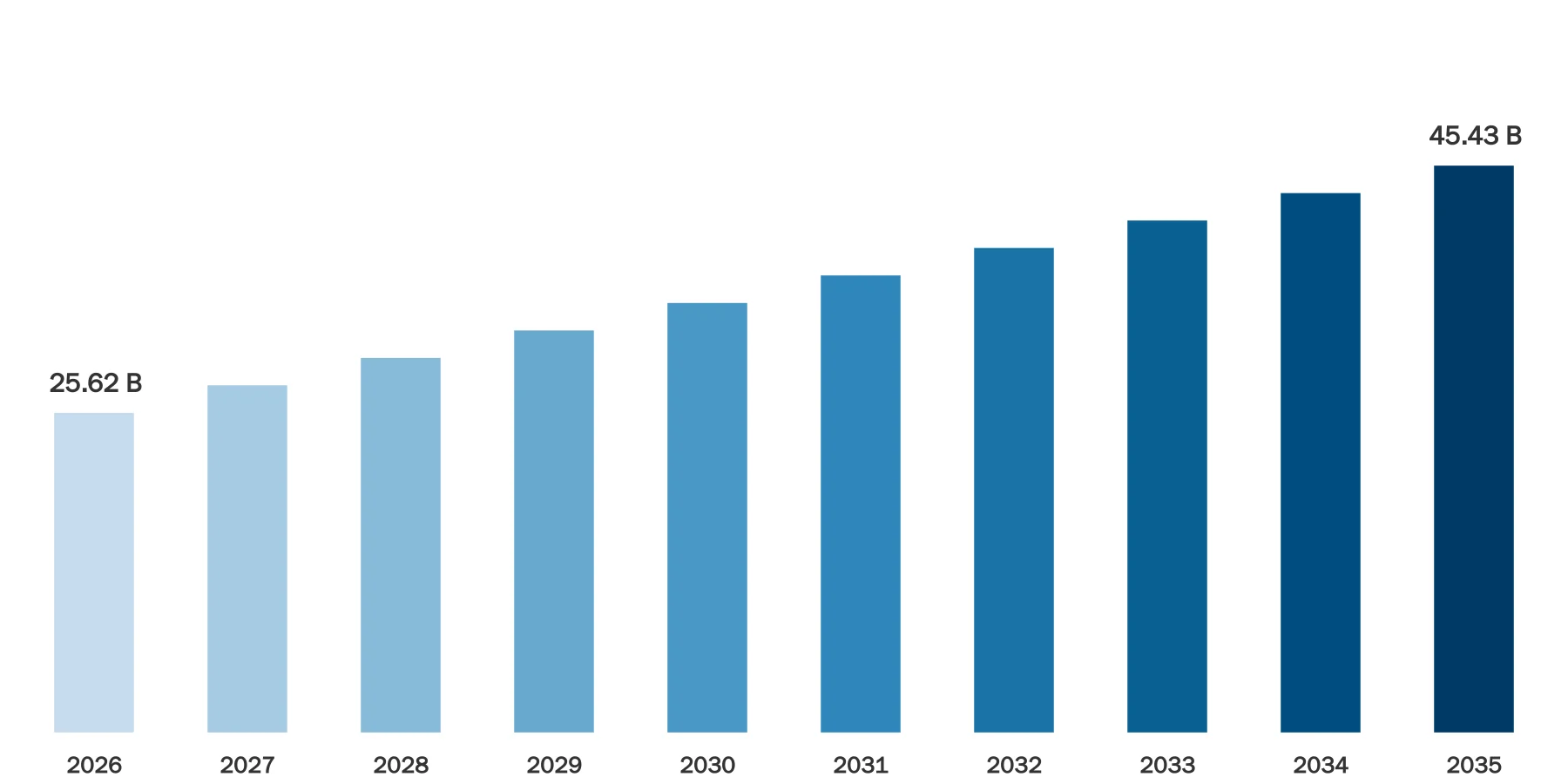
Source: Econ Market Research
As a cutting-edge material in numerous industries, the Carbon Fiber composites industry has experienced tremendous growth. These composites are characterized by their remarkable strength, low weight, and corrosion resistance. They are made up of carbon fibers inserted in a matrix, usually resin. Applications include sports equipment, automotive, aircraft, and renewable energy. Carbon fiber composites are becoming essential for improving performance, sustainability, and fuel efficiency as the market for strong, lightweight materials grows. Due to continuous improvements in production techniques, the market is expected to grow in the future, stimulating innovation and propelling a paradigm change in a variety of industries towards high-performance materials.
Carbon Fiber Composites Market Dynamics
Strong growth in the market for carbon fiber composites is a result of consumers', growing need for materials that are both strong and lightweight. Propelled by the quest for fuel efficiency and performance optimization, they have been widely adopted in the aircraft, automotive, and sporting goods industries. Expanding applications in developing industries, cost savings, and technological improvements in production processes all contribute to market expansion. Constraints include complicated recycling procedures and expensive manufacturing expenses. The market',s future is anticipated to be shaped by ongoing R&,D projects and a growing emphasis on sustainability, with an emphasis on overcoming obstacles and promoting innovation.
Carbon Fiber Composites Market Drivers
Rising Lightweight Material Demand
An industry-wide paradigm change toward improving performance, sustainability, and efficiency is what',s driving the rising need for lightweight materials. The demand for lighter substitutes grows as sectors like aerospace and the automotive industry work to reduce pollutants and improve fuel economy. Because they combine low weight and great strength, lightweight materials such as carbon fiber composites offer an appealing alternative. This helps achieve overall sustainability goals in addition to increasing transportation energy efficiency. Furthermore, the growing trend of lightweight materials is supported by the need for them in several industries, such as consumer goods and construction, where resource optimization and durability are prioritized.
High Strength-to-Weight Ratio
Superior strength-to-weight ratio materials, such as carbon fiber composites, make it possible to design lightweight and incredibly durable structures and components. This characteristic plays a critical role in industries including aerospace, automotive, and athletic goods by facilitating increased fuel efficiency, increased agility, and greater overall performance. The ability to save weight while preserving strength is a primary force behind technological and design breakthroughs, impacting the broad use of materials that provide this highly desired combination.
Restraints:
High production costs are a result of complex manufacturing processes that use specialized equipment, complex curing processes, and precursor materials. The material',s competitiveness in price-sensitive markets is limited since these expenses are frequently transferred to end users. The upfront costs associated with modern production facilities also make matters more financially difficult. The comparatively high production costs of carbon fiber composites impede their wider integration and create a hurdle to reaching widespread commercial viability in a variety of applications, as companies search for cost-effective alternatives.
Limited Raw Material Availability
These specialized inputs are essential to the manufacturing of carbon fibers, therefore supply chain interruptions can occur. Production consistency can be impacted and supply shortages can result from variables like natural disasters, geopolitical unrest, and price swings for raw materials. In addition to impeding the scalability of carbon fiber composite production, this limitation highlights the necessity of diversifying the source of raw materials in order to reduce risks and promote market resilience and stability.
Opportunities:
Electric Vehicle (EV) Market Growth
The need for lightweight materials is growing as the automobile sector shifts to more environmentally friendly modes of transportation. Thanks to their excellent strength-to-weight ratio, carbon fiber composites provide an intelligent way to improve energy efficiency and increase the range of electric vehicles. The vehicle',s overall performance and battery efficiency both benefit from the weight reduction. Carbon fiber composites, which are positioned as a crucial facilitator for the progress of electric mobility, are in line with this growing market, fostering a mutually beneficial partnership between the two sectors.
Wind Energy Expansion
The need for bigger, more effective wind turbine blades is rising as the wind energy industry expands. Because of their remarkable strength and lightweight nature, carbon fiber composites provide a tactical edge for building longer, more robust blades. This lowers energy prices while also increasing the wind turbines', overall efficiency. Carbon fiber composites have distinct properties that make them an important material for improving wind energy',s capabilities and sustainability, opening up a sizable industry.
Segment Overview
By Matrix Material
Based on matrix material, the global carbon fiber composites market is divided into carbon matrix, polymer matrix, ceramics matrix, metal matrix, and hybrid matrix. The polymer matrix category dominates the market with the largest revenue share in 2023. Polymer matrix composites are widely utilized in the automotive, maritime, and construction industries because they are lightweight, corrosion-resistant, and offer superior impact resistance. They are also easy to produce electronic, automotive, and aerospace components can benefit from metal matrix composites', enhanced strength, stiffness, and thermal conductivity. The goal of hybrid matrix composites is to combine features in a way that works well together, enabling customization according to the needs of individual applications.
By End-Use Industry
Based on the end-use industry, the global carbon fiber composites market is segmented into automotive, aerospace, sports &, leisure, marine applications, wind turbines, and civil engineering. The aerospace segment dominates the carbon fiber composites market. Carbon fiber composites are widely employed in the aerospace industry to make airplane components. Wings, fuselage sections, and other structural components fall under this category.
The automotive industry is using carbon fiber composites more and more to create lightweight, high-strength components. In the sports and leisure sector, carbon fiber composites are widely used in the production of bicycles, golf clubs, tennis racquets, and fishing rods. Carbon fiber composites are used in the marine industry to build masts, boat hulls, and other structural elements.
Carbon Fiber Composites Market Overview by Region
The global carbon fiber composites market is categorized into North America, Europe, Asia-Pacific, and the Rest of the World. North America emerged as the leading region, capturing the largest market share in 2023. There is an acute need for lightweight, high-performance materials in the region',s thriving aerospace and automotive industries. The market is also growing as a result of a strong emphasis on technological innovation, lots of R&,D, and a solid infrastructure.
With a strong presence in the aerospace, automotive, and other critical industries, North America',s dedication to sustainability is driving the use of carbon fiber composites in a wide range of applications and solidifying the region',s position as a major participant in the worldwide market. For the forecast period, Asia-Pacific is anticipated to post a significant CAGR. In The region',s rapidly developing economy, growing industrialization, and growing investments in vital industries like renewable energy, aircraft, and automobiles are all responsible for this rise.
As a result of rising manufacturing capacities, technological developments, and the growing need for lightweight materials, Asia-Pacific is now the center for the adoption of carbon fiber composites. The increased focus on infrastructure development and environmental practices also contributes to the region',s carbon fiber composites market',s predicted strong growth.
Carbon Fiber Composites Market Competitive Landscape
In the global carbon fiber composites market, a few major players exert significant market dominance and have established a strong regional presence. These leading companies remain committed to continuous research and development endeavors and actively engage in strategic growth initiatives, including product development, launches, joint ventures, and partnerships. By pursuing these strategies, these companies aim to strengthen their market position, expand their customer base, and capture a substantial share of the market.
Carbon Fiber Composites Market Leading Companies:
Toray+Zoltek
SGL Carbon
Toho
MRC
Hexcel Corporation
Rock West Composites
Hengshen
Mitsubishi Chemical Fiber Corporation
Teijin Limited
Solvay, and various others.
Carbon Fiber Composites Market Recent Developments
In October 2023, Mitsubishi Chemical Group Initiated a Strategic Purchase of CPC, a Prominent Italian Producer of Carbon Fiber Composite Parts for the Automotive Sector.
In June 2022, Japanese business Toho Tenax is a member of the Teijin Group. It is a top manufacturer of Composite Materials and carbon fibers. Products from Toho Tenax are used in a variety of industries, such as sports equipment, automotive, and aerospace.
Carbon Fiber Composites Market Report Segmentation
Carbon Fiber Composites Market Report Scope & Segmentation
| Attributes | Details |
|---|---|
Market Size (Current) | US$ 25.62 Billion in 2026 |
Market Size (Forecast) | US$ 45.43 Billion in 2035 |
Growth Rate | CAGR of 6.5% from 2026 to 2035 |
Forecast Period | 2026 – 2035 |
Base Year | 2025 |
Historical Data Available | Yes |
Regional Scope | Global |
Segments Covered | By Matrix Material
By Manufacturing Process
By End-Use Industry
|
Frequently Asked Questions
Common questions about this report
The study period covers historical insights and forecast projections for the period 2026-2035.
About the Author
Market research expert with years of industry experience

Dipali Bhingare serves as the Market Research Director at Econ Market Research. With a focus on translating complex global economic shifts into actionable business intelligence, she oversees the strategic direction of comprehensive market studies. Her work empowers organizations to navigate volatile industries through data-driven forecasting and deep-dive competitive analysis.
Related Reports
Explore more market insights from the same category