

Electric Vehicle Polymers Market
Electric Vehicle Polymers Market Size, Share, Trends, Growth, and Industry Analysis, By Type (Engineering Plastics, Elastomers), By Component (Powertrain, Exterior, Interior), By Application (Battery System, Lighting System, Sensors andamp; Connectors), Regional Analysis and Forecast Period 2026-2035
Market Overview
As per Econ Market Research analysis, the Global Electric Vehicle Polymers Market size amounted to US$ 43.92 Billion in 2026 and is anticipated to grow to US$ 2382.17 Billion by 2035, recording a CAGR of 56.1% during 2026–2035. The base year taken for analysis is 2025.
Electric Vehicle Polymers Market Size 2025-2035 (USD Billion)

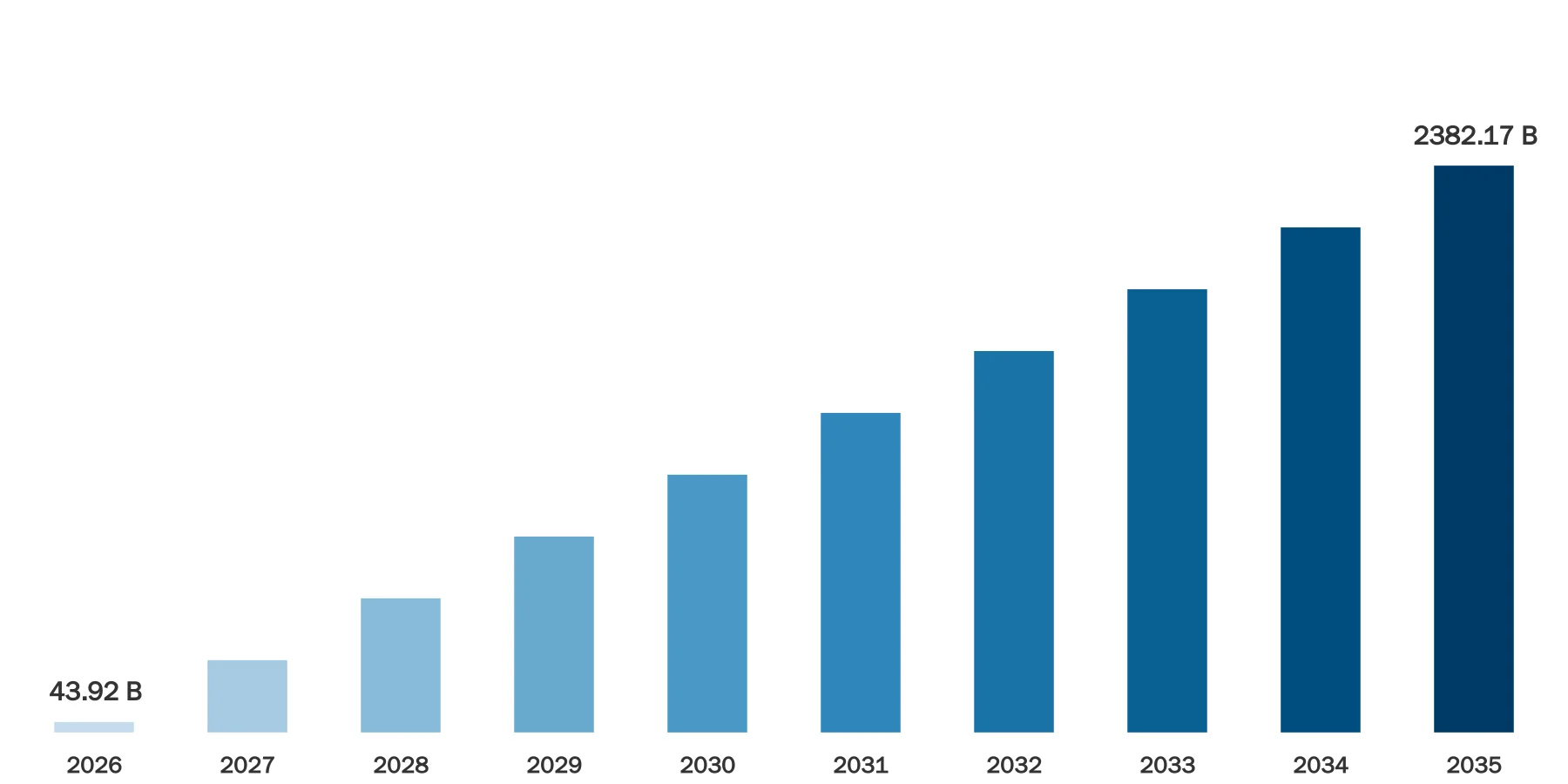
Source: Econ Market Research
The polymers used for interior and exterior applications, battery systems, and structural components of electric vehicles are all included in the market for electric vehicle (EV) polymers. The need for strong, long-lasting, and environmentally friendly materials is rising as the car industry moves toward electrification. These polymers are essential for improving the efficiency, sustainability, and performance of vehicles. Manufacturers may achieve greater energy efficiency, lower emissions, and longer range for electric vehicles (EVs) using advances in polymer technology. As a result, the growing global use of electric vehicles is expected to propel the EV polymers market to considerable growth.
Electric Vehicle (Car) Polymers Dynamics
Polymer technological breakthroughs spur innovation and make it possible to create materials for electric vehicle (EV) components that are stronger, lighter, and more efficient. Government policies that encourage sustainability and lower emissions also encourage the use of electric vehicles (EVs), which raises the need for polymers. Furthermore, by increasing customer confidence in EVs, the development of the charging infrastructure and advancements in battery technology support market growth. Moreover, collaborations between automakers and producers of polymers enable the incorporation of polymers into electric vehicle designs, hence accelerating market growth during the world',s electrification revolution.
Electric Vehicle (Car) Polymers Drivers
Environmental Regulations and Sustainability Initiatives
Automotive manufacturers are being forced to use eco-friendly and lightweight polymer materials in the construction of electric vehicle components due to increasingly strict laws that are aimed at encouraging sustainable transportation options and lowering carbon emissions. Adherence to these regulations guarantees the preservation of the environment and bolsters market competitiveness by matching consumer inclinations towards more environmentally friendly modes of transportation. Therefore, these rules act as stimulants for growth and innovation in the field of electric vehicle polymers.
Growing Consumer Preference for Electric Vehicles
With growing worries about fossil fuel emissions and environmental awareness, people are choosing more environmentally friendly and energy-efficient transportation options. Specialized polymer materials are needed in EV components as a result of this shift to EVs in order to guarantee sustainability, efficiency, and performance. As a result, across the supply chain involved in the manufacture of electric vehicles, the growing demand for EVs closely correlates with an increase in polymer demand.
Restraints:
Raw Material Supply Chain Vulnerability
Due to its reliance on specialty chemicals and feedstocks sourced from petroleum, the supply chain is vulnerable to interruptions from events like natural catastrophes, geopolitical conflicts, and changes in prices. Key polymer material costs and availability are impacted by these issues, which could cause supply shortages, higher manufacturing costs, and production delays. As a result, the market for electric car polymers is less stable and scalable due to the fragility of the raw material supply chain.
High Initial Capital Investment
There are substantial upfront expenses associated with setting up production facilities, funding R&,D, and perfecting polymer materials for EV applications. These costs, when combined with protracted payback periods, have the ability to discourage new competitors and prevent established firms from growing. As such, the high capital investment barrier to entry limits market expansion and innovation in the EV polymer industry.
Opportunities:
Advanced Battery Encapsulation
The need for specific polymer materials to improve battery safety, durability, and efficiency is growing as the market for electric vehicle batteries gets more and more demanding. Novel polymer encapsulating techniques can enhance Thermal Management, prolong battery life, and shield batteries from environmental elements including moisture and temperature swings. This gives producers of polymers a lucrative chance to design specialized solutions for the growing market for batteries for electric vehicles.
Lightweighting Initiatives
In electric vehicles, there is an increasing need for lightweight materials to replace heavier components due to the focus on increasing energy efficiency and driving range. Because polymers are versatile and lightweight, they offer a workable alternative. Manufacturers can take advantage of the growing need for lightweighting solutions by providing specific polymer materials designed for electric vehicle applications. This will spur growth and innovation in the electric car polymers industry.
Segment Overview
By Type
Based on type, the global electric vehicle polymers market is divided into engineering plastics, elastomers, and others. The elastomers category dominates the market with the largest revenue share in 2023. Elastomers are polymers that have characteristics similar to rubber, such as elasticity, durability, and flexibility. Because they can absorb energy and tolerate deformation, they are used in electric vehicle tires, vibration dampening, gaskets, and seals. High-performance polymers with exceptional mechanical, thermal, and chemical resistance qualities are referred to as engineering plastics. Because of their strength and low weight, these materials are frequently utilized in electric vehicles', housings, connectors, insulation, and structural parts.
By Component
Based on the components, the global electric vehicle polymers market is categorized into powertrain, exterior, interior, and others. The interior category leads the global electric vehicle polymers market with the largest revenue share in 2023. Electric vehicle interiors are designed to be aesthetically beautiful, useful, and comfortable through the significant use of polymer materials.
Polymers are used in interior trim, consoles, door panels, seats, dashboards, and other components because they are strong, lightweight, and adaptable. Polymer materials are used in electric car body panels, bumpers, grilles, and aerodynamic elements, among other exterior components. Polymer materials are essential to the electric car powertrain since they are utilized in motor enclosures, cooling systems, and electrical insulation, among other components.
By Vehicle Type
Based on vehicle type, the global electric vehicle polymers market is segmented into battery electric vehicles (BEVs), hybrid electric vehicles (HEVs), plug-in hybrid electric vehicles (PHEVs). BEVs are entirely electric cars without an Internal Combustion Engine that run only on rechargeable batteries (ICE). Polymer materials are widely used in BEVs for a variety of components, including electric motors, Power Electronics, battery enclosures, interior/exterior trim, and thermal management systems.
Hybrid electric vehicles (HEVs) are powered by an electric propulsion system in addition to an internal combustion engine (ICE) that combines electric and fuel (gasoline or diesel). With a rechargeable battery pack that can be charged using both an internal combustion engine (like HEVs) and an external power source (like BEVs), PHEVs combine the best attributes of both BEVs and HEVs.
Electric Vehicle (Car) Polymers Overview by Region
The global electric vehicle polymers market is categorized into North America, Europe, Asia-Pacific, and the Rest of the World. Asia-Pacific emerged as the leading region, capturing the largest market share in 2023. The demand for polymer materials used in EV components has increased due to the region',s fast expanding automotive industry and government measures supporting the adoption and manufacturing of electric vehicles.
Furthermore, Asia-Pacific has a large number of top polymer suppliers and manufacturers, which supports a strong supply chain for the creation of EV polymers. In addition, the region',s investments in R&,D, technological innovations, and growing environmental consciousness among consumers have propelled the market for polymers in the EV industry and led to the widespread adoption of electric vehicles.
Numerous reasons have contributed to this expansion, such as stricter environmental restrictions, greater consumer demand for sustainable transportation options, and more government backing for the adoption of EVs. Furthermore, investments in electric vehicle infrastructure, partnerships between polymer producers and automotive OEMs, and developments in polymer technology are anticipated to propel market expansion in the area.
Electric Vehicle (Car) Polymers Competitive Landscape
In the global electric vehicle polymers market, a few major players exert significant market dominance and have established a strong regional presence. These leading companies remain committed to continuous research and development endeavors and actively engage in strategic growth initiatives, including product development, launches, joint ventures, and partnerships. By pursuing these strategies, these companies aim to strengthen their market position, expand their customer base, and capture a substantial share of the market.
Electric Vehicle (Car) Polymers Market Leading Companies:
BASF SE
DuPont
Covestro AG
Celanese Corporation
SABIC
Solvay
LANXESS
LG Chem
Evonik Industries AG
DAIKIN INDUSTRIES, Ltd.
Mitsubishi Engineering-Plastics Corporation
JSR Corporation, and various others.
Electric Vehicle (Car) Polymers Recent Developments
In March 2022, a new sort of battery pack called a ",Pure Performance Battery", was produced by Evonik Industries, which is working to provide lighter, more cost-effective, and more efficient battery EV solutions utilizing composites. The novel holistic battery system concept is anticipated to be advantageous to the automobile sector.
In March 2022, A strategic partnership agreement was reached by BASF SE and Zhejian REEF Technology Co Ltd to develop innovative recyclate formulations for use in the consumer, automotive, and packaging industries. Under this agreement, BASF SE will offer technical support and advice for formulations of recycled polymers tested at BASF',s test facilities, together with its recently introduced IrgaCycle additive solutions.
Electric Vehicle (Car) Polymers Market Report Segmentation
Electric Vehicle Polymers Market Report Scope & Segmentation
| Attributes | Details |
|---|---|
Market Size (Current) | US$ 43.92 Billion in 2026 |
Market Size (Forecast) | US$ 2382.17 Billion in 2035 |
Growth Rate | CAGR of 56.1% from 2026 to 2035 |
Forecast Period | 2026 – 2035 |
Base Year | 2025 |
Historical Data Available | Yes |
Regional Scope | Global |
Segments Covered | By Type
By Component
By Application
|
Frequently Asked Questions
Common questions about this report
The study period covers historical insights and forecast projections for the period 2026-2035.
About the Author
Market research expert with years of industry experience

Dipali Bhingare serves as the Market Research Director at Econ Market Research. With a focus on translating complex global economic shifts into actionable business intelligence, she oversees the strategic direction of comprehensive market studies. Her work empowers organizations to navigate volatile industries through data-driven forecasting and deep-dive competitive analysis.
Related Reports
Explore more market insights from the same category