

Automotive Diecast Scale Model Market
Automotive Diecast Scale Model Market Size, Share, Trends, Growth, and Industry Analysis, By Scale (1:18 Scale, 1:24 Scale, 1:43 Scale, 1:64 Scale), By Material (Metal (Zinc Alloy), Plastic, Resin), By End-User (Collectors, Gift Buyers (Children/Adults)), Regional Analysis and Forecast Period 2026-2035
Automotive Diecast Scale Model Market Overview
As per Econ Market Research analysis, the Global Automotive Diecast Scale Model Market accounted for US$ 3.88 Billion in 2026 and is expected to surpass US$ 6.36 Billion by 2035, witnessing a CAGR of 5.64% throughout 2026–2035. The analysis is based on 2025 as the base year.
Automotive Diecast Scale Model Market Size 2025-2035 (USD Billion)

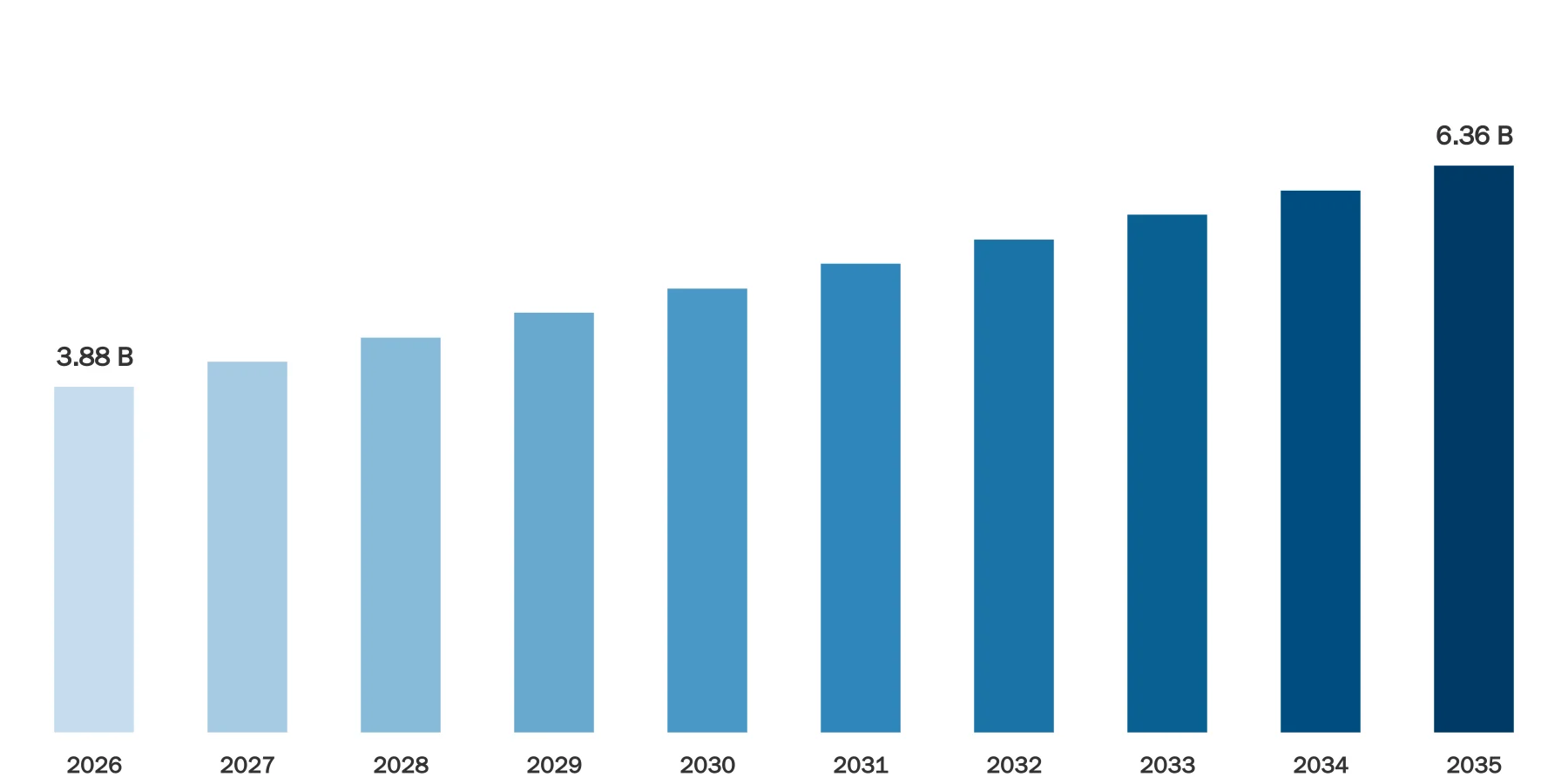
Source: Econ Market Research
Global Automotive Diecast Scale Model market is known as the making and selling miniature die-cast metal models to look like car, truck models, or the like, built to look more like real vehicle counterparts. Miniature die cast scale model types are often sold for display and collections, to educate children. They come complete with the precise features to copy real vehicles. The diecasting process injects molten metal into a mold, and the two qualities of precision and durability make these models highly sought after by collectors, enthusiasts, and hobbyists.
The market for automotive diecast scale models has been steadily increasing because of growing interest in car collections and the increasing popularity of scale model hobbies. These models are produced in different scales, such as 1:18, 1:24, and 1:43, thus providing ample options for consumers. The factors driving the market are the increasing number of collectors, interest in vintage and luxury cars, and demand from manufacturers for promotional purposes. In addition, the availability of a wide range of diecast models at different price points has made them accessible to a larger audience. However, the challenges include the availability of counterfeit products and fluctuating raw material costs that may hinder growth in some regions.
Dynamic Insights
Collecting scale models is extremely popular today as a result of the growth of hobbyists, automotive enthusiasts, and an increased level of popularity as people wish to own replicas of classic, vintage, or even luxury cars, thus the interest in detailed quality scale models in high demand keeps on growing with the help of online platforms as well as specifically designed market places. On the other side, challenges within the market have been realized: for example, the negative effect of counterfeit products on brand value and consumer trust, and price variation of raw materials, for example, the use of metals during diecasting process, will raise the production costs and the ultimate price for those models.
Economic factors also play a role, as disposable income levels and consumer spending patterns influence the willingness to invest in high-end models. Manufacturers are focusing on incorporating advanced technologies like 3D printing and improved diecasting techniques to enhance product quality and cater to the growing demand for realistic and durable models. With time, the future direction of the automotive diecast scale model industry will be shaped by factors such as limited-edition releases, collaborations with automotive brands, and the expansion of distribution channels in the market.
Drivers Insights
Growing Popularity of Collecting Diecast Models
One of the key drivers for the automotive diecast scale model market is the trend of collecting these diecast scale models. They attract collectors through their craftsmanship, precision, and ability to represent real-life vehicles, especially vintage, luxury, and rare cars. These models have over the years evolved into a valuable collector',s item, and some rare editions have been sold at high prices.
The expansion of online communities, specialized forums, and social media platforms that allow enthusiasts to share their collections and discuss trends fuels this growing interest. The increasing presence of limited edition models and collaborations with automotive brands further enhances the appeal of these products. As more people engage in collecting, the demand for automotive diecast scale models continues to grow, making it a key driver in the market.
Technological Advancements in Model Production
Advances in diecasting technologies have really improved the quality of scale models of cars. Manufacturers are using 3D printing and much more accurate diecasting methods to create highly detailed, accurate, and durable models. These innovations make it possible to have finer details, better finishes, and incorporate intricate features like movable parts, opening doors, and realistic paint jobs.
High accuracy for the molding process makes such scale models much closer representations of their counterparts in real life. These technologies not only enable increasing demands for quality from consumers but also allow manufacturers to produce models at a higher speed rate, making way for larger markets. As technology continues to grow, it',s likely that the automotive diecast models will improve in quality and variety.
Restraints Insights
Counterfeit Products
The large proportion of fake auto diecast models restrains market growth. Often, fake auto diecast products will copy best-sellers, lacking quality, precision, and strength like their real versions. As they can sell them cheaper than original versions, fake diecast models weaken the market of authentic producers and thus directly target those who respect and cherish their goods-which includes the collecting public.
Besides, counterfeit products will lead to erosion of consumer confidence in the brand, which might lead to decreased sales and loss of reputation. Counterfeit models are hard to combat due to strict monitoring and enforcement of intellectual property rights, which is quite challenging, especially in online markets. This aspect limits the potential growth of the market, especially in regions with less strict regulations.
Fluctuating Raw Material Costs
The market for automotive diecast scale models is highly dependent on metals, such as zinc, aluminum, and lead, which are used in the diecasting process. The fluctuation in the prices of these raw materials due to supply chain disruptions, geopolitical tensions, or market demand can significantly affect production costs. When raw material prices rise, manufacturers may face pressure to either absorb the additional costs or pass them on to consumers, which could impact demand, particularly in price-sensitive regions. Furthermore, higher production costs can limit profitability for manufacturers and restrict the development of new models. Managing these fluctuations and maintaining cost-efficiency remains a critical challenge for the market.
Opportunities Insights
Expansion of Online Sales Channels
The rapid growth in e-commerce represents a significant opportunity for the automotive diecast scale model market. Online platforms such as Amazon, eBay, and niche hobby websites allow manufacturers to reach a more extensive audience beyond traditional retail stores. This convenience offers collectors greater access to more models from more brands and scales than they can find in a local shop.
E-commerce also provides international sales and opens the doors of the world market for manufacturers. When the online consumer base increases, companies can penetrate into new geographies and demographics to increase their market footprint. Another aspect of the online model marketplace is direct-to-consumer sales opportunities, through which brands are more likely to engage with the consumer and lower distribution costs.
Segment Analysis
By Material
Material includes Zinc Alloy, Aluminum Alloy, Plastic, and other metals, which are applied in the production of diecast scale models in the automotive segment. Zinc Alloy is the most widely used diecasting material, with its advantages such as strength, corrosion resistance, and ease of molding, hence suitable for the production of very detailed models. Aluminium alloy, less common than copper, is utilized in a few models, light and visually attractive, and delivers a finer polish and less susceptibility to wear.
Plastic is mostly used in cheaper, lighter, less structural components in smaller or parts of the models. Brass, steel, among other metals can be applied on specific parts of the models for limited editions where special finishes are needed. The type of material will determine the model',s weight, durability, and cost, hence determining consumer preferences based on collecting needs or budget.
By Scale Size
The Scale Size Segment deals with all of the standard scales, such as 1:18, 1:24, 1:43, 1:64, 1:12, and custom scale. Scale size determines the proportionate dimension in comparison to an actual vehicle a model is replicating. Very large-scale models, like 1:18 and 1:12, are detailed because serious collectors always look for accurate and finely made models.
A lower scale, like 1:24, 1:43, and 1:64, is made for more inexpensive or space-limited displays, and it covers a wider selection of vehicles, hence being preferred among casual collectors or hobbyists. Custom scales, usually used in limited-edition models or vehicle types, can be offered to niche audiences by giving manufacturers the liberty to provide unique products. The scale size affects not only the level of detail but also the price and market demand for various segments.
By End User
The End User division consists of collectors, retailers through toy stores as well as retailers on the net, hobbyists, and then promotional and corporate gifting. Collectors mostly are interested in rare or exquisite models. To them, therefore, goes quite a big pie of the entire market share and are attracted mainly by intricate design and limited model runs.
Other retailers are wider in reach-they include even the traditional or physical toy shop and the websites. Hobbyists usually customize, modify, or assemble models, and often partake in specialized communities. The other growing category of end-users is promotional and corporate gifting, where the business uses the diecast models as a tool for promotion or as gifts for clients to raise brand awareness.
By Type
The Type segment of the automotive diecast scale model market is categorized into Static Models and Dynamic (Motorized) Models. Static models are non-motorized and are made primarily for display purposes, which usually appeal to collectors and enthusiasts who are keen on detailed craftsmanship. These models are mostly static, featuring fixed wheels and doors that cannot open or move and serve as an aesthetic representation of the actual vehicle.
Dynamic models, in contrast, contain motorized parts and moving parts such as working wheels, doors, or even engines. These are interactive models, thus appealing to collectors who also look for functionality and playability. Dynamic models tend to be marketed towards a younger crowd or someone who appreciates something more dynamic and technologically advanced.
By Distribution Channel
The Distribution Channel segment is broken down into Online (E-commerce) and Offline (Physical Stores). Online channels have increased by leaps and bounds in the last couple of years with e-commerce portals such as Amazon, eBay, and hobby sites that enable diecast model consumers to browse from anywhere. This provides convenience, a wide range of products, and international access, making it easier for the collector to track down rare models and limited editions.
Offline channels are also very relevant in the market, especially among consumers who will prefer to look at the products before buying. In addition, the physical stores offer the ability to interact with a community of collectors and hobbyists, encouraging social interaction through shared interests. The balance between online and offline sales depends mainly on the consumer',s preferences and geographical location.
Regional Analysis
The largest share of the market is found in North America, particularly in the United States, because of the extensive base of devoted collectors and hobbyists highly engaged in the automotive sector. A well-established retail chain and strong e-commerce infrastructure further supports the expansion of the market in this region. In addition, consumers in North America prefer models that are high-quality and detailed, they prefer large-scale replicas of classic and luxury vehicles, which drives the market.
Europe is also in a very prominent position, with Germany, the UK, and Italy showing high demand for automotive diecast models. The region has a long history of car manufacturing, which reflects in the passion for vehicle modeling, particularly in countries with a deep automotive heritage. Collecting diecast models is a well-established hobby in Europe, and European consumers appreciate intricate designs and craftsmanship, often seeking limited-edition releases and high-end models. E-commerce has also increased accessibility, with online platforms providing a global reach to consumers.
In the Asia Pacific region, countries such as China, Japan, and India are emerging as key players, driven by an increasing interest in hobbyist activities and rising disposable incomes. In Japan, diecast models are part of a much broader collector culture, while in China and India, the market is expanding as middle-class consumers become more interested in car-related products. In addition, these regions are also being provided with rising online retail channels and local manufacturing that offer competitive pricing along with access to a wide variety of models. Market penetration is still in its development stage, however, the region of Asia Pacific has enormous growth potential with its growing consumer base and the awareness of automotive diecast modeling.
Competitive Landscape
Some of the leading companies in the market are Mattel Inc., Diecast Models Wholesale, Maisto International, Bburago, AUTOart, and GreenLight Collectibles, among others. These brands are famous for producing highly detailed, scale models of classic, luxury, and sports cars. They offer a wide range of product options across various scales. Mattel&rsquo,s Hot Wheels and Maisto&rsquo,s extensive collection cater to both budget-conscious consumers and collectors seeking premium models, while brands like AUTOart and Bburago are known for producing high-end, meticulously crafted diecast models.
Manufacturers are going the extra mile to ensure competition by improving upon the level of detail, accuracy, and even materials used to create their model. Technologically, 3D printing techniques and specialized diecasting techniques assist companies in providing more detailed, intricate models sought after by many enthusiasts and collectors. Moreover, licensing agreements with mainstream automotive brands have been spent on by the manufacturers to sell officially branded and limited-edition models. These partnerships contribute to a wider product portfolio but also enhance brand credibility with the consumer.
However, e-commerce today has emerged as an important channel of distribution. Large players are now more concerned with polishing their digital presence, gaining easy access to hard-to-find or limited edition models, and offering a smooth customer experience. Small, niche brands also compete in the market by appealing to only a specific market niche, such as high-end collectors or one-of-a-kind vehicle types. As the preference of consumers keeps changing, competition is becoming more and more dynamic, and innovation, brand partnership, and digital strategies are on the forefront of success.
List of Key Players
ACME Trading Co.
Amalgam Collection
Auto World Store
AUTOart
AutoCult GmbH
Automania
Automodello
Corgi Model Club
Ducal LLC
GreenLight LLC
Hamleys
KYOSHO Corp.
Mattel Inc.
Automotive Diecast Scale Model Report Segmentation
Automotive Diecast Scale Model Market Report Scope & Segmentation
| Attributes | Details |
|---|---|
Market Size (Current) | US$ 3.88 Billion in 2026 |
Market Size (Forecast) | US$ 6.36 Billion in 2035 |
Growth Rate | CAGR of 5.64% from 2026 to 2035 |
Forecast Period | 2026 – 2035 |
Base Year | 2025 |
Historical Data Available | Yes |
Regional Scope | Global |
Segments Covered | By Scale
By Material
By End-User
|
Frequently Asked Questions
Common questions about this report
The study period covers historical insights and forecast projections for the period 2026-2035.
About the Author
Market research expert with years of industry experience

Related Reports
Explore more market insights from the same category