

Asset Management System Market
Asset Management System Market Size, Share, Trends, Growth, and Industry Analysis, By Asset Type (Electronic Assets, Manufacturing Assets, Returnable Transport Assets), By Technology (RFID, Barcode, GPS, RTLS), By Industry Vertical (Healthcare, Retail, Transportation andamp; Logistics, Industrial Manufacturing), Regional Analysis and Forecast Period 2026-2035
Asset Management System Market Overview
As per Econ Market Research analysis, the Global Asset Management System Market was recorded at US$ 20.29 Billion in 2026 and is projected to expand to US$ 40.18 Billion by 2035, registering a CAGR of 7.8% over the forecast period. The base year used is 2025.
Asset Management System Market Size 2025-2035 (USD Billion)

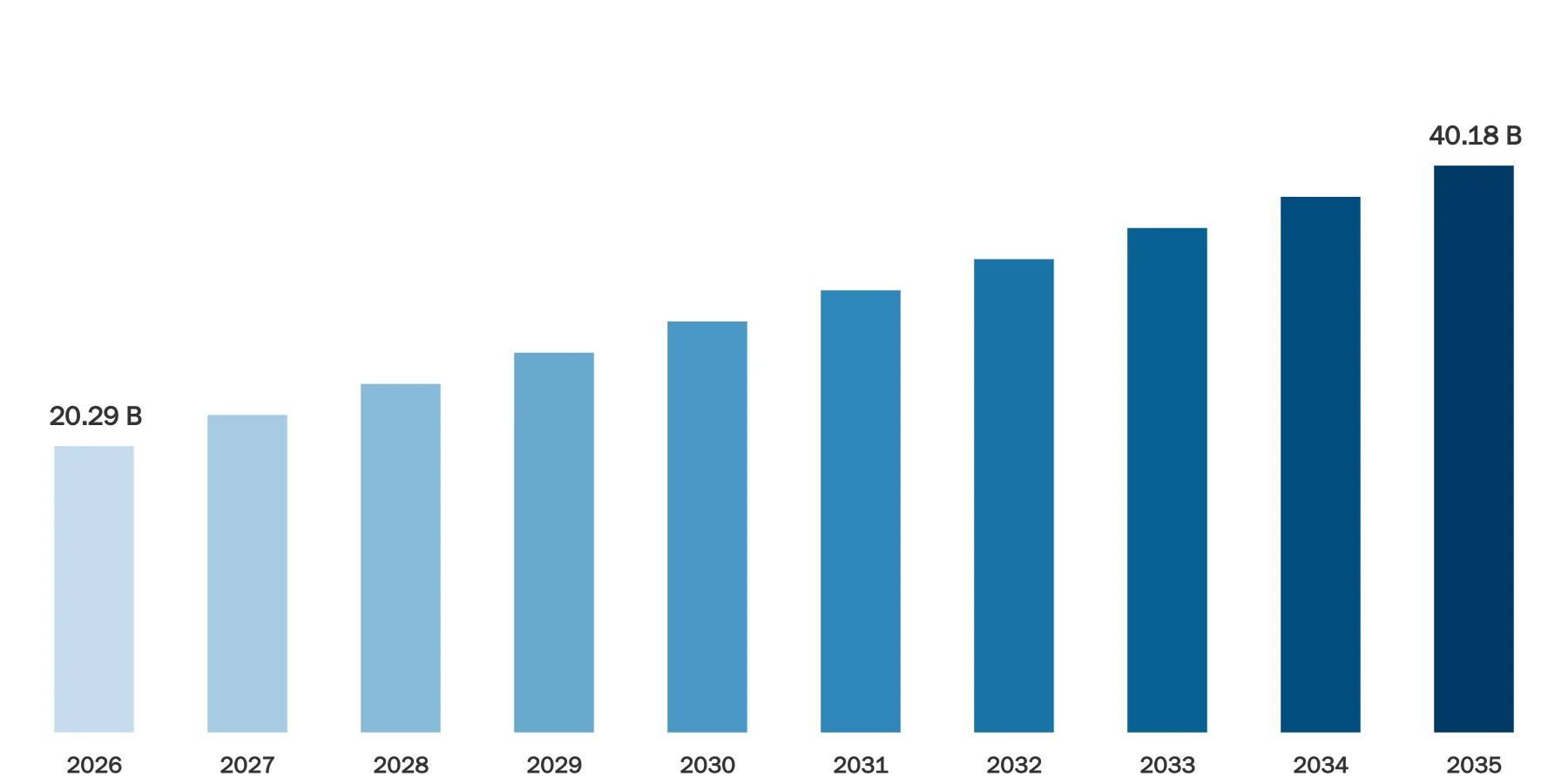
Source: Econ Market Research
The Global Asset Management System (AMS) market includes the tools and technologies used by organizations to monitor, manage, and optimize their physical, digital, and financial assets. An AMS typically includes software and services that help businesses track asset lifecycle, from acquisition to disposal, ensuring they are used efficiently, maintained properly, and compliant with regulations. The primary goal of an AMS is to maximize asset utilization and return on investment, minimize downtime, and reduce operational costs through better asset visibility and management.
The AMS market is expanding rapidly because to the increased adoption of digital transformation techniques across a wide range of sectors. The growing demand for real-time asset tracking, predictive maintenance, and strict regulatory compliance are significant drivers of market advancement. Advances in technologies like as the Internet of Things (IoT), Artificial Intelligence (AI), and big Data Analytics are improving the functionality of AMS systems, making them more intuitive and powerful.
The industry is also benefiting from the increased popularity of remote and hybrid work arrangements, which necessitate effective asset management to accommodate scattered workforces. North America and Europe now lead the market, but regions like Asia-Pacific are quickly emerging as key participants due to industrialization and technological improvements.
Asset Management System Dynamics
One of the primary drivers is the increasing digital transformation initiatives across industries, compelling businesses to adopt advanced AMS solutions for improved asset visibility and efficiency. The integration of cutting-edge technologies such as the Internet of Things (IoT), artificial intelligence (AI), and big data analytics is revolutionizing asset management by enabling real-time tracking, predictive maintenance, and data-driven decision-making. This technological advancement enhances the capability of AMS to optimize asset utilization and reduce operational costs, thus driving market demand.
On the other hand, regulatory compliance and the necessity for strict asset tracking are important market drivers. Industries such as healthcare, manufacturing, and finance confront stringent regulatory standards, needing precise asset management to assure compliance and avoid penalties. Furthermore, the growing tendency of remote and hybrid work styles following the pandemic has boosted the necessity for sophisticated asset management systems (AMS) to properly manage distributed assets.
However, the market faces challenges such as significant upfront expenditures for installing AMS systems, as well as worries about data security and privacy. Smaller firms, in particular, may find the cost excessive. Furthermore, connecting AMS with existing systems can be complex and time-consuming, creating an additional obstacle to adoption.
Asset Management System Drivers
Technological Advancements
The rapid development and integration of advanced technologies like the Internet of Things (IoT), artificial intelligence (AI), and big data analytics are significantly driving the Asset Management System (AMS) market. IoT enables real-time asset tracking and monitoring, providing valuable data on asset usage, condition, and location. This data can be leveraged by AI and machine learning algorithms to predict maintenance needs, optimize asset utilization, and prevent costly downtimes.
Additionally, big data analytics allow organizations to analyse vast amounts of asset-related data to gain insights, improve decision-making, and enhance operational efficiency. These technological advancements make AMS solutions more powerful, intuitive, and essential for modern asset management, driving their adoption across various industries.
Regulatory Compliance
Many industries, including healthcare, manufacturing, and finance, operate within strict legal frameworks that require exact asset tracking and management. Compliance with these standards is critical to avoiding significant penalties, legal problems, and reputational harm. AMS solutions assist firms in meeting these regulatory obligations by keeping accurate, up-to-date records of asset status, location, and maintenance history. They also provide automated compliance reporting and warnings for scheduled maintenance or inspections, ensuring that firms meet industry requirements. The necessity for regulatory compliance is a primary motivator for AMS adoption, as firms attempt to mitigate risks and maintain operational integrity.
Asset Management System Restraints
The implementation of an AMS can involve substantial initial costs, including software acquisition, hardware installation, and employee training. These upfront expenses can be prohibitive, particularly for small and medium-sized enterprises (SMEs) with limited budgets. The cost factor can deter these organizations from adopting AMS solutions, despite their long-term benefits. Additionally, the return on investment (ROI) may not be immediately apparent, which can further discourage businesses from making the necessary financial commitment to AMS implementation.
Data Security and Privacy Concerns
As AMS solutions become more integrated with cloud services and IoT devices, concerns about data security and privacy have intensified. These systems collect and store vast amounts of sensitive data, which can be vulnerable to cyberattacks, data breaches, and unauthorized access. Organizations are often hesitant to adopt AMS solutions due to the potential risks associated with data security and privacy. Ensuring robust security measures, such as encryption, access controls, and regular security audits, is essential to address these concerns and build trust among potential users.
Asset Management System Opportunities:
Integration with Smart Technologies
The growing popularity of smart technologies, such as smart factories and smart cities, represents a substantial opportunity for the AMS market. These efforts use networked technology and real-time data to enhance operations and improve resource management. AMS solutions can help in these situations by offering full asset tracking, predictive maintenance, and real-time analytics. The combination of AMS and smart technologies can result in more efficient and sustainable operations, bringing up new opportunities for market expansion and innovation. Companies who can effectively connect AMS with smart infrastructure will have a competitive advantage in this changing scenario.
Segment Overview
By Asset Type
The Asset Management System (AMS) market is segmented by asset type into electronic, returnable transport, in-transit, manufacturing, and personnel/staff. Electronic assets include devices like computers, servers, and other IT equipment that require precise tracking for maintenance and lifecycle management. Returnable transport assets refer to items like pallets, containers, and crates used in logistics, which need efficient tracking to minimize loss and optimize reuse.
In-transit assets involve goods and equipment being transported, requiring real-time tracking to ensure timely delivery and condition monitoring. Manufacturing assets encompass machinery and equipment used in production processes, where AMS helps in maintenance scheduling and performance optimization. Personnel or staff assets involve tracking the location and safety of employees, especially in large facilities or hazardous environments, to ensure security and operational efficiency.
By Solution
AMS solutions are categorized into Radio Frequency Identification (RFID), Real-Time Location Systems (RTLS), barcode systems, mobile computers, and GPS. RFID solutions use radio waves to automatically identify and track tags attached to assets, offering a reliable method for inventory management and loss prevention. RTLS provides precise real-time tracking of assets within a defined area, crucial for environments needing constant asset visibility.
Barcode systems are widely used for asset tracking through scanning, offering a cost-effective and straightforward solution. Mobile computers allow field personnel to manage assets on-the-go, ensuring data accuracy and accessibility. GPS solutions are essential for tracking assets in transit, providing real-time location data to improve logistics and supply chain management.
By Industry
The AMS market is diverse, including healthcare, retail, hospitality, transportation and logistics, industrial production, and the process industry. In healthcare, AMS assures the availability and correct repair of medical equipment, hence improving patient care and operating efficiency. Retailers utilize AMS to manage inventory, avoid losses, and optimize their supply chains. In the hospitality industry, AMS helps manage assets such as linens, culinary equipment, and maintenance tools, hence enhancing service quality and cost control.
Transportation and logistics rely on AMS to track cars, containers, and shipments, assuring on-time deliveries and minimizing losses. AMS is used in industrial manufacturing to monitor machinery, tools, and production materials, which improves maintenance and productivity. The process industry, which includes sectors such as chemicals and pharmaceuticals, employs AMS to manage complicated equipment and regulatory compliance, assuring safe and efficient operations.
Asset Management System Overview by Region
North America currently leads the market, driven by early technology adoption, substantial investment in digital infrastructure, and stringent regulatory requirements across industries such as healthcare, manufacturing, and transportation. The presence of major AMS solution providers and a high focus on asset optimization and regulatory compliance further bolster market growth in this region. The United States, in particular, is a key contributor, with widespread adoption of advanced technologies like IoT, AI, and big data analytics to enhance asset management practices.
Europe follows closely, with Germany, the United Kingdom, and France leading the way. The region',s robust industrial base, along with stringent regulatory standards, increases the demand for effective asset management systems. European companies, notably those in manufacturing and healthcare, are increasingly using AMS to increase operational efficiency and compliance with laws. Additionally, the European Union',s push for digital transformation and smart manufacturing projects promotes the growth of the AMS industry.
The Asia-Pacific region is emerging as a significant market for AMS, driven by rapid industrialization, urbanization, and technological advancements. Countries like China, Japan, and India are investing heavily in digital infrastructure and smart city projects, creating a robust demand for AMS solutions. The region',s expanding manufacturing sector, coupled with growing awareness about asset optimization and regulatory compliance, further accelerates market growth. Moreover, government initiatives promoting digitalization and smart technologies are providing a conducive environment for AMS adoption.
Asset Management System Market Competitive Landscape
Major companies such as IBM Corporation, SAP SE, Oracle Corporation, and Infor Inc. dominate the market with their comprehensive AMS solutions spanning various industries and asset types. These established players leverage their extensive global presence, robust R&,D capabilities, and strategic partnerships to maintain market leadership and expand their customer base.
In addition to these major players, there are a slew of smaller competitors and start-ups joining the AMS market, offering specialized solutions for niche industries or certain asset classes. To carve out a market niche, these new firms prioritize innovation, agility, and client attention. Furthermore, the growing popularity of cloud-based AMS solutions is fuelling competition from software-as-a-service (SaaS) providers such as Asset Panda, Fiix Inc., and EZOfficeInventory, which provide scalable and cost-effective alternatives to traditional AMS products.
Furthermore, the industry is seeing collaboration and partnerships between AMS providers and technology companies that specialize in IoT, AI, and data analytics. These collaborations seek to improve the functionality and value proposition of AMS solutions by combining modern technologies for real-time monitoring, predictive maintenance, and actionable analytics.
Asset Management System Key Players:
ABB
ON Semiconductor
Diodes Incorporated
Hitachi, Ltd.
STMicroelectronics
Qualcomm Technologies, Inc
NXP Semiconductors
Vishay Intertechnology
Fairchild Semiconductor
Fuji Electric Co., Ltd
Eaton Corporation
Mitsubishi Electric Corporation
Murata Manufacturing
Infineon
Toshiba
Asset Management System Recent Developments
In 2022, OpenGov, a premier provider of modern cloud solutions for municipalities, counties, state entities, educational institutions, and special districts, achieved its most successful year to date. The company experienced rapid expansion driven by the introduction of its latest software suite, Cartegraph Asset Management. Surpassing the milestone of $100 million in annual revenue run-rate, OpenGov also implemented robust new features and integrations across its suite of products. Additionally, it welcomed pivotal executives to its team and broadened its Board of Directors.
Asset Management System Report Segmentation
Asset Management System Market Report Scope & Segmentation
| Attributes | Details |
|---|---|
Market Size (Current) | US$ 20.29 Billion in 2026 |
Market Size (Forecast) | US$ 40.18 Billion in 2035 |
Growth Rate | CAGR of 7.8% from 2026 to 2035 |
Forecast Period | 2026 – 2035 |
Base Year | 2025 |
Historical Data Available | Yes |
Regional Scope | Global |
Segments Covered | By Asset Type
By Technology
By Industry Vertical
|
Frequently Asked Questions
Common questions about this report
The study period covers historical insights and forecast projections for the period 2026-2035.
About the Author
Market research expert with years of industry experience

Dipali Bhingare serves as the Market Research Director at Econ Market Research. With a focus on translating complex global economic shifts into actionable business intelligence, she oversees the strategic direction of comprehensive market studies. Her work empowers organizations to navigate volatile industries through data-driven forecasting and deep-dive competitive analysis.
Related Reports
Explore more market insights from the same category