

AR and VR Display Market
AR and VR Display Market Research Report: By Display Technology (OLED, LCD, and Others), By Device Type (AR HMDs, VR HMDs, AR HUDs, and VR Projectors), By Technology (AR and VR), By end-use (Consumer, Commercial, Manufacturing, Automotive, Healthcare, Aerospace & Defense, Energy, and Others), and Region (North America, Europe, Asia-Pacific, and Rest of the World) Global Industry Analysis, Size, Share, Growth, Trends, Regional Analysis, Competitor Analysis and Forecast
Market Overview
As per Econ Market Research analysis, the Global AR and VR Display Market accounted for US$ 4.12 Billion in 2026 and is expected to surpass US$ 46.51 Billion by 2035, witnessing a CAGR of 32.2% throughout 2026–2035. The analysis is based on 2025 as the base year.
AR and VR Display Market Size 2025-2035 (USD Billion)

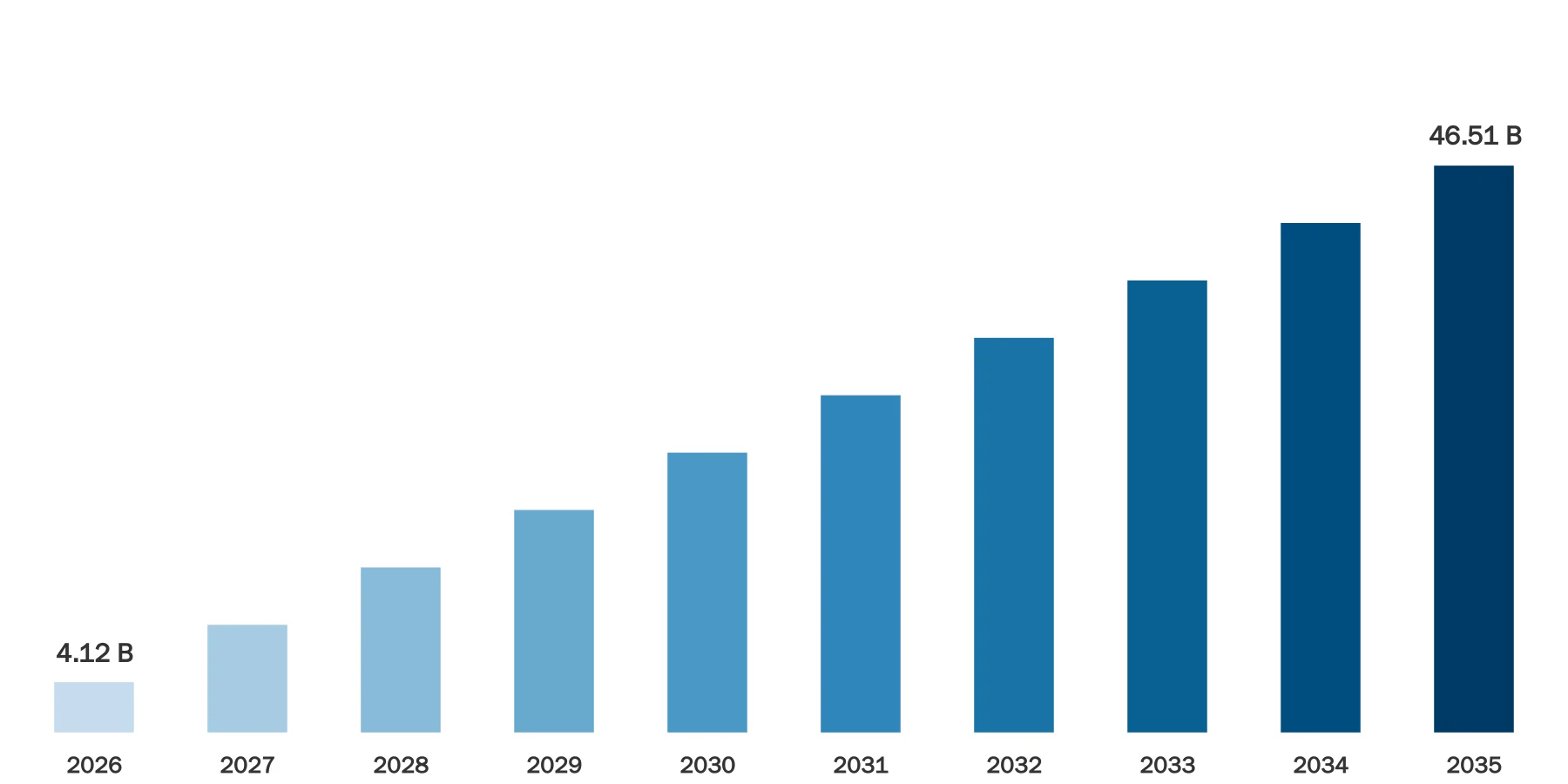
Source: Econ Market Research
AR and VR displays are immersive technologies that are changing how we see and interact with digital material. AR displays superimpose computer-generated visuals on the actual environment, improving human vision and giving real-time information. They are generally accomplished via the use of headgear or smart gadgets, allowing users to experience mixed reality. VR screens, on the other hand, provide completely immersive virtual worlds that shut out the actual world and transport viewers to a computer-generated realm. Virtual reality headsets provide a 360-degree field of vision, allowing users to explore and interact with real-world events and objects.
AR and VR Display Market Dynamics
The growing need for immersive and engaging user experiences in areas such as gaming, entertainment, healthcare, and education is driving the expansion of AR and VR displays. Display technology developments, such as high-resolution screens and optics, contribute to the better visual quality and realism of AR and VR experiences, boosting market expansion. Furthermore, the increasing availability and affordability of AR and VR equipment, such as headsets and smart glasses, is making these technologies more accessible to consumers. Furthermore, the advancement of supporting infrastructure, such as 5G networks, is enabling seamless communication and improving the performance of AR and VR displays.
AR and VR Display Market Drivers
Technological Advancements
Technological advancements refer to continuous improvements and innovations in display technologies used in AR and VR systems. These advancements include higher resolution displays, wider field of view, improved tracking capabilities, and more sophisticated rendering techniques. These advancements drive the growth of the AR and VR display market by enhancing immersive and realistic experiences for users, improving the quality of content, and expanding the range of applications across industries.
Increasing Demand for Immersive Experiences
Restraints
Limited Content Availability
Limited content availability in the AR and VR display market refers to the relatively limited availability of high-quality and diverse content for users. While the technology has advanced, the creation of compelling AR and VR content has not kept pace. This scarcity of content across various industries hinders the widespread adoption of AR and VR displays. To fully leverage the potential of these technologies, there is a need for more diverse and engaging content to meet the growing demand for immersive experiences.
High Costs of AR and VR Displays
Opportunities
Revolutionization in E-commerce and Retail
E-commerce and retail have significant potential for leveraging AR and VR displays. These technologies can transform the shopping experience by enabling virtual try-on, virtual showrooms, and enhanced product visualization. AR and VR displays allow customers to virtually interact with products, visualize how they would look or fit, and make more informed purchasing decisions. This immersive and interactive approach enhances customer engagement, reduces returns, and opens up new opportunities for personalized and convenient online shopping experiences.
Rising AR and VR Displays in Industrial Applications
Segment Overview
By Display Technology
Based on display technology, the global AR and VR display market is categorized into OLED, LCD, and others. The OLED category dominates the market with the largest revenue share of around 56.5% in 2022. OLED displays give a great visual experience in both AR and VR applications due to their bright colors, high contrast ratios, and deep blacks. OLED panels', flexibility and thinness enable the development of lightweight and small AR and VR systems. Furthermore, the ability of OLED to produce genuine blacks improves the immersion and realism of virtual surroundings. OLED screens have faster reaction times, which reduces motion blur and improves the overall viewing experience, particularly in fast-paced virtual worlds.
By Device Type
Based on the device type, the global AR and VR display market is categorized into AR HMDs, VR HMDs, AR HUDs, and VR projectors. The HMDs category dominates the market with the largest revenue share of around 37.5% in 2022. HMDs provide a very immersive experience by filtering out the outside world and moving users to virtual worlds. As a result, they are a popular choice for gaming, entertainment, and simulation applications. HMDs are available in a variety of configurations, including tethered, standalone, and mobile models, offering flexibility and responding to varied use cases and user preferences. HMD technological developments have resulted in higher resolution, field of vision, and tracking accuracy, boosting overall visual quality and user experience.
By End-Use
Based on end-use, the global AR and VR display market is categorized into consumer, commercial, manufacturing, automotive, healthcare, aerospace &, defense, energy, and others. The aerospace &, defense category is anticipated to grow at a higher CAGR of 28.5% during the forecast period. This rise may be ascribed to numerous causes, including the aerospace and defense industries', increasing adoption of AR and VR technology for training purposes, allowing pilots and military personnel to recreate realistic scenarios and enhance their abilities. AR and VR are being used in maintenance and repair operations, allowing technicians to access real-time information and instructions in a hands-free and immersive manner.
AR and VR Display Market Overview by Region
By Region, the global AR and VR display market has been segmented into North America, Europe, Asia-Pacific, and the Rest of the World. Asia-Pacific had the greatest revenue share in 2026.
Asia-Pacific
Asia-Pacific dominated the market with largest revenue share, of around 43.6%, of the global market in 2022. A high rate of adoption of cutting-edge technology is seen in the area, which is home to some of the biggest consumer markets in the world, such as China, Japan, and South Korea. The need for immersive and interactive experiences has also been spurred by the fast-economic expansion and rising disposable incomes in these nations. Additionally, the Asia-Pacific region has a strong ecosystem of IT firms, startups, and developers that are propelling innovation in AR and VR. The market is expanding as a result of government programs and investments in new technology.
AR and VR Display Market Competitive Landscape
In the global AR and VR display market, a select few prominent players exercise significant market domination and maintain a strong regional presence. These influential players prioritize continuous research and development efforts. Moreover, they actively engage in strategic growth initiatives such as product creation, product launches, joint ventures, and partnerships. The primary objective of these organizations is to enhance their market position, expand their customer base, and capture a substantial share of the market.
Key Players:
Sony
LG Display
Samsung Electronics
eMagin Corporation
Kopin Corporation
AU Optronics
Japan Display
Barco
BOE Technology
AR and VR Display Market Recent Developments
In February 2022, Sony has announced a cooperation with Niantic to improve and increase the scope of its AR devices. This collaboration',s main objective will be to enhance AR technology, especially for headphones. This collaboration has been expanded the product portfolio as well as the customer base of the company.
AR and VR Display Market Report Scope & Segmentation
| Attributes | Details |
|---|---|
Market Size (Current) | US$ 4.12 Billion in 2026 |
Market Size (Forecast) | US$ 46.51 Billion in 2035 |
Growth Rate | CAGR of 32.2% from 2026 to 2035 |
Forecast Period | 2026 – 2035 |
Base Year | 2025 |
Historical Data Available | Yes |
Regional Scope | Global |
Segments Covered | By Device Type
By Technology
By Application
|
Frequently Asked Questions
Common questions about this report
The study period covers historical insights and forecast projections for the period 2026-2035.
About the Author
Market research expert with years of industry experience

Dipali Bhingare serves as the Market Research Director at Econ Market Research. With a focus on translating complex global economic shifts into actionable business intelligence, she oversees the strategic direction of comprehensive market studies. Her work empowers organizations to navigate volatile industries through data-driven forecasting and deep-dive competitive analysis.
Related Reports
Explore more market insights from the same category