

5G Chipset Market
5G Chipset Market Size, Share, Trends, Growth, and Industry Analysis, By Type (ASIC, RFIC, mmWave, FPGA), By Frequency (Sub-6GHz, mmWave, Above 39 GHz), By End-User (Consumer Electronics, Industrial Automation, Automotive, Healthcare, Energy andamp; Utilities), Regional Analysis and Forecast Period 2026-2035
Market Overview
As per Econ Market Research analysis, the Global 5G Chipset Market reached a valuation of US$ 30.89 Billion in 2026 and is anticipated to grow to US$ 125.24 Billion by 2035, at a CAGR of 16.83% during the forecast timeline 2026–2035. The base year considered is 2025.
5G Chipset Market Size 2025-2035 (USD Billion)

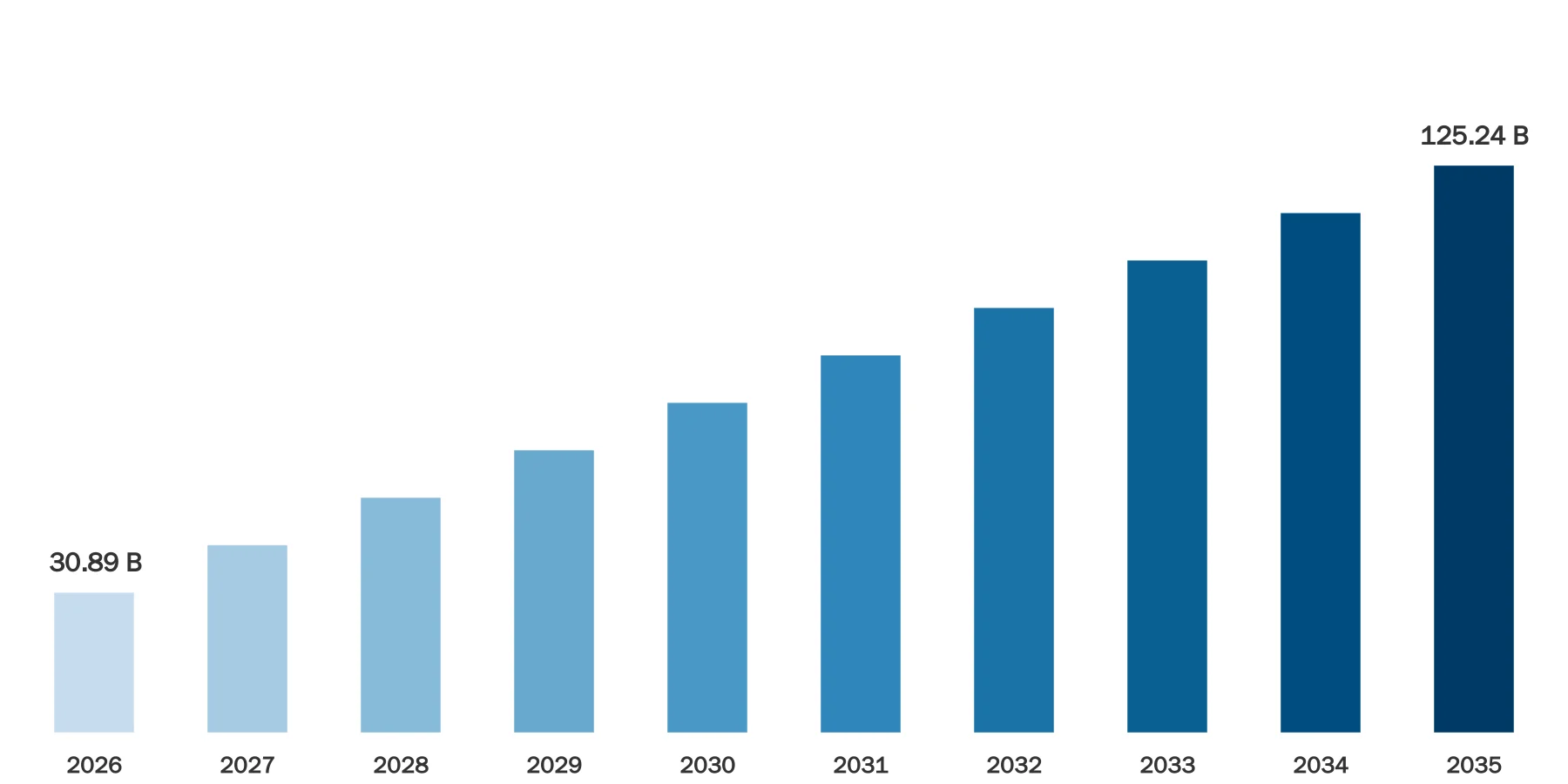
Source: Econ Market Research
A 5G chipset is an integrated circuit that empowers various devices to establish connections and communicate through the fifth-generation (5G) wireless network. Found in smartphones, tablets, IoT devices, and other wireless gadgets, it plays a pivotal role. The 5G chipset integrates cutting-edge technologies that enable faster data speeds, reduced latency, and increased network capacity compared to previous generations. It supports multiple frequency bands, including sub-6 GHz and mm Wave bands, and incorporates techniques such as beamforming and massive MIMO to enhance coverage and signal strength. Moreover, the chipset includes security measures to ensure data privacy and protection. With the introduction of 5G chipsets, users can enjoy improved mobile connectivity, real-time applications, and the potential for transformative technologies like Autonomous Vehicles, remote surgery, and smart cities.
5G Chipset Market Dynamics
The primary catalyst behind this trend is the increasing requirement for high-speed and low-latency connectivity. As bandwidth-intensive applications such as video streaming, virtual reality, and IoT devices gain popularity, the necessity for faster and more dependable networks has skyrocketed. The rising prevalence of 5G-enabled smartphones and devices has further propelled the demand for 5G chipsets. As consumers strive to upgrade their devices in order to harness the enhanced capabilities of 5G networks, there exists a substantial market opportunity for chipsets that facilitate seamless 5G connectivity. The advancement of sophisticated technologies like autonomous vehicles, smart cities, and Industrial Automation relies heavily on 5G networks, thereby intensifying the need for 5G chipsets.
5G Chipset Market Drivers
Growing Demand for High-Speed and Low-Latency Connectivity
The increasing adoption of bandwidth-intensive applications such as video streaming, virtual reality, and IoT devices has fueled the need for faster and more reliable networks. 5G chipsets enable enhanced data speeds and reduced latency, meeting the requirements of these demanding applications.
Rising Popularity of 5G-Enabled Devices
Restraints
High Development and Manufacturing Costs
Designing and manufacturing 5G chipsets involve substantial costs due to the complex nature of the technology. This can pose a challenge for smaller chip manufacturers or companies entering the market, as they may struggle to compete with established players who have greater resources and expertise.
Infrastructure Challenges
Opportunities
Expansion of 5G Networks
As 5G networks continue to expand globally, there is a significant opportunity for chip manufacturers to supply the increasing demand for 5G chipsets. This includes both the deployment of 5G networks in developed regions as well as the expansion of 5G coverage in emerging markets.
Emerging Applications and Industries
Segment Overview
By Type
Based on the type, the global 5G chipset market is segmented into modems, RFICs, and others. The RFICs segment is dominating the market with the largest revenue share of around 42.6% in 2022. RFICs are essential components of wireless communication systems because they transform digital signals into radio frequency signals for transmission and vice versa. They',re common in 5G devices and infrastructure, such as smartphones, base stations, and other wireless devices. RFICs provide 5G network functionalities such as signal amplification, filtering, and modulation/demodulation. They are in charge of providing high-speed data transfer and minimal latency through effective and dependable wireless connection. The growing requirement for higher frequency bands in 5G networks, such as mmWave, necessitates the use of upgraded RFICs capable of handling these frequencies.
By Deployment
Based on the deployment type, the global 5G chipset market is segmented into telecom base station equipment, smartphones/tablets, connected vehicles, connected devices, broadband access gateway devices, and others. The smartphones segment is dominating the market with the largest revenue share of around 46.3% in 2022. Smartphones are a major driver of 5G adoption, as users seek to upgrade their handsets to take advantage of the expanded capabilities provided by 5G networks. As a result, 5G chipsets are in high demand to power these smartphones and allow continuous communication. Smartphone makers have aggressively incorporated 5G capabilities into their flagship products, resulting in a robust market for 5G chipsets.
By Processing Node
Based on processing node type, the global 5G chipset market is segmented into 7 nm, 10 nm, and others. The 7 nm segment is dominating the market with the largest revenue share of around 34.5% in 2022. It provides benefits like as greater performance, lower power consumption, and increased transistor density. These advantages are critical for addressing the requirements of 5G technology, which necessitates quicker data processing, higher bandwidth, and enhanced energy efficiency. The dominance of the 7 nm category is due to its ability to offer chipsets that match the strict criteria of 5G networks, enabling increased connection, lower latency, and additional functionality in smartphones, IoT devices, and other wireless applications.
5G Chipset Market Overview by Region
By Region, the global 5G Chipset Market has been categorized into North America, Europe, Asia-Pacific, and the Rest of the World. Asia-Pacific dominated the market with around 39.2% of revenue share in 2022. The region is home to some of the world',s largest and fastest-growing economies, including India, Japan, China, and South Korea. These nations have made major investments in 5G infrastructure, resulting in a solid market for 5G chipsets. The area has a large population and a high smartphone penetration rate, which drives demand for 5G-enabled devices and, as a result, increases demand for 5G chipsets. Furthermore, the region has a strong manufacturing base, making it a hub for smartphone manufacture, which fuels the adoption of 5G chipsets.
5G Chipset Market Competitive Landscape
In the global 5G chipset market, a small number of prominent players hold significant market dominance and have established a strong regional presence. These key participants are committed to ongoing research and development initiatives. Additionally, they actively engage in strategic growth endeavors such as product development, product launches, joint ventures, and partnerships. By pursuing these strategies, these companies aim to strengthen their market position and expand their customer base to capture a substantial share of the market.
Key Players
MediaTek Inc.
Huawei Technologies, Inc.
Intel Corporation
Samsung
Infineon Technologies AG
Qualcomm Technologies, Inc.
Nokia Corporation
Unisoc Communications Inc.
Qorvo, Inc.
Anokiwave, Inc.
Xilinx
Renesas Electronics Corporation
NXP Semiconductors NV
Analog Devices Inc
5G Chipset Market Recent Developments
In February 2023, Qualcomm Technologies, Inc. has launched the Snapdragon X75, their latest 6th generation 5G radio frequency modem. The Snapdragon X75 5G modem's main selling point is its capability for 5G-Advanced (5G-A), a network technology that outperforms ordinary 5G connections. With this, the users may enjoy increased benefits like as greater bandwidth and lower latency with 5G-A, opening the door for a diverse variety of innovative applications for both consumers and corporations.
5G Chipset Market Report Scope & Segmentation
| Attributes | Details |
|---|---|
Market Size (Current) | US$ 30.89 Billion in 2026 |
Market Size (Forecast) | US$ 125.24 Billion in 2035 |
Growth Rate | CAGR of 16.83% from 2026 to 2035 |
Forecast Period | 2026 – 2035 |
Base Year | 2025 |
Historical Data Available | Yes |
Regional Scope | Global |
Segments Covered | By Type
By Frequency
By End-User
|
Frequently Asked Questions
Common questions about this report
The study period covers historical insights and forecast projections for the period 2026-2035.
About the Author
Market research expert with years of industry experience

Related Reports
Explore more market insights from the same category