

Top Companies in the Pressure Ulcer Devices Industry
The pressure ulcer devices industry features leading companies, smart support surfaces, wound care systems, regional trends, and future opportunities.
Introduction
Overview of the Global Pressure Ulcer Devices Industry
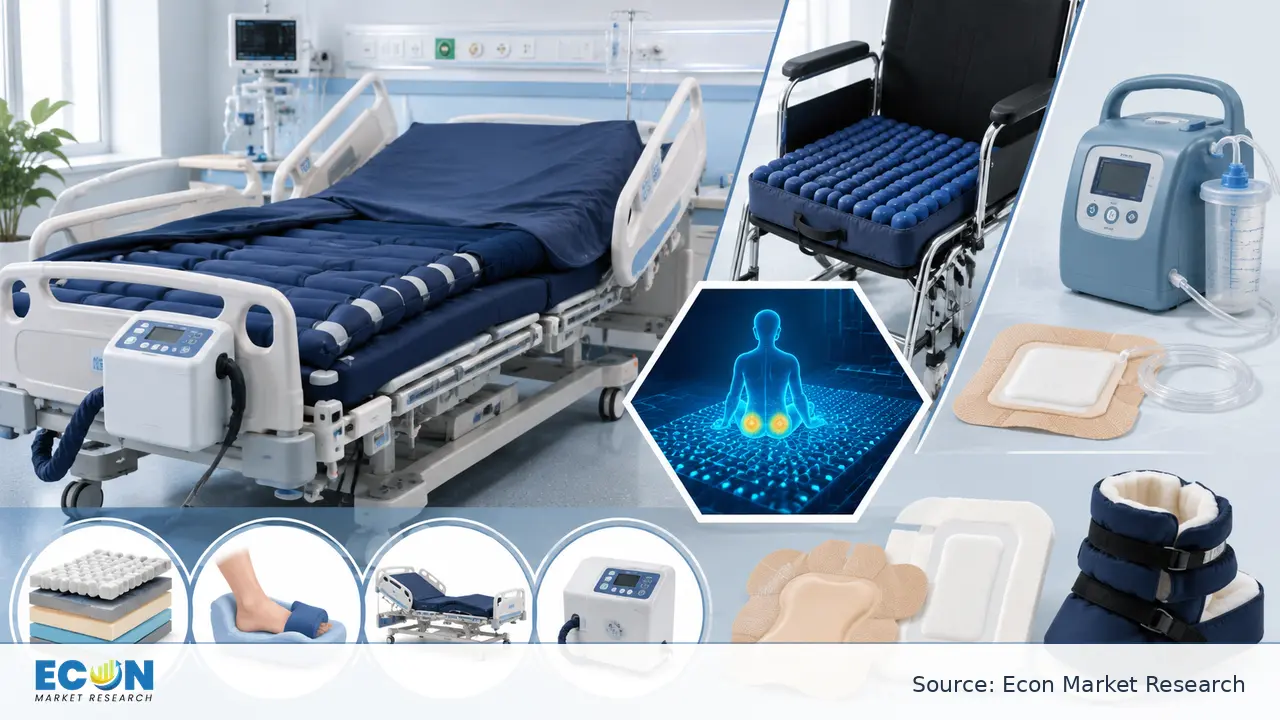
The global pressure ulcer devices industry supports the prevention, monitoring, and treatment of pressure injuries among hospitalized patients, older adults, wheelchair users, and individuals with restricted mobility. More than 2.5 million people develop pressure ulcers each year in the United States alone, demonstrating the scale of demand for pressure redistribution mattresses, cushions, heel protectors, wound dressings, patient repositioning systems, and negative pressure wound therapy devices. Pressure injuries are generally classified across 4 numbered stages, while unstageable injuries and deep-tissue pressure injuries require separate clinical assessment. In 2026, healthcare providers increasingly select integrated pressure ulcer devices that combine support surfaces, moisture control, patient monitoring, and automated alerts.
Market Evolution and Growth Drivers
The pressure ulcer devices industry has evolved from basic foam overlays and manual patient turning to advanced alternating-pressure mattresses, low-air-loss systems, wearable sensors, intelligent hospital beds, and portable wound therapy pumps. Clinical protocols commonly recommend skin inspections during every nursing shift, heel elevation, controlled head-of-bed positioning near or below 30 degrees when appropriate, and patient repositioning at intervals such as 1 to 2 hours depending on individual risk. Demand is being driven by aging populations, longer survival with chronic disease, increasing surgical activity, rising home-care adoption, and stricter hospital quality standards. Modern pressure ulcer devices are also designed to reduce shear, friction, heat, moisture, and sustained tissue deformation.
Top 5 Latest Trends in the Pressure Ulcer Devices
Trend 1: Smart Pressure-Mapping Mattresses and Sensor-Based Monitoring
Smart pressure-mapping technology is becoming one of the most influential trends in the pressure ulcer devices industry in 2026. Sensor-enabled mattresses, bed overlays, and wheelchair cushions measure pressure distribution across dozens or hundreds of sensing points and identify areas exposed to prolonged mechanical loading. Instead of relying only on a fixed 2-hour turning schedule, caregivers can receive real-time information about patient position, movement, and pressure duration. Research involving 19 participants has shown that machine-learning systems using posture and movement data can achieve prediction accuracy ranging from approximately 69% to 100%, depending on the algorithm and body position. These capabilities support more personalized pressure ulcer prevention plans rather than applying the same protocol to every patient.
Next-generation pressure ulcer devices increasingly connect with hospital dashboards, nurse-call systems, electronic health records, and mobile applications. A connected support surface can record whether a patient has remained in 1 position beyond an assigned threshold and can alert staff before tissue damage becomes visible. Hospitals operating units with 20, 40, or more high-risk beds can prioritize interventions based on real-time risk rather than depending on paper-based turning charts. Pressure sensors are also being combined with temperature and moisture monitoring because tissue vulnerability is influenced by more than pressure alone. This trend is supporting demand for intelligent beds, continuous bedside monitoring, and software-enabled pressure ulcer devices across acute-care and long-term-care environments.
Trend 2: Advanced Alternating-Pressure and Low-Air-Loss Support Surfaces
Alternating-pressure and low-air-loss surfaces remain central to pressure ulcer prevention, but the technology has become more sophisticated in 2026. Alternating-pressure mattresses use multiple air cells that inflate and deflate in programmed sequences, periodically changing the anatomical areas carrying the patient’s weight. Low-air-loss systems circulate air through specialized surfaces to help control heat and moisture around the skin. These pressure ulcer devices may include 10 or more therapy settings, adjustable firmness levels, automatic weight detection, heel zones, emergency deflation functions, and visual alarms for pressure loss or power interruption.
The clinical focus is shifting from choosing a mattress solely by product category to matching support surfaces with mobility, perfusion, body weight, wound stage, moisture exposure, and the patient’s ability to reposition. Evidence indicates that turning a patient every 4 hours on an appropriate viscoelastic foam surface may produce better prevention outcomes than turning every 2 hours on a standard mattress in certain care situations. This does not eliminate regular assessment, but it demonstrates how improved pressure ulcer devices can influence repositioning strategies. Hospitals are also expanding the use of mattress replacements instead of thin overlays because full replacement systems can provide deeper immersion, better envelopment, and more consistent pressure redistribution.
Trend 3: Portable and Single-Use Negative Pressure Wound Therapy
Portable negative pressure wound therapy, or NPWT, is expanding beyond large hospital-based systems into compact, single-use, and home-care pressure ulcer devices. Traditional NPWT uses a pump, sealed dressing, tubing, and collection canister to apply controlled subatmospheric pressure. The therapy can remove wound exudate, support granulation tissue, reduce localized edema, and help draw wound edges together. Clinical guidelines identify NPWT as a safe and effective option for selected Stage 3 and Stage 4 pressure ulcers when wound characteristics, debridement status, infection risk, and patient condition have been properly evaluated.
Single-use NPWT devices are often lighter than traditional systems and may operate for several days using 1 compact pump and a specialized dressing. Canister-free configurations can improve patient mobility and simplify discharge from hospital to home. In 2024 and 2025, manufacturers continued introducing simplified NPWT systems intended for chronic wounds, military care, community settings, and home-based treatment. These pressure ulcer devices are increasingly designed with fewer operating steps, quieter pumps, longer battery performance, blockage alarms, leak detection, and disposable components. The shift is important because pressure ulcer management may continue for several weeks, and portable therapy can reduce the disruption associated with repeated inpatient visits.
Trend 4: Multilayer Silicone Foam Dressings for Prophylactic Protection
Multilayer silicone foam dressings are increasingly used as part of pressure ulcer prevention bundles, particularly over the sacrum and heels. These products typically contain 4 or 5 functional layers that manage moisture, absorb exudate, reduce friction, distribute shear forces, and protect vulnerable skin. Unlike conventional dressings used only after a wound develops, prophylactic dressings can be applied to intact skin in patients with elevated pressure-injury risk. Clinical programs frequently combine these dressings with repositioning, nutritional support, support surfaces, incontinence management, and routine skin assessment.
Soft silicone contact layers are designed to remain secure while minimizing epidermal stripping during removal. This is particularly relevant for patients aged 65 years and older, whose skin may be thinner and more vulnerable to adhesive-related damage. Five-layer foam dressings have been studied in intensive-care and trauma populations for the prevention of sacral and heel pressure injuries. Manufacturers are now developing anatomically shaped products for the sacrum, heel, coccyx, elbows, and areas underneath medical devices. These pressure ulcer devices and dressings are also being evaluated for their ability to manage microclimate and mechanical deformation, not merely absorb fluid.
Trend 5: AI-Assisted Wound Assessment and Personalized Prevention
Artificial intelligence is beginning to influence how clinicians classify, document, and monitor pressure ulcers. Camera-based applications can analyze wound size, tissue color, wound edges, and visible characteristics, while pressure ulcer devices can combine image data with patient movement, moisture exposure, nutrition indicators, and support-surface readings. Pressure injuries are commonly described using 4 primary stages, but visual differences between stages can be subtle, producing variation between clinicians. AI-assisted tools are intended to support, rather than replace, qualified clinical judgment.
A 2025 multimodal pressure-ulcer classification study reported 85% accuracy across Stage 1 to Stage 4 images, representing a 4-percentage-point improvement over some earlier image-based models. Although such systems still require clinical validation, secure data handling, and careful regulatory review, they illustrate the direction of pressure ulcer devices in 2026. Future platforms may automatically measure wound dimensions, compare images over 7-day or 14-day periods, recommend reassessment, and identify patients whose wounds are not responding as expected. Combining AI with pressure mapping could also enable individualized repositioning schedules based on real-time behavior rather than a fixed timetable.
Top 10 Companies in the Pressure Ulcer Devices
1. Stryker Corporation
Company overview: Founded in 1941, Stryker is a global medical technology company serving hospitals, surgical centers, emergency-care providers, and rehabilitation facilities. The company participates in the pressure ulcer devices industry through hospital beds, therapeutic support surfaces, patient positioning products, and connected-care technologies.
Headquarters: Kalamazoo, Michigan, United States.
Core Pressure Ulcer Devices expertise: Stryker specializes in powered hospital beds, pressure redistribution surfaces, low-air-loss therapy, patient positioning, and systems designed to support safer patient handling. Its expertise brings together bed-frame engineering, surface design, alarm functions, and clinical workflow integration.
Major products and services: Important offerings include Isolibrium support surfaces, ProCuity bed platforms, InTouch critical-care beds, XPRT therapy surfaces, and related patient monitoring solutions. Depending on configuration, these pressure ulcer devices may provide multiple therapy modes, automatic pressure adjustment, turn-assist functions, heel management, and bed-exit monitoring.
2. Arjo
Company overview: Arjo was founded in 1957 and has developed a broad portfolio for patient mobility, hygiene, medical beds, pressure injury prevention, and long-term care. The company focuses heavily on patients with limited mobility, which makes pressure ulcer prevention a central part of its clinical positioning.
Headquarters: Malmö, Sweden.
Core Pressure Ulcer Devices expertise: Arjo’s expertise includes alternating-pressure mattresses, air-fluidized therapy, patient repositioning systems, medical beds, and technologies that reduce immobility-related complications. Its product development emphasizes pressure redistribution, microclimate control, patient handling, and caregiver ergonomics.
Major products and services: The company’s portfolio includes Nimbus mattresses, AtmosAir surfaces, Citadel bed systems, Enterprise hospital beds, Maxi Sky ceiling lifts, and repositioning accessories. These products may be used together as part of a 24-hour mobility and pressure-injury prevention strategy across acute and long-term care.
3. Baxter International
Company overview: Baxter, which completed its acquisition of Hillrom in 2021, is a major provider of connected hospital beds, support surfaces, monitoring technologies, and clinical workflow products. The combined organization has decades of experience in intensive care, medical-surgical care, patient monitoring, and pressure injury prevention.
Headquarters: Deerfield, Illinois, United States.
Core Pressure Ulcer Devices Expertise: Baxter’s pressure ulcer devices capabilities include smart beds, advanced therapeutic surfaces, continuous patient monitoring, patient weighing, turn assistance, and caregiver alerts. Its technologies are often integrated into hospital systems that manage large numbers of high-acuity patients.
Major products and services: Key offerings include Centrella Smart+ beds, Progressa ICU beds, Envella air-fluidized therapy beds, AccuMax support surfaces, and related clinical communication systems. Some platforms use 1 integrated system to combine pressure redistribution, pulmonary support, patient positioning, and safety monitoring.
4. Smith+Nephew
Company overview: Smith+Nephew was established in 1856 and supplies advanced wound management, orthopaedic, sports medicine, and surgical products in more than 100 countries. The company is a prominent participant in the pressure ulcer devices industry through NPWT systems, foam dressings, antimicrobial products, and wound-bed preparation technologies.
Headquarters: Watford, England, United Kingdom.
Core Pressure Ulcer Devices expertise: Smith+Nephew specializes in traditional and single-use NPWT, wound drainage, exudate management, moisture balance, infection management, and advanced dressings for chronic wounds. Its pressure ulcer devices are used across hospital, outpatient, and home-care settings.
Major products and services: Major products include PICO single-use NPWT, RENASYS TOUCH, RENASYS EDGE, ALLEVYN foam dressings, DURAFIBER dressings, and antimicrobial wound-care products. RENASYS systems can provide continuous or intermittent therapy, while portable PICO systems use a compact single-use design.
5. Solventum
Company overview: Solventum began operating as an independent healthcare company in 2024 after separating from 3M. It holds an established position in wound management through negative pressure wound therapy, advanced dressings, skin protection, surgical solutions, and infection-prevention products.
Headquarters: Maplewood, Minnesota, United States.
Core Pressure Ulcer Devices expertise: Solventum’s expertise includes V.A.C. Therapy, instillation therapy, portable NPWT, wound dressings, skin barriers, and technologies used for complex Stage 3 and Stage 4 wounds. Its systems are widely associated with controlled negative pressure and wound-fluid management.
Major products and services: Major offerings include V.A.C. Therapy systems, V.A.C. Ulta therapy units, ActiV.A.C. systems, Veraflo therapy, Prevena incision management, Tegaderm dressings, and Cavilon skin-protection products. Several devices offer multiple pressure settings, therapy alarms, fluid collection, and portable operation.
6. Mölnlycke Health Care
Company overview: Mölnlycke traces its healthcare history across more than 1 century and specializes in wound care and surgical products. The company is particularly recognized for silicone-based dressings designed to reduce pain, protect fragile skin, and manage pressure-injury risk.
Headquarters: Gothenburg, Sweden.
Core Pressure Ulcer Devices expertise: Mölnlycke’s pressure ulcer expertise centers on prophylactic multilayer dressings, soft silicone technology, wound-contact layers, exudate management, heel protection, and sacral protection. Its products are frequently incorporated into pressure-injury prevention bundles.
Major products and services: Major products include Mepilex Border Sacrum, Mepilex Border Heel, Mepilex Border Flex, Mepitel, Mepilex Transfer, and related wound-care education services. Several Mepilex products use a 5-layer construction intended to manage pressure, shear, friction, and moisture around high-risk anatomical areas.
7. Medline Industries
Company overview: Medline was founded in 1966 and supplies medical products across hospitals, nursing facilities, home-care organizations, and physician practices. Its scale in medical distribution allows it to offer pressure ulcer devices as part of wider skin-health and patient-care programs.
Headquarters: Northfield, Illinois, United States.
Core Pressure Ulcer Devices expertise: Medline provides pressure redistribution mattresses, wheelchair cushions, heel protectors, patient repositioning systems, foam dressings, skin barriers, and incontinence care products. The company focuses on combining equipment with standardized prevention protocols.
Major products and services: Its portfolio includes Alterra and Supra DPS support surfaces, Comfort Glide repositioning systems, heel-protection devices, Optifoam dressings, Remedy skin-care products, and multiple mattress replacements. These products support prevention programs addressing 5 major factors: pressure, shear, friction, moisture, and limited mobility.
8. Invacare Corporation
Company overview: Invacare was founded in 1885 and is known for home care, mobility, seating, and rehabilitation equipment. The company serves wheelchair users, older adults, and people with long-term mobility limitations who may face elevated pressure-injury risk.
Headquarters: Elyria, Ohio, United States.
Core pressure ulcer devices expertise: Invacare specializes in therapeutic mattresses, alternating-pressure systems, wheelchair cushions, positioning products, and home-care beds. Its pressure ulcer devices are designed for residential care, long-term care, rehabilitation, and community environments.
Major products and services: Important product categories include Softform mattresses, microAIR therapeutic support surfaces, Matrx wheelchair cushions, home-care beds, and pressure-relieving seating systems. Various configurations provide alternating pressure, low-air-loss therapy, static air support, or contoured foam for users seated for 6 hours or longer each day.
9. Drive DeVilbiss Healthcare
Company overview: Drive DeVilbiss Healthcare supplies durable medical equipment for home care, rehabilitation, long-term care, respiratory therapy, and personal mobility. The company has built a broad pressure ulcer devices portfolio aimed at both professional caregivers and home users.
Headquarters: Port Washington, New York, United States.
Core Pressure Ulcer Devices expertise: Its core capabilities include powered pressure mattresses, low-air-loss surfaces, patient lifts, hospital beds, positioning products, heel protectors, and wheelchair cushions. Many products are designed for straightforward setup in facilities with limited technical support.
Major products and services: Product lines include Med-Aire alternating-pressure systems, low-air-loss mattress replacements, therapeutic foam mattresses, Skin Protection wheelchair cushions, and hospital-bed accessories. Depending on the model, systems may include 20 individual air cells, digital pressure controls, audible alarms, static modes, and emergency CPR valves.
10. LINET Group
Company overview: LINET was established in 1990 and manufactures hospital beds, nursing-care beds, mattresses, and patient-handling solutions. The company serves acute-care, intensive-care, maternity, and long-term-care environments in more than 100 countries.
Headquarters: Slaný, Czech Republic.
Core Pressure Ulcer Devices expertise: LINET focuses on intelligent hospital beds, active and passive mattresses, lateral patient positioning, mobilization support, and technologies intended to reduce complications linked to prolonged bed rest.
Major products and services: Key offerings include Multicare intensive-care beds, Eleganza beds, Air2Care support surfaces, Virtuoso mattresses, and SafeSense monitoring functions. Certain systems combine 3-cell alternating-pressure cycles, automatic pressure adjustment, lateral tilt, patient weighing, and continuous bed-status monitoring.
Regional Outlook
North America
North America represents one of the most clinically advanced regions for pressure ulcer devices because of its large hospital network, established long-term care sector, home health infrastructure, and emphasis on preventable patient harm. More than 2.5 million people are estimated to develop pressure ulcers annually in the United States. The affected population includes intensive-care patients, individuals with spinal-cord injuries, residents of nursing facilities, and patients recovering from complex surgery. Healthcare organizations commonly use validated risk-assessment methods, including the 6-subscale Braden framework, alongside daily skin examination, repositioning, nutrition screening, and support-surface selection.
Hospitals across the region are purchasing pressure ulcer devices that provide automated weight-based adjustment, continuous lateral rotation, low-air-loss therapy, heel offloading, and electronic caregiver alerts. Facilities with 100, 300, or more beds increasingly standardize pressure-injury prevention products across intensive-care, emergency, medical-surgical, and operating-room departments. Demand is also supported by the growing population aged 65 years and above and by the increasing number of patients receiving care outside hospitals.
Home care adoption is particularly important in North America because portable NPWT systems, compact mattress replacements, wheelchair cushions, and connected monitoring devices can support patients during multiweek treatment. Product selection is becoming more evidence-driven, with healthcare teams assessing wound stage, body weight, mobility, perfusion, moisture, caregiver availability, and expected use over 24 hours. North American manufacturers also lead in connected hospital beds, digital pressure mapping, single-use NPWT, and software-supported patient monitoring.
Europe
Europe has a mature pressure ulcer devices industry supported by universal healthcare systems, established wound-care education, an aging population, and strong collaboration between clinical organizations. Pressure injury prevention practices are influenced by international recommendations first developed in 2009 and subsequently expanded through multiple editions. The 4th edition of the international guideline was developed through a staged process extending into 2025 and 2026, reflecting updated evidence on support surfaces, risk assessment, repositioning, medical-device-related injuries, and wound treatment.
European hospitals and residential-care facilities commonly use alternating-pressure mattresses, high-specification foam surfaces, prophylactic silicone dressings, heel protectors, repositioning aids, and medical beds with lateral tilt. The region is home to several major pressure ulcer device companies headquartered in Sweden, the United Kingdom, the Czech Republic, Germany, and other manufacturing centers. This provides strong local expertise in mattress engineering, advanced wound dressings, patient mobility, and connected-care systems.
Demand is shaped by the increasing number of adults aged 65 years and older, workforce shortages in nursing, and the need to deliver consistent care across thousands of long-term-care facilities. Smart devices that reduce manual documentation or alert staff when a patient has not moved for 2 hours can support clinical teams managing high workloads. European procurement is also emphasizing reusable pump platforms, recyclable components, reduced packaging, lower-energy operation, and support surfaces capable of remaining in service for 5 years or longer with scheduled maintenance.
Asia-Pacific
Asia-Pacific is developing into a major opportunity area for pressure ulcer devices because the region contains more than 4 billion people and has rapidly expanding hospital, rehabilitation, and home-care networks. Countries such as China, Japan, India, South Korea, and Australia have very different levels of medical-device access, creating demand for both premium intelligent beds and affordable foam or air-support products. Japan’s highly aged population creates substantial need for pressure redistribution mattresses, wheelchair cushions, heel protection, and home-care monitoring.
Large hospitals in major Asia-Pacific cities may operate 500 to more than 1,000 beds, increasing the operational value of standardized support-surface systems and centralized monitoring. At the same time, smaller facilities require pressure ulcer devices that can be maintained without specialized engineering teams. This is encouraging suppliers to offer modular pumps, replaceable air cells, simple control panels, multilingual instructions, and mattress systems compatible with existing bed frames.
The region also presents opportunities for local manufacturing of foam mattresses, alternating-pressure overlays, wound dressings, patient-turning products, and wearable sensors. Training remains essential because a pressure ulcer device cannot replace skin assessment, nutrition management, continence care, or repositioning. Healthcare providers are increasingly implementing risk checks within the first 8 hours of admission and reassessing patients when mobility, surgery status, or medical-device use changes. Digital wound photography, telemedicine, and AI-assisted assessment may improve access to specialist guidance in communities located 100 kilometers or more from advanced wound-care centers.
Middle East & Africa
The Middle East and Africa pressure ulcer device market includes advanced tertiary hospitals, expanding private healthcare networks, under-resourced public facilities, and geographically dispersed home-care populations. Gulf countries are investing in intensive-care beds, smart hospital infrastructure, rehabilitation centers, and long-term-care services. Large medical cities with 300 to more than 1,000 beds can create demand for integrated pressure redistribution surfaces, patient lifts, automated repositioning, and digital wound documentation.
Across parts of Africa, pressure ulcer prevention may be affected by limited access to specialist mattresses, wound-care nurses, reliable electricity, and replacement components. These conditions create demand for durable pressure ulcer devices that operate with low power, include battery backup, use repairable pumps, and provide static support during outages. High-specification foam mattresses, manual repositioning aids, heel protectors, and washable wheelchair cushions can provide practical prevention where advanced alternating-pressure systems are not consistently available.
Training programs can have a major impact when they combine 5 elements: risk assessment, skin inspection, support surfaces, repositioning, and moisture or nutrition management. Device-related pressure injuries are also receiving greater attention because oxygen masks, tubing, braces, splints, and monitoring equipment may apply pressure to small skin areas for 6, 12, or more hours. Regional suppliers that provide maintenance, caregiver training, spare parts, and product demonstrations alongside equipment are likely to gain stronger customer confidence than vendors offering devices alone.
Future Opportunities in the Pressure Ulcer Devices
Future opportunities in pressure ulcer devices will focus on prevention before visible skin damage occurs. Current clinical assessment can identify risk, but next-generation systems may continuously track pressure, temperature, humidity, posture, movement, and tissue-response indicators through 1 connected platform. Smart mattresses could use hundreds of sensor points to determine whether pressure remains concentrated over the sacrum, heels, hips, or shoulders. The resulting data could generate personalized alerts after 30, 60, or 120 minutes instead of applying a universal schedule to every patient.
Another opportunity lies in combining pressure ulcer devices with predictive analytics. A hospital could integrate age, mobility, nutrition, perfusion, incontinence, surgery duration, medical-device exposure, and previous pressure-injury history into a continuously updated risk score. A patient initially categorized as low risk could be automatically reassessed after 1 major operation, 24 hours of immobility, or a transfer to intensive care. This could help clinical teams intervene earlier with a higher-specification surface or prophylactic dressing.
Home-based treatment represents a further growth area. Portable NPWT pumps, foldable support surfaces, battery-powered alternating-pressure systems, and smartphone-connected wound measurement tools can help patients receive treatment beyond the hospital. Products requiring fewer than 5 setup steps and providing visual leak or blockage alerts may be particularly useful for family caregivers. Subscription-based maintenance, remote monitoring, and replacement-dressing delivery could also improve continuity over 4-week or 8-week treatment periods.
Sustainability will influence future product development. Manufacturers are likely to reduce the weight of disposable components, extend pump life beyond 5 years, introduce recyclable packaging, and design modular air cells that can be replaced individually. The greatest opportunity will belong to companies combining reliable hardware, validated clinical evidence, caregiver education, service support, and secure digital technology rather than selling 1 isolated pressure ulcer device.
Conclusion
The pressure ulcer devices industry in 2026 is moving toward connected, personalized, and prevention-focused care. Support surfaces, alternating-pressure mattresses, low-air-loss systems, silicone foam dressings, heel protectors, smart hospital beds, pressure-mapping sensors, repositioning equipment, and NPWT pumps each address different parts of the pressure-injury pathway. With more than 2.5 million people developing pressure ulcers annually in the United States alone, healthcare providers require solutions that can reduce sustained pressure, control moisture, limit shear, improve mobility, and support timely wound treatment.
Leading companies such as Stryker, Arjo, Baxter, Smith+Nephew, Solventum, Mölnlycke, Medline, Invacare, Drive DeVilbiss Healthcare, and LINET compete through product engineering, clinical evidence, portability, digital connectivity, and caregiver support. However, no single pressure ulcer device can replace a complete prevention program. Effective care still depends on regular risk assessment, skin inspection during each shift, appropriate nutrition, moisture management, heel elevation, and repositioning based on individual tolerance and clinical status.
Over the next 5 to 10 years, the strongest opportunities will emerge from AI-assisted wound assessment, sensor-based support surfaces, portable home-care systems, sustainable product design, and connected clinical workflows. Companies that integrate equipment with training, maintenance, data analytics, and evidence-based protocols will be best positioned to meet the evolving needs of hospitals, long-term-care facilities, rehabilitation centers, and home-care patients worldwide.