


Top Companies Shaping Humanoid Robot Surgical Robotics
The leading humanoid robot surgical robotics companies are advancing AI-assisted surgery, precision automation, teleoperation, and smarter patient care.
Introduction
Global Humanoid Robot Surgical Robotics Industry Overview
The global humanoid robot surgical robotics industry is entering a new development phase in 2026 as humanoid platforms begin moving from laboratory demonstrations toward controlled medical applications. Unlike conventional surgical robots, which use fixed consoles and specialized robotic arms, humanoid surgical robots are designed with 2 arms, articulated hands, mobile bodies and human-compatible proportions. In July 2026, researchers reported 2 in-vivo gallbladder procedures involving modified humanoid robots, demonstrating that commercially available platforms could manipulate standard laparoscopic instruments under surgeon control. Meanwhile, established robotic systems supported approximately 3.15 million procedures during 2025, showing that hospitals already possess a substantial clinical foundation for adopting more flexible robotic technologies.
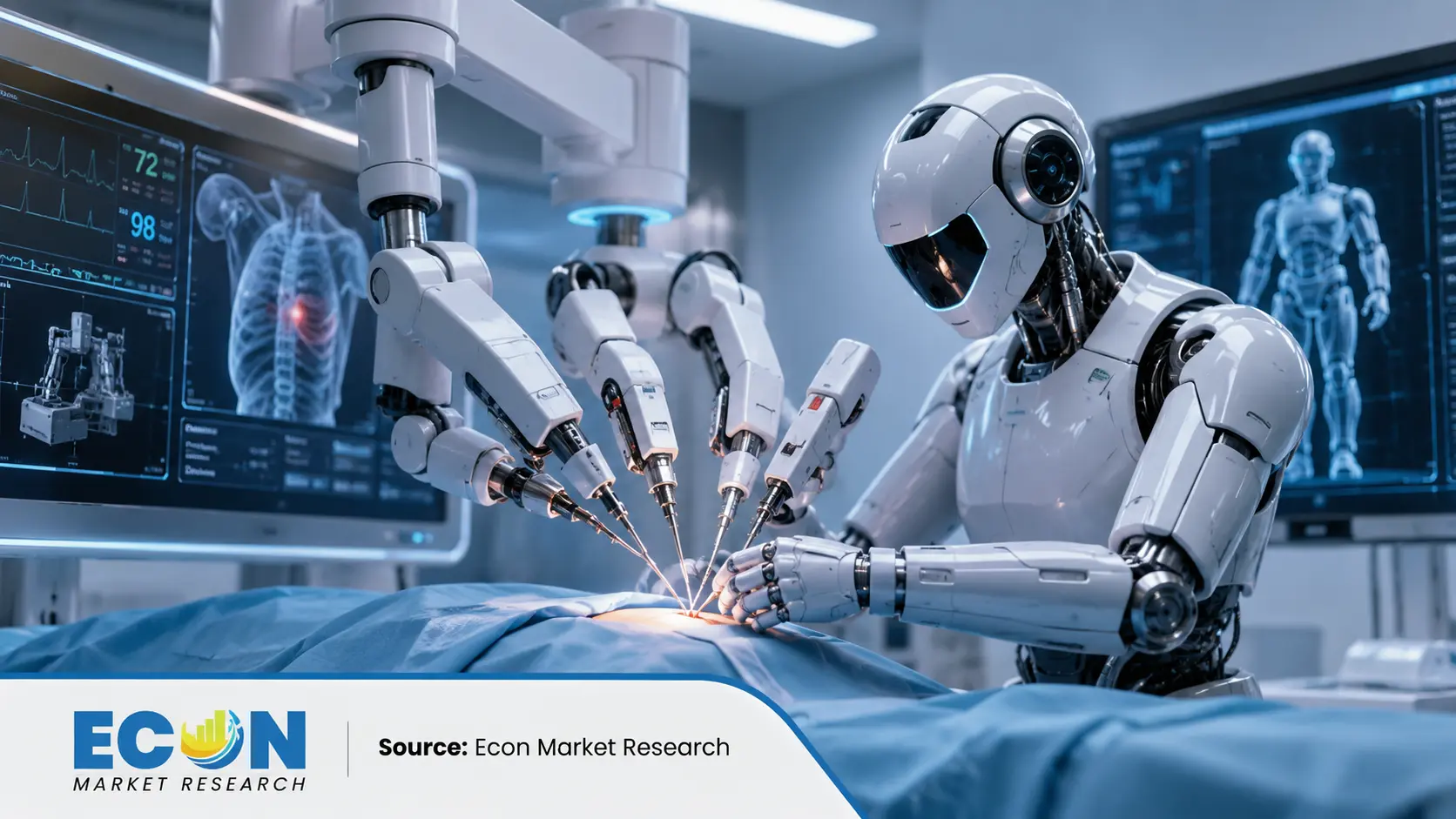
Humanoid robot surgical robotics remains an early-stage category rather than a fully commercialized clinical segment. Current humanoid systems are primarily being evaluated for endoscope positioning, instrument handling, patient monitoring, supply movement and first-assistant functions. A 2025 hospital study tested a humanoid platform across 7 medical procedures, including ventilation, ultrasound-guided tasks, physical examinations and precision needle activities. Another 2026 project demonstrated a teleoperated humanoid maintaining endoscopic visualization during a cadaveric sphenoidectomy. These trials show that humanoid robots may initially support surgical teams through repetitive or physically demanding tasks before progressing toward higher-risk tissue manipulation, autonomous suturing or complete procedural execution.
Market Evolution and Growth Drivers
The evolution of humanoid robot surgical robotics is being driven by 4 interconnected forces: healthcare workforce shortages, minimally invasive surgery adoption, improvements in robotic dexterity and advances in artificial intelligence. Healthcare systems could face a global shortage of 10 million workers by 2030, while several countries are already reporting limited operating-room capacity. Humanoid robots offer a possible method of extending specialist expertise because 1 remotely located surgeon could potentially control a robot installed in a rural hospital, disaster zone, military facility or isolated medical center. Their human-compatible design also allows them to use existing doors, operating tables, laparoscopic tools and hospital layouts without requiring complete infrastructure reconstruction.
Technical progress is also accelerating market evolution. The Unitree G1 platform, used in several medical research programs, weighs about 35 kilograms, measures 1,320 millimeters in height and can incorporate between 23 and 43 joint motors depending on its configuration. Modern humanoid hands can provide 5 independently controlled fingers, hybrid force-position control and human-like grasping capabilities. At the same time, established surgical robots are adding 3D imaging, haptic feedback, real-time analytics and procedure-specific artificial intelligence. The combination of these technologies is transforming surgical robotics from rigid, single-purpose equipment into adaptable physical-AI platforms capable of learning multiple clinical workflows.
Top 5 Latest Trends in Humanoid Robot Surgical Robotics
1. Humanoid Robots as Surgical First Assistants
The first major trend is the use of humanoid robots as surgical assistants rather than independent surgeons. A surgical first assistant performs tasks such as holding an endoscope, retracting tissue, positioning instruments and maintaining visual access to the operative field. In a 2026 proof-of-concept study, a teleoperated humanoid robot maintained endoscopic visualization while an experienced surgeon completed a cadaveric sphenoidectomy. The procedure demonstrated that a bipedal robot could maintain a clinically relevant posture and support an endoscopic operation without requiring a purpose-built robotic arm. The experiment also identified stabilization, sustained precision and control latency as 3 engineering priorities for clinical translation.
This assistant-based model represents a practical entry point for humanoid robot surgical robotics because it keeps clinical decision-making under direct human control. Hospitals may initially deploy 1 humanoid unit to handle low-risk tasks, allowing nurses and surgical assistants to focus on patient preparation, anesthesia coordination and complex instrument management. Humanoid robots could also reposition themselves between operating rooms and perform several functions during a single shift. A robot might transport 20 instrument trays, assist with 4 procedures and conduct 10 postoperative monitoring rounds instead of remaining attached to 1 operating table. Such multifunctionality could improve equipment utilization while reducing the need for separate machines for every repetitive hospital activity.
2. Teleoperation and Remote Surgical Support
Teleoperation is becoming a central trend because current humanoid surgical robots still require trained clinicians to direct their movements. During the first reported in-vivo humanoid surgical feasibility trials in 2026, human surgeons remotely controlled modified robots while completing laparoscopic gallbladder tasks. The research included 2 procedural configurations: 1 involving collaboration between a surgeon and a humanoid robot and another involving 2 humanoid units working within the same operative environment. These trials established technical feasibility but also revealed limitations involving recalibration, response delay and consistent instrument positioning.
Remote operation could expand access to specialist care across distances of 100, 500 or even 1,000 kilometers when dependable communication infrastructure is available. A regional medical center could maintain 2 humanoid systems while specialist surgeons operate from a larger urban hospital. This model would be especially valuable for isolated communities, offshore facilities, military operations and disaster-response hospitals. However, safe telesurgery will require redundant communication pathways, latency monitoring measured in milliseconds and immediate local override procedures. A network interruption lasting even 2 seconds could be clinically significant, which means future systems will require automated motion freezing, emergency instrument release and at least 2 backup connectivity channels.
3. AI-Based Surgical Learning and Digital Twins
Artificial intelligence is shifting surgical robotics from manually programmed movement toward systems that can learn from demonstrations, videos and simulations. Surgical world-model research published during 2025 used approximately 2,000 annotated video clips to train models on needle positioning, targeting, driving and withdrawal. These models generated surgical-action sequences at resolutions of at least 768 × 512 pixels and sequences of at least 49 frames. Such datasets allow developers to distinguish between ideal and non-ideal suturing techniques, creating a foundation for automated coaching, error prediction and robotic skill acquisition.
Digital twins are also becoming important because every physical procedure can be rehearsed in a virtual operating room before execution. A digital twin can reproduce 3D anatomy, instrument forces, camera positions and planned robot trajectories. One experimental robotic surgery training system achieved trajectory-tracking error of 5 micrometers and communication latency of 0.01 seconds under controlled conditions. For humanoid robot surgical robotics, these simulations could generate millions of practice movements without exposing patients to risk. Developers may train a robot on 10,000 simulated gallbladder procedures, 5,000 suturing scenarios and 1,000 emergency events before permitting it to perform a single supervised clinical task.
4. Modular and Human-Compatible Operating Rooms
Another major trend is the development of modular robots that fit existing operating rooms instead of requiring dedicated robotic suites. Traditional systems may occupy substantial floor space and include 3 or 4 major components, such as a surgeon console, patient cart, vision tower and instrument platform. Humanoid robots offer a different approach because their bodies are designed to function within environments originally built for people. A humanoid measuring between 1.3 and 1.8 meters can stand beside a standard surgical table, move through conventional doorways and manipulate equipment placed at normal human working heights.
Established surgical robotics companies are pursuing the same flexibility through modular architectures. One leading soft-tissue system uses separate bedside units that hospitals can position independently for different procedures. Another platform is available in more than 35 countries and uses an open-console configuration intended to maintain communication between the surgeon and operating-room staff. Modular designs allow hospitals to configure 2, 3 or 4 robotic arms according to procedure type. This architecture may eventually integrate humanoid assistants that manage instruments, reposition cameras or connect disposable components while specialized robotic arms perform high-precision tissue manipulation.
5. Force Feedback, Dexterous Hands and Multimodal Sensing
The fifth trend is the rapid improvement of robotic touch, force feedback and hand dexterity. Surgery requires more than visual accuracy because clinicians must detect subtle differences in tissue resistance, instrument tension and contact pressure. Modern humanoid platforms can use force-position hybrid control and configurations containing as many as 43 joint motors. Advanced robotic hands may include 5 fingers, tendon-like actuation and pressure sensors that detect slippage during manipulation. These developments are essential for tasks such as tying 1-millimeter sutures, gripping delicate tissue and maintaining controlled tension during dissection.
Established surgical systems are also introducing force-sensing capabilities. New-generation robotic platforms combine high-definition 3D visualization with instruments capable of measuring forces applied during a procedure. Orthopedic systems use CT-based 3D planning and haptic boundaries that prevent cutting tools from moving outside predefined anatomical zones. These features show how future humanoid surgical robots may combine vision from 2 or more cameras, force data from 10 or more sensors and real-time anatomical models. Instead of relying on a single information stream, the robot could compare visual, tactile and positional data hundreds of times per second before permitting an instrument movement.
Top 5 Companies in Humanoid Robot Surgical Robotics
1. Intuitive Surgical
Company overview: Intuitive Surgical is one of the most established companies in robotic-assisted surgery, with almost 3 decades of experience developing minimally invasive robotic platforms. Approximately 3.15 million procedures were performed using its systems during 2025, compared with approximately 2.68 million in 2024. The company placed 532 systems during the fourth quarter of 2025, including 303 units from its newest generation.
Headquarters: The company is headquartered in Sunnyvale, California, United States, and operates across more than 1 major global region through clinical training, technical support and research programs.
Core humanoid robot surgical robotics expertise: Its core expertise includes multi-arm robotic control, surgeon teleoperation, 3D visualization, wristed instrumentation, force feedback and digital surgical analytics. Although its robots are not humanoid, its technologies provide many of the precision-control principles that future humanoid systems will require.
Major products and services: Major platforms include da Vinci 5, da Vinci Xi and da Vinci SP. These systems support urology, gynecology, general surgery, thoracic surgery, colorectal procedures and selected transoral operations. The company also provides instruments, accessories, simulation programs and surgeon-training services across multiple clinical specialties.
2. Medtronic
Company overview: Medtronic is a diversified medical-technology company developing robotic surgery, imaging, navigation and minimally invasive instruments. Its Hugo robotic-assisted surgery platform has been used for more than 4 years and is available in over 35 countries. In February 2026, the first commercial U.S. procedure using the system was completed following regulatory clearance for specified urologic applications.
Headquarters: Medtronic maintains its principal executive headquarters in Dublin, Ireland, while significant operational activities are conducted across the United States and more than 150 countries.
Core humanoid robot surgical robotics expertise: The company specializes in modular robotic arms, open-console surgery, digital procedure analysis, electrosurgical instruments and operating-room integration. Its modular architecture is relevant to humanoid robotics because separate robotic components can be repositioned according to each patient and procedure.
Major products and services: Major offerings include the Hugo robotic-assisted surgery system, Touch Surgery digital technologies, laparoscopic instruments, powered stapling systems and energy-based surgical tools. Hugo has supported urologic, gynecologic and general-surgery programs, with procedures including prostatectomy and pancreatic surgery reported during its international expansion.
3. CMR Surgical
Company overview: CMR Surgical develops a portable, modular robotic platform intended to increase access to minimally invasive surgery. By March 2026, its Versius technology had been used to treat 45,000 patients globally. The company received U.S. regulatory authorization for its first-generation platform in October 2024 and clearance for an enhanced version in December 2025.
Headquarters: CMR Surgical is headquartered in Cambridge, United Kingdom, a region containing more than 1 internationally recognized medical-technology and artificial-intelligence cluster.
Core humanoid robot surgical robotics expertise: Its expertise includes independent bedside robotic units, compact operating-room deployment, surgeon-controlled instrumentation and data-supported procedural improvement. The system’s human-arm-inspired design and modular placement strategy provide a bridge between fixed surgical robots and more adaptable humanoid assistants.
Major products and services: The company’s primary product is the Versius surgical system, including Versius Plus for selected procedures. It also provides surgeon education, clinical implementation support, digital performance data and technical services. The platform is designed for applications such as gallbladder surgery, hernia repair, colorectal procedures and gynecologic operations.
4. Unitree Robotics
Company overview: Unitree Robotics develops general-purpose humanoid and quadruped robots used in industrial, educational and research applications. Its G1 humanoid has become particularly relevant to medical robotics because researchers have adapted the platform for at least 7 clinical tasks, endoscopic assistance and 2 in-vivo laparoscopic feasibility procedures.
Headquarters: Unitree Robotics is headquartered in Hangzhou, China, one of Asia-Pacific’s largest robotics and artificial-intelligence development centers.
Core humanoid robot surgical robotics expertise: The company’s expertise includes bipedal movement, bilateral arm control, reinforcement learning, dexterous manipulation and force-position hybrid control. The G1 stands approximately 1,320 millimeters tall, weighs about 35 kilograms and supports configurations containing between 23 and 43 powered joints.
Major products and services: Major products include the G1, H1, H2 and related dexterous-hand systems. Although these platforms are not currently approved as clinical surgical devices, researchers can integrate teleoperation equipment, medical-tool adapters and specialized control software. This flexibility makes Unitree an important enabling company within the emerging humanoid surgical robotics ecosystem.
5. Stryker
Company overview: Stryker is a major orthopedic and surgical-technology company known for robot-assisted joint replacement. Its Mako platform has supported more than 2 million procedures and has been installed across more than 45 countries, reflecting 19 years of robotic-arm-assisted surgery experience through 2025.
Headquarters: Stryker is headquartered in Kalamazoo, Michigan, United States, and distributes medical products across more than 75 countries.
Core humanoid robot surgical robotics expertise: Stryker specializes in haptic control, patient-specific 3D planning, robotic bone preparation and implant-positioning guidance. Its AccuStop technology creates virtual anatomical boundaries that help surgeons control cutting movements. Such haptic constraints could become essential safeguards when humanoid robots begin manipulating powered surgical tools.
Major products and services: The company’s major robotic offering is Mako SmartRobotics for total-knee, partial-knee and total-hip replacement, with further development extending into spine and shoulder procedures. Supporting services include CT-based planning, surgical workflow integration, clinical education, implants and technical maintenance.
Regional Outlook
North America
North America is the most established region for humanoid robot surgical robotics research and commercial robotic-assisted surgery. The United States hosts several major surgical-robotics manufacturers, artificial-intelligence laboratories and academic medical centers. During the first quarter of 2026, 431 da Vinci systems were placed globally, including 232 units from the newest generation. The country also recorded the first U.S. commercial use of the Hugo platform in February 2026, adding another major system to its competitive robotic-surgery environment.
The region is also leading humanoid medical experimentation. Researchers in California developed teleoperation methods that enabled commercially available humanoid robots to perform 7 medical tasks before progressing to laparoscopic animal studies. The 2026 in-vivo evaluation used 2 procedural configurations and demonstrated tissue retraction, instrument handling and collaborative robot operation. Although these studies do not establish clinical readiness, they show that North American research institutions are moving from benchtop tests toward realistic operating-room conditions.
Demand is reinforced by workforce pressure and uneven specialist distribution. Projections indicate that the United States could face a shortage of up to 86,000 physicians by 2036. Rural hospitals may have 1 general surgeon covering populations spread across hundreds of kilometers, while specialist procedures remain concentrated in large urban centers. Teleoperated humanoid assistants could eventually allow a specialist located in 1 city to support procedures in 2 or 3 smaller hospitals. However, regulatory approval will require extensive clinical trials, cybersecurity validation, human-factors testing and evidence that robotic assistance produces outcomes comparable with conventional care.
Canada is also positioned to participate through university research, digital-health infrastructure and existing adoption of robotic-assisted procedures. Across North America, hospitals are expected to prioritize hybrid operating rooms where 1 conventional surgical robot, 1 imaging platform and 1 mobile humanoid assistant can share data. Initial deployment is likely to focus on instrument delivery, endoscope control and procedural documentation rather than independent surgery.
Europe
Europe combines strong robotic engineering with centralized healthcare systems capable of coordinating large-scale technology adoption. The United Kingdom, Germany, France, Italy and Spain have expanded robotic-assisted surgery across urology, gynecology, colorectal surgery and orthopedics. European medical centers also have extensive experience with modular robotic platforms developed within the region, including systems designed to fit smaller operating rooms and move between surgical departments.
The United Kingdom has announced one of the clearest robotic-surgery expansion strategies. Its public healthcare system intends to increase robot-assisted procedures from approximately 70,000 annually to 500,000 annually by 2035. Under the plan, robotic systems could support 90% of selected keyhole procedures by 2035, compared with about 20% at the time the strategy was announced. The targeted specialties include cancer surgery, hysterectomy, joint replacement, general surgery and emergency procedures.
Europe also faces significant workforce constraints. Healthcare organizations have cited a potential global shortfall of 10 million health workers by 2030, while individual European systems report thousands of unfilled specialist positions. Robotic platforms can improve surgeon ergonomics, reduce fatigue during procedures lasting 3 or 4 hours and enable more consistent minimally invasive workflows. Humanoid assistants may further reduce pressure by preparing equipment, transporting supplies and maintaining endoscopic views while licensed clinicians retain responsibility for diagnosis and tissue manipulation.
Regulatory requirements will shape European deployment. Developers must demonstrate compliance with medical-device safety, clinical evidence, privacy and artificial-intelligence governance standards. A humanoid robot capable of performing 10 hospital tasks may require separate validation for every high-risk surgical function. Consequently, early European products are likely to use tightly restricted software modes, continuous human supervision and task-specific certifications rather than unrestricted general-purpose autonomy.
Asia-Pacific
Asia-Pacific is developing into a major center for humanoid manufacturing, robotic surgery and healthcare automation. China, Japan, South Korea, Singapore, India and Australia are investing in advanced robotics because the region combines large patient populations with rapidly aging societies. Japan already has more than 29% of its population aged 65 years or older, creating demand for surgical capacity, rehabilitation systems and hospital-support robots. China and South Korea possess extensive electronics, motor, sensor and precision-manufacturing supply chains that can reduce the production cost of humanoid platforms.
China holds a particularly important position because it hosts several companies producing commercially available humanoid robots. The G1 platform used in medical research weighs about 35 kilograms and offers up to 43 powered joints, while newer humanoid platforms may reach 31 degrees of freedom and computing capacity measured in thousands of TOPS. These specifications support improved balance, bilateral manipulation and real-time perception. Researchers can acquire a general-purpose platform and add medical instruments rather than designing every motor, joint and controller from the beginning.
South Korea is expanding clinical robotic-surgery competition. In May 2025, a major hospital introduced the Hugo system and used it in procedures including prostatectomy and pancreaticoduodenectomy. Japan has also authorized multiple robotic-surgery platforms and maintains a highly experienced minimally invasive surgery workforce. These markets can provide clinical environments for testing modular systems, artificial-intelligence guidance and remote mentoring.
India presents a different opportunity because its population exceeds 1.4 billion while specialist surgical resources remain concentrated in major cities. A network containing 1 expert surgical center and 10 teleoperation-enabled regional hospitals could expand access without requiring every location to employ every type of specialist. Deployment will depend on dependable 5G or fiber connectivity, local technical training and systems capable of operating despite infrastructure variations. Asia-Pacific manufacturers may gain an advantage by developing lower-cost robots that support 5 or more hospital functions instead of serving only 1 surgical specialty.
Middle East and Africa
The Middle East and Africa region presents both substantial need and significant infrastructure challenges for humanoid robot surgical robotics. Gulf countries are investing in digital hospitals, specialist surgical centers and artificial-intelligence strategies. The United Arab Emirates, Saudi Arabia and Qatar have introduced robotic-assisted procedures in urology, gynecology, bariatric surgery and general surgery. Large medical cities in these countries can support advanced systems because they often have modern operating rooms, high-speed networks and international clinical teams.
Saudi Arabia’s healthcare transformation includes hundreds of hospital and digital-health projects, creating opportunities for robotic surgery training and remote specialist support. A major urban hospital could operate 3 or 4 conventional robotic systems while using 1 humanoid assistant for equipment movement, endoscope positioning and simulation-based staff education. Gulf countries may also support telesurgery links covering distances of 500 kilometers or more, particularly for isolated communities and industrial zones.
Africa presents a stronger access challenge because many countries have fewer than 1 specialist surgeon per 100,000 people in underserved areas. Hospitals may lack advanced imaging, stable electricity or dedicated robotic maintenance teams. Fully autonomous humanoid surgery is therefore unlikely to be the first practical application. More realistic use cases include ultrasound assistance, vital-sign collection, supply delivery, remote consultation and standardized physical examinations. The 2025 humanoid medical study covering 7 procedures demonstrated that general-purpose robots could reproduce selected clinical actions, although force limitations and sensor sensitivity remained significant barriers.
Regional adoption will require durable systems, simplified maintenance and training programs that can certify local technicians within 6 or 12 months. Solar-backed power, satellite connectivity and modular replacement components could improve reliability in remote locations. International programs promoting virtual care and telesurgery may also encourage shared clinical protocols. However, governments must ensure that robotic deployment strengthens local healthcare capacity rather than replacing investment in surgeons, nurses and hospital infrastructure.
Future Opportunities in Humanoid Robot Surgical Robotics
One of the largest future opportunities is multifunctional hospital automation. A conventional surgical robot may perform 1 defined category of procedures, while a humanoid robot could support 10 or more workflows. During a 12-hour shift, the same unit might deliver sterile supplies, position an endoscope, conduct ultrasound scans, assist with patient transfer and monitor recovery rooms. This flexibility could help hospitals achieve higher utilization than equipment limited to 2 or 3 scheduled procedures per day.
Remote surgical assistance represents another opportunity. International healthcare organizations have begun supporting initiatives related to virtual care and telesurgery, reflecting growing interest in extending specialist services beyond major hospitals. A surgeon could supervise 1 procedure locally while offering remote guidance for 2 additional clinical teams, provided that appropriate staffing and safety boundaries are maintained. Such networks could support island communities, rural regions, offshore facilities and disaster-response environments.
AI-based training may become equally important. Surgical robots can record instrument trajectories, camera movement, applied force and procedural timing. A training platform could compare a resident’s performance against 1,000 expert procedures and identify deviations measured in millimeters or seconds. Humanoid systems could then reproduce the expert movement for demonstration. Simulation environments may allow trainees to complete 100 practice procedures before participating in 1 supervised patient case.
The development of autonomous subtasks offers another commercial pathway. Instead of automating an entire 2-hour operation, companies may first automate 30-second or 2-minute actions such as camera centering, knot tightening, instrument exchange and surgical-field cleaning. Each task can be validated separately and activated only when predefined safety conditions are satisfied. This staged approach reduces regulatory risk and allows clinicians to retain control over complex decisions.
Future opportunities also extend beyond Earth. Humanoid surgical robots could support medical care on ships, submarines, polar research stations and long-duration space missions where evacuation may require 24 hours or several months. A compact platform equipped with 2 arms, 5-finger hands and remotely updateable software could perform diagnostics, emergency interventions and rehabilitation tasks. Before such deployment, systems must demonstrate resistance to communication delays, limited maintenance and unpredictable patient movement.
Conclusion
The humanoid robot surgical robotics industry is moving from theoretical discussion toward measurable technical demonstrations in 2026. Conventional robotic platforms already support millions of procedures each year, while emerging humanoid systems have completed 7-task medical evaluations, cadaveric endoscopic assistance and 2 in-vivo laparoscopic feasibility procedures. These achievements show that human-shaped robots can function within clinical environments, but they do not mean autonomous humanoid surgery is ready for routine patient care.
The next 5 to 10 years will likely focus on supervised assistance, teleoperation, instrument handling, endoscope control and automated procedural subtasks. Companies with established expertise in surgical imaging, haptic control, regulatory compliance and surgeon training will remain essential, while humanoid manufacturers contribute mobility, dexterous hands and general-purpose artificial intelligence. Partnerships between these 2 groups may produce hybrid systems that combine the precision of dedicated surgical robots with the adaptability of human-compatible machines.
Successful adoption will depend on more than mechanical performance. Hospitals will require secure networks, standardized training, documented emergency protocols and clinical evidence collected across hundreds or thousands of procedures. Every movement involving patient contact must be explainable, traceable and supervised according to clearly defined responsibility frameworks. The leading companies in humanoid robot surgical robotics will therefore be those that balance innovation with safety, accessibility and measurable clinical value. As workforce shortages increase and surgical demand expands, carefully governed humanoid robotics could become an important tool for extending specialist care without removing human judgment from the operating room.