

Water Transport Market
Water Transport Market Size, Share, Trends, Growth, and Industry Analysis, By Type (Deep Sea Transport, Coastal and Great Lakes Transport, Inland Water Transport), By Application (Passenger Transport, Freight Transport), Regional Analysis and Forecast Period 2026-2035
Water Transport Market Overview
As per Econ Market Research analysis, the Global Water Transport Market generated revenue of US$ 22.2 Billion in 2026 and is forecast to achieve US$ 40.87 Billion by 2035, at a CAGR of 7% during the study period 2026–2035. The base year considered is 2025.
Water Transport Market Size 2025-2035 (USD Billion)

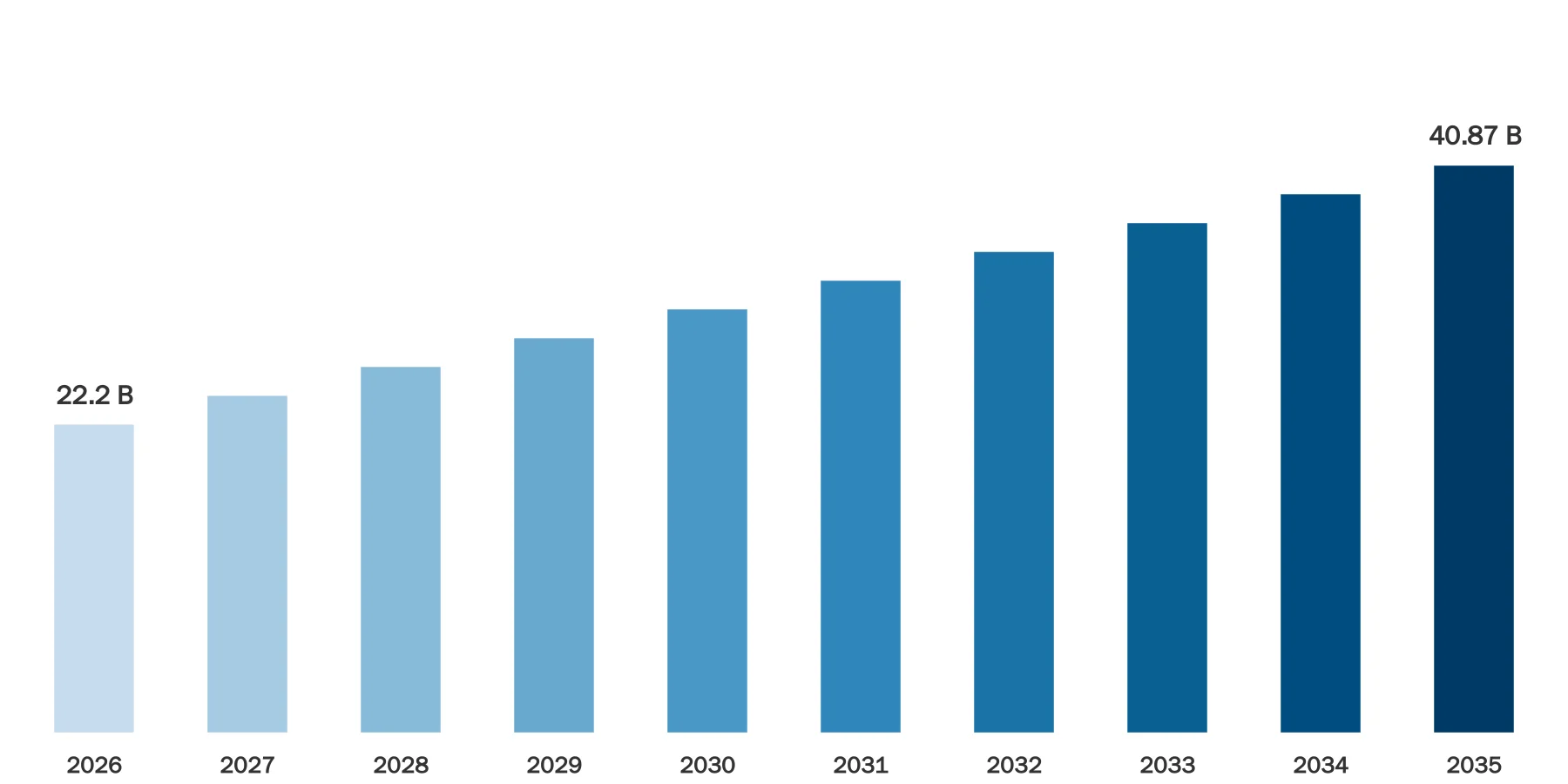
Source: Econ Market Research
The global water transport industry involves the movement of goods and people across bodies of water using ships, boats, and barges. This industry includes both the transportation of goods and passengers, serving a variety of sectors such as trade, tourism, and logistics. Water transport is essential for the global economy as it offers a cost-effective way to transport bulky goods over long distances. With the growth of globalization and trade, the demand for water transport services is increasing, leading to advancements in infrastructure and technology in the sector.
Over the past few years, the worldwide water transportation industry has experienced consistent expansion due to various factors like the increase in global trade, higher need for energy sources, and a rise in tourism. This sector is made up of a variety of participants such as shipping companies, cruise providers, port administrators, and logistics businesses. Advances in technology have also greatly improved the effectiveness and security of water transportation activities, with innovations like automation, digitization, and environmentally friendly propulsion systems becoming more widespread.
The water transport market is expected to keep growing despite challenges like regulatory compliance, environmental concerns, and geopolitical tensions. This growth is driven by the increasing global connectivity and the demand for sustainable transportation solutions. The market is shifting towards more sustainable practices, with a focus on reducing emissions and using eco-friendly technologies like LNG-powered vessels and electric propulsion systems. In addition, the advancement of effective port facilities and the widening of navigable water routes are also contributing to the industry',s growth.
Water Transport Dynamics
One major factor driving the market is the interaction between international trade patterns and economic trends. Changes in global trade volumes, influenced by shifts in consumer preferences, political tensions, and trade deals, have a direct impact on the need for water transport services. Moreover, the economic situation in key trading areas affects shipping operations, with periods of economic expansion usually leading to higher trade levels and a greater demand for sea transportation.
One important trend in the industry is the continuous technological advancements being made. These improvements in ship design, propulsion, navigation, and digitalization are leading to more efficient operations and influencing the competitive market. For example, the use of automated and remote monitoring systems is making processes smoother and cutting down on labour expenses for ship owners. Additionally, there is a growing focus on sustainability driving the creation of environmentally friendly solutions like alternative fuels and emissions-reducing technologies in response to regulations and environmental concerns.
The latest technological improvements are not only making operations more efficient, but they are also helping the industry reduce its impact on the environment. The interaction between economic conditions, advancements in technology, and changes in regulations is constantly influencing the direction of the global water transport market, impacting strategies and investments industry-wide.
Water Transport Drivers
Globalization and International Trade
The growing integration of economies across the globe plays a major role in shaping the water transport industry. The increase in international trade due to globalization has heightened the need for maritime transportation services. Businesses are expanding their reach into new markets and sourcing materials from different areas, relying on efficient and affordable modes of transport. Water transport is preferred for its cost-effectiveness in moving large quantities of goods over extensive distances. Additionally, the implementation of free trade agreements and the establishment of new trade routes are bolstering the demand for maritime shipping services, contributing to the market',s growth.
Technological Advancements
Water transportation is being transformed by continuous technological advancements, which are boosting efficiency and competitiveness. Innovations in vessel design, propulsion systems, and digitalization are allowing shipping companies to streamline their operations, cut down on fuel usage, and lessen their environmental footprint. The implementation of digital navigation tools and automation systems is enhancing safety and precision in navigation, while the creation of environmentally-friendly propulsion technologies like LNG and hydrogen fuel cells is addressing environmental issues and meeting regulatory standards. In addition, connecting Internet of Things (IoT) sensors and data analysis enables live tracking of how ships are performing and the status of the cargo. This makes it easier to make decisions and improve efficiency throughout the supply chain.
Restraints:
Environmental Regulations and Sustainability Challenges
Strict environmental laws that aim to reduce emissions and lessen pollution are a big hurdle for the water transport industry. Meeting regulations like the International Maritime Organization',s (IMO) sulphur cap rules means spending a lot on eco-friendly technologies and fuels, which raises operating expenses for shipping companies. On top of that, worries about the environmental harm caused by maritime operations, such as oil spills, ballast water dumping, and underwater noise pollution, are pushing the industry to embrace greener practices and technologies, even if it means more costs and operational challenges.
Geopolitical Instability and Trade Disputes
Geopolitical tensions and trade disputes have the potential to disturb global supply chains and impede the efficient operation of the water transport market. Political instability, territorial disagreements, and trade barriers introduce unpredictability and fluctuation, impacting shipping paths, port activities, and trade quantities. For instance, trade tensions between significant economies like the United States and China may result in increased tariffs and trade limitations, changing trade routes and decreasing the need for maritime transportation services on influenced paths. Moreover, geopolitical risks such as piracy, terrorism, and regional conflicts pose security threats to vessels and crew, necessitating additional security measures and increasing operational risks and costs for shipping companies.
Opportunities:
Infrastructure Development and Port Expansion
The growing need for water transportation services is creating chances for building infrastructure and expanding ports. Deploying resources in port upgrades, dredging, and logistics can boost the effectiveness and size of maritime shipping networks, allowing ports to handle bigger ships and increasing cargo levels. Additionally, creating multi-mode transportation canters and connections between different modes of transport can improve the flow of goods and boost trade opportunities while enhancing supply chain efficiency.
Segment Overview
By Type
The worldwide water transport market can be divided into four main categories: inland water transport, deep sea transport, coastal transport, and Great Lakes transport. Inland water transport involves moving goods along rivers, canals, and inland waterways, connecting regions and supporting local trade with vessels such as barges and riverboats.
Deep sea transport, also referred to as ocean shipping, includes transporting cargo over deep ocean waters with container ships, bulk carriers, and oil tankers, playing a critical role in global trade. Coastal transport runs along coastlines, serving local trade and offering a different option to road and rail transport. Great Lakes transport focuses on shipping activities within the Great Lakes region of North America, particularly for bulk commodities like iron ore and coal.
By Application
The water transport market is divided into two main segments: offshore and onshore activities. Offshore activities involve transportation tasks that take place far from the coast, such as oil and gas exploration, offshore wind farms, and deep-sea fishing. On the other hand, onshore activities refer to transportation tasks that occur closer to the coast or on inland waterways, such as passenger ferries, coastal cargo shipping, and inland water transport for domestic trade. Each segment offers its own set of challenges and opportunities within the water transport market, which are influenced by factors like regulatory requirements, environmental concerns, and economic demand.
Water Transport Overview by Region
Developed economies like North America and Europe have strong port infrastructure, strict safety regulations, and high environmental standards. The Great Lakes region in North America is known for its inland water transport activities, while coastal shipping is essential for domestic trade and regional connectivity in Europe. The Asia-Pacific region is becoming a crucial growth centre for the water transport industry, driven by fast-paced industrialization, urbanization, and growing maritime trade.
China and Japan have strong deep sea shipping capacities, making them important hubs for global trade. Southeast Asian countries like Singapore and Malaysia play pivotal roles in transhipment operations due to their strategic locations. Meanwhile, Africa and Latin America are seeing rising investments in port infrastructure and waterway expansion to boost trade connections and stimulate economic progress. However, challenges such as inadequate infrastructure, regulatory complexities, and security concerns remain significant in these regions.
Water Transport Market Competitive Landscape
The competitive landscape of the global water transport market is characterized by the presence of several key players competing for market share across different segments and regions. Established shipping companies such as Maersk Line, MSC Mediterranean Shipping Company, and COSCO Shipping Holdings Co., Ltd. dominate the deep-sea transport segment, leveraging their extensive fleets and global network coverage to serve major trade routes.
Inland water transport is marked by a mix of large operators like American Commercial Barge Line and Ingram Barge Company in the United States, as well as numerous smaller players operating regionally. Coastal transport sees competition from both traditional shipping companies and regional operators, with firms like China COSCO Shipping Corporation Limited and Mediterranean Shipping Company (MSC) operating coastal services in their respective regions.
Additionally, the emergence of digital platforms and logistics providers like Flex port and Freights is reshaping the competitive landscape by offering innovative solutions and value-added services to customers. Overall, the water transport market is highly competitive, driven by factors such as service reliability, cost efficiency, and technological innovation, with companies continually adapting strategies to maintain competitiveness and meet evolving customer demands.
Water Transport Market Leading Companies:
Maersk Line Ltd
MSC Mediterranean Shipping Company Inc.
COSCO Shipping Holdings Co., Ltd.
American Commercial Barge Line Inc.
Ingram Barge Company Ltd.
China COSCO Shipping Corporation Limited
Mediterranean Shipping Company Ltd.
Flexport Inc.
Freightos Ltd.
Anglo-Eastern Ship Management Ltd.
Wä,rtsilä, Voyage Inc.
Hapag-Lloyd AG
CMA CGM S.A.
Water Transport Recent Developments
Oct 2022, the European Commission sanctioned a Dutch plan worth USD 23.2 million to encourage the transfer of freight transport from roads to inland waterways and railways.
May 2022, Anglo-Eastern Ship Management of Hong Kong and Wä,rtsilä, Voyage announced progress in their joint initiative to enhance safety and environmental sustainability at sea. Over 500 vessels in Anglo-Eastern',s managed fleet now utilize Wä,rtsilä, Voyage',s Fleet Operation Solutions, a software platform aiding in voyage planning, charter-party compliance, fuel efficiency, and fleet performance management.
Water Transport Report Segmentation
Water Transport Market Report Scope & Segmentation
| Attributes | Details |
|---|---|
Market Size (Current) | US$ 22.2 Billion in 2026 |
Market Size (Forecast) | US$ 40.87 Billion in 2035 |
Growth Rate | CAGR of 7% from 2026 to 2035 |
Forecast Period | 2026 – 2035 |
Base Year | 2025 |
Historical Data Available | Yes |
Regional Scope | Global |
Segments Covered | By Type
By Application
|
Frequently Asked Questions
Common questions about this report
The study period covers historical insights and forecast projections for the period 2026-2035.
About the Author
Market research expert with years of industry experience

Dipali Bhingare serves as the Market Research Director at Econ Market Research. With a focus on translating complex global economic shifts into actionable business intelligence, she oversees the strategic direction of comprehensive market studies. Her work empowers organizations to navigate volatile industries through data-driven forecasting and deep-dive competitive analysis.
Related Reports
Explore more market insights from the same category