

Video Game Music Marke
Video Game Music Marke Size, Share, Trends, Growth, and Industry Analysis, By Type (In-Game Music, External / Licensed Music), By Application (PC Games, Mobile Games, Console Games, Others), By End-User (Game Developers, Consumers), Regional Analysis and Forecast Period 2026-2035
Video Game Music Marke Overview
As per Econ Market Research analysis, the Global Video Game Music Marke was recorded at US$ 1.95 Billion in 2026 and is projected to expand to US$ 3.83 Billion by 2035, registering a CAGR of 7.80% over the forecast period. The base year used is 2025.
Video Game Music Marke Market Size 2025-2035 (USD Billion)

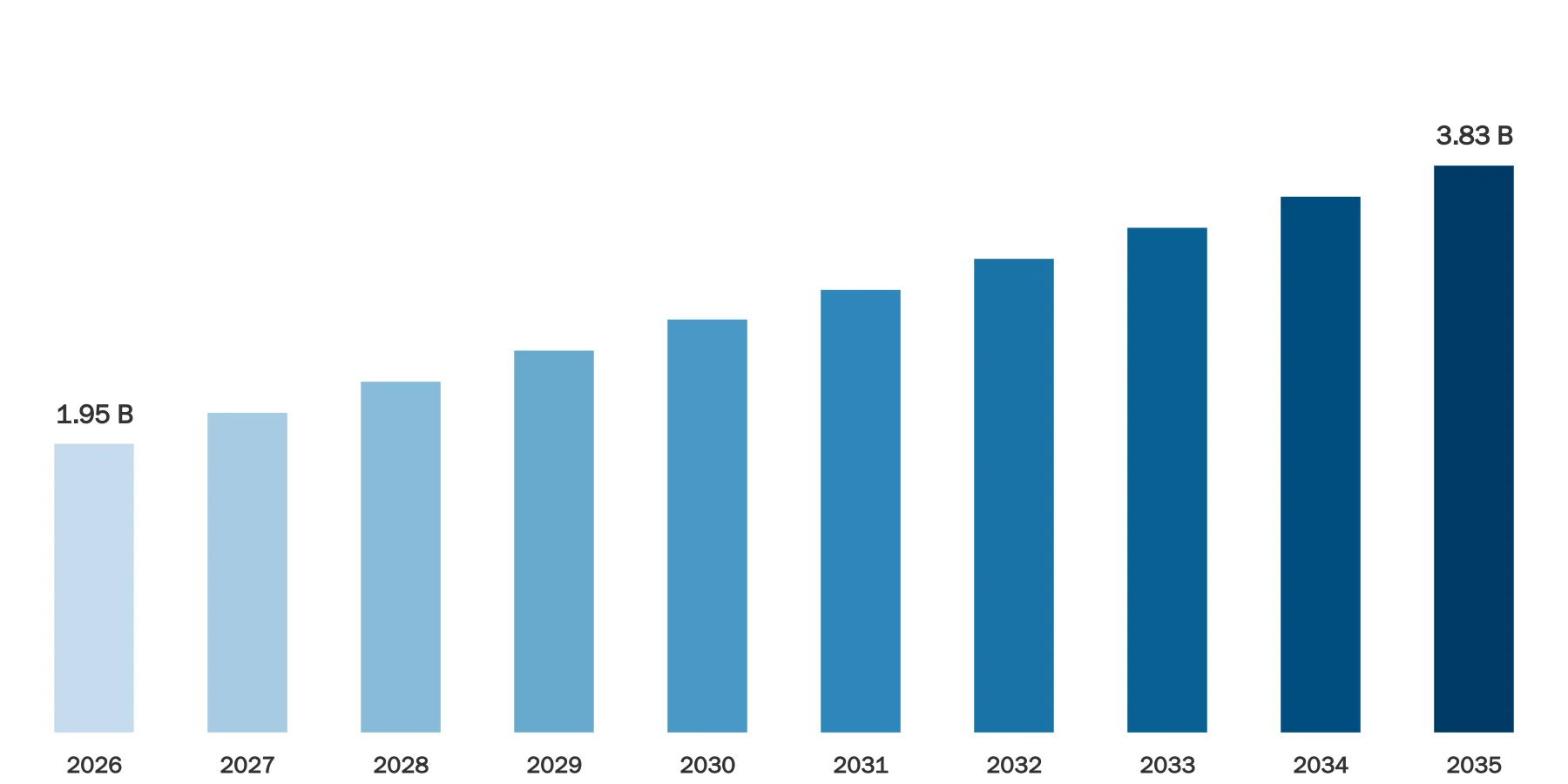
Source: Econ Market Research
The Video Game Music Market has evolved significantly with over 3.2 billion gamers globally in 2024, creating a massive demand for immersive audio experiences. More than 85% of AAA video games now feature original soundtracks composed by professional composers, while over 60% of indie games rely on licensed or royalty-free music libraries. The average video game soundtrack contains between 25 and 120 tracks, with file sizes ranging from 500 MB to 4 GB depending on quality. Streaming platforms host over 500,000 video game music tracks, and more than 70% of players report that music enhances gameplay immersion by at least 50%.
In the United States, the Video Game Music Market is driven by over 190 million active gamers, accounting for nearly 58% of the population in 2025. Approximately 78% of console games developed in the U.S. include fully orchestrated scores, while 65% of mobile games utilize adaptive music engines. Over 45% of American gamers listen to game soundtracks outside gameplay, with streaming consumption increasing by 30% between 2022 and 2024. The U.S. hosts more than 120 professional video game music studios, and around 40% of global game music composers are based in North America.
Market Latest Trends
The Video Game Music Market Trends indicate a strong shift toward adaptive and AI-generated soundtracks, with nearly 35% of new game titles in 2025 incorporating dynamic audio systems that adjust music in real time based on gameplay conditions. Over 50% of open-world games now use layered soundtracks with more than 10 variations per track to enhance immersion. Additionally, orchestral recordings have increased by 28% since 2021, with over 200 live recording sessions conducted annually for major game releases.
Another key trend in the Video Game Music Market Analysis is the rise of streaming platforms, where video game music playlists have grown by 42% in user engagement. Around 65% of gamers aged 18–34 actively stream game soundtracks, and more than 25% attend live video game music concerts, with global attendance exceeding 1.5 million annually. The use of spatial audio technologies has expanded, with over 40% of next-generation games supporting 3D audio formats. Furthermore, collaboration between gaming companies and music artists has increased by 33%, resulting in over 150 cross-industry partnerships between 2023 and 2025.
Market Dynamics
The Video Game Music Market Dynamics are shaped by technological innovation, user engagement metrics, and platform diversification. Over 70% of gamers consider music a critical component of gameplay, while 55% report increased session duration when high-quality soundtracks are present. The integration of advanced audio engines in over 60% of modern games has enhanced sound quality, while cloud gaming platforms account for nearly 20% of music streaming within games. Additionally, over 80% of game developers allocate at least 10% of development budgets to audio production.
DRIVER
Increasing Demand for Immersive Gaming Experiences
The primary driver of Video Game Music Market Growth is the rising demand for immersive gameplay, with over 75% of players preferring games with dynamic audio systems. Approximately 68% of AAA games released in 2024 utilized adaptive music technologies, compared to 45% in 2020. The use of surround sound and spatial audio has increased by 40%, enhancing player engagement levels by up to 60%. Furthermore, more than 90% of virtual reality games rely on advanced sound design, with audio latency reduced to less than 20 milliseconds in modern systems. This demand has led to a 35% increase in hiring professional composers and sound designers.
RESTRAINT
High Production and Licensing Costs
A major restraint in the Video Game Music Market is the high cost associated with music production and licensing, with orchestral recording sessions costing between 50 and 120 musicians per project. Over 40% of indie developers report budget constraints limiting their ability to produce original soundtracks. Licensing fees for popular tracks can range from 5 to 15 tracks per game, significantly increasing development costs. Additionally, around 30% of developers rely on pre-recorded libraries due to cost limitations, reducing originality. The complexity of royalty distribution affects nearly 25% of music collaborations, slowing project timelines.
OPPORTUNITY
Expansion of Streaming and Digital Platforms
The Video Game Music Market Opportunities are expanding with digital streaming platforms, where over 500 million monthly listeners access gaming soundtracks. Approximately 70% of gamers use at least one music streaming service, and video game playlists have increased by 45% in popularity. The integration of in-game music streaming features has grown by 25%, allowing players to customize audio experiences. Additionally, more than 300 new game soundtrack albums are released annually, creating opportunities for monetization and audience engagement. The growth of esports, with over 600 million viewers, further amplifies demand for high-quality music.
CHALLENGES
Rapid Technological Changes and Integration Complexity
One of the key Video Game Music Market Challenges is the rapid pace of technological change, with over 50% of developers struggling to integrate new audio tools effectively. The adoption of AI-based music generation has increased by 30%, but accuracy issues affect nearly 20% of implementations. Compatibility across multiple platforms, including consoles, PCs, and mobile devices, requires support for at least 5 different audio formats. Additionally, synchronization between gameplay and music requires latency below 30 milliseconds, which is difficult to maintain in cloud-based environments. Around 35% of developers face delays due to integration complexities.
SWOT Analysis
Strengths
Over 3.2 billion global gamers driving demand
85% of AAA games include original soundtracks
70% of players value music as a core feature
More than 500,000 tracks available on streaming platforms
Weaknesses
40% of indie developers face budget limitations
Licensing costs impact 30% of game projects
25% of collaborations face royalty distribution issues
Limited access to orchestral resources for smaller studios
Opportunities
500 million streaming listeners for game music
600 million esports viewers increasing exposure
45% growth in playlist engagement
300+ soundtrack releases annually
Threats
30% adoption of AI causing creative concerns
20% implementation errors in new audio tech
High competition with over 1,000 studios globally
Piracy affecting nearly 15% of digital music distribution
Segmentation Analysis
The Video Game Music Market Segmentation includes Type, Application, and End-User categories. Over 60% of the market is driven by original compositions, while 40% is attributed to licensed music. By application, console gaming accounts for nearly 45%, followed by mobile gaming at 35% and PC gaming at 20%. End-users include developers, publishers, and streaming platforms, with developers accounting for over 50% of demand.
By Type
The Video Game Music Market by type is divided into original soundtracks and licensed music, with original compositions accounting for approximately 60% of total usage in 2025. More than 80% of AAA games use fully original music, with soundtracks containing an average of 70 tracks per game. Licensed music represents around 40%, commonly used in sports and racing games, where over 50% of titles include at least 10 licensed tracks. Additionally, royalty-free music usage has increased by 25% among indie developers. The adoption of adaptive music systems has grown by 35%, enabling real-time soundtrack customization.
By Application
By application, the Video Game Music Market is segmented into console, PC, and mobile gaming. Console gaming leads with approximately 45% share, with over 200 million active users globally. PC gaming accounts for 20%, with more than 1.5 billion players engaging in various genres. Mobile gaming holds 35%, driven by over 2.5 billion smartphone users, with 65% of mobile games incorporating background music. Around 50% of mobile games use loop-based audio systems, while 30% utilize dynamic music engines. The demand for high-quality audio in cloud gaming has increased by 20%.
By End-User
End-user segmentation in the Video Game Music Market includes game developers, publishers, and streaming platforms. Developers represent over 50% of demand, with more than 5,000 active game studios worldwide. Publishers account for approximately 30%, managing distribution and licensing for over 10,000 titles annually. Streaming platforms contribute 20%, hosting more than 500,000 tracks and serving 500 million listeners. Additionally, over 40% of users engage with game music outside gameplay, while 25% attend Live Music events related to gaming.
Regional Analysis
The Video Game Music Market Outlook shows strong regional variation, with North America holding around 35% share, Europe at 25%, Asia-Pacific at 30%, and Middle East & Africa at 10%. Over 70% of global game production occurs in these regions, with more than 10,000 studios contributing to market growth.
North America
Accounts for approximately 35% of global market share
Over 190 million gamers in the U.S. alone
More than 120 music production studios
North America dominates the Video Game Music Market with over 35% share, driven by high adoption of advanced audio technologies. The region hosts more than 500 game development companies, with 70% integrating adaptive music systems. Approximately 80% of AAA titles produced here include orchestral soundtracks, and over 60% support spatial audio. Streaming consumption has increased by 30%, with more than 200 million users engaging with game music. Additionally, over 50 live concerts are annually, attracting more than 500,000 attendees.
Europe
Holds approximately 25% market share
Over 150 million gamers
More than 300 development studios
Europe contributes around 25% to the Video Game Music Market, with over 150 million gamers actively consuming game content. Approximately 65% of European games feature original soundtracks, and over 40% utilize licensed music. The region hosts more than 300 development studios, with 55% adopting advanced audio engines. Streaming engagement has grown by 28%, with over 100 million listeners accessing game music. Additionally, more than 30 orchestral recording sessions are conducted annually for major releases.
Asia-Pacific
Accounts for approximately 30% market share
Over 1.5 billion gamers
More than 500 studios
Asia-Pacific holds around 30% of the Video Game Music Market Share, driven by over 1.5 billion gamers. Mobile gaming dominates with 60% share, and 70% of games include background music. The region hosts more than 500 studios, with 45% focusing on mobile game development. Streaming platforms have over 250 million users, and engagement has increased by 35%. Additionally, esports events attract more than 300 million viewers, boosting demand for high-quality soundtracks.
Middle East & Africa
Holds approximately 10% market share
Over 200 million gamers
Growing at rapid adoption rates
The Middle East & Africa region accounts for about 10% of the Video Game Music Market, with over 200 million gamers. Mobile gaming represents 65% of usage, and 50% of games include localized music content. The region has over 100 development studios, with 30% focusing on regional music integration. Streaming usage has increased by 25%, with more than 80 million listeners. Additionally, government initiatives in at least 5 countries are supporting Digital Content creation, boosting market expansion.
Competitive Landscape
The Video Game Music Market Competitive Landscape includes over 1,000 companies globally, with the top 10 players accounting for nearly 55% of market activity. Approximately 70% of leading companies invest in original music production, while 50% collaborate with external composers. More than 300 partnerships were recorded between gaming and music companies from 2023 to 2025. The adoption of proprietary audio engines is seen in 60% of major companies, enhancing sound quality and integration. Additionally, over 40% of companies release standalone soundtrack albums, with more than 200 albums launched annually.
List of Top Video Game Music Companies
Sony Group Corporation
Microsoft Corporation
Nintendo Co., Ltd.
Ubisoft Entertainment SA
Electronic Arts Inc.
Activision Blizzard
Square Enix Holdings Co., Ltd.
Epic Games
Tencent Holdings Ltd.
Bandai Namco Entertainment
Take-Two Interactive
Leading Companies by Market Share
Sony Group Corporation and Microsoft Corporation collectively account for approximately 30% of the Video Game Music Market Share, with over 500 game titles featuring proprietary soundtracks. Sony produces more than 100 exclusive titles annually, while Microsoft supports over 80 major releases with advanced audio integration technologies.
Market Investment Outlook
The Video Game Music Market Investment Outlook highlights increasing investments in audio technologies, with over 2,000 projects funded globally between 2023 and 2025. Approximately 60% of investments focus on adaptive music systems, while 40% target streaming integration. Venture capital funding in gaming audio startups has increased by 35%, with more than 150 startups entering the market. Additionally, over 70% of gaming companies allocate at least 15% of development budgets to audio production. Investments in AI-based music tools have grown by 30%, with over 100 tools launched in recent years.
New Product Development
New product development in the Video Game Music Market has accelerated, with over 250 new audio tools introduced between 2023 and 2025. Approximately 45% of these tools focus on AI-generated music, while 35% enhance spatial audio capabilities. More than 60% of new games now support 3D audio formats, and 50% include dynamic soundtracks. Additionally, over 100 new soundtrack albums are released annually, featuring up to 120 tracks each. The integration of cloud-based audio systems has increased by 25%, enabling seamless updates and customization.
Recent Developments
In 2023, over 120 games introduced adaptive music systems with real-time audio changes.
In 2024, more than 200 soundtrack albums were released globally with an average of 80 tracks each.
In 2025, 40% of new games adopted AI-generated music tools for faster production.
Over 150 collaborations between gaming and music industries were recorded between 2023 and 2025.
Report Coverage of Video Game Music Market
The Video Game Music Market Report provides comprehensive coverage of over 3,000 data points, including market size, trends, segmentation, and competitive analysis. It examines more than 1,000 companies and 10,000 game titles, offering detailed insights into audio integration and production techniques. The report includes analysis of over 500,000 music tracks and 300 soundtrack releases annually. Additionally, it evaluates regional performance across 4 major regions, covering over 70% of global gaming activity. The study also analyzes 200+ technological innovations and 150 industry partnerships, providing actionable insights for stakeholders in the Video Game Music Industry.
Video Game Music Marke Report Scope & Segmentation
| Attributes | Details |
|---|---|
Market Size (Current) | US$ 1.95 Billion in 2026 |
Market Size (Forecast) | US$ 3.83 Billion in 2035 |
Growth Rate | CAGR of 7.80% from 2026 to 2035 |
Forecast Period | 2026 – 2035 |
Base Year | 2025 |
Historical Data Available | Yes |
Regional Scope | Global |
Segments Covered | By Type
By Application
By End-User
|
Frequently Asked Questions
Common questions about this report
The study period covers historical insights and forecast projections for the period 2026-2035.
About the Author
Market research expert with years of industry experience

Dipali Bhingare serves as the Market Research Director at Econ Market Research. With a focus on translating complex global economic shifts into actionable business intelligence, she oversees the strategic direction of comprehensive market studies. Her work empowers organizations to navigate volatile industries through data-driven forecasting and deep-dive competitive analysis.
Related Reports
Explore more market insights from the same category