

Vehicle Entrance Barrier Systems Market
Vehicle Entrance Barrier Systems Market Size, Share, Trends, Growth, and Industry Analysis, By Type (Bollards, Fences, Crash Barrier Systems, Drop Arms, Others), By Access Control Device (Token andamp; Reader Technology, Biometric Systems, Perimeter Security Systems andamp; Alarms, Turnstiles), By Application (Roadways, Railways, Commercial, Residential, Others), Regional Analysis and Forecast Period 2026-2035
Vehicle Entrance Barrier Systems Market Overview
As per Econ Market Research analysis, Global Vehicle Entrance Barrier Systems Market size stood at US$ 12.72 Billion in 2026 and is projected to reach US$ 33.85 Billion by 2035, growing at a CAGR of 10.28% over the forecast period 2026–2035. 2025 is taken as the base year.
Vehicle Entrance Barrier Systems Market Size 2025-2035 (USD Billion)

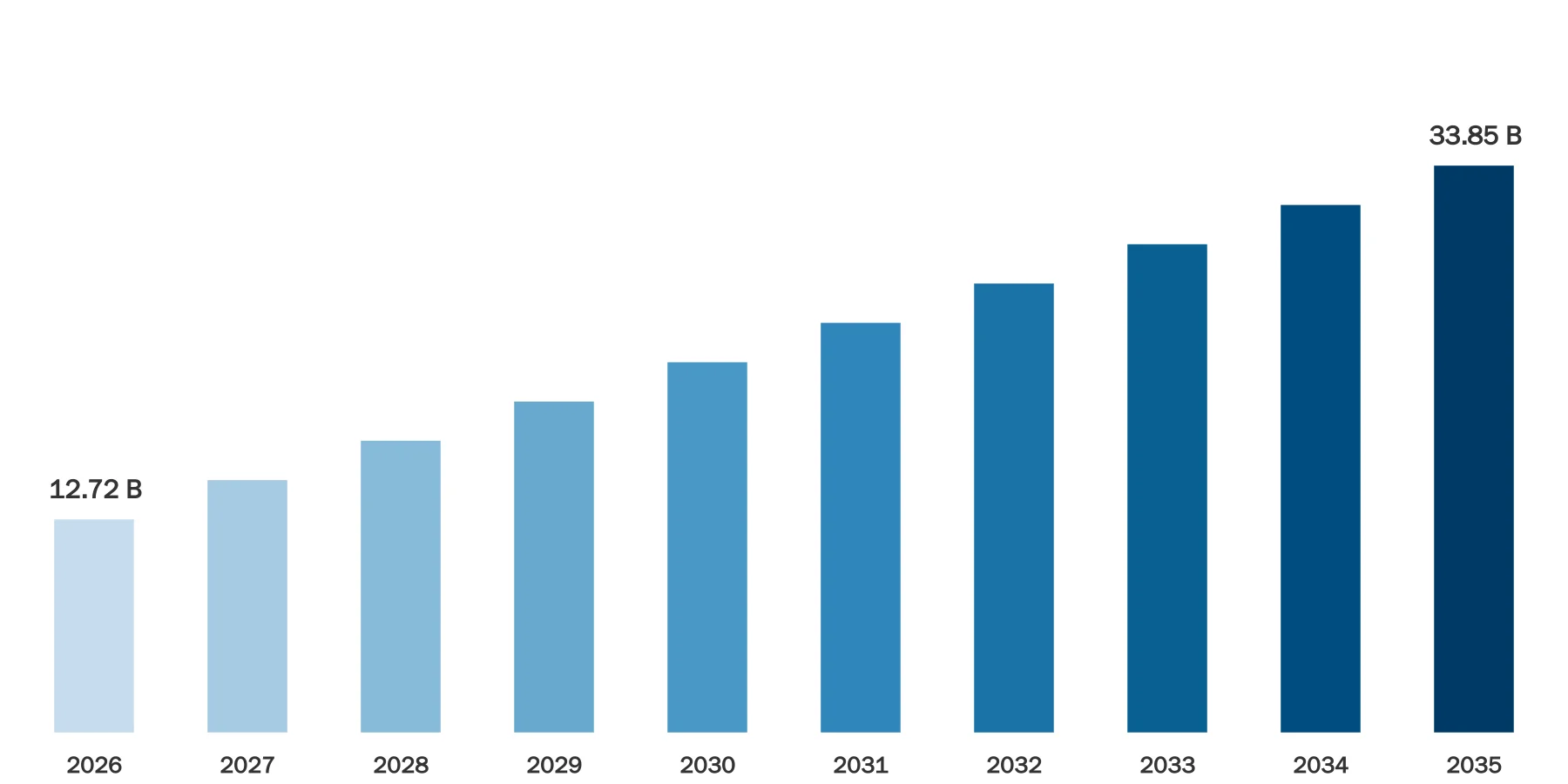
Source: Econ Market Research
Global Vehicle Entrance Barrier Systems refer to creating barriers that control and manage the entry of vehicles into different areas like parking lots, residential complexes, and commercial buildings. These barriers can be gates, bollards, or barriers that use technology like sensors and access control to effectively regulate vehicle access. As the world',s need for security and traffic management solutions continues to rise, the demand for entrance barrier systems has been steadily increasing. The market caters to various industries such as transportation, logistics, residential, and commercial real estate by providing improved safety and access control solutions.
In recent years, the Global Vehicle Entrance Barrier Systems market has seen a big growth, due to urbanization, rising worries about security risks, and the demand for better traffic management solutions. Governments, businesses, and property owners are spending in advanced entrance barrier systems to improve security and streamline vehicle access in different places. The market is marked by technological progress, with manufacturers constantly coming up with more resilient, easy-to-use solutions that include smart features like remote monitoring and automated access control. Moreover, the increasing popularity of smart cities and the use of IoT technology are driving the need for more advanced entrance barriers. These systems are essential for controlling vehicle flow and maintaining safety in city settings.
Vehicle Entrance Barrier Systems Dynamics
The Global Vehicle Entrance Barrier Systems industry is influenced by many factors like demand, technology, regulations, and competition. One key factor is the growing emphasis on security globally due to concerns about unauthorized access, theft, and terrorism. This has led to increased investments in advanced entrance barrier systems by governments, businesses, and property owners to improve security in public areas, commercial buildings, and critical facilities. Additionally, as more people move to cities and the number of cars on the road increases, the need for entrance barriers to control vehicle access and keep traffic moving smoothly in busy city centre&rsquo,s is only growing.
Technology plays a crucial role in shaping the market for vehicle entrance barriers. Manufacturers are always coming up with new ideas to create solutions with better features, like sensors, automated access controls, and remote monitoring. These advances not only make entrance barriers more efficient and effective but also meet the changing needs of customers who want to connect their barriers with smart city infrastructure and IoT devices.
Additionally, regulations and compliance standards affect the market by impacting product development, installation methods, and safety rules. Manufacturers need to follow stringent rules and obtain certifications to make sure their entrance barriers are reliable, durable, and safe. This significantly affects market trends by influencing how products are distinguished and positioned against competitors.
Vehicle Entrance Barrier Systems Drivers
Increasing Security Concerns
There is a growing worry about security issues like theft, vandalism, and terrorist attacks, leading to a higher need for vehicle entrance barrier systems. Governments, businesses, and property owners are putting more money into these systems to improve security in places like airports, government buildings, shopping centres, and neighbourhoods.
The push to monitor and manage vehicle entry into important areas is driving the use of advanced barrier systems with features like biometric access control, surveillance cameras, and automated vehicle identification. As security continues to be a major concern globally, the need for entrance barrier systems is projected to see consistent growth in the coming years.
Urbanization and Traffic Management Needs
Urbanization and the growing number of vehicles on the road are key factors fuelling the demand for vehicle entrance barrier systems. With cities becoming more crowded, issues like traffic jams, parking problems, and pedestrian safety concerns are on the rise. Entrance barrier systems offer a solution by controlling vehicle entry into parking facilities, restricted zones, and pedestrian areas.
The rise of smart city projects and IoT technology is also boosting the need for advanced barrier systems that can work together with traffic management systems to provide instant data for better decision-making. As urbanization trends persist, the demand for entrance barrier systems as part of comprehensive traffic management solutions is expected to rise.
Vehicle Entrance Barrier Systems Restraints:
The main obstacle hindering the growth of the vehicle entrance barrier systems market is the expensive upfront costs involved in installing and implementing these systems. Small businesses and organizations with limited budgets can find it particularly challenging to afford the necessary barrier equipment, infrastructure setup, and integration with existing security systems. Furthermore, the ongoing maintenance expenses further contribute to the overall cost of owning and operating these systems, making it difficult for adoption to take place in financially constrained regions.
Complexity of Integration
The market faces a challenge in integrating entrance barrier systems with existing infrastructure and security systems. Many organizations already have established security protocols and access control systems in place, which cannot be easily compatible with new barrier solutions. This integration process often requires customization, software development, and coordination with multiple stakeholders, leading to complexities and potential delays in implementation. Additionally, interoperability issues between different vendors', systems can further complicate the integration process, making it challenging for organizations to achieve seamless connectivity and functionality across their security infrastructure.
Vehicle Entrance Barrier Systems Opportunities:
Technological Advancements
With technology constantly evolving, there are great possibilities for innovation and expansion in the market for vehicle entrance barrier systems. By incorporating new advancements like Artificial Intelligence, machine learning, and edge computing, manufacturers can create more intelligent and effective barriers that can better detect threats, analyse data, and be monitored remotely. By committing to research and development, companies can stay competitive and provide top-of-the-line products that cater to the changing demands of customers seeking advanced security and access control solutions.
Segment Overview
By Type
By Type, the vehicle entrance barrier systems market is segmented into steel and cast iron. Steel barriers are renowned for their durability, strength, and resistance to corrosion, making them ideal for outdoor applications where robustness is paramount. In places with lots of people like malls, factories, and official buildings, steel barriers are usually chosen because they are very secure.
But if you want something more traditional and pretty, cast iron barriers are a good choice. They are not be as strong as steel, but they are great for places like old landmarks, parks, and fancy neighbourhoods where looks are important. Each type of barrier has its own perks and is suited for different places and tastes, depending on factors like location, safety concerns, and design choices.
By Application
By Application, the vehicle entrance barrier systems are segmented into Roads and parks, road applications include a wide range of installations aimed at regulating vehicle access to highways, expressways, toll booths, and other public roadways. Barrier systems in road applications are usually built for handling a large number of vehicles, incorporating features like automatic boom gates, traffic spikes, and integrated access control systems to facilitate smooth traffic flow and improve security.
On the other hand, barrier systems in park applications are more focused on managing vehicle access to recreational areas, green spaces, and public parks. The barriers in parks are designed with a priority on aesthetics, seamlessly blending in with the natural surroundings while effectively controlling vehicle entry to ensure pedestrian safety and protect the environment. These barriers can include decorative bollards, low-profile barriers, and retractable gates that are specifically crafted to complement the landscape and architectural features of the park.
Vehicle Entrance Barrier Systems Overview by Region
In North America, the demand for advanced barrier solutions is driven by infrastructure development and security regulations, especially in cities and critical facilities. Similarly, in Europe, there is a focus on sustainable urban planning and smart city initiatives that impact the adoption of barrier systems with IoT technology and energy-efficient features. The Asia-Pacific region is becoming an attractive market for vehicle entrance barriers, due to the rapid growth of cities, rising car ownership, and investments in transportation.
Countries like China and India are seeing great potential for growth, due to government efforts to improve traffic flow, boost security, and upgrade urban infrastructure. In the Middle East and Africa, the demand for entrance barriers is increasing due to security worries, especially in important sectors like oil and gas, hospitality, and government buildings. The region',s focus on infrastructure development and preparations for major events further boost the demand for barrier systems capable of ensuring Perimeter Security and access control.
Vehicle Entrance Barrier Systems Market Competitive Landscape
Major companies such as Automatic Systems, Avon Barrier Corporation, and APT Controls Group dominate the market with their extensive product portfolios, global presence, and strong focus on technological advancements. These companies continually invest in research and development to introduce innovative barrier solutions equipped with advanced features such as biometric access control, RFID technology, and real-time monitoring capabilities.
Furthermore, partnering with technology providers and system integrators allows these companies to provide customized security solutions for various industries and applications. The industry is also populated by a combination of local companies and new startups aiming to establish themselves by focusing on specific products or niche markets. As the importance of security and access control grows globally, major players are facing heightened competition, prompting them to innovate and expand their market presence in the dynamic vehicle entrance barrier systems market.
Vehicle Entrance Barrier Systems Market Leading Companies:
Automatic Systems Ltd
Avon Barrier Corporation Ltd
APT Controls Group Inc
Frontier Pitts Ltd
Tymetal Corp
Magnetic Autocontrol GmbH
CAME Parkare Ltd
Delta Scientific Corporation
Nasatka Security Inc
Gilgen Door Systems AG
Traffic Tech Group Inc
Perimeter Security Systems Inc
HySecurity Gate Inc
Sunfre International Ltd
Frontier Fortress Ltd
Vehicle Entrance Barrier Systems Report Segmentation
Vehicle Entrance Barrier Systems Market Report Scope & Segmentation
| Attributes | Details |
|---|---|
Market Size (Current) | US$ 12.72 Billion in 2026 |
Market Size (Forecast) | US$ 33.85 Billion in 2035 |
Growth Rate | CAGR of 10.28% from 2026 to 2035 |
Forecast Period | 2026 – 2035 |
Base Year | 2025 |
Historical Data Available | Yes |
Regional Scope | Global |
Segments Covered | By Type
By Access Control Device
By Application
|
Frequently Asked Questions
Common questions about this report
The study period covers historical insights and forecast projections for the period 2026-2035.
About the Author
Market research expert with years of industry experience

Related Reports
Explore more market insights from the same category