

Used Car Market
Used Car Market Size, Share, Trends, Growth, and Industry Analysis, By Vehicle Type (Hatchbacks, Sedans, SUVs andamp; MPVs), By Vendor Type (Organized, Unorganized), By Fuel Type (Petrol, Diesel, Others), By Sales Channel (Online, Offline), Regional Analysis and Forecast Period 2026-2035
Market Overview
As per Econ Market Research analysis, the Global Used Car Market generated revenue of US$ 2133 Billion in 2026 and is forecast to achieve US$ 3600 Billion by 2035, at a CAGR of 6% during the study period 2026–2035. The base year considered is 2025.
Used Car Market Size 2025-2035 (USD Billion)

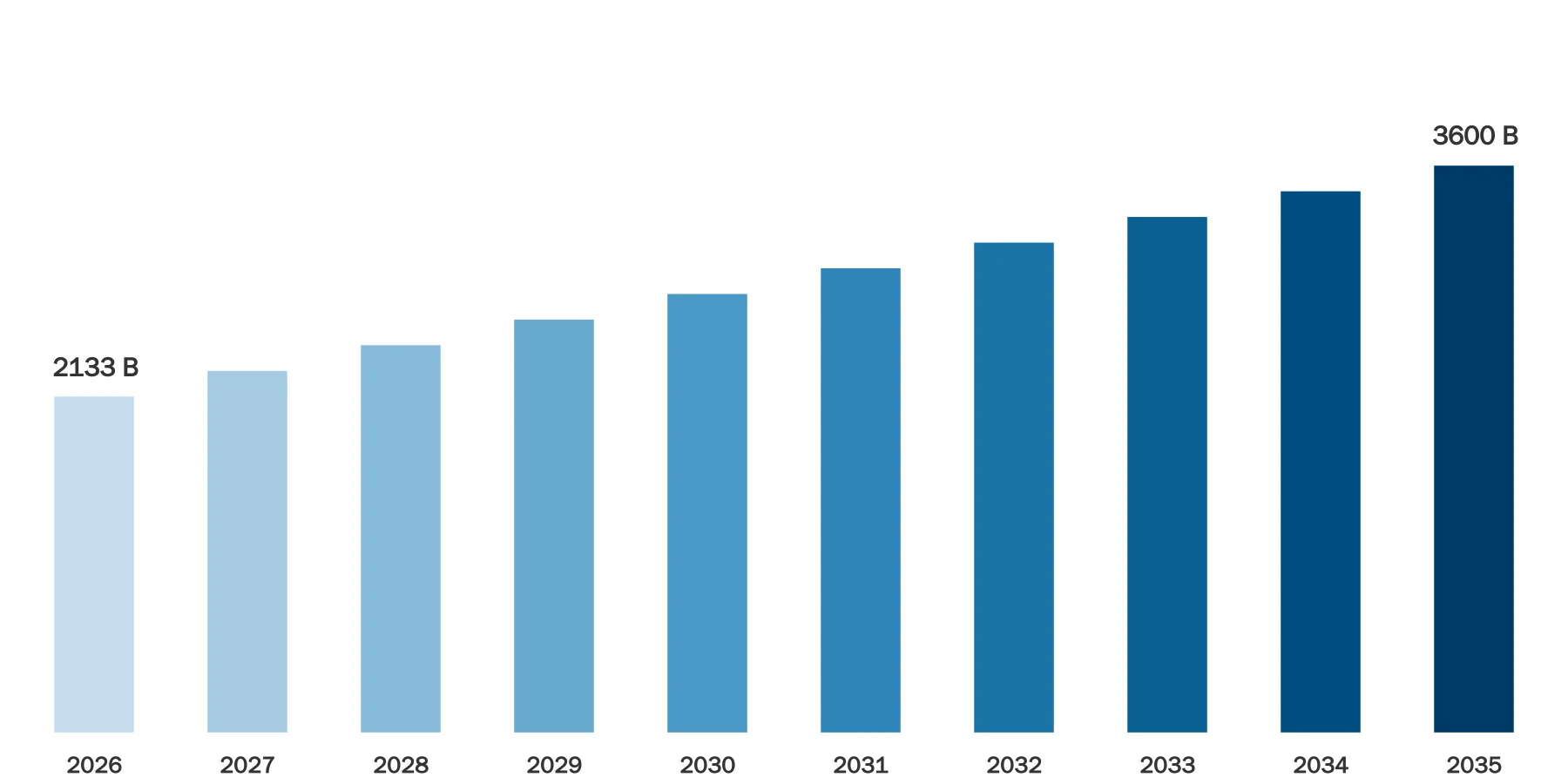
Source: Econ Market Research
Since its beginning, the used automobile market has developed into a booming sector of the economy. It began as a small marketplace for purchasing and selling used cars, but it has grown into a vibrant industry serving a wide range of consumer demands. Accessibility and transparency in the market have greatly enhanced with the advent of digital platforms and technical breakthroughs. The affordability of buying used automobiles appeals to buyers since it allows them to acquire a dependable car for a much lower price than a new one.
The purchasers have more options thanks to the increased range of models, manufacturers, and years available, which suit a range of budgets and tastes. The market has gotten more structured over time, and consumers now feel more confident thanks to certified pre-owned programs and rigorous quality checks. Depreciation rates, vehicle history reports, and warranties are a few examples of factors that have significantly impacted consumer views and increased confidence in used car purchases. The used automobile market has grown significantly due to this maturation, providing a desirable substitute for purchasing new cars while continuously changing to satisfy customers', needs.
Used Car Market Dynamics
Economic swings have a significant effect on market dynamics, influencing both supply and demand. Used car demand typically increases during recessions as buyers look for less expensive alternatives to brand-new cars. On the other hand, when things are good and people have more money to spend, the market for used automobiles may decrease and buying a new car may become more viable. Depreciation rates on automobiles have a big impact on market dynamics as well, some models hold their worth better than others, which affects price and consumer preferences.
The market is also being reshaped by changes in customer choices and technology, such as the increasing popularity of electric or hybrid cars. External variables that affect market dynamics and change the popularity of particular car types or brands include fuel prices, government regulations, and improvements in automotive technology. The conventional dynamics of the used automobile market have been impacted by the rise of online platforms and digital marketplaces, which have revolutionized the buying and selling process by providing greater ease and transparency. These complex processes are always changing, influencing the direction and patterns of the sector.
Used Car Market Drivers
Expansion of Online Platforms
In the used car industry, the rise of internet platforms has been identified as a transformative factor that is changing the way buyers and sellers transact and engage with automobiles. By offering a virtual marketplace where consumers can examine a wide range of options without being limited by geography, these platforms have democratized access. Consumer behavior has changed dramatically as a result of the ease with which one may peruse many ads, evaluate costs, and obtain vehicle history reports from the comfort of one',s home.
Additionally, these platforms promote confidence among consumers by providing comprehensive information about the vehicle',s condition, service history, and frequently, user-generated evaluations. The buying process has been simplified and made more hassle-free by the opportunity to negotiate, make transactions, and even schedule delivery or inspections online. These platforms give vendors access to a wider audience, which helps them display their goods and boost sales. The growth of internet platforms has changed consumer expectations and improved accessibility, pushing the used automobile sector as a whole toward increased efficiency, convenience, and transparency.
Innovative Financing Solutions
These solutions cover a wide range of innovative financing options designed especially for used car purchases and are suitable for a variety of different financial situations. There are now more ways for consumers to purchase pre-owned cars thanks to alternative financing models including flexible payment plans, lease-to-own agreements, and subscription-based services. By reducing the initial out-of-pocket costs connected with buying a used automobile, these programs make it more affordable for people on a tighter budget or looking for more flexible payment plans.
Further aiding in the purchasing process are partnerships among financial institutions, dealerships, and online platforms, which have sparked the creation of user-friendly loan application procedures, speedy approvals, and affordable interest rates. These creative financing options not only increase the number of prospective purchasers but also persuade those who might have been reluctant to acquire a used car because of financial limitations. In the end, these financial innovations greatly aid in the democratization of car ownership by increasing the accessibility of high-quality used cars to a wider range of buyers.
Restraints:
Depreciation and Resale Value
Vehicles depreciate relatively quickly after purchase, which affects resale values and poses a problem for sellers as well as purchasers', views of value retention. High rates of depreciation put off prospective purchasers who fear significant future losses in resale value, especially in some makes or models. This factor limits the market since buyers frequently give preference to cars with higher predicted resale values, which affects the demand for particular models.
Additionally, a car',s depreciation curve influences loan-to-value ratios and financing conditions, which impacts buyers', financing alternatives and affordability. This problem also makes it more difficult for people to sell or trade in their old cars, which reduces their ability to afford a fresh one. Overall, market sentiments are influenced by perceived and actual depreciation rates, which impact the desire of buyers and sellers to conduct transactions and limit the used automobile market',s ability to expand and remain flexible.
Rising Repair and Maintenance Costs
Vehicle wear and tear and technical problems are more likely to occur as cars get older, which means more frequent and perhaps costly repairs are required. This fact discourages purchasers who are unwilling to invest in specific secondhand models because they fear inheriting cars that need repairs soon. In addition, dealers find it difficult to market older cars because of worries regarding maintenance records and possible future costs.
This constraint is made worse by the growing expenses of labor and parts, which make repairs more expensive for both buyers and sellers. This affects pricing discussions and market demand as a whole. High repair expenses also have an impact on how much people think used cars are worth, which lowers resale values and lengthens the time sellers must wait to sell their vehicles. These dynamic limits the flexibility of the industry, affecting consumer confidence and the possibility for the used car market to flourish as people become hesitant to purchase cars that would require high ongoing maintenance costs.
Opportunities:
Growing Demand for Affordable Transportation
A growing number of people, particularly young professionals, students, and cost-conscious families, are looking for affordable and dependable modes of transportation as the economy changes. This demand is met by used automobiles, which provide a more affordable entry point into car ownership than new models. The market for used cars offers a value proposition that is in line with the growing demand for used cars because they depreciate more slowly and are more reasonably priced than new cars.
As a result, dealerships and internet retailers have a chance to serve this growing market by selecting a variety of inventory with an emphasis on cost, dependability, and fuel economy. Seizing this chance entails emphasizing the used automobiles', long-term cost-effectiveness, endorsing their dependability with extensive inspections or certificates, and offering financing choices catered to purchasers on a tight budget. By taking advantage of the need for reasonably priced transportation, the used vehicle market can grow its customer base and establish itself as a key supplier of trustworthy and easily accessible mobility options for a variety of people.
Rising Interest in Pre-Owned Electric Vehicles
The increasing demand for affordable sustainability and environmental consciousness in tandem with the growing interest in pre-owned electric vehicles (EVs) creates a strong opportunity in the used automobile industry. A rush of early adopters switching to newer EV models is creating a secondary market for pre-owned electric vehicles as the Electric Vehicle environment changes. This emerging market serves environmentally aware clients who want to lessen their carbon footprint without having to pay the high initial cost of a brand-new electric automobile.
Dealerships and internet platforms can benefit from this trend by selecting and promoting used EVs and highlighting their affordability and environmentally good qualities. Additionally, it offers a chance to inform customers about the long-term advantages of owning an EV, like cheaper operating expenses and a smaller environmental effect. Pre-owned EV confidence can be increased by providing warranties on battery life or by utilizing advances in battery technology. Taking advantage of this opportunity means highlighting the benefits of used electric cars (EVs), demonstrating their dependability, and building consumer confidence in the durability and quality of these cars.
Segment Overview
By Vehicle Type
Based on vehicle type, the global used car market is divided into hybrid, conventional, and electric. The conventional category dominates the market with the largest revenue share in 2023. These cars only have internal combustion engines that run on diesel or gasoline. They make up the majority of the used automobile market and are available in a range of shapes, sizes, and fuel efficiency levels. Conventional automobiles are known for their vast range of options and affordability on the used car market. However, their fuel consumption, performance, and environmental effect vary greatly.
Electric power that is kept in a battery is all that EVs use to run. They are regarded as environmentally benign and emit no pollutants when in use. Due to their lack of typical fuel requirements, pre-owned electric cars provide a cost-effective substitute for conventional cars in the used car market, making them attractive to consumers looking to lessen their carbon footprint and save money on operating expenses. An electric motor and internal combustion engine are combined in hybrid vehicles. In a hybrid vehicle, the gasoline engine is used at greater speeds or when more power is required. The electric motor is used largely at lower speeds or during acceleration. When it comes to secondhand cars, hybrids are more fuel-efficient than regular gasoline-powered vehicles.
By Vendor Type
Based on the vendor type, the global used car market is categorized into organized and unorganized. The organized category leads the global used car market with the largest revenue share in 2023. This market includes reputable, regulated avenues for used car sales and purchases. It consists of manufacturer-approved pre-owned programs, authorized dealerships, and internet marketplaces for used car sales. Typically, organized dealers follow industry guidelines, give structured financing choices, carry out comprehensive inspections, provide guarantees or certifications.
On the other hand, used car trades take place through unofficial methods in the unorganized market. This industry comprises private sellers, tiny independent dealers, and neighborhood markets where automobiles are offered for sale without the need for formal warranties, certificates, or defined procedures. Transactions in this industry may be opaque, lack thorough car histories, or lack legal documents, which could lead to questions about the vehicles', dependability, legality, and quality.
By Fuel Type
Based on fuel type, the global used car market is segmented into diesel, petrol, and others. The petrol segment dominates the used car market. The fuel used in these cars is gasoline (petrol). In comparison to diesel engines, petrol engines are renowned for their smoothness, rapid acceleration, and lower initial purchase costs. Petrol cars are a versatile option in the used automobile market, with a large selection of models available in a range of sizes and categories. Even while gasoline automobiles may use a little bit more fuel than diesel vehicles, purchasers who value features like smoother rides and reduced pollutants frequently choose gasoline-powered cars. Diesel fuel powers diesel-powered automobiles. Diesel engines are renowned for their increased torque and economy, which makes them appropriate for hauling or long-distance driving.
By Size
Based on size, the global used car market is divided into compact cars, mid-sized, SUVs. The SUVs category dominates the market with the largest revenue share in 2023. SUVs are bigger cars with more storage capacity, greater ground clearance, and frequently four- or all-wheel drive. They are built to be versatile. SUVs are popular among customers looking for extra space, a commanding driving position, and the capacity to handle a variety of terrains and weather conditions when purchasing a used automobile. Families, outdoor lovers, and anyone needing more towing capacity are fond of them.
Mid-sized automobiles provide a middle ground between small cars and bigger SUVs. Compared to compact cars, they offer better comfort, interior space, and frequently more equipment. Mid-sized cars on the used car market appeal to those seeking a roomier, more comfortable ride without the bulk of a larger vehicle. Compact cars are usually more fuel-efficient due to their lower size. They frequently have reduced initial purchase pricing and operational costs, making them perfect for driving in cities and navigating through confined locations. Compact automobiles are popular among individuals and families looking for affordable transportation, convenient parking, and a car that strikes a balance between affordability and usefulness in the used car market.
By Sales Channel
Based on the sales channel, the global used car market is categorized into offline, and online. The offline category leads the global used car market with the largest revenue share in 2023. The conventional, physical channels for purchasing and selling old vehicles are included in this category. It consists of physical dealerships, nearby used car lots, auctions, private sales, and classified ads in periodicals. Buyers can physically examine cars, go on test drives, and haggle over prices in person when shopping offline.
Dealerships are geographically constrained but nevertheless provide a personalized experience with services like financing, trade-ins, and on-site inspections. The internet category includes websites and digital platforms that are specifically designed to make used automobile transactions easier. These platforms include dealer websites, auction websites, and online marketplaces where buyers and sellers engage in virtual commerce. Online resources provide a large range of automobiles, a wealth of information about the cars, and the ease of perusing and buying from any location with an internet connection.
Used Car Market Overview by Region
The global used car market is categorized into North America, Europe, Asia-Pacific, and the Rest of the World. North America emerged as the leading region, capturing the largest market share in 2023. The area is fortunate to have a strong automotive culture that is engrained in the community, as many people in the area depend on their cars for everyday commuting.
The availability of used automobiles is greatly influenced by the maturity of the market as well as a high volume of vehicle turnover brought on by desires for newer models and frequent updates. Additionally, the variety of car models available in North America accommodates a wide range of consumer preferences about size, manufacture, model, and fuel type. Due to this diversity, a large range of secondhand cars are available to suit various needs and price ranges. Buying and selling used cars is now more accessible and convenient because to the growth of reputable dealership networks, internet marketplaces, and auction houses.
Throughout the projection period, the Asia-Pacific area is expected to experience the highest compound annual growth rate (CAGR). The increase in demand for personal vehicles in this region is being driven by rapid urbanization, growing middle-class populations, and rising disposable incomes in each of the member countries. In addition, the market for used cars is expanding due to consumer preferences for more cheap transportation options and a move towards a more modern way of living. Asia-Pacific',s emerging markets offer unrealized potential and support a robust used car market, which makes the region essential for significant market growth and development.
Used Car Market Competitive Landscape
In the global used car market, a few major players exert significant market dominance and have established a strong regional presence. These leading companies remain committed to continuous research and development endeavors and actively engage in strategic growth initiatives, including product development, launches, joint ventures, and partnerships. By pursuing these strategies, these companies aim to strengthen their market position, expand their customer base, and capture a substantial market share.
Some of the prominent players in the global used car market include,
Alibaba.com.
CarMax Enterprise Services, LLC
Asbury Automotive Group
TrueCar, Inc.
Scout24 SE
Lithia Motor Inc.
Group 1 Automotive, Inc
eBay.com
Hendrick Automotive Group
AutoNation.com, and various others.
Used Car Market Recent Developments
In August 2023, CarTrade is open to additional auto and Autotech acquisitions. CarTrade had 1,100 crore in cash reserves and no debt before to the OLX takeover. For 535.54 crore, OLX',s classifieds and auto businesses were acquired.
In June 2023, Southeast Asian auto marketplace Carro partnered with Jardine Cycle &, Carriage Limited, the investment division of Jardine Matheson, a company headquartered in Hong Kong. The firms released a joint statement stating that Carro will be able to enhance Republic Auto',s digital services and capabilities and have access to a wider range of premium used cars as a result of this partnership.
In August 2022, In the Indian market, Lexus, a division of TOYOTA MOTOR CORPORATION, introduced the Lexus Certified Programme. This is a calculated effort on the part of Lexus to allow existing owners of its vehicles to obtain a higher price when they sell their vehicles.
Used Car Market Report Segmentation
Used Car Market Report Scope & Segmentation
| Attributes | Details |
|---|---|
Market Size (Current) | US$ 2133 Billion in 2026 |
Market Size (Forecast) | US$ 3600 Billion in 2035 |
Growth Rate | CAGR of 6% from 2026 to 2035 |
Forecast Period | 2026 – 2035 |
Base Year | 2025 |
Historical Data Available | Yes |
Regional Scope | Global |
Segments Covered | By Vehicle Type
By Vendor Type
By Fuel Type
By Sales Channel
|
Frequently Asked Questions
Common questions about this report
The study period covers historical insights and forecast projections for the period 2026-2035.
About the Author
Market research expert with years of industry experience

Related Reports
Explore more market insights from the same category