

Succulent Plant Market
Succulent Plant Market Size, Share, Trends, Growth, and Industry Analysis, By Type (Cacti, Aloe Vera, Crassula, Sedum), By Application (Residential (Home Decor), Commercial (Office, Landscaping)), Regional Analysis and Forecast Period 2026-2035
Succulent Plant Market Overview
As per Econ Market Research analysis, the Global Succulent Plant Market size amounted to US$ 8.48 Billion in 2026 and is anticipated to grow to US$ 32.29 Billion by 2035, recording a CAGR of 16.02% during 2026–2035. The base year taken for analysis is 2025.
Succulent Plant Market Size 2025-2035 (USD Billion)

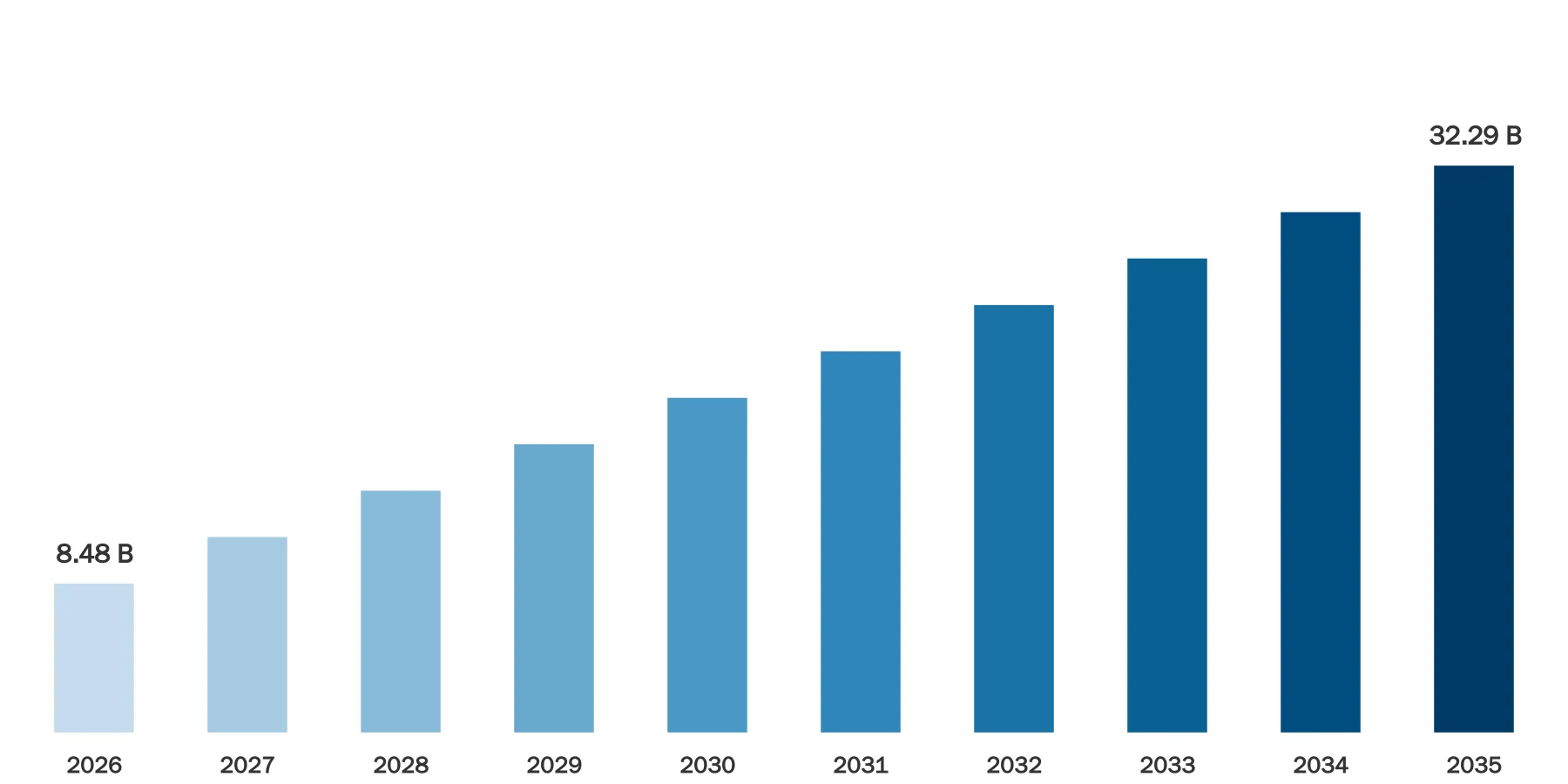
Source: Econ Market Research
Succulent Plant are adapted to survive in dry environments and are popular for their unique appearance and low maintenance requirements. Succulents come in a wide variety of shapes, sizes, and colors, making them highly sought after for decorative purposes in homes, offices, and gardens. The market for succulent plants has been growing rapidly as more consumers seek low-maintenance plants for indoor and outdoor spaces.
Succulents have gained popularity in recent years due to their aesthetic appeal, ease of care, and the growing trend of plant-based decor. As urbanization increases and more people live in apartments or smaller spaces, succulents provide a practical solution for adding greenery to homes and offices without requiring large amounts of water or sunlight. Online plant sales and social media sites, in which succulents are also often featured, have also added to their popularity. The environmental benefits of the plants are further boosted by increased awareness of their ability to thrive with minimal resources.
Dynamic Insights
As urbanization keeps growing, the number of people living in small spaces, like apartments and condos, is on the rise, where succulents are ideal due to their compact size and minimal care. This trend also gets support from the growing emphasis on wellness and biophilic design, as adding plants indoors is considered a positive influence on Mental Health and air quality. Online plant stores and social media also have boosted the popularity of succulents by making them easily accessible and visible. Most social media influencers and plant enthusiasts feature different kinds of succulents, making the online community really strong.
Consumers are being influenced by all this, and with environmental sustainability awareness rising, more people want plants that need less water and maintenance, therefore, there is a growth in succulent popularity. Supply-side innovations in breeding and packaging combined with the increase in specialized nurseries have helped to make available a wider range of succulents to the diverse tastes of consumers. The challenges in this regard may, however, arise from climate change and supply chain disruptions that will affect the plant',s availability and pricing.
Drivers Insights
Increasing Popularity of Indoor Plants:
The growing trend of indoor gardening and plant decor has significantly increased the demand for succulents. Succulents are a popular choice because they require minimal maintenance and have an aesthetic appeal, which people are looking to create in their homes and offices to make them feel more natural and calm. The health benefits of plants in improving air quality and mental health have also added to the increased adoption of succulents in indoor spaces.
Succulents are practical in urban areas, where residents have limited outdoor space, as they thrive in small containers and require minimal care, making them ideal for apartment dwellers. This growing trend of incorporating greenery into interiors, coupled with the rise of home decor influencers showcasing plants, has been a major driver in the market.
Low Maintenance and Water Efficiency:
Succulent plants are famous for their ability to survive in very harsh, dry conditions because they store water in their leaves and stems. This is why consumers seek them out for low-maintenance plants that do not need frequent watering or attention. In regions where water conservation is a growing concern, succulents offer an eco-friendly alternative to other plants that need regular watering. This characteristic has become a major selling point, especially in areas affected by water scarcity or drought conditions, further driving the demand for succulents in both residential and commercial spaces.
Restraints Insights
Climate Sensitivity and Limited Adaptability:
While succulents are hardy and can thrive in dry climates, they may struggle in regions with high humidity or extreme cold. This sensitivity to climate can limit their adoption in certain areas, especially regions with inconsistent weather patterns. In humid environments, succulents can develop mold or rot, while in extremely cold climates, they may not survive. These climate-related challenges can pose a restraint on the market',s growth, as retailers may struggle to provide the right conditions for succulent plants in regions where they are not naturally suited to the environment.
Potential for Over-Saturation in the Market:
With increased popularity for succulents comes market saturation, especially in areas that have already largely adopted the plant. Such saturation may also lead to profit margins for nurseries and retailers dropping significantly since more people compete for these customers. Additionally, the sheer number of succulent varieties may cause consumer fatigue and dilute differentiation for the sellers. The over-availability of the supply in areas may also drive down the price, which will significantly affect the bottom line of a supplier, as the smaller grower may fail to keep the pace with massive production.
Opportunities Insights
E-commerce Growth and Online Plant Marketplaces:
E-commerce growth is an excellent opportunity for the succulent plant market. More and more consumers are looking to online platforms to buy plants, and accessing a wide variety of succulents and related products has never been easier. Online marketplaces also allow consumers to research and discover rare and unique succulent varieties that may not be available locally.
This increased accessibility opens doors to new markets and extends consumers beyond the limited confines of your average garden centers. Social media, especially on Instagram and Pinterest, is essential in the promotional process for succulents. They are most often displayed in the pages by plant enthusiasts and influencers, pushing demand even further. This trend in the online buying of plants will mean that e-commerce services with easy delivery and care instruction will benefit more.
Segment Analysis
By Distribution Channel
The global succulent plant market uses different retailing channels to provide plants to consumers. Online stores have gained immense popularity due to the convenience and accessibility they provide, enabling customers to browse an extensive variety of succulents and have them delivered directly to their homes. Garden centers and nurseries are still very traditional and the most popular way to buy succulents.
They offer hands-on shopping experience and expert advice on plant care. Supermarkets and hypermarkets also play a role in distributing succulents, usually by offering plants in their gardening section. Specialty stores, which deal with unique or niche products, also cater to succulent enthusiasts, providing a curated selection of plants. Direct sales from growers and wholesalers to consumers allow for more personalized service and often a wider selection of plants.
By Type
The types of succulents available in the market vary, offering consumers a wide range of choices based on aesthetic preference, care requirements, and growth habits. Popular types such as Aloe Vera, known for its medicinal properties, and Cactus, which is well-adapted to arid environments, dominate the market. Echeveria, Sedum, Crassula, Agave, and Haworthia are other common varieties, each with unique shapes, colors, and growing conditions, making them suitable for different types of gardens or indoor settings. Succulents are often categorized based on their characteristics, such as their ability to withstand harsh conditions or their decorative appeal.
By Application
Succulent plants have a range of applications and hence are very diverse and useful in various settings. Probably the most common use is in home decorations because most succulents are used to add greenery and enhance the aesthetic appeal of the home. Landscaping and gardening also account for a good percentage of the market share due to its suitability in creating drought-tolerant designs that can be very low maintenance when implemented in an outdoor space. Commercial use has also increased, with businesses incorporating succulents into office spaces or retail environments to create a calming atmosphere. Others have been used in the medicinal industry for healing purposes, such as Aloe Vera, while others are used in the cosmetic industry for their benefits to the skin.
By End-User
End-users of succulents include the individual consumer as well as businesses that are driving this market in distinct ways. For the most part, individual consumers are the big buyers, but they buy the succulents for personal consumption, either as part of a home dé,cor item, a garden plant, or hobby plant. Commercial establishments like offices, hotels, and restaurants also contribute to the market, incorporating succulents into interior designs for aesthetic and environmental value. Nurseries and garden centers are very important in the supply chain, both as retail outlets and growers of succulents for individual consumers and other businesses. Retailers, whether physical or online, act as intermediaries, offering a range of succulent plants to a wide audience and capitalizing on growing consumer interest.
By Growing Environment
Succulent plants are classified based on the environment where they can grow, and that environment impacts their growth and care. Succulents for indoors are growing in popularity because more people are trying to include some greenery in their home space, especially in urban settings where outdoor space may be at a minimum. Succulents that can grow indoors are preferred for their low light and minimal water requirements.
On the other hand, outdoor plants are more commonly suited to open natural environments that allow them to grow under direct sunlight and an open soil setting. Succulents in open settings are most often used for landscaping and other garden designs so that they could be part of a water-friendly, low maintenance garden. The indoor and outdoor settings each bring about unique difficulties and benefits and consumers opt for succulents based on what best fits their needs for space, care, and aesthetic appeal.
Regional Analysis
North America, especially the United States, also holds a vast share of this market, supported by the booming trend of indoor gardening, new home dé,cor themes, and consumers', interest in low-maintenance plants. It is also an urban area trend where consumers desire compact and easily cared-for plants. Online sales have also made the region gain growth as more people can acquire succulents. In Europe, demand for succulents is strong, especially in the United Kingdom, Germany, and the Netherlands, where gardening and home decoration are part of the culture. The trend of bringing greenery into homes and workplaces has been a significant driver in these markets.
The succulent plant market in Asia-Pacific is increasing with growing disposable incomes, urbanization, and a rising interest in gardening as a hobby. Countries like China, Japan, and South Korea have seen increased demand for succulents, particularly in urban areas where space is limited. The Middle East and Africa are emerging markets for succulents, with the UAE and Saudi Arabia adopting them in residential and commercial spaces because of their strength in hot, arid climates. Latin America, especially Brazil and Mexico, is gaining popularity for succulents due to their aesthetic appeal and adaptability to diverse climates.
Competitive Landscape
Key players in the market include established nurseries, such as Costa Farms, The Home Depot, and Lowe&rsquo,s, which dominate the retail sector by offering a wide variety of succulents to a broad customer base. These players benefit from large-scale operations, extensive distribution networks, and the ability to reach both online and offline customers, making succulents readily available to consumers. These are complemented by the competitive landscape in the online world by providing the consumers with ample succulents options that they can avail with the ease of home delivery at the platform, including Amazon, Etsy, and dedicated plant shops. Another strength of smaller, specialized retailers and nurseries lies in offering special, unusual, or even unavailable succulent species to the aficionados and collectors.
Most such companies have used the growth trend of specialty gardening by giving each customer attention with advice on growing plants. The regional players play a big role in this competition as well since they respond better to the localized consumer demand, thereby having deeper knowledge about growing conditions in different regions. The growing concern for sustainable gardening practices has created a surge in eco-friendly succulent suppliers, which focus on water-efficient plants and environmentally friendly cultivation methods. The market remains fragmented, with various players competing based on product variety, quality, pricing, and customer service.
List of Key Players
Altman Plants
Eurocactus
Qingdao Brilliant East International
Costa Farms
Min Hui Horticultural Co., Ltd.
AdeniumRose Company
BC Partners
Peace Tree Farm
Avant Gardens
Yiwu Lishi
The Greenhouse
AG 3 Inc
Global Succulent Plant Report Segmentation
Succulent Plant Market Report Scope & Segmentation
| Attributes | Details |
|---|---|
Market Size (Current) | US$ 8.48 Billion in 2026 |
Market Size (Forecast) | US$ 32.29 Billion in 2035 |
Growth Rate | CAGR of 16.02% from 2026 to 2035 |
Forecast Period | 2026 – 2035 |
Base Year | 2025 |
Historical Data Available | Yes |
Regional Scope | Global |
Segments Covered | By Type
By Application
|
Frequently Asked Questions
Common questions about this report
The study period covers historical insights and forecast projections for the period 2026-2035.
About the Author
Market research expert with years of industry experience

Related Reports
Explore more market insights from the same category