Spirometer Market Overview
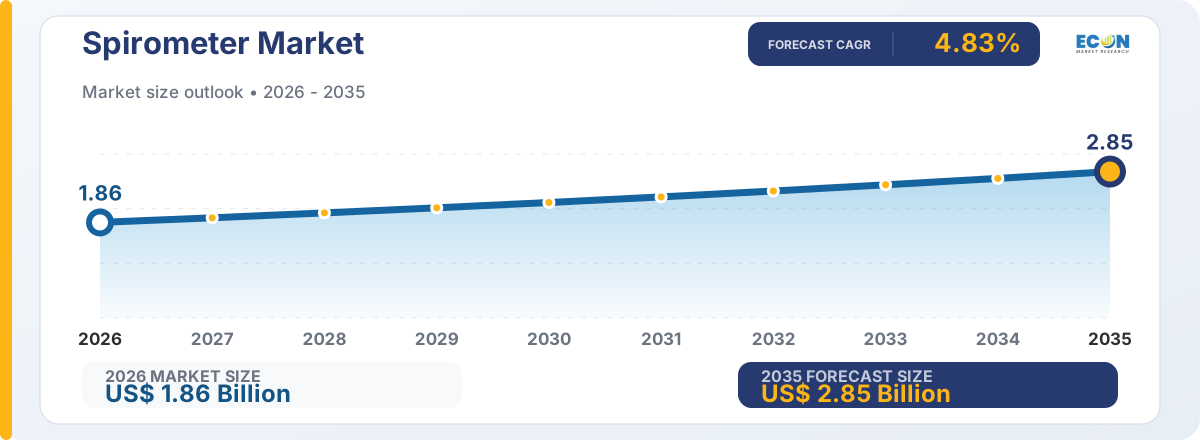
As per Econ Market Research analysis, the Global Spirometer Market was valued at approximately US$ 1.86 Billion in 2026 and is predicted to reach US$ 2.85 Billion by 2035, expanding at a CAGR of 4.83% over the forecast duration. The base year is 2025.
A spirometer is a medical tool that helps with respiratory condition monitoring and diagnosis by measuring the amount of air that is inspired and exhaled by the lungs. The growing understanding of the value of early detection and treatment of respiratory disorders, along with technological developments that improve the precision and efficacy of spirometry testing, are driving the market. Spirometer demand is rising as a result of the COVID-19 pandemic',s increased emphasis on respiratory health and the importance of pulmonary function testing in healthcare systems.
The market for spirometers is distinguished by the incorporation of intelligent and lightweight gadgets, which facilitate distant observation and enhance patient involvement. Given the rise in popularity of telehealth and home-based care in the current healthcare environment, this trend is especially important. The growing market is also aided by the ageing of the world',s population and the rise in respiratory problems linked to ageing. Spirometry is becoming more widely used as a useful tool for early intervention and individualised treatment plans as governments and healthcare organisations around the world place a greater emphasis on preventative healthcare measures.
Spirometer Dynamics
The rising global prevalence of respiratory conditions such as COPD, asthma, and pulmonary fibrosis is one of the main causes. Spirometer demand is being driven by growing recognition of the significance of early diagnosis and monitoring of respiratory conditions. Spirometry devices are becoming more user-friendly and enabling remote monitoring thanks to technological advancements like smart feature integration and portability. This is in line with the growing trend of telehealth and home-based care.
The importance of respiratory health has been highlighted by the COVID-19 pandemic, which has LED to a surge in the use of spirometry for evaluating lung function and identifying possible complications. The growing market is also aided by the ageing of the world',s population, as respiratory problems are more common in the elderly. Governments and healthcare organizations are emphasizing preventive healthcare measures, fostering the integration of spirometry into routine health assessments.
Spirometer Drivers
Increasing Prevalence of Respiratory Disorders
The global spirometer market is significantly influenced by the rising prevalence of respiratory conditions like pulmonary fibrosis, asthma, and chronic obstructive pulmonary disease (COPD). The prevalence of respiratory disorders is rising due to an ageing population and a growing global population, making spirometry essential for early illness detection, precise diagnosis, and efficient treatment. Lifestyle choices, pollution in the environment, and the COVID-19 pandemic',s aftereffects all contribute to this trend',s acceleration and raise the need for spirometry equipment.
Technological Advancements and Integration of Smart Features
Continuous technological advancements in spirometry devices, including the integration of smart features, are driving market growth. The development of portable and user-friendly spirometers enhances accessibility and facilitates remote monitoring, aligning with the increasing adoption of telehealth and home-based care. Smart spirometers offer real-time data collection, analysis, and transmission capabilities, empowering healthcare professionals to make informed decisions promptly. This not only improves patient care but also streamlines the diagnostic process, making spirometry an integral tool in the evolving landscape of connected healthcare.
Restraints:
High Cost of Spirometry Devices
The growth of the spirometry market is hindered by the high cost of these devices. Despite the advanced features and capabilities that these devices offer, their high upfront costs may be problematic, particularly in healthcare settings with limited resources. The widespread adoption of spirometry technology is hindered by healthcare providers', ongoing concerns about affordability, especially in developing nations where financial constraints are severe.
Limited Reimbursement Policies
The limited or inconsistent reimbursement policies for spirometry testing impede market expansion. Reimbursement challenges, including variations in coverage and reimbursement rates, create barriers for both healthcare providers and patients. This can lead to a reluctance to invest in spirometry equipment and may limit patient access to essential respiratory diagnostics, hindering market growth and the widespread adoption of spirometry testing.
Opportunities:
Rapid Growth in Telehealth Services
For the spirometer market, the quick growth of telehealth services offers a big opportunity. Spirometry devices that facilitate remote monitoring and data transmission are expected to become more common as telehealth becomes a widely accepted model for delivering healthcare. Spirometry integration with telehealth platforms can improve patient access to respiratory care by enabling at-home testing while medical professionals monitor and treat patients', respiratory conditions from a distance.
Segment Overview
By Product Type
The spirometer market is categorized into three primary product types: devices, software, and accessories &, consumables. Spirometry devices are the hardware components used for measuring lung function, capturing vital respiratory parameters. The software segment includes applications that facilitate data analysis, interpretation, and storage of spirometry results, contributing to a comprehensive respiratory assessment. Accessories and consumables encompass items such as disposable mouthpieces and filters essential for maintaining hygiene and accuracy during spirometry testing. Together, these product types form an integrated ecosystem that enables healthcare professionals to conduct precise respiratory diagnostics and manage pulmonary conditions effectively.
By Type
The segmentation by type distinguishes between volume measurement and peak flow meters within the spirometer market. Volume measurement spirometers assess the amount of air a patient can inhale and exhale, providing detailed insights into lung capacity and function. On the other hand, peak flow meters focus on measuring the maximum speed of exhalation, aiding in the detection of airflow limitations. This dual categorization ensures that healthcare providers have a range of spirometry tools at their disposal, allowing for a nuanced approach to respiratory diagnostics tailored to specific patient needs.
By Application
The application segment of the spirometer market encompasses various respiratory conditions, with a primary focus on Chronic Obstructive Pulmonary Disorder (COPD), asthma, and other respiratory ailments. Spirometry plays a pivotal role in diagnosing and monitoring COPD, a prevalent and progressive lung disease. Additionally, it is instrumental in assessing asthma severity and providing valuable data for treatment adjustments. The broader category of ",Others", includes the application of spirometry in diagnosing a spectrum of respiratory disorders beyond COPD and asthma, further highlighting the versatility of spirometry in addressing diverse pulmonary health challenges.
By End User
The end-user segmentation encompasses a spectrum of healthcare facilities utilizing spirometry for respiratory diagnostics. Hospitals and diagnostic centers serve as primary hubs for comprehensive respiratory assessments, catering to both inpatient and outpatient needs. Homecare settings leverage portable spirometry devices for monitoring and managing respiratory conditions in the comfort of patients', homes.
Physician/primary care offices, clinics, and other healthcare facilities also play crucial roles in integrating spirometry into routine healthcare, ensuring widespread accessibility and utilization across diverse healthcare settings. This segmented approach ensures that spirometry technology is tailored to meet the specific requirements of various healthcare environments, promoting its widespread adoption and effective use in diverse clinical scenarios.
Spirometer Overview by Region
North America, with its well-established healthcare system and high prevalence of respiratory diseases, stands as a significant market contributor. The region',s focus on adopting advanced technologies, coupled with a rising aging population, fuels the demand for spirometry devices. Europe follows suit, with a strong emphasis on preventive healthcare and a growing awareness of respiratory health contributing to market growth. The Asia-Pacific region is witnessing robust growth, driven by the increasing incidence of respiratory conditions, particularly in densely populated countries. Government initiatives to enhance healthcare infrastructure and rising healthcare expenditure further stimulate the adoption of spirometry technology in this region.
In Latin America and the Middle East, spirometer market growth is influenced by a mix of economic factors, disease prevalence, and healthcare accessibility. Latin America experiences a growing awareness of respiratory health, prompting increased adoption of spirometry devices, while the Middle East witnesses a rising incidence of lifestyle-related respiratory disorders. The African continent, though currently at a nascent stage in terms of market contribution, holds potential for growth as healthcare awareness and infrastructure development progress.
Spirometer Market Competitive Landscape
Leading companies such as BD (Becton, Dickinson and Company), Hill-Rom Holdings, Inc., and Medtronic plc dominate the market with their extensive product portfolios and global reach. These companies emphasize research and development to introduce advanced spirometry devices, incorporating features such as wireless connectivity, user-friendly interfaces, and integration with Electronic Health Records.
Additionally, the market showcases a vibrant ecosystem of emerging players and startups, contributing to the diversification of product offerings and fostering competition. Companies like Vitalograph Ltd., ndd Medizintechnik AG, and MIR Medical International Research S.r.l. are gaining prominence by focusing on niche segments, geographic expansion, and technological innovation. The competitive landscape also witnesses strategic collaborations and partnerships, with companies seeking to enhance their market presence through joint ventures, distribution agreements, and mergers and acquisitions.
Key Players:
MGC Diagnostics Corporation
NDD Medical Technologies
KoKo PFT
ICU Medical, Inc.
Koninklijke Philips N.V.
Hill-Rom Holdings, Inc.
Midmark Corporation
Vitalograph
Vyaire Medical
Welch Allyn Inc.
Schiller AG
Spirometer Recent Developments
March 2023, Clario, a healthcare research technology firm specializing in advanced endpoint technology solutions for clinical trials, has officially entered into a collaboration with the technology startup ArtiQ. The primary objective of this partnership is to enhance the reliability of respiratory clinical trials that necessitate spirometry data. Through this newly formed alliance, users of the Clario platform for clinical trials will now have the capability to utilize AI-driven evaluations for reviewing spirometry data.
Nov 2021, On World COPD Day, Cipla unveiled Spirofy, the inaugural pneumotach-based portable and wireless Spirometer in India. This introduction signifies Cipla',s commitment to transforming the diagnosis of Obstructive Airway Disease (OAD) and aligns with its goal to enhance its standing as a prominent figure in respiratory health in India.
Global Spirometer Report Segmentation
Spirometer Market Report Scope & Segmentation
| Attributes | Details |
|---|---|
| Market Size (Current)Current market valuation | US$ 1.86 Billion in 2026 |
| Market Size (Forecast)Projected market valuation | US$ 2.85 Billion in 2035 |
| Growth RateCompound Annual Growth Rate | CAGR of 4.83% from 2026 to 2035 |
| Forecast PeriodAnalysis timeline | 2026 – 2035 |
| Base YearReference year for analysis | 2025 |
| Historical Data AvailablePast market data availability | Yes |
| Regional ScopeGeographical coverage | Global |
| Segments CoveredMarket segments analyzed | By Product
By Technology
By Application
By End-User
|
Leading companies covered in this report
- Hill-Rom (Baxter)
- Vitalograph
- Schiller AG
- Vyaire Medical
- COSMED
- NDD Medical Technologies
- MGC Diagnostics
Frequently Asked Questions
Common questions about this report
The study period covers historical insights and forecast projections for the period 2026-2035.
About the Author
Market research expert with years of industry experience