

Autoinjectors Market
Autoinjectors Market Size, Share, Trends, Growth, and Industry Analysis, By Type (Disposable, Reusable), By Therapy (Rheumatoid Arthritis, Multiple Sclerosis, Anaphylaxis, Diabetes, Others), By End-User (Home Care Settings, Hospitals andamp; Clinics), Regional Analysis and Forecast Period 2026-2035
Market Overview
As per Econ Market Research analysis, the Global Autoinjectors Market size amounted to US$ 11.81 Billion in 2026 and is anticipated to grow to US$ 37.36 Billion by 2035, recording a CAGR of 13.5% during 2026–2035. The base year taken for analysis is 2025.
Autoinjectors Market Size 2025-2035 (USD Billion)

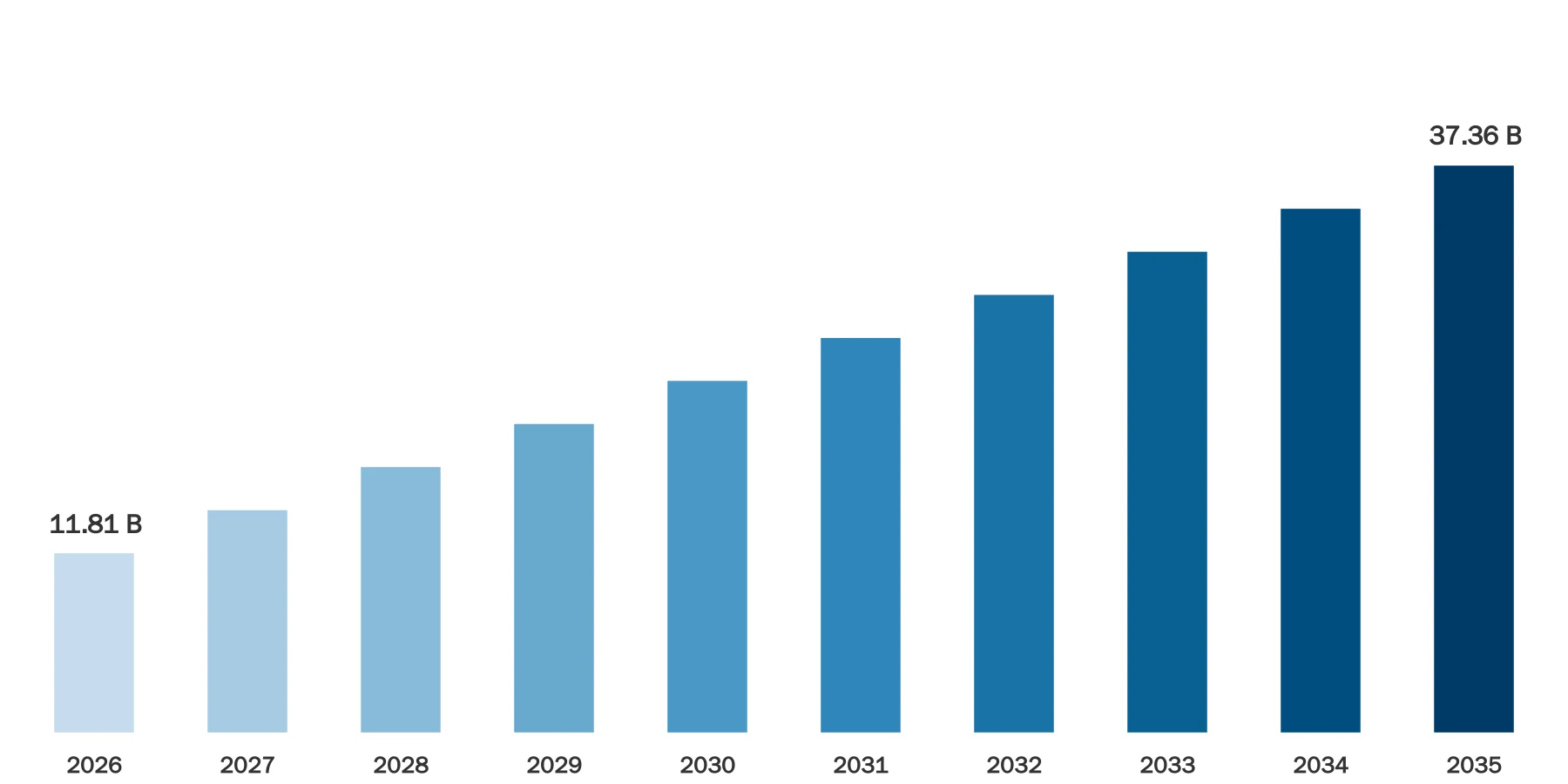
Source: Econ Market Research
Autoinjectors are Medical Devices designed for the automatic injection of a pre-measured dose of a drug. Because of their intuitive design, which makes it possible for patients to take their medications at home and lessens the need for frequent hospital visits, they have become well-known. The market covers a broad spectrum of therapeutic areas, some of which are diabetes, rheumatoid arthritis, multiple sclerosis, and anaphylaxis.
The ageing population and the resulting rise in the prevalence of chronic diseases are two major factors driving the autoinjector market. More and more patients are choosing to self-administer their medications in order to save money on healthcare and increase convenience. The market',s growth has also been significantly influenced by technological developments, with breakthroughs like electronic autoinjectors providing increased accuracy and user-friendliness. Furthermore, autoinjector adoption has accelerated globally due to growing awareness of the advantages of early disease management and the significance of timely medication administration.
Autoinjectors Dynamics
An increase in diseases like rheumatoid arthritis, diabetes, and multiple sclerosis has been caused by an ageing population and changes in lifestyle, which has increased demand for convenient and effective drug delivery devices like autoinjectors. The market is being driven by the increasing inclination towards self-administration of medications, which is fuelled by the desire to reduce healthcare costs and improve patient autonomy. Innovations such as electronic autoinjectors and connected devices, which provide better accuracy, user-friendliness, and real-time data monitoring, are crucial.
Autoinjectors Drivers
Rising Incidence of Chronic Diseases
Globally, the increasing prevalence of chronic illnesses is one of the main factors driving the autoinjector market. The prevalence of diseases like multiple sclerosis, diabetes, and rheumatoid arthritis is rising, which makes regular and accurate medication administration necessary. Autoinjectors provide a practical and easy-to-use solution that enables patients to take their medications at home on their own. The need for autoinjectors is being driven by the rising incidence of chronic illnesses and the growing desire for individualised, patient-centred healthcare.
Technological Advancements
The continuous evolution of technology in the healthcare sector is a significant driver for the autoinjectors market. Technological advancements, such as the development of electronic autoinjectors and smart connected devices, have enhanced the precision, ease of use, and monitoring capabilities of these devices. Electronic autoinjectors, for instance, enable controlled and programmable drug delivery, ensuring accurate dosing and contributing to improved patient outcomes. As these innovations gain prominence, they not only address the need for efficient drug delivery but also cater to the growing trend of digital health solutions, creating a positive impact on the market',s growth.
Restraints:
High Development Costs and Regulatory Challenges
The autoinjectors market faces challenges related to high development costs and stringent regulatory requirements. The development of innovative and technologically advanced autoinjectors demands substantial financial investments. Additionally, navigating complex regulatory pathways poses a barrier to entry for some market players, leading to a slower pace of product approvals and market entry. The financial and regulatory hurdles can impede the market',s growth and limit the accessibility of advanced autoinjector technologies.
Patient Safety Concerns
Despite their widespread adoption, autoinjectors are not immune to concerns related to patient safety. Issues such as needlestick injuries, device malfunctions, or user errors can have serious consequences. These safety concerns may lead to hesitancy among patients and healthcare providers in fully embracing autoinjector solutions. Addressing and mitigating these safety challenges through rigorous testing, improved design, and user education are essential for sustaining the market',s growth and fostering confidence in autoinjector use.
Opportunities:
Personalized Medicine and Biologics
The market for autoinjectors is poised for substantial growth due to the growing trend of personalised medicine and the expanding application of biologics in diverse therapeutic domains. When it comes to administering biologics, autoinjectors provide an excellent option for accurate and regulated dosing. The need for autoinjectors as the go-to drug delivery method is anticipated to rise as long as the pharmaceutical industry keeps concentrating on creating customised targeted therapies. This compatibility with the changing field of personalised medicine sets up the autoinjector market for long-term expansion and innovation.
Segment Overview
By therapy
In terms of therapy, the autoinjectors market encompasses various medical conditions and treatment areas. This includes anaphylaxis, which involves the rapid and severe allergic reactions requiring immediate intervention. Diabetes, another significant therapy segment, utilizes autoinjectors for the convenient and controlled administration of insulin. Autoinjectors are also employed in the treatment of Multiple Sclerosis, Rheumatoid Arthritis, and other therapies, providing patients with a user-friendly and efficient means of self-administering medications.
By End-users
End-users of autoinjectors include hospitals &, clinics, home care settings, and ambulatory care settings. Hospitals and clinics often utilize autoinjectors for efficient and precise drug delivery in a clinical setting. Home care settings leverage the convenience of autoinjectors to empower patients with self-administration capabilities, fostering independence and adherence to treatment plans. Ambulatory care settings, including outpatient clinics and urgent care centers, may also utilize autoinjectors to streamline the administration process for various therapies.
By type
Autoinjectors are categorized by type into reusable and disposable autoinjectors. Reusable autoinjectors are designed for multiple administrations of the same medication, allowing patients to refill and reuse the device. Disposable autoinjectors, on the other hand, are designed for single-use, providing a convenient and hygienic solution for patients who require periodic injections.
Autoinjectors Overview by Region
With a strong healthcare system and a high incidence of chronic illnesses, including diabetes and autoimmune disorders, North America is a significant market. Europe is closely behind due to population ageing, rising healthcare costs, and technological advancements. The Asia-Pacific region is experiencing notable expansion as a result of growing patient populations with ailments like rheumatoid arthritis and diabetes, as well as improved self-administration awareness and an expanding healthcare infrastructure. In addition, a growing number of major market participants are forming alliances and working together in the Asia-Pacific market in an effort to capitalise on the potential of the region.
In Latin America and the Middle East, the autoinjectors market is influenced by improving healthcare access and a growing demand for efficient drug delivery methods. These regions exhibit a rising prevalence of chronic diseases, contributing to the increased adoption of autoinjectors. Africa, while currently representing a smaller share, is witnessing gradual market growth with increasing healthcare investments and a focus on improving treatment accessibility.
Autoinjectors Market Competitive Landscape
Major players in the industry include AbbVie Inc., Eli Lilly and Company, Johnson &, Johnson, Amgen Inc., and Biogen Inc. These companies consistently invest in research and development to enhance their product portfolios, introducing advanced autoinjector technologies and features to gain a competitive edge. Partnerships and collaborations play a pivotal role in shaping the competitive dynamics of the market.
Key players often engage in strategic alliances with pharmaceutical companies to develop and market autoinjectors tailored for specific therapeutic areas. This collaborative approach helps in leveraging the expertise of both parties, accelerating product development, and expanding market reach. The market also witnesses a continuous influx of new entrants, particularly startups and Biotechnology firms, aiming to introduce innovative autoinjector solutions. These entrants often focus on addressing unmet medical needs or improving user-friendliness to disrupt established market players. Additionally, mergers and acquisitions are prevalent strategies among industry leaders to expand their market presence, acquire complementary technologies, and enhance their overall competitiveness.
Key Players:
AbbVie Inc.
Viatris Inc. (formerly Mylan)
Eli Lilly and Company
Ypsomed AG
Amgen Inc.
Becton, Dickinson and Company
GlaxoSmithKline plc
Johnson &, Johnson
Teva Pharmaceutical Industries Ltd.
Antares Pharma, Inc.
Merck KGaA
Recipharm AB
Halozyme Therapeutics, Inc.
AstraZeneca plc
Autoinjectors Recent Developments
Oct 2023, Altaviz unveils a novel auto-injector platform designed for drug administration. AltaVISC is customizable to accommodate a diverse range of drug formulations.
Oct 2023, SHL Medical, a prominent provider of advanced Drug delivery systems like autoinjectors and innovative specialty delivery systems, has forged a non-exclusive co-marketing partnership with Lifecore Biomedical (Nasdaq: LFCR). Lifecore is a fully integrated Contract Development and Manufacturing Organization (CDMO) with specialized expertise in developing, filling, and finishing complex sterile injectable pharmaceutical products in syringes and vials.
Global Autoinjectors Report Segmentation
Autoinjectors Market Report Scope & Segmentation
| Attributes | Details |
|---|---|
Market Size (Current) | US$ 11.81 Billion in 2026 |
Market Size (Forecast) | US$ 37.36 Billion in 2035 |
Growth Rate | CAGR of 13.5% from 2026 to 2035 |
Forecast Period | 2026 – 2035 |
Base Year | 2025 |
Historical Data Available | Yes |
Regional Scope | Global |
Segments Covered | By Type
By Therapy
By End-User
|
Frequently Asked Questions
Common questions about this report
The study period covers historical insights and forecast projections for the period 2026-2035.
About the Author
Market research expert with years of industry experience

Dipali Bhingare serves as the Market Research Director at Econ Market Research. With a focus on translating complex global economic shifts into actionable business intelligence, she oversees the strategic direction of comprehensive market studies. Her work empowers organizations to navigate volatile industries through data-driven forecasting and deep-dive competitive analysis.
Related Reports
Explore more market insights from the same category