

Solar Concentrator Market
Solar Concentrator Market Size, Share, Trends, Growth, and Industry Analysis, By Technology (Parabolic Trough, Solar Power Tower, Linear Fresnel, Dish Stirling), By Application (Electricity Generation, Heating Fluids, Others), By End-User (Utility, Industrial, Commercial), Regional Analysis and Forecast Period 2026-2035
Market Overview
As per Econ Market Research analysis, the Global Solar Concentrator Market accounted for US$ 10.46 Billion in 2026 and is expected to surpass US$ 43.67 Billion by 2035, witnessing a CAGR of 17.2% throughout 2026–2035. The analysis is based on 2025 as the base year.
Solar Concentrator Market Size 2025-2035 (USD Billion)

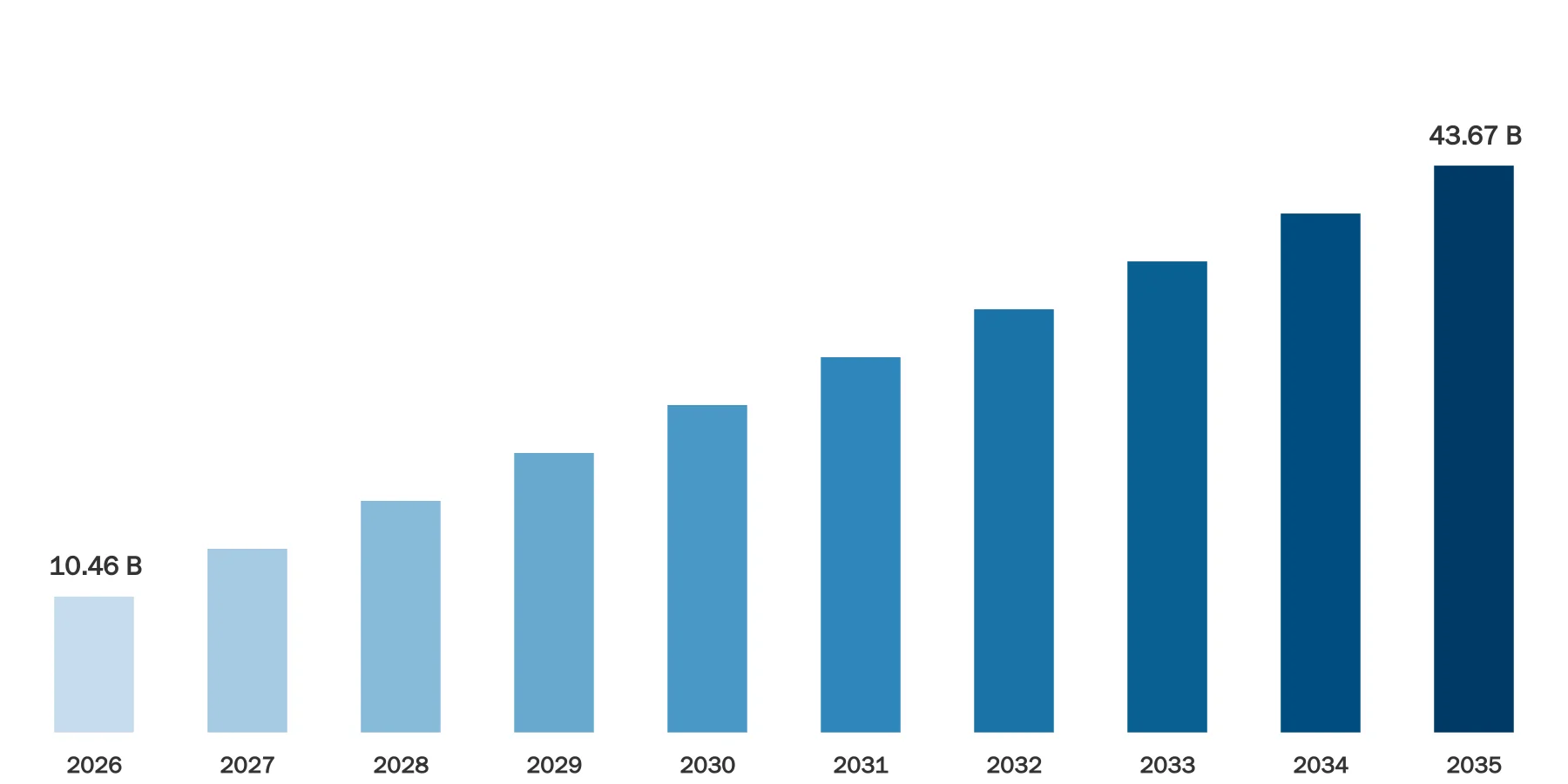
Source: Econ Market Research
The global solar concentrator market refers to the market for a device that concentrates Solar Energy. The principal application of this technology is in thermal solar energy, but it can also be used in photovoltaics (PV). It is an essential component of Concentrated Solar Power (CSP) energy. Its operation is based on the reflection of solar rays over a vast region by reflective surfaces. It is typically a mirror-aligned pattern. The idea is to concentrate them on a small receiver. This thermal energy is utilized to generate steam, which drives steam turbines in solar power plants. Radiation is thus transformed into mechanical energy using a heat engine in this manner. Then it powers a generator to generate electricity. The market is driven by increasing demand for renewable energy and the rise of energy prices.
Market Dynamics
The market dynamics of solar concentrator are influenced by several factors. The increasing demand for renewable energy and the rise of energy prices drive market growth. However, high initial investment and competition from other renewable energy technologies act as restraints. Opportunities arise from the utility scale electricity generation and industrial process heating. The market is niche and relatively small but it is growing rapidly with various companies striving to gain a competitive edge through innovation and customer-centric offerings. As the market evolves and consumer demand continues to rise, the dynamics of the solar concentrator market are expected to remain dynamic and highly competitive.
Market Drivers
Increasing demand for renewable energy
The global solar concentrator market is being driven by the increasing demand for renewable energy. Demand for renewable energy is fast increasing as countries worldwide attempt to lessen their dependency on fossil fuels. Demand for all forms of renewable energy technology, including solar concentrators, is increasing as a result. The cost of solar concentrator technology has dropped dramatically in recent years. This is attributable to a variety of variables, including developments in manufacturing technology and economies of scale. The increasing demand for renewable energy and the reduction in cost prices can drive the market.
Rise of energy prices
The global solar concentrator market is also being driven by the rise of energy prices. The rise in energy prices makes solar concentrators more appealing than ever. Solar concentrators produce power more effectively than other renewable energy systems, particularly in places with abundant sunlight. As a result, they are a realistic solution for lowering energy prices and dependency on fossil fuels. Solar concentrators are also becoming more economical as manufacturing technology and economies of scale improve. As a result, the market for solar concentrators is likely to expand dramatically in the future years.
Restraints
The global solar concentrator market faces a restraint in the form of privacy concerns. One of the primary issues confronting the solar concentrator market is the high initial investment cost. Solar concentrators are more difficult and costly to produce than ordinary Solar Panels. Furthermore, solar concentrator systems necessitate additional acreage as well as more difficult installation and maintenance methods. For businesses and families contemplating installing solar concentrators, the hefty initial investment cost can be a deterrent.
Competition from other renewable energy technologies
The global solar concentrator market faces a restraint from the competition. Other renewable energy sources, such as solar panels, wind turbines, and geothermal energy, compete with solar concentrators. Each of these technologies has its own set of benefits and drawbacks. Solar panels are the world',s most frequently used renewable energy technology. They are reasonably priced to install and maintain. Solar panels, on the other hand, can only create electricity when the sun shines. Wind turbines are yet another popular renewable energy technique. As long as there is wind, wind turbines may create electricity at any time of day or night. Wind turbines, on the other hand, might be more expensive to build and maintain than solar panels. Geothermal energy is a renewable energy technique that generates power by using heat from the Earth',s core. Geothermal energy technologies are still in their infancy.
Opportunities
Utlity scale electricity generation
The global solar concentrator market presents significant opportunities driven by the utility scale electricity generation. Solar concentrators are ideal for large-scale electricity generation. They can produce power more effectively than other renewable energy sources, particularly in locations with abundant sunlight. Solar concentrators can also be used to store energy as heat, which can then be used to generate electricity when the sun is not shining. The growing adoption of solar concentrator for the large scale utility generation highlights the potential for market players to use this opportunity according to the consumer needs and services.
Segment overview
By Type
The market for solar concentrators is segmented based on type into three categories: Cylindrical Parabolic (2D Hubs), Paraboloid Revolution, Others. Cylindrical parabolic solar concentrators (2D hubs) are a form of solar concentrator that focuses sunlight onto a receiver tube using a parabolic mirror. A working fluid is contained within the receiver tube and is heated before being utilized to create electricity or heat. A paraboloid of revolution solar concentrator (PRSC) is a form of solar concentrator that focuses sunlight onto a receiver using a paraboloid mirror. The receiver is usually a tube containing a working fluid that is heated and then utilized to generate electricity or heat. The other types of solar concentrators are: LSCs, CPCs, Fresnel lens concentrators etc.
By Technology
The solar concentrator market is categorized based on technologies into solar power towers, Linear concentrating systems, and dish sterling technology. Solar power towers are a sort of solar concentrator that uses a large number of mirrors (heliostats) to direct sunlight to a receiver at the top of the tower. The receiver heats up and then passes heat to a working fluid that generates electricity.
Linear concentrating systems (LCS) are a type of solar concentrator that focuses sunlight onto a receiver tube using long, rectangular, curved mirrors. A working fluid is contained within the receiver tube and is heated before being utilized to create electricity or heat. Dish Stirling technology is a sort of solar concentrator that employs a parabolic dish to direct sunlight onto a Stirling engine, which turns the heat from the sunshine into mechanical energy that may then be utilized to create electricity. This segmentation allows consumers to choose the type of technology that aligns with their specific needs and preferences.
Overview, By Region
Asia Pacific
Asia Pacific has the largest market share in solar concentrator market, and this dominance is expected to continue in the future. The region',s large population, with the fastest growing economies in the world, and the low cost manufacturing hubs is one of the major reasons for its dominance. Additionally, the government support with its technological advancements in the region further contributes to its market dominance. As the demand for solar concentrator continues to rise, Asia Pacific is projected to maintain its leading position in the market in the coming years.
North America
North America is experiencing significant growth in the solar concentrator market, with a significant Compound Annual Growth Rate (CAGR). The region',s increasing adoption of renewable energy and the government initiatives towards the solar concentrator technology is the major reason for its growth. With the continuous advancements in solar concentrator technology and the rising demand for renewable energy, North America is expected to witness a substantial CAGR in the coming years.
Competitive Landscape
The competitive landscape of the market is marked by a wide array of players competing for market dominance. Several key players are offering a variety of solar concentrator technologies and are also in the process of development of solar concentrator projects around the world. Aside from these established competitors, a number of new businesses are developing new solar concentrator technology. These businesses are working to create more efficient and cost-effective solar concentrator systems.
The market for solar concentrators is quite competitive, and businesses are always inventing to improve their goods and services. This competition is lowering the cost of solar concentrators and making them more competitive with alternative energy sources. As consumer demand for solar concentrator continues to grow, the market is anticipated to witness even more intense competition among these players.
Key Players
BrightSource Energy, Inc.
ACWA Power Company
Acciona S.A.
Clique Solar
Trivelli Energia S.r.l.
Torresol Energy Investments, S.A.
SolarReserve, LLC
Siemens Energy AG
Abors Green GmbH
Abengoa Solar GmbH
ENGIE S.A.
Enel Green Power S.p.A.
Aalborg CSP A/S
Cobra Group (ACS Group)
SENER Group
Recent Developments
March 2022, ACWA Power and the Saudi Power Procurement Company (SPPC) signed a power purchase agreement (PPA) today for the development of the 700 MW Ar Rass solar photovoltaic independent power plant (IPP) in Saudi Arabia',s Al Qassim province. The deal was signed in the presence of His Royal Highness Prince Abdulaziz bin Salman bin Abdulaziz Al Saud, Saudi Arabia',s Minister of Energy.
June 2021, ACCIONA has started work on its first solar project in the United States, the 317MWp Fort Bend Solar Farm outside Houston (Texas). The project is intended to start off a period of significant growth for ACCIONA, which expects to double its renewable energy capacity in the US by the end of 2023 with the installation of more than 1.2GW MW of solar photovoltaic electricity.
Solar Concentrator Market Report Scope & Segmentation
| Attributes | Details |
|---|---|
Market Size (Current) | US$ 10.46 Billion in 2026 |
Market Size (Forecast) | US$ 43.67 Billion in 2035 |
Growth Rate | CAGR of 17.2% from 2026 to 2035 |
Forecast Period | 2026 – 2035 |
Base Year | 2025 |
Historical Data Available | Yes |
Regional Scope | Global |
Segments Covered | By Technology
By Application
By End-User
|
Frequently Asked Questions
Common questions about this report
The study period covers historical insights and forecast projections for the period 2026-2035.
About the Author
Market research expert with years of industry experience

Dipali Bhingare serves as the Market Research Director at Econ Market Research. With a focus on translating complex global economic shifts into actionable business intelligence, she oversees the strategic direction of comprehensive market studies. Her work empowers organizations to navigate volatile industries through data-driven forecasting and deep-dive competitive analysis.
Related Reports
Explore more market insights from the same category