

Self-expanding Stents Market Overview
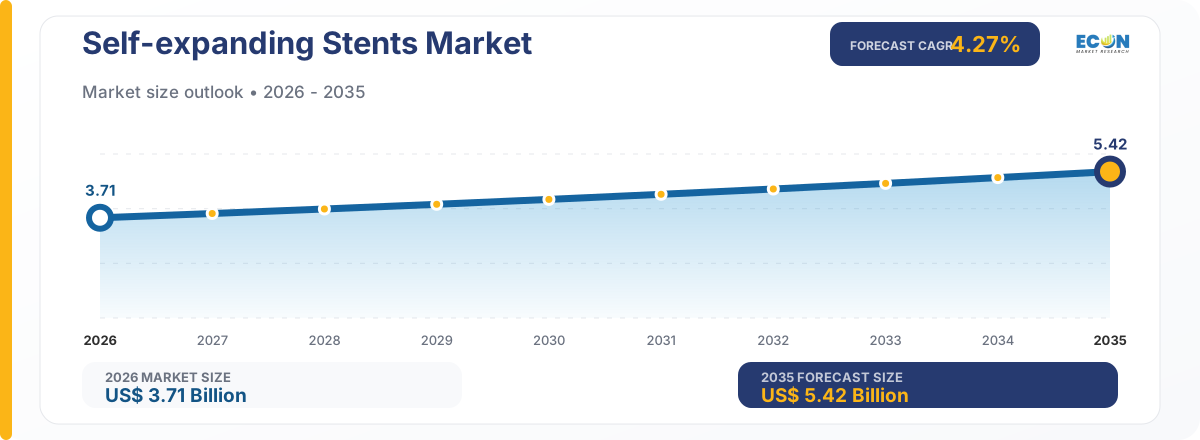
As per Econ Market Research analysis, Global Self-expanding Stents Market size stood at US$ 3.71 Billion in 2026 and is projected to reach US$ 5.42 Billion by 2035, growing at a CAGR of 4.27% over the forecast period 2026–2035. 2025 is taken as the base year.
Expandable stents, another name for self-expanding stents, are Medical Devices that open constricted or clogged blood vessels to improve blood flow. The capacity of these stents to automatically expand and conform to the vessel',s diameter sets them apart from conventional stents and offers a more robust and efficient solution. The market is characterised by a growing ageing population that is more susceptible to vascular disorders and a spike in demand for minimally invasive procedures. Self-expanding stents are becoming a crucial part of the treatment landscape as diseases like peripheral artery disease and coronary artery disease become more common. Technological advancements like drug-eluting and bioresorbable stents are also helping the market grow by improving patient outcomes and lowering the risk of complications.
Self-expanding Stents Dynamics
The global rise in cardiovascular disease incidence is the main factor driving the market, as is the rising demand for efficient and minimally invasive treatment alternatives. The need for self-expanding stents is further fuelled by the ageing global population, which is more susceptible to vascular disorders. Technological developments that offer better treatment outcomes and lower risk of complications, like the creation of bioresorbable and drug-eluting stents, have a substantial impact on market dynamics.
Market dynamics on the supply side are defined by intense R&,D activity carried out by major industry players. Businesses are making significant investments in innovation in order to launch new goods, advance current technologies, and obtain a competitive advantage. Companies frequently engage in strategic alliances, mergers, and acquisitions in an effort to increase their market share and diversify their product lines.
Self-expanding Stents Drivers
Growing Prevalence of Cardiovascular Diseases
The self-expanding stents market is driven primarily by the rising incidence of cardiovascular diseases worldwide. Effective cardiovascular interventions are in greater demand as risk factors like obesity and diabetes rise and lifestyles become more sedentary. The market is growing because self-expanding stents provide patients with diseases like peripheral artery disease and coronary artery disease with a minimally invasive option. These stents', ongoing development to address particular cardiovascular issues increases their desirability and highlights their critical role in contemporary cardiovascular care.
Technological Advancements and Innovation
Rapid advancements in medical technology and ongoing research and development activities contribute significantly to the market',s growth. Innovations such as bioresorbable stents, which gradually dissolve in the body after fulfilling their purpose, and drug-eluting stents, coated with pharmaceutical agents to prevent restenosis, showcase the industry',s commitment to improving patient outcomes. These technological advancements not only enhance the efficacy of self-expanding stents but also drive the adoption of these devices by healthcare professionals seeking state-of-the-art solutions for their patients.
Restraints:
Stringent Regulatory Requirements
The self-expanding stents market faces challenges due to stringent regulatory requirements imposed by health authorities globally. The approval process for new devices can be time-consuming and resource-intensive, potentially delaying market entry for innovative products. Compliance with these regulations requires substantial investments in clinical trials and regulatory submissions, posing a barrier to entry for smaller companies and hindering the overall pace of market growth.
High Cost of Self-expanding Stents
One major barrier to the widespread use of self-expanding stents is their cost, which is especially problematic in developing nations. Healthcare budgets may be strained by the high initial costs of these devices as well as extra expenses for follow-up care and deployment procedures. Self-expanding stent adoption may be hampered by this financial burden on patients and healthcare systems, especially in areas where cost is a major factor in healthcare decisions.
Opportunities:
Collaborations and Strategic Partnerships
Collaborations and strategic partnerships represent significant opportunities for market players to strengthen their positions. By partnering with healthcare institutions, research organizations, or other industry stakeholders, companies can leverage combined expertise and resources to accelerate research and development efforts. Such collaborations can lead to the introduction of innovative products, foster knowledge exchange, and enhance the overall competitiveness of self-expanding stent manufacturers in the dynamic healthcare landscape. Proactive engagement in partnerships can facilitate market expansion and foster a collaborative environment conducive to sustained growth.
Segment Overview
By Products
The self-expanding stents market is diversified based on product types, with three key categories. Bare Metal Stents, comprising metallic alloys without additional coatings, provide cost-effective and durable structural support. Drug-Eluting Stents, equipped with pharmacological coatings, actively prevent restenosis and are particularly favored in treating coronary artery disease. Bioresorbable Vascular Scaffold, an innovative category, offers temporary support before gradually dissolving, potentially reducing long-term complications associated with permanent implants. This product segmentation caters to a spectrum of clinical needs, balancing simplicity, advanced drug delivery, and bioresorbable solutions.
By Application
In terms of applications, self-expanding stents are strategically deployed across various anatomical locations within the vascular system. Fem-pop Artery applications target peripheral artery disease in the lower extremities, providing essential support. Iliac Artery interventions address issues in the iliac vessels associated with atherosclerosis and stenosis. Carotid Artery applications focus on improving cerebral blood flow and preventing strokes.
Biliary applications involve the treatment of obstructions in the bile ducts. The ",Other", category encompasses a diverse range of applications beyond specified arteries, showcasing the versatility of self-expanding stents in addressing varied vascular challenges. This segmentation ensures that healthcare professionals can tailor interventions to specific anatomical contexts, optimizing the efficacy of self-expanding stents across a spectrum of clinical scenarios.
Self-expanding Stents Overview by Region
North America and Europe occupying prominent positions, driven by well-established healthcare infrastructures and a high prevalence of cardiovascular diseases. In North America, the United States stands as a major contributor to market growth, fuelled by a robust healthcare system and significant investments in research and development. The European market is characterized by a high degree of technological adoption and a proactive approach to innovative medical solutions.
Asia-Pacific emerges as a region of tremendous growth potential, fuelled by increasing healthcare expenditure, a rising awareness of minimally invasive treatments, and a growing patient pool. Countries such as China and India are pivotal to this expansion, with improving healthcare infrastructures and a surging demand for advanced medical interventions.
Self-expanding Stents Market Competitive Landscape
Leading companies such as Medtronic, Abbott Laboratories, Boston Scientific Corporation, and C.R. Bard (acquired by BD) are at the forefront of technological advancements and product development. These companies invest significantly in research and development to introduce cutting-edge self-expanding stents, enhancing their market position and meeting the evolving demands of healthcare professionals.
Strategic collaborations, mergers, and acquisitions play a crucial role in shaping the competitive dynamics of the market. Companies often engage in partnerships with research institutions and healthcare organizations to pool resources, share expertise, and accelerate product development. Mergers and acquisitions are employed as strategies to strengthen product portfolios, broaden market reach, and gain a competitive edge. Such moves contribute to the consolidation of the industry, fostering innovation and enhancing the overall competitiveness of the market.
Self-expanding Stents Market Leading Companies:
Abbott Laboratories
Medtronic
Boston Scientific Corporation
Becton, Dickinson and Company (BD Interventional)
Terumo Corporation
Veryan Medical
Cook Medical
C.R. Bard (acquired by BD)
Self-expanding Stents Recent Developments
July 2022, BIOTRONIK has recently obtained approval from the U.S. Food and Drug Administration (FDA) for its ground-breaking Pulsar-18 T3 self-expanding stent system designed to enhance the implantation process in endovascular treatments.
Self-expanding Stents Report Segmentation
Self-expanding Stents Market Report Scope & Segmentation
| Attributes | Details |
|---|---|
Market Size (Current) | US$ 3.71 Billion in 2026 |
Market Size (Forecast) | US$ 5.42 Billion in 2035 |
Growth Rate | CAGR of 4.27% from 2026 to 2035 |
Forecast Period | 2026 – 2035 |
Base Year | 2025 |
Historical Data Available | Yes |
Regional Scope | Global |
Segments Covered | By Application
By Material
By End-User
|
Frequently Asked Questions
Common questions about this report
The study period covers historical insights and forecast projections for the period 2026-2035.
About the Author
Market research expert with years of industry experience

Related Reports
Explore more market insights from the same category