

Polyacrylamide Market
Polyacrylamide Market Research Report: Information Based on by physical form (powder, liquid, and emulsion/dispersions), application (enhanced oil recovery, flocculants for water treatment, soil conditioner, binders and stabilizers in cosmetics, and other applications), end-user industry (water treatment, oil and gas, pulp and paper, mining, and other end-user industries), and Region (North America, Europe, Asia-Pacific, and Rest of the World) Global Industry Analysis, Size, Share, Growth, Trends, Regional Analysis, Competitor Analysis and Forecast
Market Overview
As per Econ Market Research analysis, the Global Polyacrylamide Market size amounted to US$ 6.8 Billion in 2026 and is anticipated to grow to US$ 10.8 Billion by 2035, recording a CAGR of 5.2% during 2026–2035. The base year taken for analysis is 2025.
Polyacrylamide Market Size 2025-2035 (USD Billion)

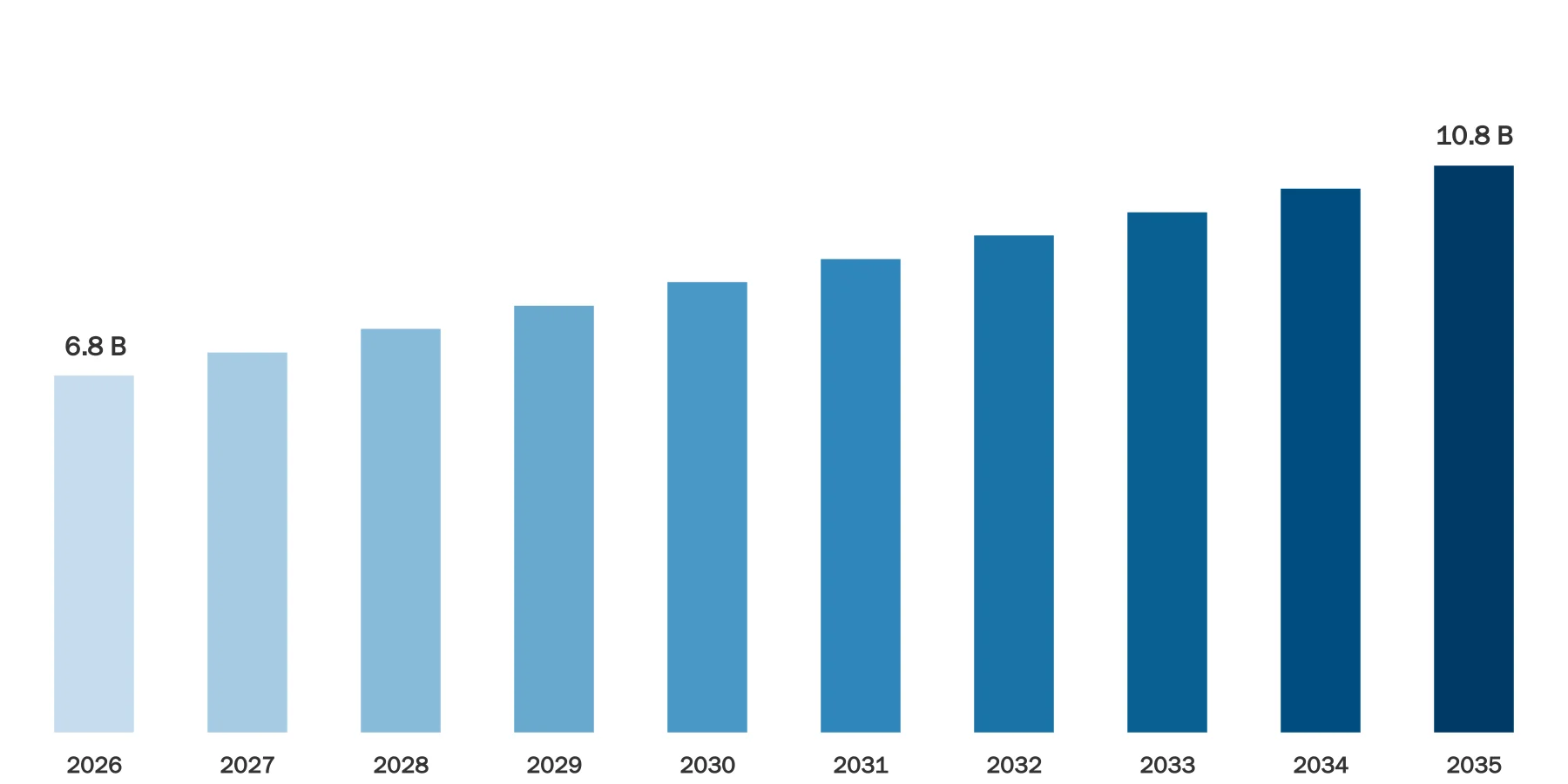
Source: Econ Market Research
Polyacrylamide (PAM) is a synthetic polymer derived from the polymerization of acrylamide monomer, with the molecular formula CH2CHCONH2. This versatile polymer finds extensive application in various industries. It is commonly utilized for solid-liquid flocculation processes, such as water treatment, paper making, and screen printing, owing to its gel-like properties. Additionally, polyacrylamide and its derivatives are widely employed in enhanced oil recovery and soil conditioning. The polymer is available in powder, solution, and emulsion forms, and is also used as a chemical intermediate for producing N-Methylol acrylamide and N-butoxyacrylamide, further expanding its utility in diverse industrial processes.
Market Dynamics
Several main factors influence the market dynamics of the polyacrylamide sector. Polyacrylamide is in high demand as an effective flocculant in water treatment processes due to the increased emphasis on wastewater treatment and environmental requirements. The expanding use of enhanced oil recovery techniques in the oil and gas industry accelerates market expansion even further. Furthermore, the growing awareness of sustainable agriculture practises and soil conditioning boosts polyacrylamide demand in the agriculture industry. Technological developments, product innovations, and strategic collaborations among market participants all contribute to the polyacrylamide market's dynamic nature, promoting growth and creating new opportunities for industry expansion.
Market Drivers
The growing use of polyacrylamide in the petroleum industry, specifically for enhanced oil recovery (EOR) applications, is driving the global polyacrylamide market. Polyacrylamide is critical in boosting oil recovery from reservoirs, increasing production rates, and optimising oil extraction efficiency. The increasing demand for oil, combined with the necessity to develop mature oil fields as well as unconventional resources, have encouraged the use of polyacrylamide in EOR procedures. Polyacrylamide, with its capacity to improve oil displacement, reduce viscosity, and improve sweep efficiency, is a significant driver for the global market, catering to the changing needs of the petroleum industry.
Restraints
Concerns about the potential adverse effects of polyacrylamide use are one of the key barriers for the global polyacrylamide industry. The use of polyacrylamide in agricultural applications raises concerns regarding acrylamide contamination of food products, which is a proven carcinogen and neurotoxic. These worries concentrate around the potential health dangers provided by acrylamide in food. As a result, in order to ensure the safety and well-being of consumers and the environment, extensive examination, strict restrictions, and good handling practises are required to minimise the dangers connected with polyacrylamide usage.
Opportunities
The worldwide polyacrylamide industry offers numerous opportunities for expansion and development. One major opportunity is the growing need for water treatment solutions around the world, which is being driven by the need for clean and safe water sources. Furthermore, the growing emphasis on sustainable agriculture practises and soil conditioning provides opportunities for the use of polyacrylamide in precision farming and erosion prevention. Polyacrylamide has prospects in the increasing cosmetics industry as binders and stabilisers in cosmetic compositions. With numerous applications across sectors, the polyacrylamide market offers significant opportunity for firms to capitalise on growing opportunities and meet changing market demands.
Segment Overview
By Physical Form
In the polyacrylamide sector, segmentation is done based on the physical form of the product, which comprises powder, liquid, and emulsion/dispersions. Polyacrylamide is available in powder form, which makes it easier to handle and store. Liquid polyacrylamide is easy to use and enables for precise dosing in a variety of applications. Polyacrylamide emulsions and dispersions provide a stable and homogeneous solution, allowing for consistent distribution and application. This physical form segmentation allows manufacturers and end-users to select the most appropriate form of polyacrylamide for their unique needs, enabling efficient and effective utilisation across a wide range of industries and applications.
Based on application
Segmentation in the polyacrylamide industry based on application is done including encompassing enhanced oil recovery, flocculants for water treatment, soil conditioner, binders and stabilizers in cosmetics, and other applications. Polyacrylamide plays a vital role in enhanced oil recovery techniques, improving oil extraction efficiency. In water treatment, it serves as a flocculant, facilitating solid-liquid separation and purifying water. As a soil conditioner, polyacrylamide helps retain moisture and improve soil structure. It also finds application as binders and stabilizers in cosmetics, enhancing product formulation and performance. This application-based segmentation enables customized solutions for diverse industries, meeting specific needs and driving the widespread adoption of polyacrylamide
By End-user
By End User, the industry is segmented including water treatment, oil and gas, pulp and paper, mining, and other end-user industries. In the water treatment sector, polyacrylamide is widely used for flocculation and sedimentation processes. In the oil and gas industry, it finds application in enhanced oil recovery and drilling operations. Polyacrylamide also plays a crucial role in the pulp and paper industry for retention and drainage improvement. In the mining sector, it aids in mineral processing and tailings management. Other end-user industries, such as agriculture, textiles, and personal care, also utilize polyacrylamide for various applications. This end-user-based segmentation enables targeted solutions and caters to the diverse needs of different industries, driving the demand for polyacrylamide.
Polyacrylamide Market Overview by Region
The Asia-Pacific region holds significant potential for market expansion. The region's favorable market conditions, coupled with increasing industrialization, technological advancements, and growing investments in various sectors, contribute to the expected high growth rate. With a strong focus on infrastructure development and rising consumer demand, Asia-Pacific emerges as a key driver in the global market, presenting lucrative opportunities for industry players operating in the region.
The stringent regulations governing wastewater disposal in North America are anticipated to drive the demand for polyacrylamide. These regulations necessitate effective treatment of industrial wastewater, creating a market need for polyacrylamide as a flocculant and water treatment solution. As companies strive to comply with these regulations and mitigate environmental impact, the demand for polyacrylamide is expected to increase, presenting growth opportunities for the industry in the North American region.
Competitive Landscape
The polyacrylamide market is characterised by a highly competitive environment and the presence of multiple major and well-established firms. These businesses compete fiercely for market share and strive to maintain their dominant positions. As firms strive to differentiate themselves and create unique value propositions, the competitive climate encourages innovation, product development, and strategic activities. Furthermore, the market's competitiveness stimulates innovations in technology, quality, and customer service, ultimately benefiting customers and encouraging the polyacrylamide industry's overall growth and development.
Key Players
SNF Group
BASF SE
Kemira Oyj
Ashland Inc.
Anhui Jucheng Fine Chemical Co., Ltd.
Black Rose Industries Ltd.
Dongying Kechuang Biochemical Industrial Co., Ltd.
Shandong Polymer Bio-Chemicals Co., Ltd.
Xitao Polymer Co., Ltd.
ZL EOR Chemicals Ltd.
Solenis LLC
Ecolab Inc.
PetroChina Company Limited
CNPC (China National Petroleum Corporation)
Recent Developments
In Feb 2022, Kemira revealed its commencement of large-scale manufacturing for a novel polymer made from biobased feedstock, specifically polyacrylamide.
Polyacrylamide Market Report Scope & Segmentation
| Attributes | Details |
|---|---|
Market Size (Current) | US$ 6.8 Billion in 2026 |
Market Size (Forecast) | US$ 10.8 Billion in 2035 |
Growth Rate | CAGR of 5.2% from 2026 to 2035 |
Forecast Period | 2026 – 2035 |
Base Year | 2025 |
Historical Data Available | Yes |
Regional Scope | Global |
Segments Covered | By Product Type
By Form
By Application
|
Frequently Asked Questions
Common questions about this report
The study period covers historical insights and forecast projections for the period 2026-2035.
About the Author
Market research expert with years of industry experience

Dipali Bhingare serves as the Market Research Director at Econ Market Research. With a focus on translating complex global economic shifts into actionable business intelligence, she oversees the strategic direction of comprehensive market studies. Her work empowers organizations to navigate volatile industries through data-driven forecasting and deep-dive competitive analysis.
Related Reports
Explore more market insights from the same category