

Nutraceutical Packaging Market
Nutraceutical Packaging Market Size, Share, Trends, Growth, and Industry Analysis, By Material Type (Plastic, Glass, Metal, Paper and Paperboard, Others), By Product Type (Bottles and Jars, Bags and Pouches, Blisters and Strips, Stick Packs, Others), By Application (Dietary Supplements, Functional Foods, Functional Beverages), Regional Analysis and Forecast Period 2026-2035
Nutraceutical Packaging Market Overview
As per Econ Market Research analysis, the Global Nutraceutical Packaging Market valuation stood at US$ 4.12 Billion in 2026 and is expected to reach US$ 6.45 Billion by 2035, growing at a steady CAGR of 5.1% from 2026 to 2035. 2025 serves as the base year.
Nutraceutical Packaging Market Size 2025-2035 (USD Billion)

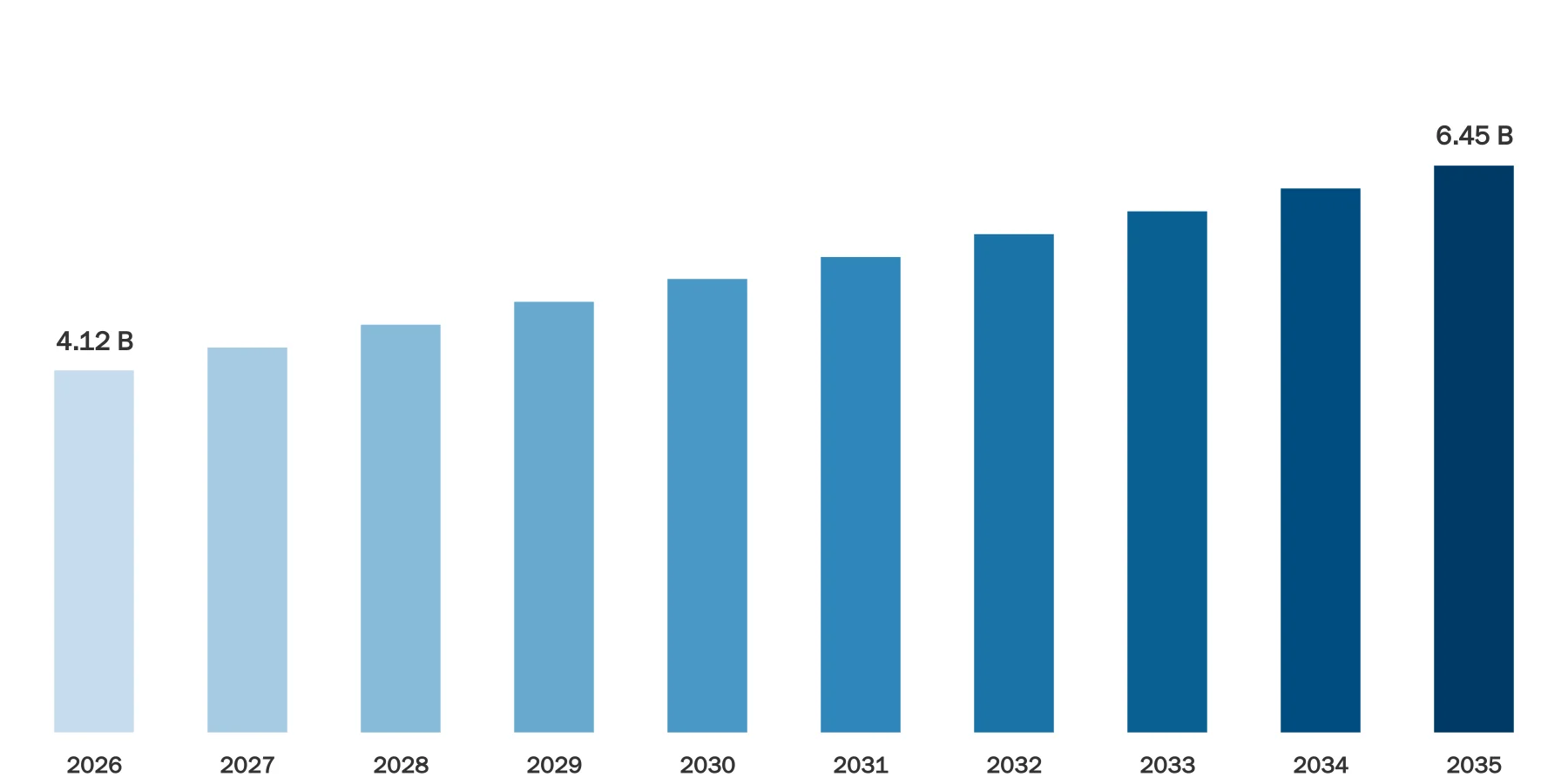
Source: Econ Market Research
Nutraceutical packaging refers to the specialized packaging used for nutraceutical products. Nutraceuticals are products derived from food sources that offer health benefits beyond their basic nutritional value. They can include dietary supplements, functional foods, herbal products, and more. The packaging for these products plays a crucial role in preserving their quality, efficacy, and safety while also conveying important information to consumers.
Nutraceuticals often contain sensitive compounds that can degrade due to factors like light, moisture, air, and temperature. Packaging must provide adequate protection to maintain the product',s strength and extend its shelf life. Packaging materials should have appropriate barrier properties to prevent the entry of oxygen, moisture, and UV light, which can negatively impact the product',s quality. This can involve the use of materials like foil pouches, vacuum-sealed containers, and opaque bottles. Nutraceutical packaging must provide accurate and clear labeling, including information such as dosage instructions, nutritional facts, ingredients list, health claims, and any potential allergens.
Clear and informative labeling helps consumers make informed decisions. The nutraceutical industry is experiencing growth worldwide, driven by both developed and developing economies. This expansion has LED to increased demand for diverse packaging solutions to meet the unique needs of different markets. Advancements in technology, such as smart packaging with embedded sensors or QR codes for tracking and authentication, are also influencing the nutraceutical packaging landscape.
The nutraceutical packaging market is highly competitive, with packaging manufacturers continuously developing innovative solutions to address the evolving needs of nutraceutical brands and consumers. As the health and wellness industry continues to grow, nutraceutical packaging will remain a vital component in ensuring product quality, safety, and consumer satisfaction.
Nutraceutical Packaging Dynamics
The global nutraceutical packaging market is driven by factors that reflect the evolving landscape of health and wellness products. Rapidly changing consumer preferences, regulatory considerations, and technological advancements have synergized to shape the market',s trajectory. Heightened health consciousness and a growing inclination towards natural and functional foods have fueled demand for nutraceutical products. This surge in demand directly impacts the packaging sector, compelling it to offer solutions that preserve product efficacy and safety.
Consumer awareness regarding sustainable practices has propelled the integration of eco-friendly materials and designs, fostering a drive towards environmentally responsible packaging options. Advancements in packaging technology have led to innovative solutions such as tamper-evident features, child-resistant closures, and smart packaging with interactive elements. These innovations heighten consumer confidence, enhance product usability, and offer brands a competitive edge in a crowded market.
Nutraceutical Packaging Drivers
Health and Wellness Trends Driving Demand
The Global Nutraceutical Packaging Market is propelled by the surging global health and wellness movement. Growing consumer awareness of the link between nutrition and well-being has spurred demand for nutraceutical products. Nutraceutical packaging serves as a bridge between the health-conscious consumer',s aspirations and the products that promise wellness enhancements. It is tasked with safeguarding the potency, quality, and safety of these specialized products.
Packaging materials are carefully chosen to protect sensitive ingredients from degradation due to factors like light, moisture, and air. Additionally, packaging design is tailored to ensure accurate dosing and easy product consumption. Consumers are more interested in utilizing the potential health benefits provided by functional foods, dietary supplements, and herbal medicines than they are in merely satisfying their fundamental nutritional demands. Because of this perspective change, the market for nutraceutical products has grown significantly, and packaging is now very important.
Sustainability Initiatives and Eco-Friendly Solutions
Sustainability is a driving force in the Global Nutraceutical Packaging Market. Consumers are increasingly demanding environmentally responsible products and packaging. This driver has led to the adoption of eco-friendly packaging materials, reduced packaging waste, and innovative design approaches that minimize the environmental footprint.
Nutraceutical packaging manufacturers are embracing biodegradable, recyclable, and compostable materials to meet these demands, aligning with brands', and consumers', sustainability goals while addressing broader environmental concerns. Furthermore, Sustainable Packaging design goes beyond material choice. It encompasses aspects such as minimalistic packaging, lightweight designs that reduce transportation-related emissions, and innovative structures that optimize space utilization. These solutions not only align with environmentally conscious consumers', preferences but also resonate with nutraceutical brands committed to corporate social responsibility.
Restraints:
While the demand for innovative and sustainable packaging solutions is on the rise, the integration of advanced technologies and eco-friendly materials often comes with higher production costs. This presents a challenge, particularly for smaller nutraceutical companies or those operating on tighter budgets. Eco-friendly packaging materials and cutting-edge technologies, such as barrier coatings and smart packaging features, can drive up manufacturing expenses. Balancing the desire for environmentally responsible packaging with the need to maintain competitive pricing can be intricate. The additional costs associated with sustainable packaging may affect profit margins and potentially limit options for cost-conscious brands.
Global Supply Chain Disruptions
The interconnected nature of the industry, spanning sourcing of raw materials, manufacturing, transportation, and distribution, makes it vulnerable to a range of external factors that can disrupt the supply chain. Supply chain disruptions can lead to production delays, affecting the timely availability of nutraceutical products on the market. Manufacturers may struggle to secure necessary materials or find alternate suppliers, potentially compromising product quality or leading to increased production costs. These challenges can also impact the ability to meet consumer demand and fulfill orders promptly, which can have negative consequences for brand reputation and customer loyalty. Events such as natural disasters, geopolitical tensions, or global health crises, like the COVID-19 pandemic, can lead to material shortages, delays in transportation, and increased costs. These disruptions can ripple through the supply chain, impacting the availability of essential packaging materials and components needed for nutraceutical products.
Opportunities
Innovative Smart Packaging
innovative smart packaging in the nutraceutical industry involves integrating advanced technologies like QR codes, RFID tags, and near-field communication (NFC) into product packaging to create an interactive and information-rich experience for consumers. This approach capitalizes on the growing consumer demand for transparency, authenticity, and real-time information about the products they consume. QR codes, for instance, can be printed on packaging, and when scanned with a smartphone, they can instantly provide consumers with detailed information about the nutraceutical product, such as its ingredients, sourcing, manufacturing processes, and usage guidelines.
Similarly, RFID tags and NFC technology allow consumers to tap or wave their devices near the packaging to access relevant data, fostering a seamless and engaging interaction. The benefits of innovative smart packaging are multifaceted. It empowers consumers to make well-informed decisions by accessing accurate and up-to-date information. For nutraceutical companies, it offers a direct channel to engage with customers, build brand loyalty, and demonstrate product authenticity. Moreover, it aids in supply chain management by enabling real-time tracking of products, which can enhance inventory control, reduce counterfeiting risks, and ensure regulatory compliance
Blockchain Transparency and Authentication
Implementing blockchain technology in nutraceutical packaging involves integrating a secure and transparent digital ledger system to enhance authenticity, traceability, and trust within the supply chain. Blockchain provides a decentralized and immutable record of transactions, enabling nutraceutical companies and consumers to verify the origin, quality, and journey of products. This innovation addresses several critical concerns. It minimizes the risk of counterfeit or adulterated products entering the market, as any attempt to alter data on the blockchain would be immediately detectable. Additionally, it strengthens regulatory compliance by providing accurate and auditable records, which can expedite recalls if necessary.
Nutraceutical Packaging Segment Overview
By Type
Based on type, the global nutraceutical packaging market is divided into bottles, cans and jars, bags &, pouches, cartons, stick packs, blister packs, display boxes, canisters, and others. The bags &, pouches category dominates the market with the largest revenue share. Bags and pouches offer convenience in terms of portability and ease of use. They are lightweight and often resealable, making them suitable for on-the-go consumers who value convenience and portion control.
Many consumers are increasingly conscious of environmental issues, and some types of bags and pouches can be designed using eco-friendly materials, aligning with sustainable packaging trends. Where, bottles are a common packaging choice for nutraceutical products, offering protection from moisture and air. They are often used for liquid supplements, vitamins, and powders. Cans and jars provide sturdy packaging, ideal for preserving the freshness and quality of nutraceutical products. Stick packs are slim, elongated sachets designed for single servings of powdered supplements or liquid concentrates.
By Material Type
Based on the material type, the global nutraceutical packaging market is categorized into plastic, metal, glass, paper &, paperboard, and others. The plastic category leads the global nutraceutical packaging market with the largest revenue share. a versatile and widely used material in nutraceutical packaging. It offers various benefits such as durability, lightweight nature, and cost-effectiveness. Plastic packaging includes options like bottles, jars, bags, pouches, and blister packs. However, there is growing concern about the environmental impact of plastic waste, which has led to increased interest in sustainable and biodegradable plastic alternatives. Where metal packaging, often in the form of cans or canisters, is chosen for its durability, barrier properties, and visual appeal. Glass packaging is prized for its inert nature, which prevents interactions between the container and the nutraceutical product, ensuring product integrity. And paper and paperboard materials are often used for cartons, boxes, and labels in nutraceutical packaging
By Product Form
Based on product form, the global nutraceutical packaging market is segmented into tablets &, capsules, powder &, granules, liquid, and solid. The tablets &, capsules segment dominates the nutraceutical packaging market. This segment includes packaging solutions tailored for solid dosage forms like tablets and capsules. Packaging options could range from blister packs, bottles, and jars to pouches with individual compartments. These packaging solutions aim to protect the integrity of the solid dosage forms, prevent moisture and air exposure, and offer convenient dispensing for consumers. Where the powder &, granules segment holds the second-largest share in the market. Packaging for powdered and granulated nutraceutical products requires solutions that keep the content dry, free-flowing, and properly sealed to maintain freshness. Bag and pouch formats, as well as canisters, are common choices in this segment. Packaging should provide ease of pouring and resealing for multiple uses.
Nutraceutical Packaging Overview by Region
The global nutraceutical packaging market is categorized into North America, Europe, Asia-Pacific, and the Rest of the World. North America emerged as the leading region, capturing the largest market share. North America boasts a well-established and thriving nutraceutical industry, characterized by a diverse range of products, including dietary supplements, functional foods, and wellness products. This industry',s growth creates a substantial demand for packaging solutions.
Increasing consumer awareness and focus on health and wellness have led to a higher consumption of nutraceutical products in North America. As consumers seek products that support their well-being, the demand for nutraceutical packaging has risen correspondingly. North America',s well-developed retail infrastructure, both in physical stores and e-commerce platforms, facilitates the distribution and sale of nutraceutical products. Effective packaging is crucial for products to stand out on shelves and arrive intact when ordered online.
Competitive Landscape
In the global nutraceutical packaging market, a few major players exert significant market dominance and have established a strong regional presence. These leading companies remain committed to continuous research and development endeavors and actively engage in strategic growth initiatives, including product development, launches, joint ventures, and partnerships. By pursuing these strategies, these companies aim to strengthen their market position, expand their customer base, and capture a substantial share of the market.
Key Players
MJS Packaging
PolyOne Corporation (now Avient Corporation)
Glenroy, Inc.
Maco Bag Corporation
John Byrne Company
Birchwood Contract Manufacturing
NuEra Nutraceuticals Inc.
MOD-PAC Corp.
Hughes Enterprises
Amgraph Packaging, Inc.
Amcor plc
Berry Global Inc.
Gerresheimer AG
AptarGroup, Inc.
Recent Developments
In April 2021, Origin launches packaging design agency for nutraceutical sector. The parent company, Origin Pharma Packaging, has introduced Design Innovation Development (DiD) for enterprises in the nutraceutical and healthcare industries. Concept sketches, 3D modelling, prototyping, and technical design files are all services offered by the business.
Nutraceutical Packaging Market Report Scope & Segmentation
| Attributes | Details |
|---|---|
Market Size (Current) | US$ 4.12 Billion in 2026 |
Market Size (Forecast) | US$ 6.45 Billion in 2035 |
Growth Rate | CAGR of 5.1% from 2026 to 2035 |
Forecast Period | 2026 – 2035 |
Base Year | 2025 |
Historical Data Available | Yes |
Regional Scope | Global |
Segments Covered | By Material Type
By Product Type
By Application
|
Frequently Asked Questions
Common questions about this report
The study period covers historical insights and forecast projections for the period 2026-2035.
About the Author
Market research expert with years of industry experience

Dipali Bhingare serves as the Market Research Director at Econ Market Research. With a focus on translating complex global economic shifts into actionable business intelligence, she oversees the strategic direction of comprehensive market studies. Her work empowers organizations to navigate volatile industries through data-driven forecasting and deep-dive competitive analysis.
Related Reports
Explore more market insights from the same category