

Nasopharyngeal Cancer Market
Nasopharyngeal Cancer Market Size, Share, Trends, Growth, and Industry Analysis, By Therapy (Chemotherapy, Immunotherapy, Radiation Therapy, Targeted Therapy), By End-User (Hospitals andamp; Specialty Clinics, Ambulatory Surgical Centers, Cancer Research Institutes), Regional Analysis and Forecast Period 2026-2035
Market Overview
As per Econ Market Research analysis, the Global Nasopharyngeal Cancer Market was valued at approximately US$ 1.39 Billion in 2026 and is predicted to reach US$ 2.37 Billion by 2035, expanding at a CAGR of 6.1% over the forecast duration. The base year is 2025.
Nasopharyngeal Cancer Market Size 2025-2035 (USD Billion)

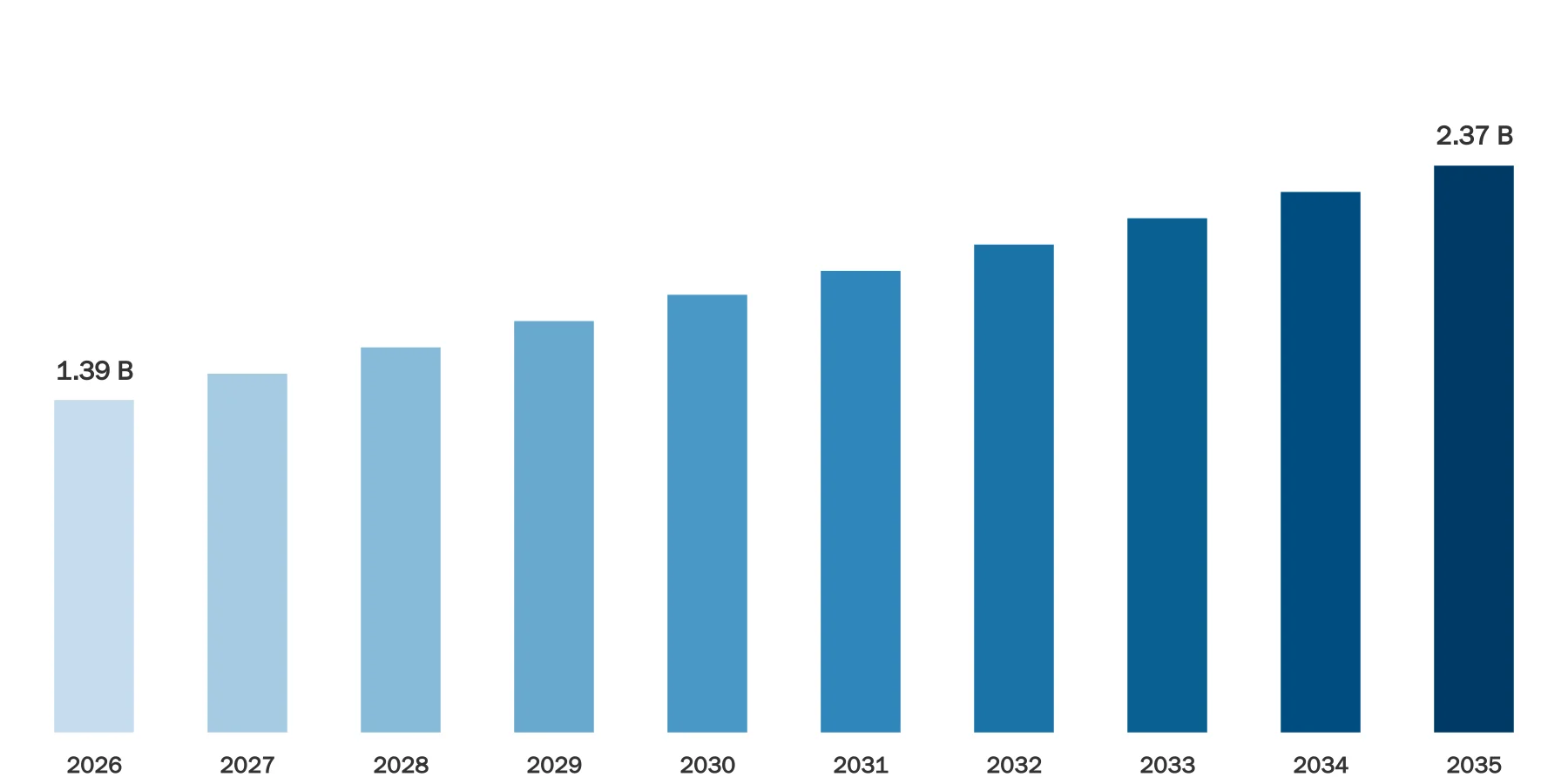
Source: Econ Market Research
Nasopharyngeal cancer is a type of head and neck cancer that originates in the nasopharynx. Its incidence is on the rise, and patients and healthcare professionals are becoming more aware of the disease, which is driving the growth of the global market for nasopharyngeal cancer. The nasopharynx is the area behind the nose and above the back of the throat. Abnormal cell growth in this region is the hallmark of nasopharyngeal cancer. Its development is influenced by a number of factors, including genetic predisposition, Epstein-Barr virus infection, and environmental factors.
Research and development efforts are increasing in the market, which is resulting in the release of novel treatment approaches and focused therapies. One particularly promising treatment option for nasopharyngeal cancer is immunotherapy. The management of nasopharyngeal cancer is also changing as a result of the combination of precision medicine and customised therapies based on the unique characteristics of each patient. Effective treatment depends on early diagnosis and detection, and the market is seeing an increase in the use of advanced imaging techniques and biomarker identification methods.
Nasopharyngeal Cancer Dynamics
Globally, the incidence of nasopharyngeal cancer is rising due to the increasing prevalence of risk factors like genetic predisposition and HIV infection. A prominent trend in the market is the move towards precision medicine, with a growing emphasis on immunotherapies and targeted therapies that target particular molecular and genetic traits of individual patients. This individualised approach reduces side effects while simultaneously improving treatment efficacy.
Technological innovations in diagnostic tools, such as advanced imaging techniques and biomarker identification methods, play a pivotal role in early detection and accurate diagnosis, thereby influencing treatment outcomes. The market is witnessing a surge in research and development activities, leading to the introduction of novel therapies that offer improved efficacy and reduced side effects. Additionally, strategic collaborations, partnerships, and mergers among key industry players are shaping the competitive landscape and fostering the development of comprehensive solutions for nasopharyngeal cancer management.
Nasopharyngeal Cancer Drivers
Advancements in Precision Medicine and Immunotherapy
The market for nasopharyngeal cancer is driven by notable developments in immunotherapy and precision medicine. Personalised treatment approaches that are adapted to each patient',s specific genetic and molecular profile have improved therapeutic efficacy while reducing side effects. In particular, immunotherapy has become a promising treatment option because it uses the body',s immune system to target and destroy cancer cells. The market is growing because of the ongoing development and integration of these cutting-edge treatment modalities, which also improve patient outcomes.
Increasing Incidence Rates and Awareness
Globally rising nasopharyngeal cancer incidence rates are a major factor propelling market growth. The increasing frequency of this cancer is caused by a number of factors, including environmental factors, genetic predisposition, and Epstein-Barr virus infection. The market is growing as a result of patients', and healthcare professionals', growing awareness of advanced treatment options and early detection. The demand for diagnostic and therapeutic solutions is expected to rise steadily in the market as screening programmes spread and education campaigns increase public awareness of the risks and symptoms of nasopharyngeal cancer.
Restraints:
Limited Accessibility to Advanced Healthcare Services
Access to cutting-edge healthcare services remains a challenge even in the face of technological advancements, particularly in areas with inadequate healthcare infrastructure. Uneven access to healthcare in developing nations makes it more difficult to diagnose and treat nasopharyngeal cancer in a timely manner. This restriction limits the growth of the market because a sizable segment of the population might encounter difficulties obtaining state-of-the-art diagnostic equipment and cutting-edge treatments.
High Treatment Costs
One major obstacle to market expansion is the high cost of treating nasopharyngeal cancer. More sophisticated diagnostic tests, customised treatments, and immunotherapies are frequently more expensive, which restricts the number of patients who can afford them. The cost burden on patients and healthcare systems may prevent these cutting-edge treatments from being widely adopted, especially in areas with limited resources, which would impede market expansion.
Opportunities:
Increasing Research and Development Initiatives
There are a lot of opportunities due to the continuous increase in research and development efforts in the nasopharyngeal cancer market. Breakthrough solutions may be found with continued investment in the investigation of novel therapeutic targets, cutting-edge treatment modalities, and sophisticated diagnostic technologies. Working together, pharmaceutical companies, academic institutions, and healthcare organisations can introduce interventions that could change the game and open up new markets.
Segment Overview
By Therapy
The nasopharyngeal cancer market is categorized into four primary therapy segments, each playing a crucial role in the comprehensive management of the disease. Chemotherapy, a well-established systemic treatment, involves the use of drugs to inhibit the growth of cancer cells, often employed alone or in combination with other modalities. Immunotherapy, an innovative approach, leverages the body',s immune system to target and eliminate cancer cells, aligning with the trend of personalized medicine.
Radiation therapy, a fundamental component, utilizes high-energy rays to precisely target and destroy cancer cells, offering a localized and effective treatment strategy. The ',Other Therapy', segment encompasses emerging and investigational approaches, including targeted therapies and gene therapies, reflecting the dynamic nature of nasopharyngeal cancer research and the pursuit of novel therapeutic options.
By End Users
The market',s end-user segmentation considers the diverse settings where nasopharyngeal cancer diagnosis and treatment occur. Hospitals and clinics, serving as primary hubs, offer a multidisciplinary approach with comprehensive medical services. Ambulatory surgery centers contribute to outpatient surgical services, aligning with the trend towards minimally invasive procedures.
The ',Other End Users', category includes specialized cancer care centers, research institutions, and community health centers, emphasizing the collaborative efforts across various healthcare settings to address nasopharyngeal cancer comprehensively. This segmentation recognizes the importance of a varied and interconnected healthcare ecosystem in providing optimal care for individuals with nasopharyngeal cancer.
Nasopharyngeal Cancer Overview by Region
The high incidence of nasopharyngeal cancer in the Asia-Pacific region, especially in Southeast Asia, is primarily ascribed to genetic predisposition, Epstein-Barr virus prevalence, and environmental factors. Owing to a greater incidence of nasopharyngeal cancer among its citizens, China makes a substantial contribution to the regional market. Additionally, the disease has a significant impact on the region in nations like Indonesia and Malaysia.
With their developed healthcare infrastructures, North America and Europe see a significant emphasis on research and development, which results in improvements to treatment modalities and diagnostic technologies. While nasopharyngeal cancer is not as common in these regions as it is in Asia-Pacific, early detection and comprehensive treatment approaches are made possible by strong healthcare systems. These regions', markets are growing because of the presence of major players in the industry, strategic partnerships, and investments in cancer research.
Nasopharyngeal Cancer Market Competitive Landscape
Key players such as AstraZeneca, Bristol Myers Squibb, and Merck &, Co. dominate the market, leveraging their robust research and development capabilities to introduce innovative therapies and strengthen their market presence. These industry leaders actively engage in strategic collaborations and partnerships to enhance their product portfolios and gain a competitive edge. A focus on precision medicine and immunotherapy is evident, with ongoing clinical trials and product launches aimed at providing more targeted and personalized treatment options for nasopharyngeal cancer patients.
Emerging Biotechnology firms, such as BeiGene and Innovent Biologics, play a pivotal role in shaping the competitive landscape by bringing novel therapies and treatment modalities to the forefront. Their agility and focus on niche areas contribute to the diversification of available treatment options and foster competition within the market. Moreover, smaller research-focused entities contribute to the innovation ecosystem by exploring alternative therapies and diagnostic tools, influencing the overall direction of nasopharyngeal cancer research.
Strategic mergers and acquisitions are prevalent in the competitive landscape, enabling companies to strengthen their market positions and accelerate the development of nasopharyngeal cancer therapies. Collaborations between pharmaceutical companies and academic institutions also contribute to knowledge exchange and the advancement of groundbreaking treatments.
Nasopharyngeal Cancer Market Leading Companies:
Pfizer Inc.
Merck &, Co., Inc.
Sanofi
Eli Lilly and Company
Bristol Myers Squibb
Novartis AG
GlaxoSmithKline (GSK) PLC
Teva Pharmaceutical Industries Ltd.
F. Hoffmann-La Roche Ltd
Fresenius SE &, Co. KGaA
Celgene Corporation
Cyclacel Pharmaceuticals Inc.
BioDiem Ltd.
Nasopharyngeal Cancer Recent Developments
Oct 2023, Loqtorzi (toripalimab-tpzi) has received FDA approval for the treatment of individuals with recurrent or metastatic nasopharyngeal carcinoma (NPC). Its approval extends to its use in conjunction with cisplatin and gemcitabine for initial therapy and as a standalone treatment for patients experiencing disease progression after receiving platinum-containing chemotherapy.
Oct 2023, Coherus BioSciences, Inc. and Shanghai Junshi Biosciences Co., Ltd. (Junshi Biosciences, HKEX: 1877, SSE: 688180) have received approval from the U.S. Food and Drug Administration (FDA) for LOQTORZI (toripalimab-tpzi). The approval covers its use in combination with cisplatin and gemcitabine for the initial treatment of adults with metastatic or recurrent locally advanced Nasopharyngeal Carcinoma (NPC). Additionally, LOQTORZI is approved as a monotherapy for treating adults with recurrent, unresectable, or metastatic NPC who have experienced disease progression after platinum-containing chemotherapy.
Global Nasopharyngeal Cancer Report Segmentation
Nasopharyngeal Cancer Market Report Scope & Segmentation
| Attributes | Details |
|---|---|
Market Size (Current) | US$ 1.39 Billion in 2026 |
Market Size (Forecast) | US$ 2.37 Billion in 2035 |
Growth Rate | CAGR of 6.1% from 2026 to 2035 |
Forecast Period | 2026 – 2035 |
Base Year | 2025 |
Historical Data Available | Yes |
Regional Scope | Global |
Segments Covered | By Therapy
By End-User
|
Frequently Asked Questions
Common questions about this report
The study period covers historical insights and forecast projections for the period 2026-2035.
About the Author
Market research expert with years of industry experience

Related Reports
Explore more market insights from the same category