

Patient Clinical Data Registry Software Market
Patient Clinical Data Registry Software Market Size, Share, Trends, Growth, and Industry Analysis, By Registry Type (Disease Registries, Health Service Registries, Product Registries), By Deployment (On-Premise, Cloud), By Functionality (Population Health Management, Patient Care Management, Health Information Exchange, Others), Regional Analysis and Forecast Period 2026-2035
Market Overview
As per Econ Market Research analysis, the Global Patient Clinical Data Registry Software Market valuation stood at US$ 2.64 Billion in 2026 and is expected to reach US$ 6.78 Billion by 2035, growing at a steady CAGR of 11.04% from 2026 to 2035. 2025 serves as the base year.
Patient Clinical Data Registry Software Market Size 2025-2035 (USD Billion)

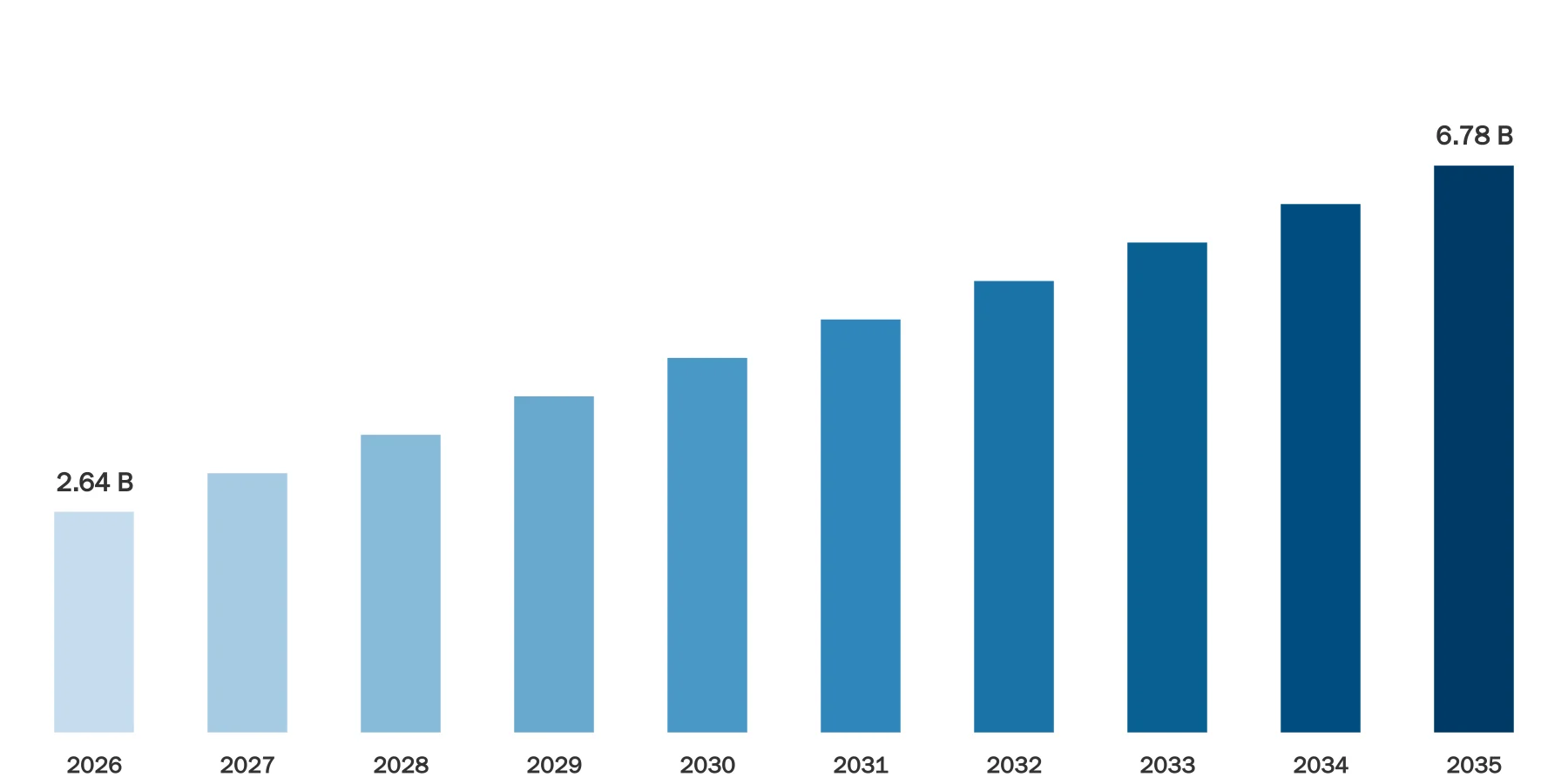
Source: Econ Market Research
Patient Clinical Data Registry Software refers to specialized platforms designed to collect, store, and analyze patient-centric information generated across various healthcare settings. These systems play a pivotal role in advancing healthcare outcomes by facilitating the aggregation of comprehensive patient data, enabling healthcare providers and researchers to derive meaningful insights. The rising prevalence of chronic diseases, coupled with the growing emphasis on evidence-based medicine, has fuelled the adoption of Patient Clinical Data Registry Software globally. These platforms not only streamline data collection and management but also support decision-making processes, quality improvement initiatives, and clinical research endeavors.
The need for advanced Clinical Data Registry Software has increased as healthcare organisations work to improve patient care, cut costs, and adhere to regulations. By helping to build centralised databases, these solutions enable medical professionals to monitor and evaluate patient outcomes, the efficacy of their treatments, and compliance with clinical recommendations. Moreover, these platforms', capacity to anticipate trends, recognise risk factors, and customise treatment regimens is improved by the incorporation of cutting-edge technologies like artificial intelligence and machine learning. The market is characterised by a dynamic landscape where major industry players collaborate, form partnerships, and innovate new products in an effort to stay ahead of this quickly changing ecosystem.
Patient Clinical Data Registry Software Dynamics
The increasing emphasis on value-based care and the need for healthcare providers to improve patient outcomes and operational efficiency are major motivators. Patient Clinical Data Registry Software is becoming more and more popular as a result of the increased prevalence of chronic illnesses around the world and the increased need for reliable data management solutions. Additionally, organisations have been driven to invest in advanced data registry solutions by strict regulatory requirements and the growing emphasis on real-world evidence in healthcare decision-making.
Clinical Data Registry Software is undergoing a revolution in capabilities due to technological advancements, specifically the amalgamation of machine learning and artificial intelligence. These technologies facilitate predictive analytics, giving medical professionals useful information for individualised patient care in addition to streamlining data collection and analysis. As stakeholders seek seamless integration with Electronic Health Records (EHRs) and other healthcare IT systems, promoting data exchange and accessibility, the market is witnessing a trend towards interoperability.
Patient Clinical Data Registry Software Drivers
Increasing Emphasis on Value-Based Care
The market for patient clinical data registry software is significantly driven by the global shift towards value-based care models. Solutions that enable thorough data management and analysis are in greater demand as healthcare payers and providers place a higher priority on providing high-quality, cost-effective care. Value-based care initiatives are greatly aided by Patient Clinical Data Registry Software, which offers a comprehensive picture of patient outcomes, treatment efficacy, and adherence to clinical guidelines. Adoption of these platforms is anticipated to increase as healthcare stakeholders work to enhance patient satisfaction and maximise resource utilisation, propelling market expansion.
Technological Advancements and Integration of AI/ML
Artificial intelligence (AI) and machine learning (ML) in particular are two cutting-edge technologies that are integrating and influencing the patient clinical data registry software market. Through the automation of data analysis, pattern recognition, and predictive analytics facilitation, these technologies augment the capabilities of data registry platforms.
In addition to streamlining data collection procedures, AI and ML provide healthcare providers with useful insights for individualised patient care. Patient Clinical Data Registry Software is positioned as an essential tool for healthcare providers and researchers due to its ability to use these technologies for real-time data processing and decision support. This fosters innovation and drives market expansion.
Restraints:
Data Security Concerns and Privacy Issues
The market for patient clinical data registry software is hampered in part by the ongoing worries about patient privacy and data security. Cybercriminals target healthcare data because it is sensitive, and breaches can have detrimental effects. The seamless adoption and implementation of Clinical Data Registry Software may face challenges due to stakeholders', increased focus on ensuring strong security measures and compliance with data protection regulations. These stakeholders include healthcare organisations and regulatory bodies.
Interoperability Challenges
One major obstacle is the non-interoperability of Patient Clinical Data Registry Software with other healthcare IT systems, like Electronic Health Records (EHRs). Consistent data formats and standards reduce the efficacy of data registry solutions by impeding the smooth transfer of information between various platforms. Reaching the full potential of these systems in enabling thorough, integrated healthcare data management requires overcoming interoperability obstacles.
Opportunities:
Rising Demand for Remote Patient Monitoring
The market for patient clinical data registry software has a lot of potential due to the growing use of remote patient monitoring. Solutions that can effectively gather, manage, and analyse patient data created outside of traditional healthcare settings are becoming more and more necessary as healthcare delivery models change to include more virtual and remote care options. Software for patient clinical data registry can be essential in gathering and analysing data from remote patient monitoring, promoting care continuity, and improving patient outcomes.
Segment Overview
By Registry Types
The Patient Clinical Data Registry Software market is segmented based on registry types, including Disease Registries, Health Service Registries, and Product Registries. Disease Registries focus on collecting and managing data related to specific medical conditions, enabling healthcare professionals and researchers to monitor and analyze disease patterns, treatment outcomes, and patient demographics. Health Service Registries, on the other hand, concentrate on tracking and evaluating healthcare services, facilitating the assessment of service quality, resource utilization, and overall healthcare delivery efficiency.
Product Registries encompass data related to medical products, such as pharmaceuticals or Medical Devices, providing valuable insights into product performance, safety, and adherence to regulatory standards. This segmentation reflects the diverse applications of Patient Clinical Data Registry Software in addressing various aspects of healthcare, from specific diseases to broader health service evaluations and product-related data management.
By Type of Software
The segmentation based on the type of software categorizes Patient Clinical Data Registry Software into Stand-alone Software and Integrated Software. Stand-alone Software operates independently, offering specialized functionalities for data registry and management. Integrated Software, on the other hand, seamlessly integrates with other healthcare information systems, such as Electronic Health Records (EHRs) and practice management software. This segmentation reflects the flexibility of Patient Clinical Data Registry Software solutions, accommodating both standalone applications for specific needs and integrated platforms that enhance interoperability and data sharing across the healthcare ecosystem.
By End Users
The market is further segmented by end users, encompassing Hospitals, Government Organizations, Third Party Administrators (TPAs), Pharmaceutical, Biotechnology, and Medical Device Companies, as well as Other End Users. Hospitals leverage Patient Clinical Data Registry Software to enhance patient care, optimize processes, and contribute to research initiatives. Government Organizations utilize these platforms for public health monitoring and policy development. Third Party Administrators benefit from streamlined data management for insurance and administrative purposes.
Pharmaceutical, Biotechnology, and Medical Device Companies leverage data registries to monitor product performance and support regulatory compliance. Other End Users may include research institutions, academic medical centers, and healthcare networks, highlighting the diverse stakeholders relying on Patient Clinical Data Registry Software for data-driven decision-making and improved healthcare outcomes. This segmentation underscores the broad applicability of these solutions across various sectors within the healthcare industry.
Patient Clinical Data Registry Software Overview by Region
North America holds a dominant position in the market due to its extensive implementation of cutting-edge healthcare technologies, strong regulatory frameworks, and emphasis on value-based care. The area gains from an established healthcare system that promotes the use of Patient Clinical Data Registry Software to enhance patient outcomes, expedite data processing, and assist in making decisions based on evidence.
Increased interoperability initiatives, the digitization of healthcare, and a focus on patient-centric care are driving market growth in Europe. Patient Clinical Data Registry Software adoption is influenced by the existence of an established healthcare ecosystem and government support for healthcare IT solutions. Due to the increasing investments in healthcare, changing regulatory environments, and growing understanding of the significance of data-driven healthcare strategies, Asia-Pacific is emerging as a major growth region. Advanced data registry solutions can be implemented in developing economies as a result of the region',s rapid development of healthcare infrastructure.
The Middle East and Africa demonstrate a growing interest in Patient Clinical Data Registry Software, driven by efforts to enhance healthcare infrastructure and improve patient care quality. The region is increasingly investing in healthcare IT solutions to address emerging health challenges. Latin America reflects a mix of opportunities and challenges, with healthcare modernization initiatives and the adoption of Patient Clinical Data Registry Software varying across countries.
Patient Clinical Data Registry Software Market Competitive Landscape
Leading global companies such as IBM Corporation, Cerner Corporation, and McKesson Corporation exhibit strong market presence through their technologically advanced and comprehensive data registry solutions. These companies focus on strategic partnerships, collaborations, and product innovations to maintain their competitive edge. Additionally, electronic health record (EHR) providers, including Epic Systems Corporation and Allscripts Healthcare Solutions, are actively expanding their offerings to include integrated Patient Clinical Data Registry Software, leveraging their established presence in the healthcare IT domain.
Numerous niche players, such as ArborMetrix, Inc., FIGmd, Inc., and M2S, Inc., contribute to the competitive landscape by specializing in disease-specific or service-specific registry solutions. These companies often distinguish themselves through their ability to cater to unique healthcare needs, providing tailored solutions for specific medical conditions or aspects of healthcare delivery. The market is characterized by a continual influx of startups and innovative entrants, introducing novel technologies and approaches to data registry.
The competitive dynamics also include collaborations between software developers and healthcare institutions to enhance interoperability and address industry challenges. Noteworthy partnerships between major players and healthcare organizations contribute to the development of comprehensive solutions that align with evolving healthcare requirements. Regulatory compliance and adherence to data security standards are critical factors shaping the competitive landscape, with companies investing in robust security measures to gain and maintain trust among end-users.
Patient Clinical Data Registry Software Market Leading Companies:
Dacima Software Inc.
FIGmd Inc.
Global Vision Technologies Inc.
ImageTrend Inc.
IQVIA Holdings Inc.
McKesson Corporation
Cerner Corporation
IBM Corporation
Syneos Health
Velos
Patient Clinical Data Registry Software Recent Developments
Nov 2023, Alira Health, a worldwide advisory and clinical research firm, has collaborated with FORWARD, the National Databank for Rheumatic Diseases and the largest patient-reported research databank for rheumatic disorders in the United States. Together, they have introduced an upgraded Lupus Registry, providing improved insights for patients, caregivers, and research sponsors, ultimately aiming to enhance patient outcomes.
June 2022, Verana Health, a digital health firm dedicated to enhancing quality in real-world data (RWD), has unveiled VeraSite, a new solution designed to pinpoint potential clinical trial sites. This subscription-based tool provides clinical trial sponsors and contract research organizations (CROs) with a secure and efficient method for identifying practices possessing clinical expertise and potential patient populations aligned with specific study protocols.
Global Patient Clinical Data Registry Software Report Segmentation
Patient Clinical Data Registry Software Market Report Scope & Segmentation
| Attributes | Details |
|---|---|
Market Size (Current) | US$ 2.64 Billion in 2026 |
Market Size (Forecast) | US$ 6.78 Billion in 2035 |
Growth Rate | CAGR of 11.04% from 2026 to 2035 |
Forecast Period | 2026 – 2035 |
Base Year | 2025 |
Historical Data Available | Yes |
Regional Scope | Global |
Segments Covered | By Registry Type
By Deployment
By Functionality
|
Frequently Asked Questions
Common questions about this report
The study period covers historical insights and forecast projections for the period 2026-2035.
About the Author
Market research expert with years of industry experience

Dipali Bhingare serves as the Market Research Director at Econ Market Research. With a focus on translating complex global economic shifts into actionable business intelligence, she oversees the strategic direction of comprehensive market studies. Her work empowers organizations to navigate volatile industries through data-driven forecasting and deep-dive competitive analysis.
Related Reports
Explore more market insights from the same category