

Minibar Refrigerators Market
Minibar Refrigerators Market Size, Share, Trends, Growth, and Industry Analysis, By Technology (Absorption, Compressor, Thermoelectric), By Product (Portable, Cube, Mid-size), By End-User (Residential, Commercial), Regional Analysis and Forecast Period 2026-2035
Market Overview
As per Econ Market Research analysis, the Global Minibar Refrigerators Market reached a valuation of US$ 1.9 Billion in 2026 and is anticipated to grow to US$ 3.98 Billion by 2035, at a CAGR of 8.3% during the forecast timeline 2026–2035. The base year considered is 2025.
Minibar Refrigerators Market Size 2025-2035 (USD Billion)

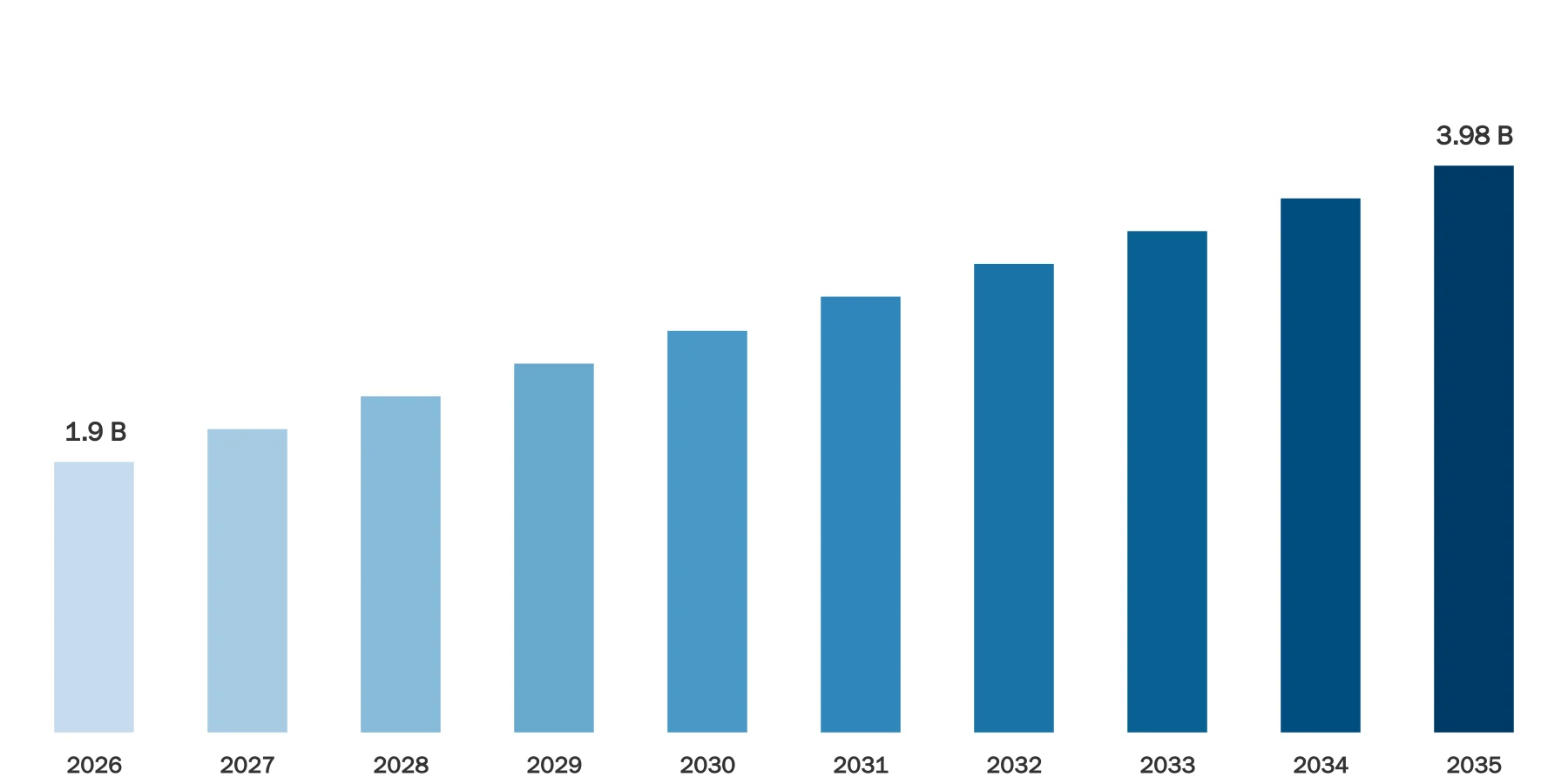
Source: Econ Market Research
The minibar is a small refrigerator, typically an absorption refrigerator, in a hotel room or cruise ship stateroom. Mini fridges are compact refrigerators that help bridge the gap between full-size refrigerators and coolers, letting store extra snacks and drinks when find refrigerator reaching capacity. Furthermore, several benefits of minibar refrigerators such as space optimization, organization station, convenience and accessibility, cost savings.
Minibar Refrigerators Market Drivers:
Increasing demand of minibar refrigerators in several end use sectors
Increasing demand of minibar refrigerators in several end use sectors such as transportation, hospitality, offices, household, others. The hospitality industry, particularly hotels, is distinguished by its emphasis on unique designs, personalized services, and immersive themes. These elements are responsible for driving market expansion. According to Lodging Econometrics', Q4 year-end global construction pipeline trend report, the global hotel construction pipeline at the end of 2022 was 14,267 with 2,298,846 rooms, representing a 4% year-over-year increase. In the market, these facilities frequently focus on curating high-quality minibar options that correspond with their brand identity, serving to guests that seek exclusivity and luxury amenities.
Opportunities:
Increase in technological advancements
The technology has improved, minibar refrigerators have evolved from simple cooling devices to complex equipment with cutting-edge features and capabilities. For example, smart minibar refrigerators may be remotely operated, monitored, and supplied, allowing hotels to streamline operations and improve the guest experience. These gadgets may also give usage data, allowing businesses to maximize restocking and minimize waste.
For instance, Dometic Group AB',s HiPro range offers a line of premium minibars that are energy-efficient and do not contain chromate, a commonly used corrosion inhibitor for absorption minibars that was recently identified by the EU. The Dometic HiPro minibar refrigerators are designed to quickly chill drinks without overcooling. Furthermore, the transparent door racks can hold 1.5L bottles, while the adjustable and removable shelves may accommodate a variety of products.
Restraints:
High maintenance and repair costs
The maintenance and repair costs associated with minibar refrigerators can significantly impact on the target market, particularly those in the hospitality industry that commonly use minibars in hotel rooms. Minibars are often considered ancillary services in the hospitality industry, contributing to additional revenue through the sale of snacks, beverages, and other items. However, if the maintenance and repair costs are too high, they can eat into the profit margins derived from minibar sales. Furthermore, the hotels are always looking to optimize operational expenses to maintain profitability.
Segment Overview
By Technology
Based on technology, the global minibar refrigerators market is divided into absorption, thermoelectric/ peltier, compression. The absorption segment dominated the market in 2023 and is expected to dominating during the minibar refrigerators market in forecast period, due to absorption technology, which uses a heat-driven process to chill the refrigerator rather than a standard compressor-based system, has gained popularity due to its distinct advantages. One significant driver is the increased global emphasis on sustainability and energy conservation. Absorption technology reduces electricity use, making it a popular choice among environmentally conscious individuals and organizations looking to decrease their carbon footprint and energy expenditures.
By End Use
Based on end use, the global minibar refrigerators market is fragmented into transportation, hospitality, offices, household, others. The hospitality segment dominated the global minibar refrigerators market in 2023. This is attributed to the hospitality industry',s increased emphasis on individualized and immersive guest experiences has driven up demand for minibar refrigerators. Modern visitors desire more than simply a place to rest, they want to have remarkable and one-of-a-kind experiences on their trips. Accommodation companies are realizing this movement and using minibar refrigerators to increase visitor pleasure. Hotels may give guests a taste of the destination',s culture by offering a curated variety of locally sourced beverages and foods in minibars, making their stay more authentic and memorable.
Minibar Refrigerators Overview by Region
Europe dominated the minibar refrigerators market in 2023. This is owing to European consumers are increasingly looking for products with convenience, energy efficiency, and connectivity functions. This trend has prompted manufacturers to innovate and create new refrigerator models with cutting-edge features like touch screens, remote monitoring, energy-saving capabilities, and connectivity with other smart home equipment.
For example, Dometic, a Swedish maker of transportable solutions and freezers, debuted its HiPro minibar range in April 2021. The revamped minibar increases cooling performance while using 40% less power, lowering operating expenses for hotel owners. The modular line includes minibars with stainless steel, black mirror glass, or transparent doors, three refrigeration technologies, and a networking system with sophisticated remote-control capabilities.
Minibar Refrigerators Competitive Landscape
In the global minibar refrigerators market, a few major players exert significant market dominance and have established a strong regional presence. These leading companies remain committed to continuous research and development endeavors and actively engage in strategic growth initiatives, including product development, launches, joint ventures, and partnerships. By pursuing these strategies, these companies aim to strengthen their market position, expand their customer base, and capture a substantial share of the market.
Minibar Refrigerators Market Leading Companies:
ISM Makine Elektrik Sanayi ve Ticaret A..
Dometic
Felix Storch (Summit Appliance)
Minibar Systems
Indel B SpA
HISENSE
OMNITEC SYSTEMS S.L.
Royal Minibars
TEFCOLD Group
Kollatron Corporation
Bartech and others.
Minibar Refrigerators Recent Developments
In April 2021, Dometic, the Swedish manufacturer specializing in mobile solutions and refrigeration, has unveiled its HiPro line of minibars. This revamped minibar not only enhances cooling performance but also boasts a 40% reduction in power consumption, leading to decreased operational costs for hotel proprietors.
In May 2022, Dometic progressed to the subsequent stage of its sustainability strategy. The entirety of its European plants and production facilities are now operating exclusively on 100% renewable electricity.
In September 2021, Dometic has acquired Igloo, a prominent player in the passive cooling boxes and drinkware industry. This strategic move has bolstered Dometic',s distribution network across North America, aligning with our goal to transform into a consumer-centric and less cyclical entity within the rapidly expanding outdoor sector. As the largest market for cooling boxes and outdoor products, North America, coupled with Igloo',s robust brand recognition, consumer familiarity, and local manufacturing capabilities, positions Dometic for substantial growth in this dynamic market.
Minibar Refrigerators Market Report Scope & Segmentation
| Attributes | Details |
|---|---|
Market Size (Current) | US$ 1.9 Billion in 2026 |
Market Size (Forecast) | US$ 3.98 Billion in 2035 |
Growth Rate | CAGR of 8.3% from 2026 to 2035 |
Forecast Period | 2026 – 2035 |
Base Year | 2025 |
Historical Data Available | Yes |
Regional Scope | Global |
Segments Covered | By Technology
By Product
By End-User
|
Frequently Asked Questions
Common questions about this report
The study period covers historical insights and forecast projections for the period 2026-2035.
About the Author
Market research expert with years of industry experience

Dipali Bhingare serves as the Market Research Director at Econ Market Research. With a focus on translating complex global economic shifts into actionable business intelligence, she oversees the strategic direction of comprehensive market studies. Her work empowers organizations to navigate volatile industries through data-driven forecasting and deep-dive competitive analysis.
Related Reports
Explore more market insights from the same category