

Micro Irrigation System Market
Micro Irrigation System Market Size, Share, Trends, Growth, and Industry Analysis, By Mechanism (Drip Irrigation, Micro-Sprinkler Irrigation, Bubbler Irrigation), By Crop Type (Field Crops, Orchards andamp; Vineyards, Plantation Crops, Vegetables), By End-User (Smallholder Farms, Large Commercial Farms, Greenhouses, Landscape andamp; Turf), Regional Analysis and Forecast Period 2026-2035
Micro Irrigation System Market Overview
As per Econ Market Research analysis, the Global Micro Irrigation System Market generated revenue of US$ 13.38 Billion in 2026 and is forecast to achieve US$ 31.14 Billion by 2035, at a CAGR of 9.84% during the study period 2026–2035. The base year considered is 2025.
Micro Irrigation System Market Size 2025-2035 (USD Billion)

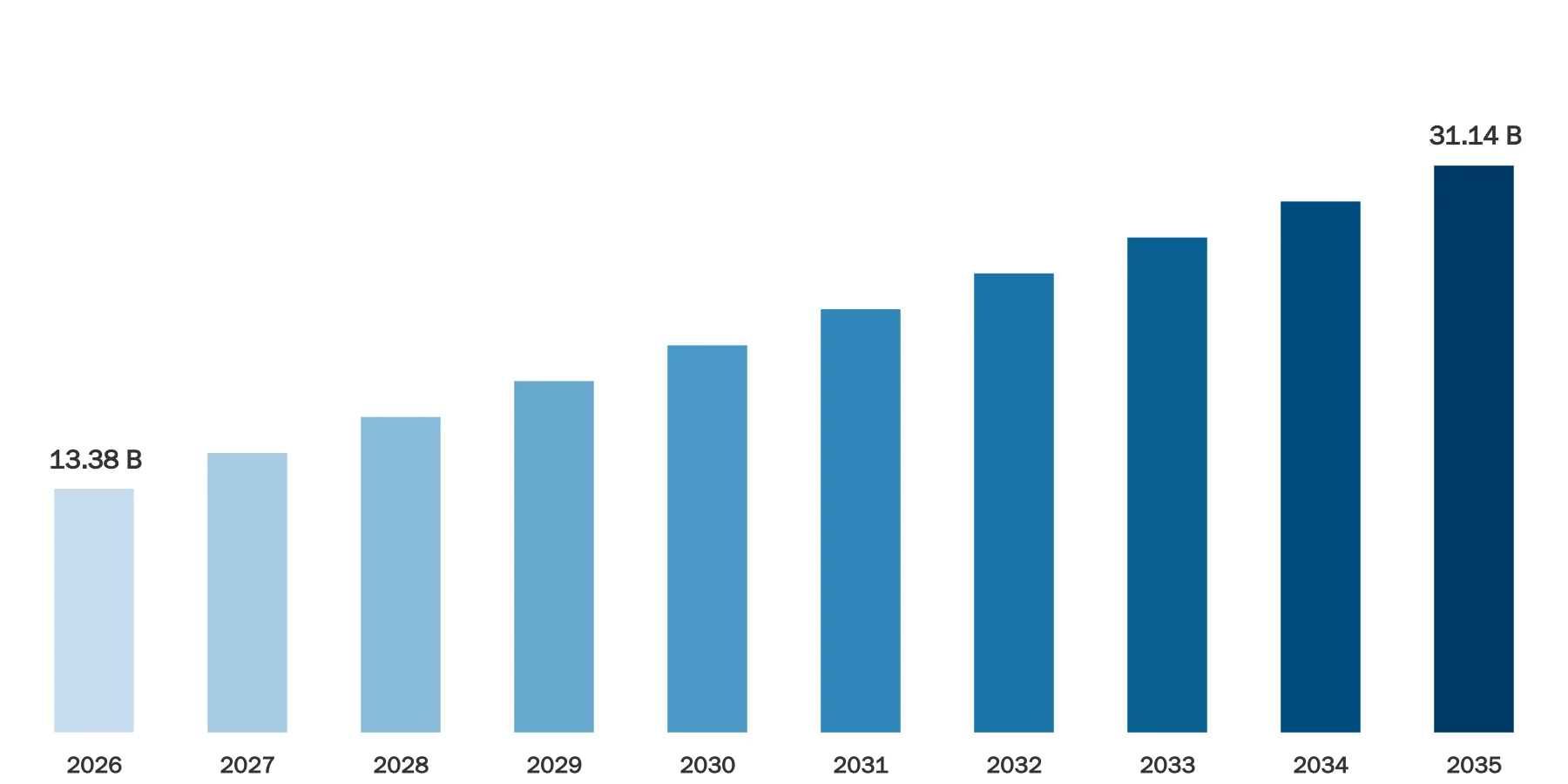
Source: Econ Market Research
Micro irrigation systems, sometimes referred to as drip or trickle irrigation, minimise water waste and increase crop yields by carefully applying water directly to the root zone of plants. Worldwide, this technology is becoming widely used, especially in areas where water is scarce and rainfall patterns are unpredictable. The system delivers water exactly where it is needed through a network of emitters, pipes, valves, and tubing. Micro irrigation system adoption is now essential for sustainable agriculture as the world struggles with issues like climate change and diminishing water supplies.
Micro Irrigation System Dynamics
One of the main causes is the growing world population, which raises the need for food production and makes effective irrigation techniques necessary to increase crop yields. Water scarcity brought on by climate change and erratic rainfall patterns highlight the significance of micro irrigation systems for maximising water use and lessening the negative effects of water scarcity on agriculture. The expansion of the market is largely facilitated by government programmes and policies that support sustainable farming methods and provide financial incentives for the adoption of water-efficient technologies.
Developments in technology are a major factor in market dynamics. The main goals of ongoing research and development are to increase system connectivity, automation, and efficiency. Farmers now have access to real-time monitoring and remote management tools thanks to the development of smart irrigation solutions that integrate sensor technologies and control systems. This pattern is consistent with the expanding field of precision agriculture, whereby data-driven decision-making improves the efficient use of resources and the general productivity of farms.
Micro Irrigation System Drivers
Global Population Growth and Food Demand
One of the main factors propelling the market for micro irrigation systems is the world population',s exponential growth. In order to maintain sustainable food production, there is an increasing need for effective agricultural practices as the demand for food rises, particularly in areas with dense populations. Micro irrigation systems, which maximise water use, boost crop yields, and increase total agricultural productivity, are essential in tackling this problem. Micro irrigation systems are becoming more and more popular as farmers become more conscious of the value of conserving water and the effectiveness of modern irrigation techniques. As a result, micro irrigation systems are becoming a necessary tool for supplying the world',s expanding food demand.
Climate Change and Water Scarcity
Water scarcity is a result of climate change-related factors in many places, including increased frequency of drought and irregular rainfall patterns. This is a major factor driving the market for micro irrigation systems as farmers look for long-lasting ways to lessen the effects of shifting weather patterns on crop production. Micro irrigation systems ensure ideal moisture levels for crop growth and minimise waste by precisely delivering water to plant roots. As a strategic response to the challenges posed by water scarcity, governments and environmental agencies are increasingly realising the role that micro irrigation plays in helping farmers adapt to climate change. This has LED to the adoption of supportive policies, subsidies, and incentives for farmers to install these systems.
Restraints:
The high initial cost of system installation is one of the main barriers to the microirrigation system market. Small and medium-sized farmers may find it prohibitively expensive to acquire and install the required infrastructure, which includes emitters, valves, pipes, and control systems. This is especially true in developing nations. Micro irrigation systems are not widely adopted due to this financial barrier, which calls for targeted interventions like government subsidies or financing options to increase the accessibility of these technologies to a wider range of farmers.
Skilled Labor Requirement
The effective operation and maintenance of micro irrigation systems demand a certain level of technical expertise. Farmers need to be adequately trained to install, manage, and troubleshoot these systems. The requirement for skilled labor becomes a significant restraint, especially in regions where agricultural practices are traditional, and the workforce may lack the necessary skills. Bridging this skills gap through educational programs and training initiatives is crucial to overcoming this restraint and ensuring the successful and sustainable implementation of micro irrigation systems.
Opportunities:
Smart Irrigation Technologies
The integration of smart technologies in micro irrigation systems presents a significant opportunity for market growth. Advancements in sensor technologies, Data Analytics, and connectivity enable the development of smart irrigation solutions. These systems allow farmers to monitor soil moisture levels, weather conditions, and crop requirements in real-time, optimizing irrigation schedules and resource usage. The evolution toward precision agriculture, driven by smart irrigation, not only enhances the efficiency of micro irrigation but also opens doors to innovative, data-driven farming practices that can further increase productivity and sustainability.
Segment Overview
By Mechanism
Based on mechanism, the micro irrigation system market is divided into three primary segments. With drip irrigation systems, water is carefully delivered via a system of emitters, pipes, and tubing right to the plant',s root zone. This system provides targeted hydration while reducing water waste. Conversely, Sprinkler Irrigation Systems cover a greater area by dispersing water as droplets via overhead sprinklers. This technique works well for both field and orchard cultivation, and it is efficacious for a wide range of crops. Given the dynamic nature of irrigation system development, the category of Other Micro-irrigation Systems includes cutting-edge and novel irrigation technologies in addition to conventional drip and sprinkler techniques.
By Component
Micro irrigation systems consist of various components essential for their functionality. Drip Irrigation Components include pipes, tubing, filters, and emitters designed for precise water delivery. Sprinkler Irrigation Components involve sprinkler heads, pipes, pumps, and valves to disperse water evenly over the cultivated area. These components are crucial for maintaining the efficiency and reliability of the irrigation system.
By Cultivation Technology
The market is further segmented based on cultivation technology, distinguishing between Open Field and Protected Cultivation methods. Open Field cultivation refers to traditional outdoor farming, where crops are exposed to natural environmental conditions. In contrast, Protected Cultivation involves the use of greenhouses or other structures to shield crops from adverse weather and external factors. This segmentation recognizes the diverse needs of farmers engaging in different cultivation practices.
By Application
Micro irrigation systems are used with a variety of crops. Field Crops&mdash,large-scale staple crops&mdash,Orchards and Vineyards&mdash,fruit-bearing trees and grapevines&mdash,Vegetables&mdash,a broad category of cultivated vegetables&mdash,Plantation Crops&mdash,such as tea, coffee and rubber&mdash,and Other Applications&mdash,specialized crops or unusual agricultural techniques&mdash,are among the applications that are divided into categories. This classification reflects the adaptability of micro irrigation systems in contemporary agriculture by ensuring that the market dynamics and demands unique to each application are appropriately addressed.
Micro Irrigation System Overview by Region
The need for water-efficient solutions and the region',s sizable agricultural sector are driving the market',s strong growth in Asia-Pacific. Micro irrigation systems are becoming more widely used in nations like China and India thanks to government initiatives that encourage environmentally friendly agricultural methods. North America is a developed market, leading the way in the United States, where the need for cutting-edge irrigation technologies is driven by precision agriculture techniques and the need to conserve water. Europe',s market is distinguished by its emphasis on sustainable agriculture, with nations such as Spain and Italy at the forefront of the adoption of micro irrigation systems for a range of crops.
In Latin America, countries like Brazil are embracing micro irrigation to enhance crop yields, particularly in the vast expanses of agricultural land. Water scarcity concerns in parts of the region contribute to the growing popularity of these systems. The Middle East and Africa region, characterized by arid and semi-arid climates, sees micro irrigation as a vital solution for optimizing water use in agriculture. Governments in the Middle East are investing in modern irrigation technologies to ensure food security amid challenging environmental conditions.
Micro Irrigation System Market Competitive Landscape
Industry leaders such as Deere &, Company. (U.S.), HUNTER INDUSTRIES (U.S.), Mahindra (India), HARVEL AGUA INDIA PRIVATE LIMITED (India), and Jain Irrigation Systems Ltd dominate the market with their extensive product portfolios and global reach. These companies focus on continuous research and development to enhance the efficiency of their micro irrigation systems, integrating smart technologies to meet the evolving needs of farmers. Strategic partnerships and acquisitions are prevalent strategies among major players to strengthen their market position and broaden their customer base.
By offering niche solutions and meeting particular regional needs, emerging players&mdash,including start-ups and regional businesses&mdash,contribute to the competitive diversity. The focus on sustainability and precision agriculture, where businesses like The Toro Company and Valmont Industries use their knowledge to provide cutting-edge irrigation solutions, further intensifies competition in the market. The competitive landscape is significantly shaped by government initiatives that support sustainable farming practices and water conservation, as businesses align their strategies with these policies in an effort to obtain a competitive advantage.
Micro Irrigation System Market Leading Players:
Jain Irrigation Systems Ltd.
The Toro Company
Netafim Ltd.
Lindsay Corporation
Rain Bird Corporation
Hunter Industries
Valmont Industries
Rivulis Irrigation
NaanDanJain Irrigation
Nelson Irrigation
Micro Irrigation System Recent Developments
Sept 2023, Rivulis and Dragon-Line, frontrunners in micro-irrigation and mobile drip irrigation pivots, are excited to reveal their exclusive collaboration for the USA, Mexico, and Canada markets. In this strategic partnership, Dragon Line is introducing an innovative Dragon Line Mobile Drip Irrigation System, leveraging a newly developed Rivulis drip line product tailored for this purpose. This ground-breaking system facilitates the shift from traditional sprinkler systems to mobile drip irrigation for Center Pivots. Farmers can now enhance crop yields, conserve water, and cut down on input expenses, including fertilizers and disease management, thanks to this cutting-edge technology.
Oct 2023, Netafim India, a prominent provider of smart irrigation solutions, has unveiled Toofan, a revolutionary irrigation technology set to reshape farming practices for growers of various scales. The company',s ambitious goal is to cover 25,000 hectares of land and engage with 35,000 farmers by 2025 throughout India, ushering in a new era of sustainable agriculture. Toofan boasts cutting-edge anti-clogging technology, ensuring the efficient delivery of water and nutrients. The drip line, with a remarkable 40% increase in tensile strength, sets a new standard for durability. Moreover, Toofan is priced 20% lower than the currently available thin wall, non-pressure-compensated (NPC) drip lines in the Indian market, making it a more cost-effective choice for farmers.
Micro Irrigation System Report Segmentation
Micro Irrigation System Market Report Scope & Segmentation
| Attributes | Details |
|---|---|
Market Size (Current) | US$ 13.38 Billion in 2026 |
Market Size (Forecast) | US$ 31.14 Billion in 2035 |
Growth Rate | CAGR of 9.84% from 2026 to 2035 |
Forecast Period | 2026 – 2035 |
Base Year | 2025 |
Historical Data Available | Yes |
Regional Scope | Global |
Segments Covered | By Mechanism
By Crop Type
By End-User
|
Frequently Asked Questions
Common questions about this report
The study period covers historical insights and forecast projections for the period 2026-2035.
About the Author
Market research expert with years of industry experience

Dipali Bhingare serves as the Market Research Director at Econ Market Research. With a focus on translating complex global economic shifts into actionable business intelligence, she oversees the strategic direction of comprehensive market studies. Her work empowers organizations to navigate volatile industries through data-driven forecasting and deep-dive competitive analysis.
Related Reports
Explore more market insights from the same category