

Medical X-ray Image Processor Market
Medical X-ray Image Processor Market Size, Share, Trends, Growth, and Industry Analysis, By Product (Cassette, Flat Panel Detectors), By Application (Orthopedic, Dental, Mammography, Others), By End-Use (Hospitals, Outpatient Facilities, Research andamp; Manufacturing), Regional Analysis and Forecast Period 2026-2035
Market Overview
As per Econ Market Research analysis, the Global Medical X-ray Image Processor Market reached a valuation of US$ 1.05 Billion in 2026 and is anticipated to grow to US$ 1.48 Billion by 2035, at a CAGR of 3.88% during the forecast timeline 2026–2035. The base year considered is 2025.
Medical X-ray Image Processor Market Size 2025-2035 (USD Billion)

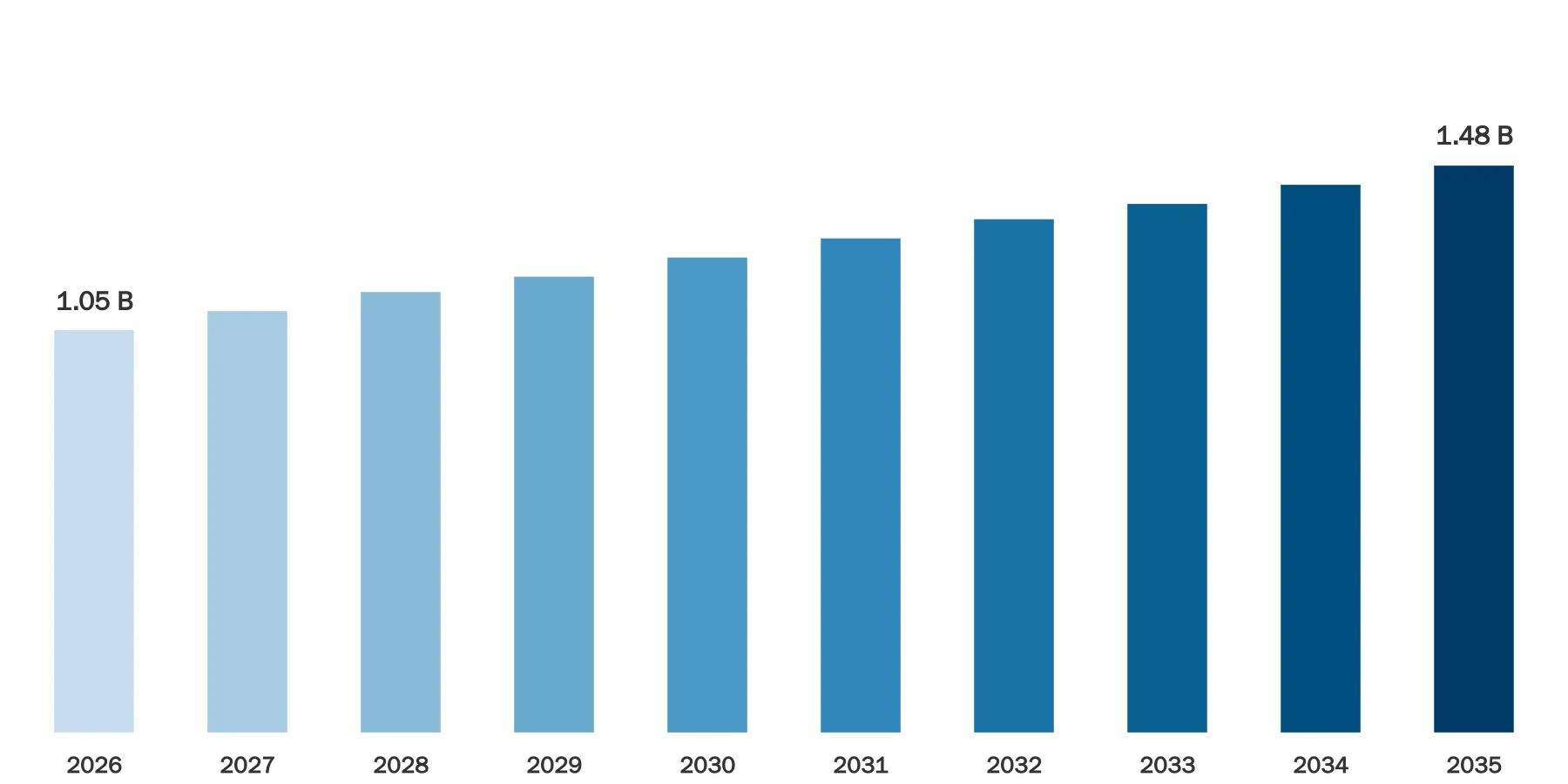
Source: Econ Market Research
Medical X-ray image processors, which provide image optimisation and diagnostic accuracy, are essential for improving the calibre and effectiveness of X-ray imaging. These processors help convert analogue signals into digital format for better analysis and visualisation, making them crucial parts of X-ray systems. The market includes a range of X-ray image processors that serve different medical imaging applications, such as computed radiography (CR) and digital radiography (DR) processors.
Medical X-ray Image Processor Dynamics
The market is mostly driven by the ageing population, the rising incidence of chronic diseases, and the expanding need for sophisticated diagnostic instruments. Because to the advantages of better image quality, quicker processing times, and seamless integration with healthcare information systems, digital radiography (DR) and computed radiography (CR) processors are rapidly replacing traditional analogue X-ray systems. The constant focus on lowering radiation exposure and improving diagnostic precision drives the uptake of cutting-edge X-ray image processing technologies even more.
The dynamics of the market are significantly shaped by technological advancements, with continuous research and development efforts concentrating on innovative features and functionalities to satisfy the changing demands of healthcare providers. By encouraging innovation and broadening product offerings, strategic alliances and cooperation between major industry participants support the expansion of the market. Furthermore, a noteworthy development in medical X-ray image processors is the incorporation of machine learning and Artificial Intelligence (AI) algorithms, which present prospects for automated image analysis and more effective diagnostic workflows.
Medical X-ray Image Processor Drivers
Rising Prevalence of Chronic Diseases
An important factor driving the global market for medical X-ray image processors is the rising prevalence of chronic illnesses. In order to effectively manage and plan treatment for conditions like cancer and cardiovascular diseases, diagnostic imaging must be performed frequently. Advanced X-ray image processors are becoming more and more in demand as medical professionals work to provide timely and accurate diagnoses. These processors play a crucial role in enhancing the clarity and precision of medical images, contributing to improved disease detection and monitoring.
Technological Advancements and Innovation
The relentless pursuit of technological advancements in medical imaging is a key driver for the market. Ongoing research and development efforts focus on innovations such as improved image resolution, faster processing speeds, and the integration of artificial intelligence (AI) for automated image analysis. Technological upgrades not only enhance diagnostic capabilities but also contribute to streamlined workflows and increased efficiency in healthcare settings. As healthcare systems seek to stay at the forefront of diagnostic capabilities, the continuous evolution of X-ray image processors remains a pivotal driver in the market',s growth.
Restraints:
High Initial Costs and Implementation Challenges
Advanced medical X-ray image processor adoption is hindered by high initial costs and complex implementation, even with their obvious benefits. The adoption of digital solutions, particularly in healthcare facilities with limited resources, is impeded by the substantial capital investment required to convert from conventional analogue systems. It is also difficult to integrate these systems into current infrastructures, which means that healthcare personnel must undergo extensive training programmes and there may be workflow disruptions during this process.
Concerns Regarding Radiation Exposure
Heightened awareness of radiation risks has LED to increased scrutiny and concerns among both healthcare professionals and patients. While X-ray imaging is invaluable for diagnosis, the potential risks associated with radiation exposure have become a restraint for the market. Balancing the need for accurate diagnostics with minimizing radiation exposure remains a challenge. Stricter regulatory guidelines and growing emphasis on radiation safety necessitate continuous efforts by industry players to develop X-ray image processors that can deliver high-quality images with reduced radiation doses.
Opportunities:
Integration of Artificial Intelligence (AI)
The incorporation of AI and machine learning presents a significant opportunity for the Medical X-ray Image Processor Market. AI algorithms can aid in automated image analysis, pattern recognition, and decision support, enhancing diagnostic accuracy and efficiency. The integration of AI not only opens avenues for more precise diagnoses but also contributes to the development of smart and adaptive imaging systems that can tailor their functionality to specific clinical scenarios.
Segment Overview
By Product
The market comprises two main product segments: cassettes and flat panel detectors. Cassettes are traditional components used in computed radiography (CR) systems, holding the imaging plate that captures X-ray images. On the other hand, flat panel detectors represent the forefront of technological innovation, providing direct digital X-ray imaging capabilities. Flat panel detectors offer advantages such as real-time imaging, high resolution, and improved efficiency compared to traditional cassette-based systems. The choice between these products often depends on factors like imaging requirements, cost considerations, and the specific applications within the healthcare setting.
By Application
The application segment encompasses various medical disciplines where X-ray imaging plays a crucial role. These include dental, mammography, orthopedic, and other miscellaneous applications. Dental X-ray image processors are designed for imaging the oral and maxillofacial region, aiding in the diagnosis and treatment planning of dental conditions. Mammography involves the use of specialized X-ray equipment for breast imaging, contributing to the early detection of breast cancer. Orthopedic applications focus on imaging the musculoskeletal system, aiding in the diagnosis and management of bone and joint disorders. The ",others", category covers a range of diverse applications, including cardiovascular imaging and general radiography.
By End-Use
The end-use segment reflects the varied settings where medical X-ray image processors are deployed. Hospitals, as the primary healthcare institutions, constitute a significant end-use category. These facilities employ X-ray image processors across diverse departments for diagnostics and treatment planning. Outpatient facilities, including diagnostic imaging centers, clinics, and private practices, also utilize X-ray image processors for various medical imaging applications. Research and manufacturing settings represent a specialized end-use category where X-ray imaging technology is employed for research purposes, product development, and quality control processes. Each end-use category caters to specific healthcare needs, contributing to the overall growth and adoption of medical X-ray image processors in the market.
Medical X-ray Image Processor Overview by Region
North America stands as a prominent market leader, driven by a well-established healthcare system, early adoption of advanced medical technologies, and a high prevalence of chronic conditions. The region benefits from robust research and development activities, fostering continuous innovation in medical imaging technologies, including X-ray image processors. Europe follows closely, with a mature healthcare infrastructure and a focus on improving diagnostic capabilities. The presence of key market players and stringent regulatory standards contribute to the region',s substantial market share.
Asia-Pacific emerges as a rapidly growing market, fuelled by increasing healthcare expenditures, a burgeoning population, and rising awareness of the importance of early disease detection. Countries like China and India are witnessing significant investments in healthcare infrastructure, driving the adoption of advanced imaging technologies, including X-ray image processors. The region',s evolving regulatory landscape and the integration of digital health solutions further contribute to market expansion.
Medical X-ray Image Processor Market Competitive Landscape
Leading companies such as Siemens Healthineers, GE Healthcare, and Philips Healthcare are at the forefront, leveraging their extensive product portfolios and global presence to maintain a significant market share. These industry giants consistently invest in research and development initiatives to introduce advanced features, enhance image processing capabilities, and integrate artificial intelligence into their X-ray image processors. Their strong distribution networks and established relationships with healthcare institutions contribute to their dominance in the market.
The market also features the presence of innovative and niche players, contributing to a diverse competitive landscape. Companies like Agfa-Gevaert N.V., Carestream Health, and Fujifilm Holdings Corporation focus on specialized imaging solutions, catering to specific medical applications and needs. Start-ups and emerging players often bring agility and novel technologies to the market, challenging established norms and pushing the boundaries of what X-ray image processors can achieve. Strategic partnerships and collaborations between key market players and technology companies further contribute to the competitive dynamics, facilitating the integration of complementary technologies and expanding market reach.
Medical X-ray Image Processor Market Leading Companies:
Siemens Healthineers
GE Healthcare
Philips Healthcare
Agfa-Gevaert NV
Fujifilm Holdings Corporation
Carestream Health
Konica Minolta, Inc.
PROTEC
AFP Manufacturing
HEXAGON INTERNATIONAL (GB) LIMITED
Euroteck
Zimed Healthcare Ltd
Medical X-ray Image Processor Recent Developments
Nov 2023, HOPPR, a subsidiary of Health2047, has chosen RSNA 2023 as the platform to unveil Grace, a versatile foundation model designed for image-to-image and text-to-image learning across various modalities. This beta model is specifically aimed at radiology PACS vendors, AI companies, and other developers involved in medical imaging, providing them with the opportunity for fine-tuning and application development.
Nov 2021, Block Imaging is excited to declare its collaboration as an authorized Channel Partner for Fujifilm Healthcare Solutions. This alliance is set to cultivate a enduring connection between Block Imaging and Fujifilm.
Global Medical X-ray Image Processor Report Segmentation
Medical X-ray Image Processor Market Report Scope & Segmentation
| Attributes | Details |
|---|---|
Market Size (Current) | US$ 1.05 Billion in 2026 |
Market Size (Forecast) | US$ 1.48 Billion in 2035 |
Growth Rate | CAGR of 3.88% from 2026 to 2035 |
Forecast Period | 2026 – 2035 |
Base Year | 2025 |
Historical Data Available | Yes |
Regional Scope | Global |
Segments Covered | By Product
By Application
By End-Use
|
Frequently Asked Questions
Common questions about this report
The study period covers historical insights and forecast projections for the period 2026-2035.
About the Author
Market research expert with years of industry experience

Related Reports
Explore more market insights from the same category