

Blood Group Typing Market
Blood Group Typing Market Size, Share, Trends, Growth, and Industry Analysis, By Product andamp; Service (Consumables, Instruments, Services andamp; Software), By Test Type (ABO Blood Tests andamp; Rh Typing, Antibody Screening, HLA Typing, Cross-matching Tests, Antigen Typing), By Technique (Assay-based Techniques, PCR-based andamp; Microarray Techniques, Massively Parallel Sequencing), By End-User (Hospitals, Blood Banks, Clinical Laboratories, Others), Regional Analysis and Forecast Period 2026-2035
Blood Group Typing Market Overview
As per Econ Market Research analysis, the Global Blood Group Typing Market accounted for US$ 2.49 Billion in 2026 and is expected to surpass US$ 5.55 Billion by 2035, witnessing a CAGR of 9.2% throughout 2026–2035. The analysis is based on 2025 as the base year.
Blood Group Typing Market Size 2025-2035 (USD Billion)

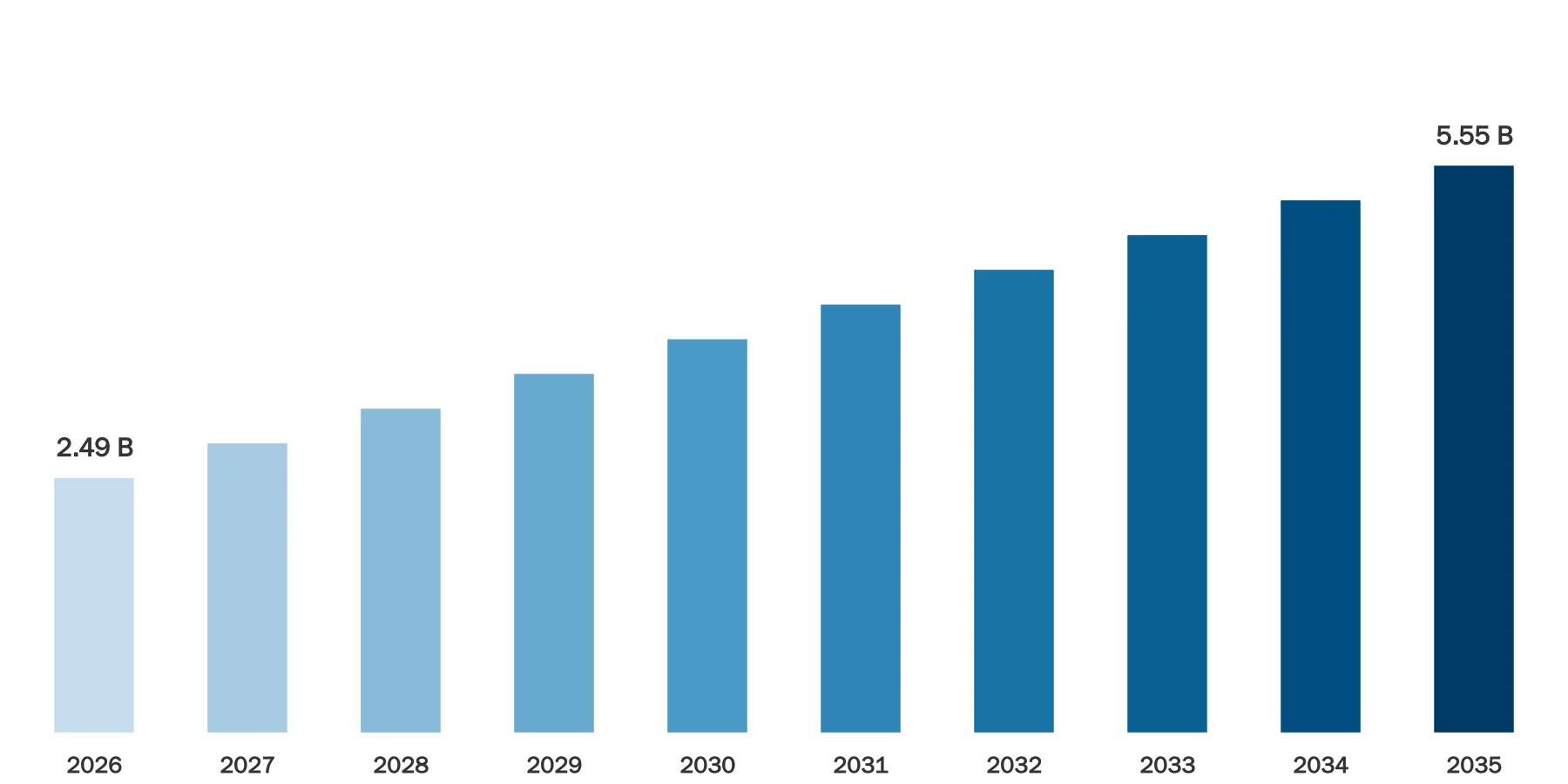
Source: Econ Market Research
Blood group typing, sometimes referred to as blood grouping or blood typing, is an essential diagnostic process that establishes a person',s blood type and Rh factor. For a number of medical procedures, such as organ transplants, blood transfusions, and prenatal care, this classification is essential. The market includes a broad range of methods and goods intended to reliably and quickly identify blood types, including RhD and ABO, as well as extra subtyping for more thorough compatibility evaluations.
Blood Group Typing Dynamics
Increasing demand for blood transfusions, driven by a rising incidence of surgeries, trauma cases, and chronic diseases, is a key driver fuelling market expansion. The significance of blood group typing in modern healthcare practices is further underscored by its crucial role in guaranteeing safe and compatible organ transplants and transfusions. Furthermore, there is a growing awareness in the market about the significance of precise blood group identification for routine medical care, prenatal testing, and personalised medicine applications, in addition to emergency scenarios.
The dynamics of the market are significantly shaped by technological developments, with continuous improvements in automation and molecular techniques improving the speed, accuracy, and efficiency of blood typing procedures. Healthcare workers can now perform high-throughput blood group typing, which streamlines clinical workflows and cuts down on turnaround times, thanks to the integration of advanced technologies. Increased research and development efforts aimed at broadening the spectrum of blood typing techniques and taking into account the subtleties of varied populations also benefit the market.
Blood Group Typing Drivers
Increasing Healthcare Needs and Surgical Procedures
The global prevalence of chronic illnesses, surgical procedures, and trauma cases, among other factors, are major factors driving the blood group typing market. Blood transfusions are frequently required after surgical procedures, which has increased demand for precise blood group identification in order to guarantee safe and appropriate transfusions.
As healthcare infrastructure advances and access to medical services expands, the market will grow as a result of the growing healthcare needs, especially in emerging economies. This driver highlights the vital role that the market plays in facilitating a range of medical interventions and the significance of blood group typing in the process of making healthcare decisions.
Technological Advancements and Automation
Rapid advancements in blood typing technologies, including molecular techniques and automation, significantly drive market growth. Automation streamlines blood typing processes, reducing turnaround times and enhancing overall efficiency. The integration of molecular methods provides higher precision and expands the capabilities of blood group typing, allowing for more comprehensive compatibility assessments. These technological innovations not only improve the accuracy of results but also contribute to the scalability of blood typing procedures, making them more accessible in various healthcare settings. The continuous evolution of these technologies positions the market at the forefront of diagnostic innovations, reinforcing its relevance in modern healthcare practices.
Restraints:
High Cost of Advanced Blood Typing Technologies
The high costs associated with advanced blood typing technologies, like automated systems and molecular methods, are impeding their adoption. These technologies can come with hefty initial and ongoing maintenance costs, especially for healthcare facilities in areas with limited resources. This financial barrier prevents advanced blood typing techniques from being widely used, which affects market penetration and makes it more difficult for some healthcare settings to upgrade their blood typing capabilities.
Challenges in Emerging Markets
Although the market for blood group typing has room to grow, there are obstacles in emerging economies. These difficulties include a lack of knowledge regarding the significance of blood group typing, a deficiency in the infrastructure of healthcare, and a lack of funding for medical expenses. To overcome these obstacles, focused initiatives are needed to increase awareness, enhance healthcare accessibility, and offer affordable solutions that are suited to the unique requirements of these areas. The uniform advancement of the blood group typing market globally is impeded by the disparities in healthcare development among different economies.
Opportunities:
Rising Emphasis on Personalized Medicine
The growing emphasis on personalized medicine presents a significant opportunity for the blood group typing market. As healthcare practices increasingly focus on tailoring treatments to individual characteristics, accurate blood group identification becomes crucial for personalized therapeutic strategies. This trend opens avenues for the integration of blood group typing into precision medicine approaches, creating opportunities for market players to develop and offer specialized solutions catering to personalized healthcare needs.
Segment Overview
By Product
The blood group typing market is segmented by product into instruments, consumables, and services. Instruments encompass the machinery and devices utilized for blood group typing procedures, including automated analyzers and testing platforms. Consumables refer to the disposable components and reagents required for blood typing tests, such as blood grouping reagents and test cards. Services involve the professional expertise and support provided by healthcare institutions or specialized laboratories in conducting blood group typing tests. This segmentation reflects the diverse components and resources involved in delivering accurate and reliable blood typing results.
By Technique
The market is categorized by technique, encompassing PCR-based and Microarray methods, assay-based techniques, massively parallel sequencing, and other emerging technologies. PCR-based and Microarray techniques utilize polymerase chain reaction and microarray platforms for efficient and high-throughput blood group typing. Assay-based methods involve specific assays for identifying blood group antigens. Massively Parallel Sequencing leverages advanced sequencing technologies for comprehensive and detailed blood group analysis. The ",other", category encompasses innovative techniques contributing to the continuous evolution of blood group typing methodologies. This segmentation highlights the diverse technological approaches employed to enhance the precision and efficiency of blood typing processes.
By Test Type
Blood group typing is further classified by test type, including antibody screening, HLA typing, cross-matching tests, ABO blood tests, and other specialized tests. Antibody screening identifies antibodies in the blood that may cause adverse reactions during transfusions. HLA typing determines the compatibility of human leukocyte antigens for organ transplantation. Cross-matching tests assess the compatibility between donor and recipient blood samples. ABO blood tests classify individuals into different blood groups based on the presence or absence of A and B antigens. The ",other", category comprises additional specific blood group tests, reflecting the diversity of diagnostic applications within this segment.
By End-user
The end-user segment encompasses healthcare entities and institutions utilizing blood group typing services, including hospitals, diagnostic laboratories, blood banks, and research institutions. The end-user segmentation reflects the diverse settings where blood group typing is essential for various medical interventions. This includes routine blood typing for healthcare procedures in hospitals, compatibility assessments in blood banks for transfusions, and specialized research applications in research institutions. The diversity in end-users underscores the broad scope and critical role of blood group typing across different facets of the healthcare ecosystem.
Blood Group Typing Overview by Region
In developed regions such as North America and Europe, the market experiences a robust presence due to well-established healthcare systems and a higher adoption rate of advanced blood typing technologies. North America, particularly the United States, holds a significant share, driven by the increasing prevalence of chronic diseases, a sophisticated healthcare infrastructure, and a strong emphasis on technological innovation.
Growing older populations and an increasing need for blood products are driving market growth in Europe, where nations like France, Germany, and the United Kingdom play a major role. Collaborative research and development efforts benefit the region as well, promoting improvements in blood typing techniques. Due to increased healthcare spending, bettering healthcare infrastructure, and growing recognition of the significance of blood group typing, the Asia-Pacific market is growing quickly. Leading the way in this expansion are nations like China and India, where blood typing services are in high demand amidst a changing healthcare environment.
Blood Group Typing Market Competitive Landscape
Major companies such as Bio-Rad Laboratories, Inc., Grifols S.A., Ortho Clinical Diagnostics, Immucor, Inc., and Quotient Limited dominate the market, leveraging their extensive product portfolios and widespread geographic presence. These companies focus on research and development activities to introduce innovative blood typing solutions, including advanced instruments and consumables, enhancing the efficiency and accuracy of blood group identification.
Collaborations, mergers, and acquisitions are prevalent strategies within the competitive landscape as companies seek to expand their market share and strengthen their technological capabilities. For instance, strategic partnerships between diagnostic laboratories and blood banks facilitate the integration of blood group typing services into broader healthcare networks. Moreover, continuous efforts are made by market players to comply with regulatory standards and certifications, ensuring the reliability and safety of their blood typing products.
Blood Group Typing Market Leading Companies:
QuidelOrtho Corporation
Grifols, S.A.
Bio-Rad Laboratories, Inc.
Immucor, Inc.
Thermo Fisher Scientific Inc.
Merck KGaA
QIAGEN
Beckman Coulter, Inc.
Quotient Limited
CareDx Inc.
Agena Bioscience, Inc.
DIAGAST
Illumina, Inc.
Blood Group Typing Recent Developments
Feb 2023, InTec, a prominent international in vitro diagnostics (IVD) company specializing in infectious disease diagnostics and emphasizing point-of-care screening, has unveiled an updated ABO &, RhD Blood Grouping Kit (Solid-phase method) designed for efficient blood typing and screening.
Global Blood Group Typing Report Segmentation
Blood Group Typing Market Report Scope & Segmentation
| Attributes | Details |
|---|---|
Market Size (Current) | US$ 2.49 Billion in 2026 |
Market Size (Forecast) | US$ 5.55 Billion in 2035 |
Growth Rate | CAGR of 9.2% from 2026 to 2035 |
Forecast Period | 2026 – 2035 |
Base Year | 2025 |
Historical Data Available | Yes |
Regional Scope | Global |
Segments Covered | By Product andamp; Service
By Test Type
By Technique
By End-User
|
Frequently Asked Questions
Common questions about this report
The study period covers historical insights and forecast projections for the period 2026-2035.
About the Author
Market research expert with years of industry experience

Dipali Bhingare serves as the Market Research Director at Econ Market Research. With a focus on translating complex global economic shifts into actionable business intelligence, she oversees the strategic direction of comprehensive market studies. Her work empowers organizations to navigate volatile industries through data-driven forecasting and deep-dive competitive analysis.
Related Reports
Explore more market insights from the same category