

Location Intelligence Market
Location Intelligence Market Size, Share, Trends, Growth, and Industry Analysis, By Component (Software, Services), By Location Type (Indoor, Outdoor), By Application (Workforce Management, Asset Management, Facility Management, Risk Management, Remote Monitoring, Sales and Marketing Optimization, Others), By Vertical (Retail and Consumer Goods, Government and Defense, Manufacturing, Transportation and Logistics, BFSI, IT and Telecom, Others), Regional Analysis and Forecast Period 2026-2035
Market Overview
As per Econ Market Research analysis, the Global Location Intelligence Market size amounted to US$ 28.37 Billion in 2026 and is anticipated to grow to US$ 74.81 Billion by 2035, recording a CAGR of 11.39% during 2026–2035. The base year taken for analysis is 2025.
Location Intelligence Market Size 2025-2035 (USD Billion)

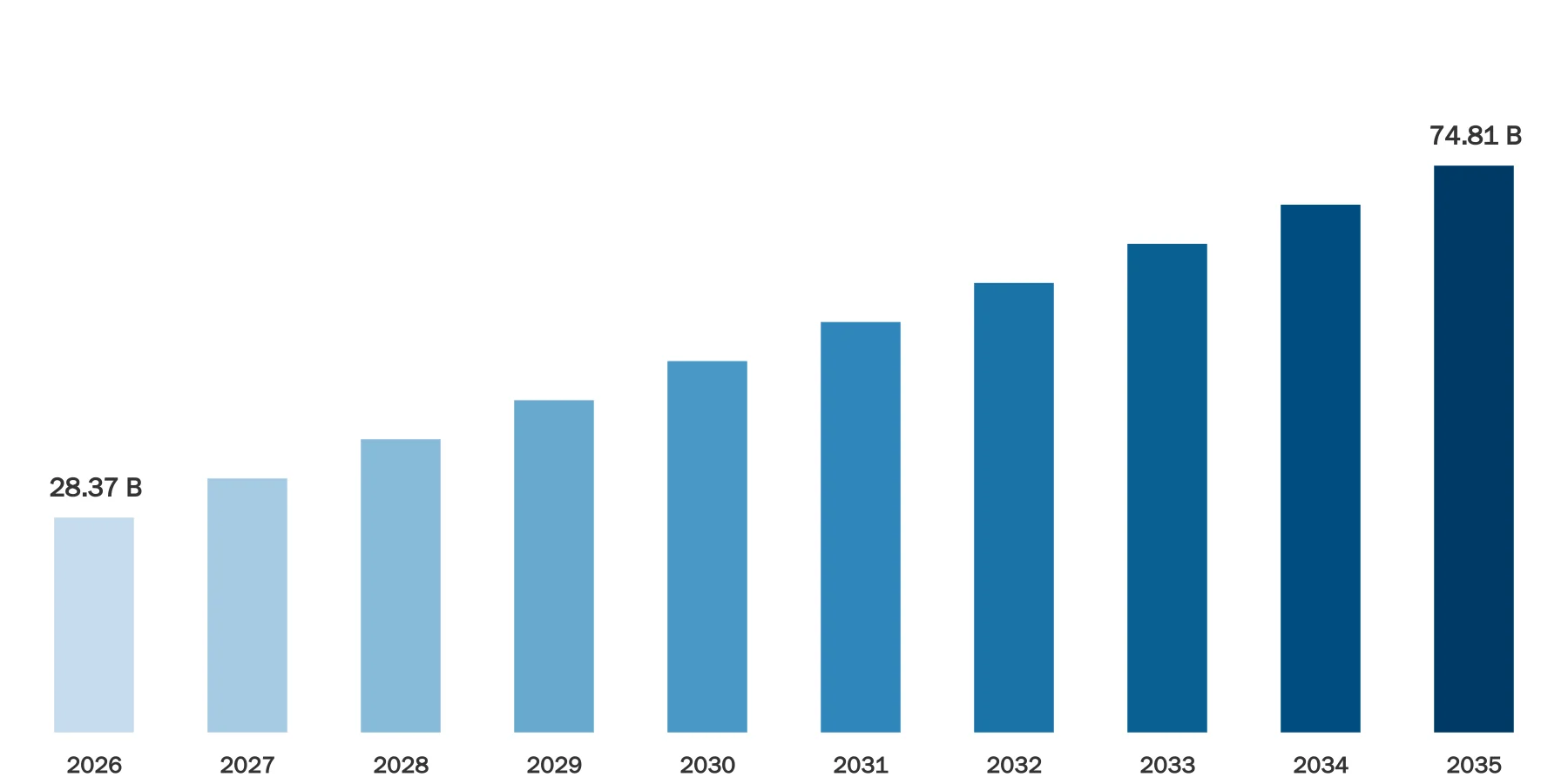
Source: Econ Market Research
Location intelligence is the process of employing spatial or geographic data to gather knowledge, develop wise judgments, and resolve issues. It entails gathering, examining, and visualizing data connected to certain geographic places. Organizations and individuals can comprehend correlations, patterns, and trends that appear when data is linked to its geographic context thanks to this form of intelligence. Integrating geographic information systems (GIS), global positioning systems (GPS), and Data Analytics, this market offers businesses and organizations a strategic advantage.
It empowers them to optimize operations, enhance customer experiences, and make informed decisions by leveraging location-based information. Industries such as retail, logistics, real estate, and urban planning benefit from location intelligence',s ability to visualize patterns, trends, and relationships within geographical contexts. From targeted marketing campaigns to supply chain optimization, the market enables efficient resource allocation and risk assessment. As technology advances, encompassing AI and IoT, location intelligence continues to evolve, driving innovation across sectors and enabling a deeper understanding of the spatial dimension in data analysis.
Location Intelligence Dynamics
The dynamic and quick expansion of the location intelligence market is attributed to the industries it has transformed. This expansion has been fueled by the growing use of geographic information systems (GIS) and data analytics. Businesses in retail, logistics, urban planning, and other industries are becoming aware of its potential to enhance productivity and consumer interaction. Decision-making is aided by location-based insights, allowing merchants to more efficiently target markets and streamline supply chains. Location intelligence is used by urban planners to construct infrastructure and respond to disasters effectively.
Monitoring diseases and allocating resources are enhanced in healthcare. Real estate benefits from thorough market research and property value. The development of data gathering technologies like GPS and satellite photography, as well as the expanding accessibility of open data sources, are driving the market',s expansion. Analytics tools, including spatial analysis and visualization, unravel hidden patterns in data, enhancing strategic planning.
The increasing demand for real-time location-based services on mobile platforms also fuels market growth. However, challenges include data privacy concerns and the need for skilled professionals to extract valuable insights from complex spatial data. Overall, the Location Intelligence market',s dynamic landscape is shaped by technological innovation, industry-specific applications, and the ongoing pursuit of data-driven decision-making across diverse sectors.
Location Intelligence Market Drivers
Rise in Big Data and IoT Adoption
The substantial rise in big data and internet of things (IoT) adoption has fundamentally transformed the landscape of technology and business. Big Data refers to the massive volume of structured and unstructured data generated at an unprecedented pace. Simultaneously, IoT represents the network of interconnected devices and sensors that collect and exchange data over the internet. The synergy between Big Data and IoT has created a powerful ecosystem that drives innovation and efficiency across various domains.
IoT devices generate vast streams of real-time data, including sensor readings, user interactions, and environmental variables. Big Data technologies, such as advanced analytics, machine learning, and data processing frameworks, enable the extraction of valuable insights from this influx of information. Industries across the board have harnessed this combined potential. Manufacturing benefits from predictive maintenance, where IoT sensors detect equipment anomalies, and Big Data analytics forecast maintenance needs. Healthcare leverages wearable IoT devices to monitor patient health, with Big Data aiding diagnosis and treatment decisions.
Rapid Urbanization Trend and Development of Smart Cities
Rapid urbanization is the term used to describe the rapid increase in the number of people living in cities as they move from rural areas in quest of better job prospects and living conditions. To address the complexities of urbanization, the concept of smart cities has emerged. Smart cities leverage technology and data-driven approaches to enhance urban living, sustainability, and efficiency.
These cities deploy internet of things (IoT) devices, sensors, and data analytics to gather real-time information about various aspects of urban life, including transportation, energy consumption, waste management, and public services. Smart city initiatives aim to optimize resource allocation, reduce environmental impact, and improve the quality of life for residents. Examples include efficient traffic management through real-time data analysis, intelligent energy distribution systems, and responsive public services based on citizen feedback. These initiatives also promote sustainability by reducing energy consumption and greenhouse gas emissions.
Restraints
Data Privacy and Security Concerns
As information becomes more digitized and interconnected, the risks associated with unauthorized access, data breaches, and misuse of personal and sensitive information have escalated. These concerns hinder the adoption of innovative technologies, as individuals and businesses are wary of exposing themselves to potential data vulnerabilities. Organizations often face legal and financial repercussions for failing to adequately protect data, leading to regulatory non-compliance and reputational damage. Moreover, the tension between data privacy and the utility of data analytics poses a restraint. Stricter privacy measures can limit the ability to gather and analyze data for valuable insights, affecting sectors like healthcare, finance, and marketing.
Regulatory and Compliance Barriers
These barriers encompass a range of rules, laws, and standards that organizations must adhere to in order to operate within the confines of ethical, legal, and societal norms. Such barriers can create complexities in several ways. Industries are subject to a multitude of regulations that differ across jurisdictions. Navigating this intricate web of rules requires significant resources, time, and expertise, leading to higher operational costs and potential inconsistencies in global operations. Compliance with regulations often necessitates substantial changes in processes, data handling, and technology implementations. These changes can disrupt established workflows, slow down innovation, and even limit the adoption of new technologies.
Opportunities
Real-Time Analytics
The opportunity lies in the ability to respond swiftly to changing conditions, capitalize on emerging trends, and address challenges in real-time. Industries such as e-commerce, finance, healthcare, and manufacturing can benefit immensely. For instance, e-commerce platforms can personalize user experiences based on real-time browsing and purchase behaviors. Financial institutions can detect fraudulent transactions instantly, enhancing security. In healthcare, real-time analysis of patient data can lead to timely interventions. Furthermore, real-time analytics enables proactive decision-making, allowing businesses to seize opportunities before they vanish. Supply chain optimization, demand forecasting, and inventory management become more accurate, reducing costs and improving customer satisfaction.
Supply Chain Optimization
This approach entails streamlining the transfer of goods, services, and information from raw material suppliers to final consumers by utilizing data-driven insights and cutting-edge technologies. The possibility of developing a flexible, adaptable, and economical supply chain represents the opportunity. Businesses may more correctly estimate demand, modify inventory levels in real-time, and reduce stockouts and overstock situations by analyzing data at different stages. Due to timely product availability, this results in better inventory management, lower carrying costs, and increased customer satisfaction. By determining the most cost-effective routes and forms of transportation, supply chain optimization can also result in decreased transportation expenses and better logistics. This supports environmental goals by saving money and lowering carbon impact.
Segment Overview
By Application
Based on application, the global location intelligence market is divided into remote monitoring, risk management, sales and marketing optimization, workforce management, and others. The sales and marketing optimization category dominates the market with the largest revenue share. This segment leverages data insights to refine sales strategies and tailor marketing efforts. Businesses analyze customer behavior and preferences to deliver targeted campaigns, enhance customer experiences, and drive revenue growth. Data analytics is employed to identify and mitigate potential risks.
By analyzing historical and real-time data, businesses can anticipate market shifts, regulatory changes, and operational vulnerabilities, enabling proactive decision-making to minimize disruptions and financial losses. The remote monitoring segment focuses on utilizing technology like sensors and IoT devices to monitor assets and processes from a distance. It enables real-time data collection, ensuring timely insights for predictive maintenance, performance optimization, and process efficiency across industries like manufacturing, energy, and healthcare. Data-driven tools are utilized for optimizing workforce operations. From employee scheduling to performance analysis, data helps enhance productivity, allocate resources efficiently, and boost employee satisfaction through informed decisions.
By Service
Based on the service, the global location intelligence market is categorized into system integration, consulting, and others. The system integration category leads the global location intelligence market with the largest revenue share. This segment involves combining various technologies, software, and hardware components into a unified system that functions seamlessly. System integration providers play a crucial role in ensuring that different systems and applications work harmoniously, enabling efficient data flow, communication, and functionality. This is particularly important in complex environments where multiple systems need to interact cohesively, such as in enterprise resource planning (ERP) systems or IoT implementations.
Consulting services offer expertise and guidance to businesses seeking to harness the power of data and technology. Consultants help organizations understand their specific needs, develop strategies, and identify the right tools and technologies for their goals. They provide insights into data analytics, system architecture, regulatory compliance, and best practices, aiding businesses in making informed decisions to maximize the value of their data assets.
By Vertical
Based on vertical, the global location intelligence market is segmented into BFSI, IT and telecom, transportation and logistics, government and defense, Media and Entertainment. The transportation and logistics segment dominates the location intelligence market. Data analytics improves route optimization, Fleet Management, and supply chain efficiency. By analyzing data from sensors, GPS devices, and other sources, this sector can reduce operational costs, enhance delivery accuracy, and address maintenance needs promptly.
The BFSI sector relies heavily on data analytics for risk assessment, fraud detection, customer insights, and personalized financial services. Data-driven solutions help optimize trading strategies, improve customer experiences, and ensure regulatory compliance. Data-driven solutions play a critical role in areas like public safety, disaster management, and national security. Analytics aid in threat detection, resource allocation, and emergency response, ensuring effective governance and protection. The media and entertainment sector leverages data for audience analysis, content recommendations, and marketing campaigns. Insights gained from data analytics enhance content creation, distribution strategies, and engagement with consumers
Location Intelligence Market Overview by Region
The global location intelligence market is categorized into North America, Europe, Asia-Pacific, and the Rest of the World. North America emerged as the leading region, capturing the largest market share in 2022. North America',s emergence as the leading region in various sectors and industries can be attributed to a combination of factors that foster innovation, economic development, and technological advancement.
North America boasts a robust ecosystem of research and development, academic institutions, and tech companies. The region is home to Silicon Valley in the United States, a global epicenter of innovation and entrepreneurship, where groundbreaking technologies are conceived and developed. Favorable regulatory environments and access to venture capital investments facilitate the growth of startups and tech initiatives. This encourages the exploration of new ideas, fostering a culture of risk-taking and innovation. Furthermore, a highly skilled workforce, combined with a culture that values creativity and problem-solving, contributes to North America',s technological leadership. This workforce drives research, development, and the practical application of emerging technologies across industries.
Additionally, the region',s well-developed infrastructure and widespread internet connectivity support the adoption of new technologies and their integration into various aspects of business and daily life. North America',s large consumer base and relatively high levels of disposable income also create a fertile ground for testing and scaling new products and services, giving innovators the opportunity to refine their offerings and achieve market success.
Competitive Landscape
In the global location intelligence market, a few major players exert significant market dominance and have established a strong regional presence. These leading companies remain committed to continuous research and development endeavors and actively engage in strategic growth initiatives, including product development, launches, joint ventures, and partnerships. By pursuing these strategies, these companies aim to strengthen their market position, expand their customer base, and capture a substantial share of the market.
`Key Players
Autodesk, Inc.
Bosch Software Innovations GmbH
Esri (Environmental Systems Research Institute, Inc.)
HERE Technologies
MDA Ltd.
Navizon, Inc.
Pitney Bowes Inc.
Qualcomm Technologies, Inc.
SuperMap Software Co., Ltd.
TIBCO Software Inc.
Trimble Inc.
TruePosition, Inc.
Wireless Logic Ltd.
Google LLC
Recent Developments
In June 2023, New Satellite IoT Solutions from Qualcomm are Available for Uninterrupted Remote Monitoring and Asset Tracking. In order to allow ultra-low power and improved communication for IoT devices via satellite and cellular networks, the new modems were launched in conjunction with Skylo, an NTN service provider. The new modems adhere to 3GPP Release 17 standards for GEO/GSO satellite communications, enabling connectivity throughout the world and facilitating simple device setup and orientation.
In July 2023, HERE released a technology for businesses to utilize in self-hosted systems that anonymize location data. Globally, laws governing data transfers and privacy are expanding, necessitating new self-hosted technologies for compliance and management. Particularly sensitive and difficult to anonymize is location data. The HERE anonymization tool can be utilized in cloud, hybrid, and self-hosted systems.
Location Intelligence Market Report Scope & Segmentation
| Attributes | Details |
|---|---|
Market Size (Current) | US$ 28.37 Billion in 2026 |
Market Size (Forecast) | US$ 74.81 Billion in 2035 |
Growth Rate | CAGR of 11.39% from 2026 to 2035 |
Forecast Period | 2026 – 2035 |
Base Year | 2025 |
Historical Data Available | Yes |
Regional Scope | Global |
Segments Covered | By Component
By Location Type
By Application
By Vertical
|
Frequently Asked Questions
Common questions about this report
The study period covers historical insights and forecast projections for the period 2026-2035.
About the Author
Market research expert with years of industry experience

Dipali Bhingare serves as the Market Research Director at Econ Market Research. With a focus on translating complex global economic shifts into actionable business intelligence, she oversees the strategic direction of comprehensive market studies. Her work empowers organizations to navigate volatile industries through data-driven forecasting and deep-dive competitive analysis.
Related Reports
Explore more market insights from the same category