

Green Concrete Market
Green Concrete Market Size, Share, Trends, Growth, and Industry Analysis, By Material Type (Fly Ash, Slag, Recycled Aggregates, Silica Fume), By Application (Residential, Commercial, Infrastructure, Industrial), Regional Analysis and Forecast Period 2026-2035
Green Concrete Market Overview
As per Econ Market Research analysis, the Global Green Concrete Market generated revenue of US$ 30.46 Billion in 2026 and is forecast to achieve US$ 177.09 Billion by 2035, at a CAGR of 11.89% during the study period 2026–2035. The base year considered is 2025.
Green Concrete Market Size 2025-2035 (USD Billion)

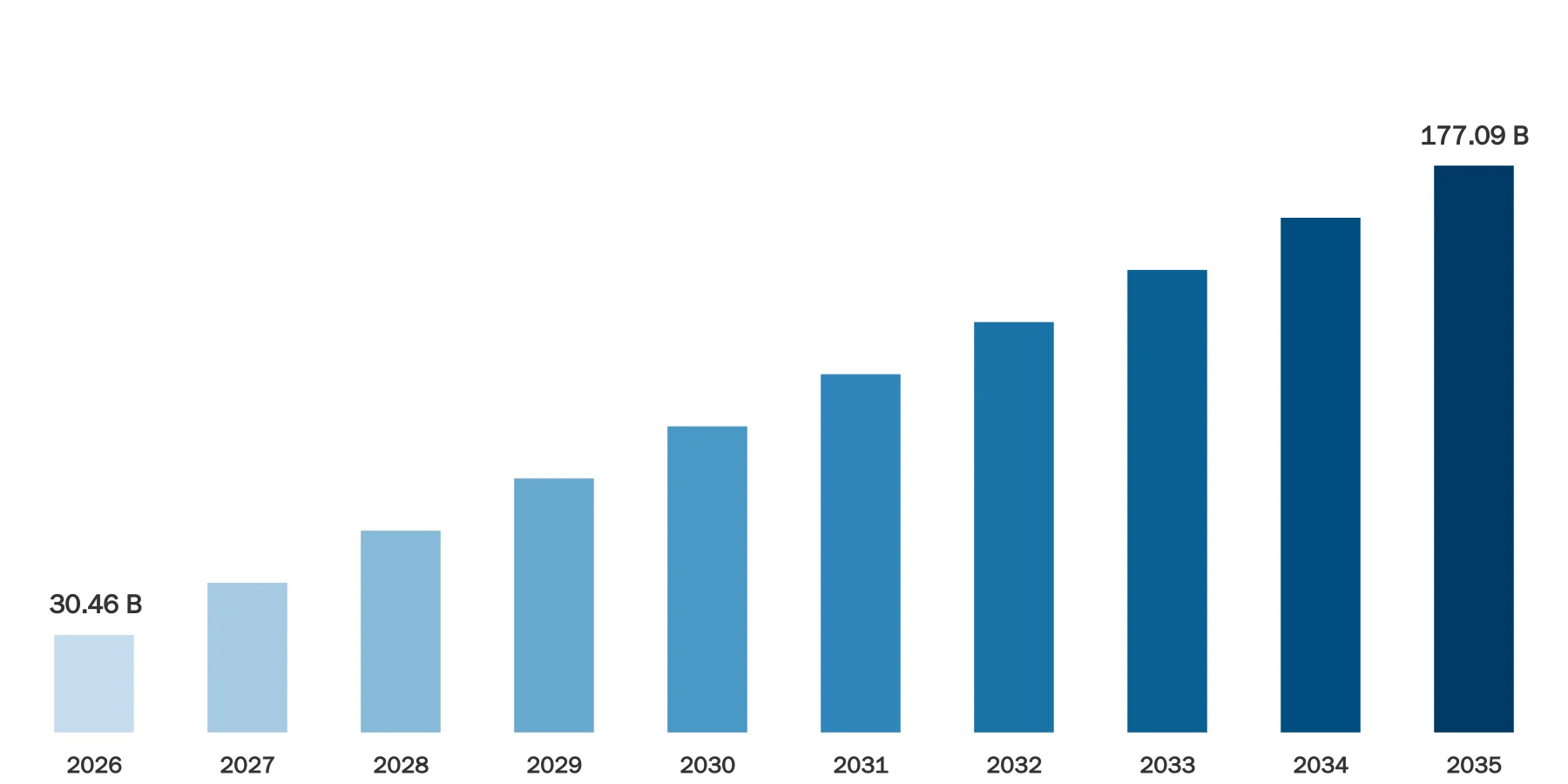
Source: Econ Market Research
The Global Green Concrete market is centered on environmentally friendly concrete solutions that reduce carbon emissions and limit the environmental effect of construction activities. Green concrete is a type of concrete created from recycled or waste resources, such as fly ash, slag, and silica fume, to replace standard cement. This concrete is intended to be more sustainable by requiring fewer natural resources and emitting fewer pollutants during production. Furthermore, green concrete strives to increase energy efficiency, minimize waste, and help the worldwide push for sustainable building techniques.
The market for green concrete is quickly expanding as the building industry strives to line with global sustainability goals and government legislation that promote environmentally friendly practices. Key drivers of this expansion include increased environmental consciousness, a demand for energy-efficient buildings, and stringent carbon emission regulations. Furthermore, the growing popularity of green building certifications such as LEED (Leadership in Energy and Environmental Design) is accelerating the adoption of green concrete. Although the market is still in its early stages, technological developments and rising investments in sustainable construction are likely to drive significant growth in the coming years, making green concrete a critical component of the future construction environment.
Green Concrete Dynamics
As the construction industry promotes sustainability, the demand for green concrete is being driven by the desire to cut carbon emissions and minimize building projects', environmental footprint. Governments and regulatory agencies around the world are enforcing stronger laws on construction methods, forcing businesses to use eco-friendly materials such as green concrete. This legislative effort, combined with incentives for environmentally friendly development, is a major driver of industry expansion.
On the other hand, the industry confronts hurdles such being the greater cost of green concrete compared to ordinary concrete, which can discourage its adoption, especially in cost-sensitive projects. Additionally, the limited availability of raw materials used in green concrete, such as fly ash and slag, could hinder market growth. However, continuous research and development are leading to innovations that reduce costs and improve the performance of green concrete, making it more competitive. Moreover, the increasing emphasis on green building certifications and the rising awareness of the long-term environmental and economic benefits of green concrete are creating opportunities for market expansion.
Green Concrete Drivers
Growing Environmental Regulations
The rising implementation of rigorous environmental rules around the world is a major driver for the green concrete market. To tackle climate change, governments and regulatory organizations are implementing higher carbon emission limits and promoting sustainable construction techniques. These restrictions require enterprises to reduce their carbon footprints in construction projects, encouraging them to use environmentally friendly materials such as green concrete. The increased awareness of the environmental impact of traditional construction materials is heightening the need for green concrete, which fits with worldwide efforts to attain net-zero carbon emissions.
Rising Demand for Sustainable Infrastructure
Another major factor driving the green concrete market is the increased demand for sustainable infrastructure. As urbanization proceeds at a rapid rate, there is an increasing demand for infrastructure that reduces environmental impact and promotes sustainability. Green concrete, built from recycled resources and engineered to be energy efficient, is increasingly being utilized to construct green buildings, roadways, and bridges. Green construction certification systems such as LEED, which incentivise the use of eco-friendly materials, are also helping to accelerate the transition to green infrastructure. This trend is encouraging the development of green concrete, as builders and developers strive to achieve the sustainability criteria set by these programs.
Green Concrete Restraints:
Higher Initial Costs
One of the primary restraints in the green concrete market is the higher initial cost compared to traditional concrete. The use of alternative materials like fly ash, slag, and recycled aggregates often leads to increased production costs. These higher costs can be a barrier to adoption, particularly in cost-sensitive markets or projects with tight budgets. Additionally, the lack of widespread awareness and understanding of the long-term benefits of green concrete can lead to resistance from stakeholders who are focused on short-term financial considerations, further hindering market growth.
Limited Availability of Raw Materials
Another major constraint is the scarcity of critical raw materials required in green concrete production. Materials such as fly ash and slag, which are by-products of industrial processes, are not always available in adequate amounts or locations, causing supply chain issues. Variations in industrial output can also have an impact on the consistency of green concrete manufacturing. This limited supply not only raises questions about the scalability of green concrete but also leads to higher costs, creating an obstacle for widespread market acceptance.
Green Concrete Opportunities:
Technological Advancements in Material Science
Material science advances provide a substantial opportunity for the green concrete sector. Ongoing R&,D efforts are aimed at developing novel formulations and increasing the performance of green concrete. Innovations such as the development of alternative binders that can substitute traditional cement, the use of nanotechnology to improve material qualities, and the incorporation of carbon capture technologies are likely to propel the industry ahead. These advances can help lower prices, increase the durability and strength of green concrete, and make it more competitive with ordinary concrete, thus expanding its use in the building industry.
Segment Overview
By Product Type
In the green concrete market, product types are primarily categorized into cement and lime. Cement, a key ingredient in concrete, plays a significant role in determining the environmental impact of the final product. Traditional cement production is highly energy-intensive and contributes to considerable carbon emissions, making the development and use of eco-friendly cement alternatives crucial. These alternatives, often produced with recycled materials or using less energy-intensive methods, are central to the green concrete movement.
Lime, on the other hand, is another essential component in certain green concrete formulations. Lime-based binders are used for their lower environmental impact compared to traditional cement, as they generally require less energy to produce and can incorporate waste materials, further enhancing their sustainability profile. Both cement and lime are pivotal in shaping the environmental performance and market acceptance of green concrete.
By Design
The design segment of green concrete encompasses plain cement, pre-stressed, and reinforced concrete. Plain cement concrete, which is straightforward in its composition and use, forms the base for various applications but is less commonly utilized in high-performance or specialized green concrete products. Pre-stressed concrete involves a design where internal stresses are introduced to improve performance and durability, making it suitable for applications requiring higher strength and resistance.
Reinforced concrete incorporates steel or other reinforcing materials to enhance its structural capabilities, making it ideal for demanding construction projects. Each design type offers different benefits and applications within the green concrete market, influencing how the concrete performs and meets sustainability criteria. The choice among these designs depends on specific project requirements and the desired environmental impact.
By End Use
Green concrete',s end-use applications include residential, commercial, industrial, and infrastructure. Green concrete is used in residential homes and buildings to improve energy efficiency and sustainability in everyday living areas. Commercial uses include the use of green concrete in office buildings, retail spaces, and other business-related structures, in line with corporate sustainability goals and green building certification.
Green concrete is most commonly used in industrial applications that demand high durability and tolerance to harsh circumstances, such as factories and warehouses. Green concrete',s environmental benefits can have a significant impact on public and environmental health in infrastructure applications such as highways, bridges, and public utilities. Each end-use category drives the demand for green concrete based on its specific performance and sustainability needs.
Green Concrete Overview by Region
In North America, notably in the United States and Canada, there is a strong push for sustainable construction, fuelled by rigorous environmental rules and a high acceptance rate of green building standards. The existence of superior technology, as well as major investments in R&,D, contribute to the rise of green concrete in this region.
Europe is a large market for green concrete, headed by Germany, France, and the United Kingdom. European countries have some of the most stringent environmental legislation and sustainability standards, encouraging the usage of eco-friendly materials. The European Union',s focus on reducing carbon emissions and enhancing energy efficiency in construction is accelerating the adoption of green concrete. The region',s commitment to green building certifications and environmental policies reinforces the market',s expansion.
In Asia-Pacific, countries such as China, India, and Japan are emerging as significant players in the green concrete market. The rapid urbanization and industrialization in these countries, coupled with increasing awareness of environmental issues, are driving the demand for sustainable construction materials. China&rsquo,s government has implemented various initiatives to promote green building practices, while India and Japan are also making strides towards incorporating green concrete in infrastructure and residential projects.
Green Concrete Market Competitive Landscape
Multinational building materials businesses such as Holcim, CEMEX, and HeidelbergCement have added green concrete products to their portfolios in response to rising environmental restrictions and consumer demand for sustainable solutions. These firms use their significant research and development capabilities, global distribution networks, and strong market presence to promote green concrete technology and increase their market share.
In addition to these large businesses, there is a growing number of specialty firms that focus solely on green and sustainable construction materials. Companies like Eco-Concrete and Green Building Materials are gaining traction by providing specialty goods and novel technology that improve the environmental performance of concrete. These companies often collaborate with research institutions and industry partners to develop new formulations and improve the sustainability of green concrete.
Competitive strategies in this market include partnerships and collaborations to enhance product offerings and expand market reach. Firms are investing in research and development to innovate new green concrete formulations and improve performance characteristics. Additionally, companies are actively participating in sustainability certifications and standards to demonstrate their commitment to environmental stewardship and attract eco-conscious clients.
Green Concrete Key Players:
SOLIDIA TECHNOLOGIES
Aggregate Industries
Sika AG
Ecocem
HeidelbergCement AG
UltraTech Cement Ltd
Tarmac
CRH
Cement Australia Holdings Pty Limited
Giatec Scientific Inc.
St. Marys Cement Inc.
TAIHEIYO CEMENT CORPORATION
CEMEX
Vicat SA
CarbonCure Technologies Inc.
Buzzi S.p.A.
BASF SE
HOLCIM
Green Concrete Recent Developments
In June 2024, Sweden',s Vattenfall, an electricity and heat provider, has entered into a new agreement with Cemvision, a low-carbon cement startup. This collaboration focuses on supplying and developing cement with a carbon footprint reduced by up to 95%.
In May 2024, Stockholm-based startup Cemvision and the leading Nordic construction firm Peab have signed a product delivery agreement effective immediately. This enhanced partnership represents a significant advancement for the concrete industry in the Nordics. In the years ahead, Peab will incorporate Cemvision',s ultra-low carbon cement into various projects.
Green Concrete Report Segmentation
Green Concrete Market Report Scope & Segmentation
| Attributes | Details |
|---|---|
Market Size (Current) | US$ 30.46 Billion in 2026 |
Market Size (Forecast) | US$ 177.09 Billion in 2035 |
Growth Rate | CAGR of 11.89% from 2026 to 2035 |
Forecast Period | 2026 – 2035 |
Base Year | 2025 |
Historical Data Available | Yes |
Regional Scope | Global |
Segments Covered | By Material Type
By Application
|
Frequently Asked Questions
Common questions about this report
The study period covers historical insights and forecast projections for the period 2026-2035.
About the Author
Market research expert with years of industry experience

Dipali Bhingare serves as the Market Research Director at Econ Market Research. With a focus on translating complex global economic shifts into actionable business intelligence, she oversees the strategic direction of comprehensive market studies. Her work empowers organizations to navigate volatile industries through data-driven forecasting and deep-dive competitive analysis.
Related Reports
Explore more market insights from the same category