

Polymer Concrete Market
Polymer Concrete Market Size, Share, Trends, Growth, and Industry Analysis, By Polymer Type (Epoxy, Polyester, Methyl Methacrylate, Latex), By Application (Asphalt Pavement andamp; Overlays, Industrial Tanks, Drainage Systems), By End-User (Infrastructure, Industrial, Residential), Regional Analysis and Forecast Period 2026-2035
Polymer Concrete Market Overview
As per Econ Market Research analysis, the Global Polymer Concrete Market valuation stood at US$ 0.7 Billion in 2026 and is expected to reach US$ 1.19 Billion by 2035, growing at a steady CAGR of 6.17% from 2026 to 2035. 2025 serves as the base year.
Polymer Concrete Market Size 2025-2035 (USD Billion)

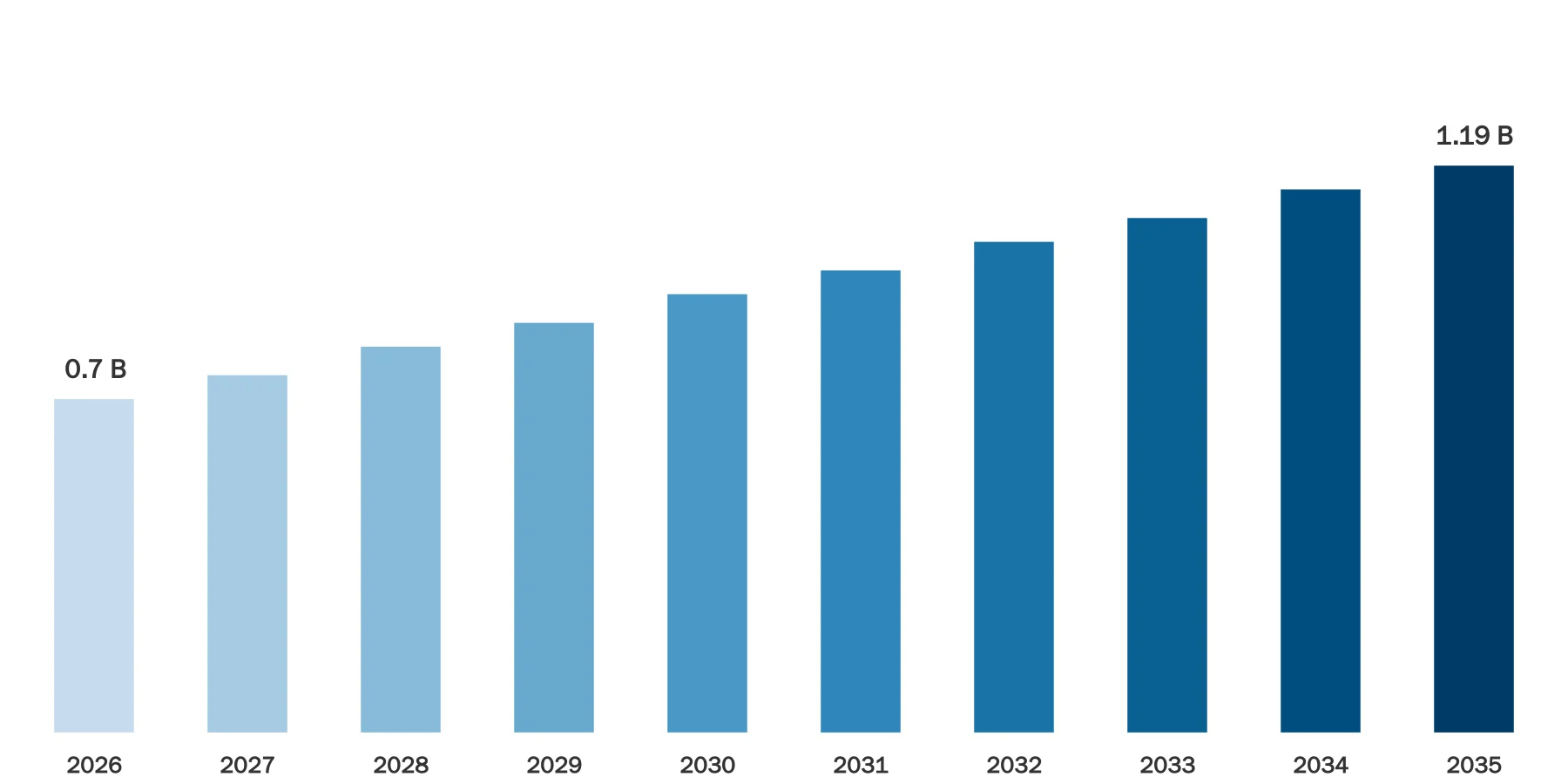
Source: Econ Market Research
Polymer concrete is a type of concrete that uses polymers as a binder rather than regular cement. In comparison to ordinary concrete, this novel substance provides increased durability, corrosion resistance, and faster curing times. Its outstanding mechanical qualities and durability to adverse climatic conditions make it widely employed in a variety of applications, including structural building, repair, and rehabilitation.
The global polymer concrete market has been growing steadily, driven by the increasing demand for high-performance materials in construction and infrastructure projects. The market is expanding due to the rising need for durable and long-lasting building materials, particularly in regions prone to extreme weather conditions or heavy traffic. Additionally, advancements in polymer technology and growing awareness about the benefits of polymer concrete are fuelling market growth. Key applications of polymer concrete include road repair, bridge construction, and industrial Flooring. The market is also influenced by the growing focus on sustainable and eco-friendly construction practices, as polymer concrete often incorporates recycled materials and offers longer service life, reducing the need for frequent repairs and replacements.
Polymer Concrete Dynamics
One key driver is the growing need for high-performance building materials that are both durable and resistant to environmental influences. Polymer concrete, with its increased strength and lifespan, fits the requirements of infrastructure projects and industrial applications where traditional concrete may fail. This demand is fuelled by a growing emphasis on sustainable construction techniques, as polymer concrete frequently integrates recycled components and reduces maintenance requirements, aligning with environmentally favourable trends.
In contrast, the market has hurdles, such as greater initial costs compared to conventional concrete, which can dissuade some projects from employing polymer concrete despite its long-term benefits. Additionally, the market',s growth is constrained by the limited availability of skilled professionals who can effectively work with polymer concrete technologies. Nevertheless, advancements in polymer formulations and production techniques are addressing these issues, making polymer concrete more accessible and cost-effective.
Polymer Concrete Drivers
Increasing Demand for Durable Construction Materials
The global construction industry is putting more focus on materials with high durability and long service life. Polymer concrete, with its superior resistance to chemicals, dampness, and extreme weather conditions, is becoming increasingly popular for use in difficult situations. This increased need stems from the desire to lower maintenance costs and extend the life of infrastructure projects such as highways, bridges, and industrial floors. The material',s exceptional mechanical qualities and its ability to endure large traffic loads make it an appealing alternative for developers and construction businesses trying to assure the lifespan and reliability of their projects.
Focus on Sustainable and Eco-Friendly Construction Practices
Polymer concrete is well-suited to the growing trend of sustainable construction techniques. The utilization of recycled components in polymer concrete, as well as its extended service life, help to reduce environmental impact by lowering the need for frequent repairs and replacements. Furthermore, polymer concrete has a lower carbon footprint than traditional cement-based concrete, which appeals to stakeholders wishing to improve their green building credentials. As legislation and requirements for environmentally friendly building continue to change, polymer concrete is becoming a preferred alternative for projects attempting to fulfil sustainability goals.
Polymer Concrete Restraints:
Higher Initial Cost
One of the primary challenges faced by the polymer concrete market is its higher initial cost compared to conventional concrete. The advanced polymers and additives used in polymer concrete contribute to its increased expense, which can be a significant barrier for budget-conscious projects. While the long-term benefits of reduced maintenance and extended durability can offset these costs, the upfront investment required for polymer concrete may deter some developers and contractors, particularly in cost-sensitive markets or smaller-scale projects.
Limited Availability of Skilled Professionals
The proper application of polymer concrete requires particular knowledge and abilities that are not as common as those for traditional concrete. The scarcity of qualified personnel who understand polymer concrete',s unique features and installation processes impedes industry expansion. This limited availability might result in greater labor costs and probable delays in project execution, further reducing the overall practicality of employing polymer concrete in diverse applications.
Polymer Concrete Opportunities:
Technological Advancements and Product Innovations
The polymer concrete market is poised to benefit from ongoing advancements in polymer technology and product innovations. Researchers and manufacturers are continually developing new formulations and improving production processes to enhance the properties and reduce the cost of polymer concrete. Innovations such as improved bonding agents, faster curing formulations, and better environmental resistance can make polymer concrete more accessible and cost-effective. These technological advancements are likely to expand the range of applications for polymer concrete and attract new customers seeking high-performance construction materials.
Segment Overview
By Class
The polymer concrete market is divided into three classes: polymer modified concrete (PMC), polymer resin concrete (PC), and polymer impregnated concrete (PIC). Each class reflects a separate approach of adding polymers to concrete to improve its qualities. PMC is the process of adding polymers to ordinary concrete to improve adhesion, flexibility, and resilience to environmental conditions.
PC replaces traditional cement with polymers as the principal binder, producing a material with better strength and durability. PIC includes impregnating existing concrete with polymers to improve its performance, particularly its resistance to chemicals and moisture. These classes enable customizable solutions based on the unique performance criteria and application needs.
By Type
The type segment of polymer concrete includes Epoxy, Polyester, Vinyl, Furan, Latex, Acrylate, and others. These types denote different polymers used in the formulation of polymer concrete, each contributing unique properties to the final product. Epoxy-based polymer concrete is known for its excellent chemical resistance and high strength, making it suitable for industrial applications.
Polyester and Vinyl offer good flexibility and cost-effectiveness, while Furan provides resistance to extreme temperatures and chemical attack. Latex and Acrylate-based polymers enhance the flexibility and adhesion of concrete, improving its performance in various conditions. The diverse types of polymers allow for customization of polymer concrete to meet specific performance and environmental requirements.
By Binding Agent
In the polymer concrete market, binding agents are divided into two types: natural resin and synthetic resin. Natural resins are sourced from plants and provide environmental benefits such as lower carbon footprints and improved biodegradability. They are frequently employed in applications where sustainability is a consideration. In contrast, synthetic resins are man-made and offer consistent performance qualities such as high strength and durability. They are valued for their dependability and versatility in a variety of applications. The decision between natural and synthetic resins depends on criteria such as environmental effect, performance needs, and cost concerns.
By Application
The application segment of polymer concrete includes Containments, Pump Bases, Trench Drains, Waste Containers, Flooring Blocks, and others. Each application highlights the versatility of polymer concrete in different structural and functional contexts. Containments utilize polymer concrete for its resistance to chemicals and leakage prevention, making it ideal for industrial and environmental applications.
Pump bases and trench drains benefit from polymer concrete&rsquo,s durability and resistance to wear and corrosion. Waste containers are made from polymer concrete to handle harsh conditions and extend service life. Flooring blocks use polymer concrete for their strength and aesthetic appeal, while other applications may include specialized uses in various industrial and construction sectors. The broad range of applications demonstrates polymer concrete&rsquo,s adaptability and performance across different environments and uses.
Polymer Concrete Overview by Region
North America dominates the market, owing to substantial infrastructure initiatives and a strong emphasis on high-performance construction materials. The United States, in particular, has a well-established construction industry that makes extensive use of polymer concrete for its durability and resistant capabilities, particularly in industrial and commercial applications. The region benefits from modern technology and innovation, which aids in continued market expansion.
In Europe, the industry is boosted by severe environmental rules and an increasing emphasis on sustainable building methods. Countries like Germany, France, and the UK are investing heavily in infrastructure upgrades and green building initiatives, which enhances the demand for polymer concrete. The European market is characterized by a strong preference for eco-friendly materials, which aligns with the benefits offered by polymer concrete, such as reduced maintenance and longer service life.
The Asia-Pacific region is witnessing rapid growth due to increasing urbanization, industrialization, and infrastructure development in countries like China, India, and Japan. These countries are investing in modern construction techniques and materials to support their booming economies and expanding urban areas. The region&rsquo,s burgeoning construction sector presents substantial opportunities for polymer concrete, particularly in large-scale infrastructure projects and commercial buildings.
Polymer Concrete Market Competitive Landscape
Major firms like BASF SE, Sika AG, and GCP Applied Technologies are dominating the market with their diverse product portfolios and creative solutions. These competitors use their strong R&,D capabilities to introduce new polymer concrete formulations that meet a wide range of applications and performance requirements. Their established market presence, combined with strong distribution networks, enables them to successfully meet expanding demand in multiple locations.
Furthermore, regional competitors such as Fosroc International, Mapei S.p.A., and RPM International Inc. contribute to the competitive dynamics by providing specialized products and locally tailored solutions. These enterprises focus on specialized market needs and regulatory restrictions, which increases their attractiveness in regional markets. Strategic partnerships, mergers, and acquisitions are common in this sector as companies seek to expand their market reach and technological expertise. For instance, collaborations between polymer concrete manufacturers and construction firms enable the development of tailored solutions for complex projects.
Polymer Concrete Key Players:
BASF SE
GLOBAL PRECISION BALL AND ROLLER
SK geo centric Co., Ltd.
Devson Catalyst
Dow
TotalEnergies
SAINT-GOBAIN
Axens
Polymer Concrete Report Segmentation
Polymer Concrete Market Report Scope & Segmentation
| Attributes | Details |
|---|---|
Market Size (Current) | US$ 0.7 Billion in 2026 |
Market Size (Forecast) | US$ 1.19 Billion in 2035 |
Growth Rate | CAGR of 6.17% from 2026 to 2035 |
Forecast Period | 2026 – 2035 |
Base Year | 2025 |
Historical Data Available | Yes |
Regional Scope | Global |
Segments Covered | By Polymer Type
By Application
By End-User
|
Frequently Asked Questions
Common questions about this report
The study period covers historical insights and forecast projections for the period 2026-2035.
About the Author
Market research expert with years of industry experience

Dipali Bhingare serves as the Market Research Director at Econ Market Research. With a focus on translating complex global economic shifts into actionable business intelligence, she oversees the strategic direction of comprehensive market studies. Her work empowers organizations to navigate volatile industries through data-driven forecasting and deep-dive competitive analysis.
Related Reports
Explore more market insights from the same category