

Geothermal Drilling Market
Geothermal Drilling Market Size, Share, Trends, Growth, and Industry Analysis, By Rig Type (Land Rigs, Offshore Rigs), By Well Type (Production Wells, Injection Wells, Slim Wells), By Application (Power Generation, District Heating, Industrial Applications), Regional Analysis and Forecast Period 2026-2035
Geothermal Drilling Market Overview
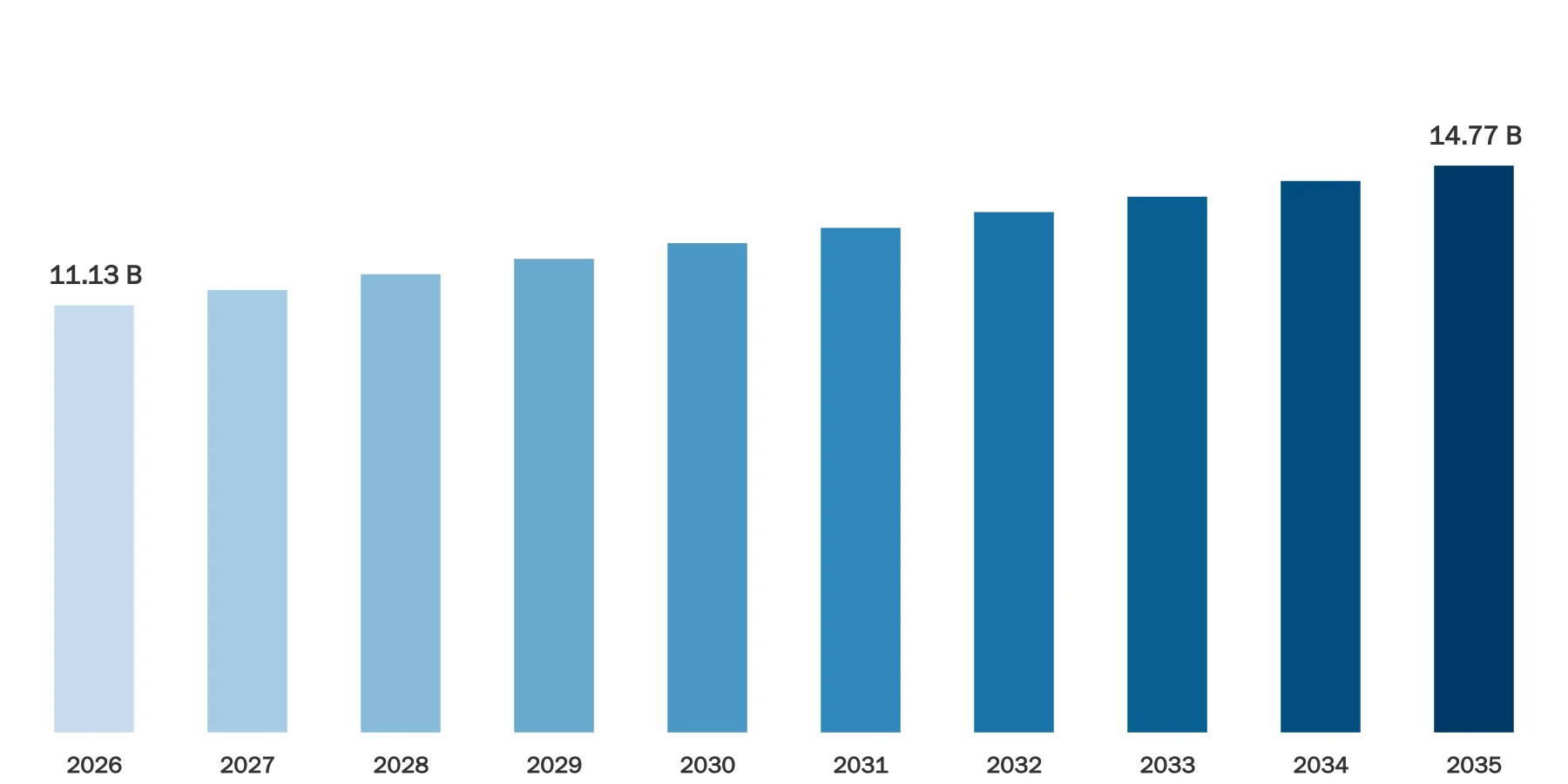
As per Econ Market Research analysis, the Global Geothermal Drilling Market was recorded at US$ 11.13 Billion in 2026 and is projected to expand to US$ 14.77 Billion by 2035, registering a CAGR of 4.83% over the forecast period. The base year used is 2025.
Geothermal Drilling Market Size 2025-2035 (USD Billion)

Source: Econ Market Research
Geothermal drilling is a specialized drilling technique used to extract heat from the Earth',s subsurface for various applications, including electricity generation, heating, and cooling. It involves drilling deep wells into the Earth',s crust to access geothermal reservoirs, which contain hot water or steam. The heat energy is then harnessed through geothermal power plants or direct-use applications. Geothermal drilling plays a vital role in the utilization of geothermal energy, an abundant and renewable source that contributes to sustainable and eco-friendly energy solutions.
Geothermal Drilling Market Dynamics
The geothermal drilling market is influenced by several factors. Drivers include the global push for clean energy alternatives and advancements in drilling technologies. Additionally, government incentives for renewable energy projects foster market growth. However, certain restraints, such as high initial costs, regulatory complexities, and geological uncertainties, can hinder market expansion. Despite challenges, there are ample opportunities for geothermal drilling, especially in regions with untapped geothermal resources. The nature of competition is highly competitive, with major players investing in research and development to offer innovative drilling solutions, driving technological advancements and market competitiveness.
Geothermal Drilling Market Drivers
Environmental activists are advocating for increased adoption of clean energy solutions, and global organizations are endorsing technologies that promote energy efficiency. Geothermal projects are increasingly focused on utilizing low-emission or zero-emission drilling methods, aligning with the growing demand for eco-friendly energy production. As drilling contractors prioritize energy-efficient technologies, the geothermal drilling market is expected to witness significant growth and contribute to the advancement of sustainable energy practices.
The increasing adoption of geothermal drilling for power generation in remote and diverse locations has emerged as a prominent trend worldwide. As this trend gains momentum, the global geothermal drilling market is projected to experience remarkable growth. One key driver is the non-reliance on weather conditions for geothermal power generation, making it an attractive and consistent energy source. This unique advantage contributes significantly to the rising demand for geothermal drilling services, fueling the market's expansion.
Restraints
The geothermal drilling sector encounters a significant challenge in the form of high entry costs, which could potentially impede market growth. Developing geothermal facilities involves substantial upfront expenses, making them costlier than conventional energy sources. The initial investment required for drilling and setting up geothermal projects can be a deterrent for potential investors and developers. As a result, this financial barrier poses a restraint on the market, limiting the rate of growth in the geothermal drilling sector.
Opportunities
The geothermal drilling market presents several promising opportunities for growth and development. As the global focus on renewable and clean energy intensifies, geothermal drilling technologies stand to gain significant traction. Governments and organizations worldwide are increasingly investing in sustainable energy projects, creating a conducive environment for geothermal drilling adoption. Additionally, the exploration of untapped geothermal resources in various regions offers vast untapped potential. With technological advancements and innovations, the industry is witnessing the emergence of more efficient and cost-effective drilling techniques, further propelling the opportunities for expansion in the geothermal drilling market.
Segment Overview
By Application Type
The geothermal drilling market segmentation based on application includes binary plants and steam plants. Binary plants and steam plants are the primary applications for utilizing geothermal resources to generate electricity. Binary plants utilize lower-temperature geothermal reservoirs to produce electricity, while steam plants tap into higher-temperature reservoirs. The differentiation in applications caters to various geological conditions and resource availability, offering flexibility and efficiency in harnessing geothermal energy for power generation.
By Depth Type
The geothermal drilling market segmentation based on depth includes Below 1000 m, 1000-2000 m, 2001-3000 m and above 3000. The depth of geothermal drilling is a crucial factor as it determines the accessibility and availability of geothermal resources. Deeper drilling operations allow access to higher-temperature reservoirs, which typically yield higher energy output. On the other hand, drilling operations within the range of 1000 to 2000 meters are suitable for tapping into moderate-temperature geothermal reservoirs, providing viable energy solutions for specific geographic locations. By depth type, 2001-3000 m segment accounted for the largest share in 2022.
By Well Type
The geothermal drilling market is segmented based on the type of wells as production wells and slim wells. Production wells are primarily used for extracting geothermal fluids to generate electricity or for direct use in heating applications. These wells are typically larger in diameter and have higher flow rates to handle the production of geothermal fluids efficiently. On the other hand, slim wells are designed for exploration purposes or to monitor geothermal reservoirs. They have smaller diameters and are used to gather data on the reservoir's temperature and pressure before deciding on full-scale production well development.
Geothermal Drilling Market Overview by Region
Asia-Pacific
The Asia-Pacific market is expected to witness a significant compound annual growth rate (CAGR) during the forecast period. The region',s growth is driven by increasing demand for geothermal energy solutions in countries like China, Indonesia, and the Philippines. Rapid urbanization, coupled with the focus on clean and sustainable energy sources, is fuelling the adoption of geothermal drilling technologies in the region. As a result, the Asia-Pacific market is poised for substantial expansion in the coming years.
North America
North America leads the geothermal drilling market due to its growing focus on renewable energy sources and increasing investments in geothermal projects. The region's advanced drilling technologies and supportive government policies have further accelerated market growth. Additionally, the presence of key market players and established geothermal energy infrastructure contributes to North America',s dominant position. The rising demand for clean energy solutions and the region',s abundant geothermal resources create favourable opportunities for the expansion of the geothermal drilling market in North America during the forecast period.
Geothermal Drilling Market Competitive Landscape
The geothermal drilling market is witnessing intense competition among established industry players and emerging startups, all competing to capitalize on the increasing demand for sustainable energy solutions. Established companies like Schlumberger, Halliburton, and SIMCO Drilling Equipment, Inc., are leveraging their extensive experience and global presence to secure lucrative contracts and expand their market share.
At the same time, innovative startups and technology firms are disrupting the market with innovative drilling technologies and efficient exploration methods. Additionally, partnerships and collaborations between drilling service providers and geothermal developers are becoming more prevalent, fueling the industry',s growth and driving further advancements in geothermal drilling techniques.
Key Players
Fraste S.p.A.
Huisman Equipment B.V.
Deep Rock Manufacturing Company
Geotech Drilling Services Ltd.
Marton Geotechnical Services Ltd.
Baker Hughes Company
Ormat Technologies, Inc.
Halliburton Company
Schlumberger Limited
KCA Deutag Alpha Limited
Bentec GmbH Drilling & Oilfield Systems
SIMCO Drilling Equipment, Inc.
Gill Rock Drill Company, Inc.
Atlas Copco (Epiroc)
Geothermal Drilling Market Recent Developments
In February 2023, Baker Hughes Company unveiled its latest geothermal drilling rig, the BHGR-3000. This advanced rig is specifically engineered to drill geothermal wells of depths up to 10,000 feet, showcasing Baker Hughes', commitment to enhancing geothermal exploration and development.
In November 2022, Halliburton Energy Services, Inc. introduced its latest geothermal drilling training initiative. This program is designed to equip and educate aspiring geothermal drillers, nurturing a skilled workforce for the future of geothermal exploration and drilling.
Geothermal Drilling Market Report Scope & Segmentation
| Attributes | Details |
|---|---|
Market Size (Current) | US$ 11.13 Billion in 2026 |
Market Size (Forecast) | US$ 14.77 Billion in 2035 |
Growth Rate | CAGR of 4.83% from 2026 to 2035 |
Forecast Period | 2026 – 2035 |
Base Year | 2025 |
Historical Data Available | Yes |
Regional Scope | Global |
Segments Covered | By Rig Type
By Well Type
By Application
|
Frequently Asked Questions
Common questions about this report
The study period covers historical insights and forecast projections for the period 2026-2035.
About the Author
Market research expert with years of industry experience

Related Reports
Explore more market insights from the same category