

Gas Turbine Market
Gas Turbine Market Research Report: By Technology (Open Cycle and Combined Cycle), By Design Type (Heavy-duty and Aero-derivative), By Rating Capacity (Less than 40 MW, 40-120 MW, 120-300 MW, and Above 300 MW), By Application (Power Generation, Oil & Gas, Marine, Aerospace, Process Plants, and Others), and Region (North America, Europe, Asia-Pacific, and Rest of the World) Global Industry Analysis, Size, Share, Growth, Trends, Regional Analysis, Competitor Analysis and Forecast
Market Overview
As per Econ Market Research analysis, the Global Gas Turbine Market was valued at US$ 25.4 Billion in 2026 and is expected to reach US$ 64.8 Billion by 2035, registering a CAGR of 11.2% during the forecast period 2026–2035. The base year considered is 2025.
Gas Turbine Market Size 2025-2035 (USD Billion)

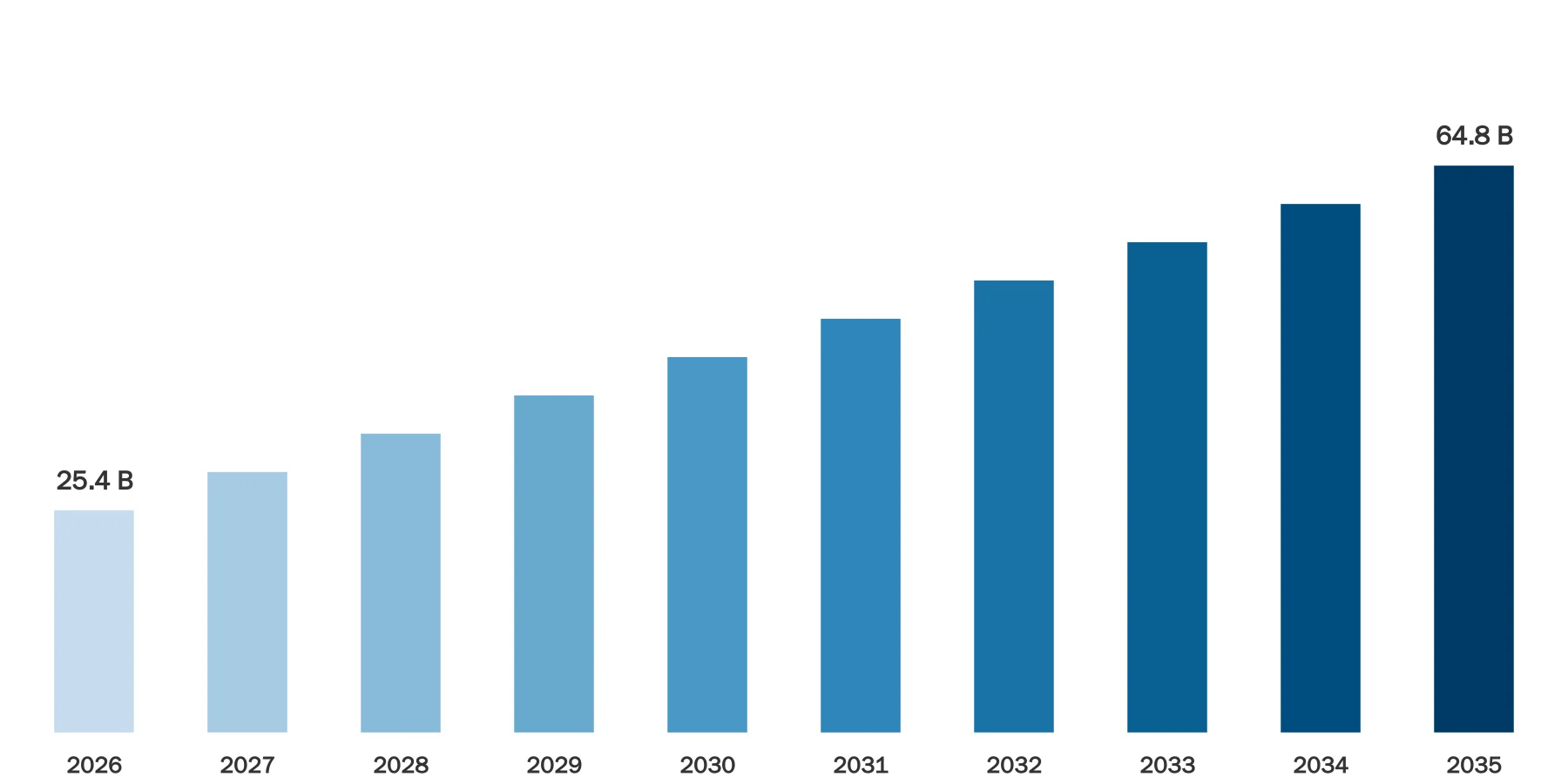
Source: Econ Market Research
A gas turbine is a type of internal combustion engine that uses a continuous combustion process to transform fuel, usually natural gas or aviation fuel, into mechanical energy. Compressor, combustion chamber, and turbine make up the device. High-speed exhaust gases created by the compression, blending, and ignition of air and fuel power the turbine. This rotation produces energy for a number of uses, including industrial machinery, electricity generation, and aviation propulsion. For their effectiveness, dependability, and adaptability, gas turbines are well-known.
The growing demand for effective and clean energy solutions across numerous industries has led to substantial expansion and transformation in the worldwide gas turbine market in recent years. Gas turbines are adaptable mechanical systems that use the power of combustion to generate energy, power machinery, and move ships and aeroplanes. In comparison to other energy generation technologies, they have a number of benefits, including high power-to-weight ratios, lower emissions, and quicker startup times.
The demand for dependable and adaptable power generation is one of the main factors propelling the growth of the gas turbine industry. Gas turbines are widely utilized in the electricity production industry, especially in peaking and combined cycle power plants where they are essential for balancing the grid and meeting peak demand. In addition, their adaptability to a variety of fuels, such as hydrogen, bio fuels, and natural gas, makes them a flexible option in the shift to greener energy sources.Due to its effectiveness and thrust capacities, gas turbines continue to be actively utilised in the aviation sector for aircraft propulsion.
Gas turbines are also used in the oil and gas industry for a variety of purposes, including the production of liquefied natural gas (LNG), offshore platform power generation, and gas compression. The gas turbine market is anticipated to continue evolving as businesses prioritise cutting carbon emissions and increasing energy efficiency, thanks to technological advancements, rising usage of sustainable fuels, and integrated power solutions. The global gas turbine market can grow and innovate in light of this changing environment.
Market Dynamics
A variety of dynamic elements affect the gas turbine market, which shapes its development and expansion. First of all, the market',s growth has been fueled by the rising global need for electricity and the desire for cleaner, more effective power generation options. Gas turbines are favoured in many industries because of their short startup times and minimal emissions.
The increasing use of renewable energy sources like wind and solar power has also raised the demand for flexible and quick-response backup power, which has enhanced the importance of the gas turbine market in maintaining grid stability. Furthermore, the performance and efficiency of gas turbines have been significantly improved because to technological breakthroughs. Gas turbines have become more potent and environmentally friendly as a result of advancements in materials, design, and combustion technologies. This has increased their competitiveness against other energy generation options.
Energy policies and global geopolitics have an impact on the gas turbine sector as well. The trajectory of the market',s growth and regional dynamics may be impacted by changes in government laws, renewable energy adoption incentives, and energy price fluctuations. The gas turbine sector may also be significantly impacted by changes in the markets for natural gas and hydrogen, since these fuels are the main sources of energy for gas turbines.The market for gas turbines is characterized by a complex interplay of technological advancements, energy trends, environmental considerations, and policy choices, making it a dynamic industry with opportunities for growth and innovation, particularly as the world moves towards a more sustainable and energy-efficient future.
Market Drivers
Increasing Global Energy Demands
Energy is always and continuously needed to run buildings, businesses, and industries around the world. Numerous causes, such as population growth, urbanization, industrial development, and the spread of technological gadgets and devices, are to blame for this increased need. Energy demands rise as societies grow more urbanized and industrialized, producing a constant need for dependable and effective power generation solutions. Due to their adaptability and efficiency, gas turbines are a critical component in managing this growing energy demand. They provide a quick and effective way to transform different fuels into electrical or mechanical power. Gas turbines are the best option for addressing rapid spikes in energy usage, such as during peak hours or harsh weather events, because they can be deployed quickly.
Flexible Power Generation
The demand for flexible power generating solutions has increased as renewable energy sources like wind and solar are being integrated into the grid at a faster rate. Gas turbines are excellent in this capacity because of their quick response time and adaptability in modifying power output. Due to their reliance on variables like weather and daylight availability, renewable energy sources are inherently unpredictable.
Gas turbines are a complement to these renewable energy sources since they can quickly ramp up or down to make up for sharp decreases or increases in electricity production. When the supply of renewable energy is insufficient or during periods of high demand, this flexibility is essential for ensuring grid stability and satisfying electrical demand.
Restraints
Gas turbines are complicated and sophisticated pieces of technology, and they require significant infrastructure and capital investments to build and install. These up-front costs include not only the cost of buying the gas turbine, but also the price of setting up the site, building fuel storage facilities, installing cooling systems, and purchasing control machinery. These significant up-front costs may be problematic for smaller companies or areas with scarce financial resources.
The significant financial outlay can discourage potential investors and operators, resulting in projects being postponed or canceled. Additionally, to cut initial costs, areas or companies with limited resources may choose to priorities more affordable energy options or choose older, less effective gas turbine models, which may have higher long-term operating costs.
Competition from Renewables
Environmental concerns and government incentives have hastened the global transition to cleaner and more sustainable energy sources, which has led to an increase in the proportion of electricity output that comes from renewable sources. This change puts a strain on gas turbine dominance, particularly in areas with favourable renewable energy circumstances. Compared to conventional gas turbines, renewable energy sources like wind and solar have a number of advantages. They generate power without emitting greenhouse gases, have low fuel costs, and gain from falling technology costs, which increases their cost-competitiveness. Further lowering the cost of implementation, government programs frequently use subsidies, tax credits, and feed-in tariffs to encourage the use of renewable energy sources. This rivalry could delay the installation of new gas turbines and may cause the decommissioning or limited use of existing gas turbine facilities.
Opportunities
Integration of Gas Turbines with Renewable Energy Sources
The market for gas turbines has a sizable opportunity due to the integration of gas turbines with energy storage and renewable energy sources. The intermittent nature of renewable energy, such as wind and solar power, presents difficulties for maintaining a consistent and dependable electrical supply as the world progresses towards a more sustainable and low-carbon energy future. Gas turbines can be a key component of hybrid power systems that can help to solve these problems. Gas turbines collaborate with renewable energy sources and energy storage systems in a hybrid system.
When renewable energy production is high, extra power can be used to charge energy storage devices like batteries. The stored energy can be quickly deployed alongside gas turbine power to satisfy demand when renewable energy production declines due to weather conditions or time of day. Gas turbines and renewable energy sources work together to improve grid stability, provide a steady supply of electricity, and enable resource efficiency. Furthermore, gas turbines are able to adapt swiftly to changes in energy demand by offering grid support services including frequency management and spinning reserves. Having this flexibility is essential as the system incorporates more renewable energy sources.
Ongoing Developments in Aviation Technologies
Particularly when it comes to aircraft propulsion, the aviation sector offers the gas turbine market a sizable possibility. For decades, commercial and military aircraft have been powered primarily by gas turbine engines, also referred to as jet engines. However, due to continual advancements in aircraft technologies, this possibility goes beyond the conventional scope of aviation. The investigation of electric and hybrid-electric propulsion systems for aircraft is one prominent trend. When included into these hybrid systems, gas turbines can act as effective generators, generating electricity to drive electric motors that turn the aircraft',s fans or propellers. This strategy aims to make aviation more ecologically friendly and passenger-friendly by reducing fuel usage, emissions, and noise levels.
Segment Overview
By Technology
Based on technology, the global gas turbine market is divided into open cycle and combined cycle. The combined cycle based category dominates the market with the largest revenue share. Combined cycle power plants combine a gas turbine with a steam turbine. The gas turbine generates electricity using the same process as in OCGT, but the hot exhaust gases are then used to produce steam, which drives a steam turbine to generate additional electricity.
CCGT power plants are highly efficient and are commonly used for base load electricity generation. They are favored for their ability to maximize fuel utilization and energy efficiency, making them suitable for continuous power generation.In an open cycle configuration, a gas turbine operates independently to generate electricity. It compresses air, mixes it with fuel, and ignites the mixture to produce high-speed exhaust gases that drive a turbine, generating electricity.
By Design Type
Based on the design type, the global gas turbine market is categorized into heavy-duty and aero-derivative. The aero-derivative category leads the global gas turbine market with the largest revenue share. Aero-derivative gas turbines, as the name suggests, are derived from aircraft engines. They are typically used in applications where rapid startup, mobility, and versatility are crucial. Common applications include peaking power plants, distributed generation, and as backup power for critical facilities such as hospitals and data centers. Aero-derivative turbines are also used in the marine industry to power ships and naval vessels.
Aero-derivative gas turbines are more compact and lightweight compared to heavy-duty turbines. They are designed for quick deployment and are capable of achieving full power output in a short time.Heavy-duty gas turbines are primarily used in industrial and power generation applications. They are commonly found in utility-scale power plants, including combined cycle power plants, where they play a central role in electricity generation. These turbines are also used in various industrial processes such as petrochemical, oil and gas, and manufacturing facilities, where they provide mechanical drive power for pumps, compressors, and other machinery.
By Rating Capacity
Based on rating capacity, the global gas turbine market is segmented into less than 40 MW, 40-120 MW, 120-300 MW, and above 300 MW. The above 300 MW segment dominates the gas turbine market. In above 300 MW The highest power range is typically associated with large utility-scale power plants and major industrial facilities. These gas turbines are critical components of massive power generation projects. In 120-300 MW gas turbines in this range are typically found in utility-scale power plants and larger industrial facilities. They are well-suited for providing baseload and peaking power to regional or national electricity grids.
In 40-120 MW power range covers a broad spectrum of applications, including industrial power generation, utility-scale peaking power plants, and combined cycle power plants. These turbines can supply power to medium-sized industrial facilities and contribute to grid stability during peak demand. In less than 40 MW gas turbines in this power range are typically used for smaller-scale applications. These can include distributed generation for smaller industrial facilities, commercial buildings, and rural or remote areas. They are also used as backup power sources for critical infrastructure like hospitals and data centers.
By Application
Based on the application, the global gas turbine market is categorized into power generation, oil &, gas, marine, aerospace, process plants, and others. The power generation category leads the global gas turbine market with the largest revenue share. Gas turbines play a significant role in the power generation sector, where they are used in various types of power plants, including combined cycle, peaking, and co generation plants. They help produce electricity for utility grids, meeting both baseload and peak demand. The oil and gas industry extensively utilizes gas turbines for various purposes, such as gas compression, electricity generation on offshore platforms, and the liquefied natural gas (LNG) production process. They provide reliable power in remote and challenging environments.
Gas turbines are used in marine propulsion systems for naval vessels, commercial ships, and fast ferries. They are known for their high power-to-weight ratio and rapid acceleration, making them suitable for high-speed applications. Gas turbines are the primary propulsion systems for aircraft, including commercial airliners, military jets, and helicopters. They provide the thrust needed for aircraft to take off, cruise, and land efficiently. Various industries, including petrochemical, chemical, and manufacturing, employ gas turbines for mechanical drive applications. They power machinery such as compressors, pumps, and generators in industrial processes.
Gas Turbine Overview by Region
The global gas turbine market is categorized into North America, Europe, Asia-Pacific, and the Rest of the World. Asia Pacific emerged as the leading region, capturing the largest market share in 2022. Energy demand increased significantly in the Asia Pacific area, which is home to some of the world',s fastest-growing economies. Urbanization, industrialization, and a growing middle class all contributed to this growth by boosting the demand for dependable and effective electricity generation. In the Asia Pacific region, many nations made significant investments in the development of their infrastructure, which included building factories and power plants.
Gas turbines were crucial in helping these developments fulfil their increasing energy needs. Governments in the area put policies into place to diversify their energy sources and cut emissions. Gas turbines were thought to be a cleaner and more effective alternative that would help achieve these environmental objectives, especially when used in combined cycle systems.
Numerous energy-intensive businesses, including petrochemicals, manufacturing, and steel production, are found throughout the Asia-Pacific area. In these industries, gas turbines were frequently employed for mechanical drive applications and on-site power generation. The need for gas turbines was further fueled by the expansion of the infrastructure for aviation, maritime transportation, and power generation, including natural gas pipelines and liquefied natural gas (LNG) facilities. A number of nations in the region made investments in R&,D to advance gas turbine technology, resulting in the creation of more effective and ecologically friendly versions.
Competitive Landscape
In the global gas turbine market, a few major players exert significant market dominance and have established a strong regional presence. These leading companies remain committed to continuous research and development endeavors and actively engage in strategic growth initiatives, including product development, launches, joint ventures, and partnerships. By pursuing these strategies, these companies aim to strengthen their market position, expand their customer base, and capture a substantial share of the market.
Key Players
General Electric Company (GE Vernova)
Siemens Energy AG
Mitsubishi Power, Ltd. (Mitsubishi Heavy Industries)
Ansaldo Energia S.p.A.
Bharat Heavy Electricals Limited (BHEL)
Kawasaki Heavy Industries, Ltd.
MAN Energy Solutions SE
Solar Turbines Incorporated (Caterpillar Inc.)
Centrax Gas Turbines Ltd.
OPRA Turbines B.V.
Rolls-Royce Holdings plc
Wärtsilä Corporation
Harbin Electric Company Limited
Dongfang Electric Corporation
Recent Developments
In June 2023, As the corporation phased out its fossil fuel business, Volkswagen (VOWG_p.DE) subsidiary MAN Energy Solutions announced it had inked a deal to sell its gas turbine business to Chinese state-owned CSIC Longjiang GH Gas Turbine Co (GHGT).
In April 2023, Nexus Controls, a renowned aftermarket controls company, was successfully acquired by GE',s Gas Power division from Baker Hughes. With the addition, GE Gas Power will be able to establish a single, full-service controls business line that will be in charge of advancing GE',s in-house Mark Vle controls systems platform, putting the OnCore system into place, as well as streamlining and enhancing the delivery and customer service of its controls offerings.
Gas Turbine Market Report Scope & Segmentation
| Attributes | Details |
|---|---|
Market Size (Current) | US$ 25.4 Billion in 2026 |
Market Size (Forecast) | US$ 64.8 Billion in 2035 |
Growth Rate | CAGR of 11.2% from 2026 to 2035 |
Forecast Period | 2026 – 2035 |
Base Year | 2025 |
Historical Data Available | Yes |
Regional Scope | Global |
Segments Covered | By Capacity
By Technology
By Application
|
Frequently Asked Questions
Common questions about this report
The study period covers historical insights and forecast projections for the period 2026-2035.
About the Author
Market research expert with years of industry experience

Related Reports
Explore more market insights from the same category