Fresh Fruits and Vegetables Market Overview
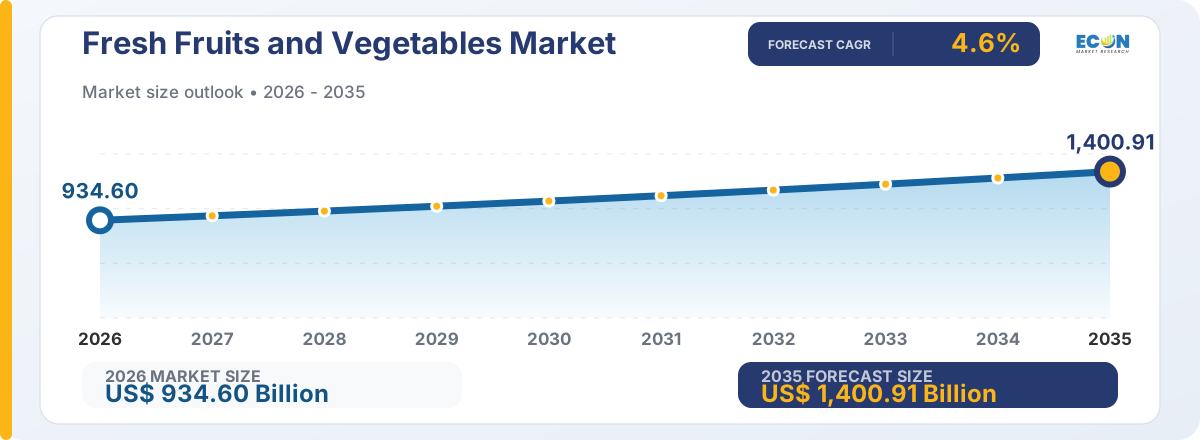
As per Econ Market Research analysis, Global Fresh Fruits and Vegetables Market size stood at US$ 934.6 Billion in 2026 and is projected to reach US$ 1400.91 Billion by 2035, growing at a CAGR of 4.6% over the forecast period 2026–2035. 2025 is taken as the base year.
The Fresh Fruits and Vegetables Market is a vital segment of the global food supply chain, with global production exceeding 2.1 billion metric tons annually, including approximately 1.3 billion metric tons of vegetables and 900 million metric tons of fruits. More than 65% of the global population consumes fresh fruits and vegetables daily, while nearly 45% of total agricultural land worldwide is used for fruit and vegetable cultivation. Global per-capita fruit and vegetable consumption averages around 380 kilograms per person per year, with vegetables accounting for 60% of this intake. The Fresh Fruits and Vegetables Market Report, Fresh Fruits and Vegetables Market Analysis, and Fresh Fruits and Vegetables Industry Report highlight strong supply chains involving over 500 million smallholder farmers worldwide.
The United States Fresh Fruits and Vegetables Market plays a major role in global agricultural trade, with annual production exceeding 45 million metric tons of vegetables and nearly 30 million metric tons of fruits. Approximately 92% of U.S. households purchase fresh produce weekly, while per-capita consumption averages 140 kilograms annually. The country cultivates more than 3.6 million hectares of fruit and vegetable farmland, with states such as California contributing nearly 38% of total vegetable output and 69% of fruit and nut production. According to multiple Fresh Fruits and Vegetables Market Research Report and Fresh Fruits and Vegetables Industry Analysis insights, nearly 60% of the U.S. population consumes fresh produce at least once daily.
Market Latest Trends
The Fresh Fruits and Vegetables Market Trends are strongly influenced by rising health awareness and changing dietary patterns. Globally, more than 72% of consumers prioritize fresh food consumption, and over 58% of adults report increasing their fruit and vegetable intake in the last decade. The Fresh Fruits and Vegetables Market Insights indicate that the World Health Organization recommends consuming at least 400 grams of fruits and vegetables per day, and currently approximately 55% of the global population meets this intake recommendation. As a result, the Fresh Fruits and Vegetables Market Size continues to expand through higher consumption volumes across urban and semi-urban populations.
Another major trend in the Fresh Fruits and Vegetables Industry Analysis is the rapid expansion of organized retail channels. Supermarkets and hypermarkets account for approximately 52% of global fresh produce retail distribution, while traditional markets still contribute nearly 38%. Online grocery platforms have experienced strong growth, with digital grocery purchases accounting for around 12% of total fresh produce transactions globally. In many developed economies, more than 70% of fruit and vegetable purchases occur through organized retail chains, supporting the expansion of Cold Chain Logistics infrastructure.
The increasing adoption of cold storage and logistics infrastructure represents another key trend in the Fresh Fruits and Vegetables Market Outlook. Globally, cold storage capacity dedicated to fresh produce exceeds 720 million cubic meters, enabling longer shelf life and improved supply chain efficiency. Nearly 35% of harvested fruits and vegetables historically experienced post-harvest losses, but improved storage technologies have reduced losses to approximately 20–25% in many developed markets. Advanced refrigerated transportation systems now handle over 450 million metric tons of fresh produce annually.
Organic produce demand represents another important development within the Fresh Fruits and Vegetables Market Growth landscape. Organic fruits and vegetables account for approximately 9–10% of total produce consumption globally, while in certain developed countries the share exceeds 20%. Organic farmland dedicated to fruit and vegetable cultivation exceeds 15 million hectares worldwide, with nearly 45% of organic produce farms located in Europe and 30% in Asia-Pacific. Consumer surveys show that nearly 63% of health-conscious consumers prefer pesticide-free produce, accelerating organic farming adoption.
Urbanization also plays a significant role in shaping the Fresh Fruits and Vegetables Market Opportunities. Currently, approximately 56% of the global population lives in urban areas, and urban consumers purchase nearly 68% of fresh produce through modern retail channels. Rapid urban population growth in developing economies has resulted in increased demand for convenient packaging, pre-cut fruits, and ready-to-cook vegetables. Pre-packaged fresh produce currently accounts for nearly 18% of global retail produce sales, compared with 8% two decades ago.
Technological advancements in agriculture are also influencing the Fresh Fruits and Vegetables Market Research Report landscape. Precision farming technologies, including sensor-based irrigation systems and satellite crop monitoring, are now used on approximately 22% of commercial fruit and vegetable farms globally. These technologies can reduce water consumption by nearly 30% and increase crop yield by approximately 15–20% per hectare. Additionally, greenhouse farming now produces nearly 12% of global vegetable output, enabling year-round production.
Another key trend shaping the Fresh Fruits and Vegetables Market Forecast involves the rapid expansion of greenhouse and Vertical Farming. Globally, greenhouse vegetable cultivation exceeds 500,000 hectares, producing crops such as tomatoes, cucumbers, and peppers. Vertical farming facilities now operate in over 35 countries, producing more than 150,000 metric tons of leafy vegetables annually. These systems can use 95% less water than conventional farming and produce crops in as little as 25–30 days.
Food safety regulations are also influencing the Fresh Fruits and Vegetables Industry Report. Governments worldwide enforce strict agricultural standards, including pesticide residue limits and traceability requirements. Approximately 85% of fresh produce exported internationally must comply with food safety certification standards, while nearly 60% of large retailers require farm-level traceability systems. These regulations have increased quality assurance investments across global produce supply chains.
Consumer demand for locally sourced produce has also increased significantly within the Fresh Fruits and Vegetables Market Insights environment. Surveys indicate that nearly 67% of consumers prefer locally grown fruits and vegetables, while 42% actively seek farmers’ markets or community agriculture programs. In many developed economies, locally sourced produce accounts for nearly 20% of total fruit and vegetable consumption, supporting small and medium-scale farming operations.
Climate-resilient agriculture is another major factor shaping the Fresh Fruits and Vegetables Market Outlook. Climate variability has affected approximately 30% of global fruit and vegetable farming regions, prompting farmers to adopt drought-resistant crop varieties and advanced irrigation techniques. Drip irrigation systems are currently used on more than 10 million hectares of fruit and vegetable farmland, improving water efficiency and crop productivity.
Supply chain digitalization is also transforming the Fresh Fruits and Vegetables Market Trends. Blockchain-based traceability systems are being implemented across more than 15% of global fresh produce supply chains, enabling faster recall management and enhanced transparency. Digital produce marketplaces currently connect more than 8 million farmers with wholesalers and retailers, reducing transaction costs by approximately 20–25%.
Another emerging trend in the Fresh Fruits and Vegetables Market Analysis is the expansion of ready-to-eat and convenience produce products. Fresh-cut fruits, salad mixes, and packaged vegetable kits now account for approximately 14% of retail fruit and vegetable sales globally. Demand for convenience produce products has increased particularly among urban consumers aged 20–40 years, representing nearly 48% of fresh-cut produce buyers.
Sustainable Packaging innovations are also shaping the Fresh Fruits and Vegetables Market Growth environment. Biodegradable produce packaging now represents nearly 11% of fresh produce packaging materials, reducing plastic waste across retail supply chains. Many major retailers have pledged to eliminate single-use plastic packaging for fresh produce by 2030, encouraging the adoption of recyclable and compostable materials.
Global fruit and vegetable trade has expanded significantly, with international produce exports exceeding 240 million metric tons annually. Countries in Latin America and Asia account for approximately 48% of global fresh produce exports, supplying major markets in North America and Europe. Export-oriented fruit production, particularly bananas, apples, citrus, and berries, represents nearly 38% of total global fruit trade.
Food waste reduction initiatives are also influencing the Fresh Fruits and Vegetables Market Outlook. Globally, nearly 1.3 billion metric tons of food is wasted annually, with fruits and vegetables representing approximately 44% of this waste. Governments and food companies are implementing improved logistics systems, packaging innovations, and donation programs to reduce produce waste across supply chains.
Agricultural biotechnology is also shaping the Fresh Fruits and Vegetables Market Forecast. New plant breeding techniques have produced fruit and vegetable varieties with improved disease resistance, higher yield potential, and longer shelf life. Currently, more than 200 new crop varieties are introduced annually, improving productivity across global agricultural systems.
Key Insights
Key Market Driver: Approximately 72% of global consumers increase fresh produce consumption for health reasons, while 65% of households purchase fruits and vegetables weekly, and nearly 54% of global diets include vegetables as the primary food component.
Major Market Restraint: Nearly 35% of fruits and vegetables are lost during post-harvest handling, around 22% of crops are affected by climate variability, and approximately 18% of global farmers face limited cold storage infrastructure.
Emerging Trends: Approximately 63% of consumers prefer organic fruits and vegetables, nearly 28% of farms adopt precision agriculture technologies, and around 15% of produce supply chains implement blockchain traceability systems.
Regional Insights: Asia-Pacific accounts for approximately 52% of global fruit and vegetable production, Europe represents nearly 18%, North America contributes around 14%, and Middle East & Africa together account for approximately 10%.
Competitive Landscape: Approximately 45% of global produce distribution is controlled by large agricultural companies, while nearly 55% of production originates from smallholder farmers across more than 80 countries.
Market Segmentation: Vegetables account for approximately 62% of total fresh produce consumption, fruits represent around 38%, while conventional farming contributes nearly 88% of production compared with 12% organic cultivation.
Recent Development: Nearly 20% of global fruit farms adopt greenhouse cultivation, more than 15 countries introduced vertical farming initiatives, and approximately 18% of retailers expanded digital produce traceability systems.
Market Dynamics
DRIVER
Rising demand for healthy diets and plant-based nutrition
Health awareness has significantly increased fruit and vegetable consumption worldwide. Approximately 72% of adults report increasing plant-based food intake, while global vegetable consumption exceeds 1.3 billion metric tons annually. Fruits contribute nearly 900 million metric tons of global production, representing about 38% of total fresh produce supply. Nutrition guidelines recommend consuming at least 5 servings of fruits and vegetables daily, yet currently around 55% of the global population meets this standard. Public health campaigns across more than 90 countries promote increased consumption of fresh produce, supporting expansion of the Fresh Fruits and Vegetables Market Growth. Additionally, plant-based diets adopted by nearly 18% of global consumers further increase demand.
RESTRAINT
Post-harvest losses and supply chain inefficiencies
Post-harvest losses remain a major challenge in the Fresh Fruits and Vegetables Industry Analysis. Globally, approximately 30–35% of fruits and vegetables are lost between harvest and retail distribution due to inadequate storage, transportation, and handling infrastructure. In developing regions, losses can exceed 40% of harvested produce. Limited cold chain infrastructure affects nearly 50% of fruit and vegetable farmers, particularly in emerging economies. Transportation delays contribute to nearly 12% of produce spoilage, while inadequate packaging causes nearly 8% of losses during distribution.
OPPORTUNITY
Expansion of cold chain infrastructure
Cold chain expansion represents a major opportunity for the Fresh Fruits and Vegetables Market Opportunities landscape. Global cold storage capacity exceeds 720 million cubic meters, but demand continues to increase as fresh produce trade grows. Modern refrigerated transportation networks handle over 450 million metric tons of fresh produce annually, improving shelf life by 30–40%. Investments in cold chain logistics have increased significantly in Asia and Latin America, where produce exports represent nearly 35% of agricultural trade.
Growth of organic and sustainable farming
Organic fruit and vegetable farming continues to expand globally. Organic farmland dedicated to fruit and vegetable cultivation exceeds 15 million hectares worldwide, representing approximately 7% of total horticultural land. Consumer surveys indicate that nearly 63% of consumers prefer pesticide-free produce, while around 48% actively seek organic labeling in grocery stores. Organic produce currently accounts for approximately 9–10% of total fruit and vegetable consumption globally, indicating strong growth potential.
CHALLENGE
Climate variability and agricultural risks
Climate variability affects nearly 30% of global fruit and vegetable farming regions, influencing crop yields and production stability. Extreme weather events have increased by nearly 35% in the last two decades, impacting crop productivity. Water scarcity affects approximately 40% of agricultural land worldwide, while rising temperatures can reduce fruit yields by nearly 15% in certain regions. These factors represent significant operational challenges within the Fresh Fruits and Vegetables Market Outlook.
Segmentation Analysis
The Fresh Fruits and Vegetables Market Segmentation is primarily categorized by product type and nature. Vegetables account for approximately 62% of global fresh produce consumption, while fruits represent around 38%. Conventional farming dominates the industry, contributing nearly 88% of total production, whereas organic farming accounts for approximately 12%. Global fruit production exceeds 900 million metric tons annually, while vegetable production surpasses 1.3 billion metric tons.
By Product
Vegetables
Vegetables dominate the Fresh Fruits and Vegetables Market Share, representing nearly 62% of total consumption globally. Global vegetable production exceeds 1.3 billion metric tons annually, with major crops including tomatoes, potatoes, onions, and cucumbers. Tomatoes alone account for nearly 190 million metric tons of global vegetable production, while potatoes contribute more than 370 million metric tons annually. Approximately 75% of households worldwide consume vegetables daily, supporting steady demand across retail and food service sectors.
Fruits
Fruits represent approximately 38% of the global Fresh Fruits and Vegetables Market Size, with annual production exceeding 900 million metric tons. Bananas, apples, citrus fruits, and berries represent the most widely consumed fruit categories. Bananas account for nearly 125 million metric tons annually, while apple production exceeds 85 million metric tons globally. Approximately 68% of consumers include fruit in daily meals, supporting demand across fresh retail and processing industries.
By Nature
Conventional
Conventional farming accounts for nearly 88% of global fruit and vegetable production, representing the dominant cultivation method. Approximately 1.9 billion metric tons of fruits and vegetables are produced through conventional agricultural practices annually. Conventional farms occupy nearly 90% of horticultural farmland, utilizing irrigation systems, fertilizers, and pest management technologies to improve productivity.
Organic
Organic fruits and vegetables represent approximately 12% of global production, with cultivation covering nearly 15 million hectares worldwide. Consumer demand for organic produce has increased significantly, with nearly 63% of consumers preferring chemical-free fruits and vegetables. Organic fruit production accounts for approximately 40% of total organic food consumption, while vegetables contribute nearly 45%.
Regional Insights
The Fresh Fruits and Vegetables Market Regional Outlook demonstrates strong production concentration across Asia-Pacific, followed by Europe and North America. Asia-Pacific accounts for approximately 52% of global production, while Europe contributes around 18%, North America 14%, and Middle East & Africa approximately 10%.
North America
North America represents approximately 14% of global fruit and vegetable production, with the United States accounting for nearly 70% of regional output. The region produces more than 75 million metric tons of fresh produce annually, including approximately 45 million metric tons of vegetables and 30 million metric tons of fruits. The United States cultivates over 3.6 million hectares of fruit and vegetable farmland, while Mexico contributes nearly 25% of regional fruit exports. Per-capita produce consumption in North America averages around 150 kilograms annually, with nearly 92% of households purchasing fresh fruits and vegetables weekly.
Europe
Europe accounts for nearly 18% of global fruit and vegetable production, producing approximately 360 million metric tons annually. Spain, Italy, France, and Germany represent major producers, collectively contributing nearly 55% of European horticultural output. Spain alone exports more than 13 million metric tons of fruits and vegetables annually, representing nearly 25% of regional exports. Organic farming is widely adopted in Europe, with organic fruit and vegetable cultivation covering nearly 4 million hectares.
Asia-Pacific
Asia-Pacific dominates the Fresh Fruits and Vegetables Market Share, accounting for approximately 52% of global production. China and India represent the largest producers, together generating more than 900 million metric tons of fruits and vegetables annually. China produces approximately 650 million metric tons, while India contributes nearly 320 million metric tons. Rapid urbanization across Asia has increased fresh produce consumption, with nearly 60% of urban households purchasing fresh produce daily.
Middle East & Africa
The Middle East & Africa region accounts for approximately 10% of global fruit and vegetable production, producing nearly 200 million metric tons annually. Egypt, South Africa, and Morocco represent key horticultural exporters. Egypt alone produces over 15 million metric tons of fruits annually, including significant citrus exports. Agricultural investments across the region have expanded greenhouse farming, which now accounts for nearly 8% of regional vegetable production.
Top Fresh Fruits and Vegetables Companies
Fresh Del Monte Produce Inc.
Calavo Growers, Inc.
Dole plc
Chiquita Brands International, Inc.
Driscoll’s, Inc.
Unifrutti Group
Bonduelle S.A.
Zespri International Ltd.
Nature’s Pride B.V.
Greenyard NV
Top Companies with Highest Market Share
Dole plc: Dole plc supplies fresh produce to more than 90 countries and distributes over 13 million boxes of fresh fruit weekly. The company operates across 30+ production regions and manages nearly 160 distribution facilities worldwide.
Fresh Del Monte Produce Inc.: Fresh Del Monte distributes more than 3 billion pounds of fresh produce annually, operating across 100+ countries with over 40 distribution centers and supplying products to more than 60,000 retail outlets globally.
Investment Opportunities and Analysis
The Fresh Fruits and Vegetables Market Investment Opportunities are expanding significantly as global food demand increases. Agricultural investments in fruit and vegetable farming exceeded 200 million hectares globally, with horticulture accounting for nearly 15% of total agricultural investment activities. Governments across more than 70 countries provide subsidies and financial incentives to encourage fruit and vegetable production.
Cold chain logistics investments are also increasing rapidly, with global refrigerated warehouse capacity exceeding 720 million cubic meters. New cold storage facilities constructed in Asia alone added nearly 50 million cubic meters of storage capacity between 2022 and 2024. Additionally, greenhouse farming investments now cover more than 500,000 hectares globally, producing vegetables such as tomatoes and cucumbers year-round.
Private sector investment in vertical farming technology has increased significantly, with over 150 commercial vertical farming facilities operating worldwide. These facilities can produce nearly 15–20 crop cycles annually, compared with 2–3 cycles in traditional farming. Investment in sustainable agriculture technologies, including precision irrigation and climate-resilient crop varieties, continues to support expansion of the Fresh Fruits and Vegetables Market Outlook.
New Product Development
Innovation within the Fresh Fruits and Vegetables Market Trends is focused on improving shelf life, quality, and convenience. Fresh-cut fruits and vegetables represent nearly 14% of retail produce sales globally, while ready-to-eat salad mixes account for approximately 8% of vegetable retail products. Packaging innovations such as modified atmosphere packaging extend produce shelf life by nearly 40% compared with traditional packaging.
New fruit varieties with improved disease resistance and longer shelf life are introduced each year. Global agricultural research institutions develop more than 200 new fruit and vegetable varieties annually, including improved tomato, strawberry, and apple varieties. Genetic improvement programs have increased crop yields by approximately 15–20% per hectare.
Smart packaging technologies incorporating freshness indicators and temperature sensors are also gaining adoption. These technologies are used in approximately 12% of global fresh produce shipments, improving product monitoring during transportation and reducing spoilage rates.
Recent Developments
Dole plc expanded its global distribution network in 2024, increasing fresh fruit shipments by nearly 12% across international markets.
Fresh Del Monte Produce Inc. introduced new pineapple cultivation technologies in 2023, improving crop yields by approximately 18% per hectare.
Zespri International Ltd. launched new kiwi fruit varieties in 2024, increasing fruit shelf life by nearly 30% compared with earlier varieties.
Greenyard NV expanded its European fresh produce logistics operations in 2025, increasing refrigerated storage capacity by approximately 15%.
Bonduelle S.A. introduced new fresh vegetable processing facilities in 2023, increasing production capacity by nearly 20% annually.
Fresh Fruits and Vegetables Market Report Scope & Segmentation
| Attributes | Details |
|---|---|
| Market Size (Current)Current market valuation | US$ 934.6 Billion in 2026 |
| Market Size (Forecast)Projected market valuation | US$ 1400.91 Billion in 2035 |
| Growth RateCompound Annual Growth Rate | CAGR of 4.6%% from 2026 to 2035 |
| Forecast PeriodAnalysis timeline | 2026 – 2035 |
| Base YearReference year for analysis | 2025 |
| Historical Data AvailablePast market data availability | Yes |
| Regional ScopeGeographical coverage | Global |
| Segments CoveredMarket segments analyzed | By Product
By Nature
By End Use
|
Leading companies covered in this report
- Key Players: Fresh Del Monte Produce Inc.
- Calavo Growers
- Inc.
- Dole plc
- Chiquita Brands International
- Driscoll’s
- Unifrutti Group
- Bonduelle S.A.
- Zespri International Ltd.
- Nature’s Pride B.V.
- and Greenyard NV
Frequently Asked Questions
Common questions about this report
The study period covers historical insights and forecast projections for the period 2026-2035.
About the Author
Market research expert with years of industry experience

Dipali Bhingare serves as the Market Research Director at Econ Market Research. With a focus on translating complex global economic shifts into actionable business intelligence, she oversees the strategic direction of comprehensive market studies. Her work empowers organizations to navigate volatile industries through data-driven forecasting and deep-dive competitive analysis.