

Cold Chain Logistics Market
Cold Chain Logistics Market Size, Share, Trends, Growth, and Industry Analysis, By End-use Industry (Fruits and Vegetables, Bakery and Confectionary, Dairy and Frozen Desserts, Meat, Fish, and Sea Food, Drugs and Pharmaceuticals, Others), By Business Type (Warehousing, Transportation, Railways, Airways, Roadways, Waterways), Regional Analysis and Forecast Period 2026-2035
Market Overview
As per Econ Market Research analysis, the Global Cold Chain Logistics Market accounted for US$ 496.8 Billion in 2026 and is expected to surpass US$ 1477.53 Billion by 2035, witnessing a CAGR of 12.97% throughout 2026–2035. The analysis is based on 2025 as the base year.
Cold Chain Logistics Market Size 2025-2035 (USD Billion)

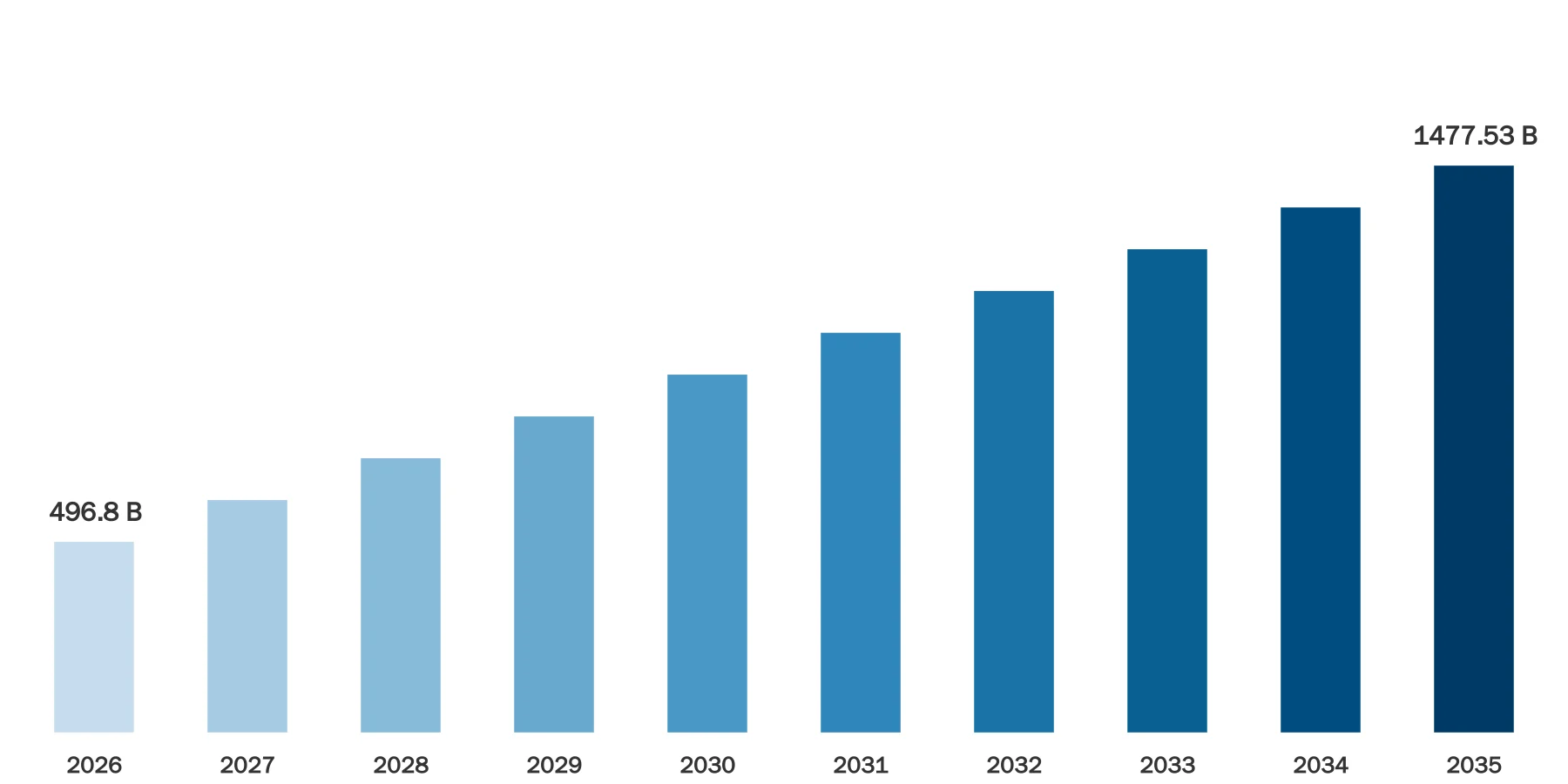
Source: Econ Market Research
The cold chain logistics market, along with the supply chain, is the technology and process that allows for the safe transport of temperature-sensitive goods and products such as fresh agricultural products, seafood, frozen food, photographic film, chemicals, and pharmaceutical drugs. It has an effect on every step of the supply chain, including last-mile delivery, storage, and transportation. The transportation modes for product supply include refrigerated trucks, refrigerated railcars, refrigerated cargo, and refrigerated air cargo. Utilizing temperature-controlled warehouses for storage and cold insulated delivery trucks for product distribution are further steps in the process. Furthermore, cold chains are essential for extending marketing, preventing overcapacity, reducing transport bottlenecks during peak periods, and maintaining product quality.
Market Growth
The global cold chain logistics market is expected to grow during the forecast period. due to a growing demand for refrigerated warehouses in both developed and developing economies. Cold chain logistics, or Cold Storage transportation, was used during the pandemic to carry out the vaccination increase. This cold chain logistics market is expected to grow as there is a great demand in the pharmaceutical sector. The pharmaceutical market will provide great business for cold chain logistics. The food and beverage industry also makes use of cold chain logistics, and it is expected to boost the demand for cold chain logistics. There has been a growth in the market due to constant research and development to have more effective services. There is an increase in the use of Radio Frequency Identification technology in this market, and this is expected to provide good growth during the forecast period.
The increased use of this software in various industries that make use of cold chain logistics will provide better growth for the market in the forecast period. As the number of distribution channels, such as supermarkets, hypermarkets, and various types of convenience stores, increases, so will the demand for cold storage logistics. Policies by the government relating to the trade of various food products that will be helpful in reducing the wastage of food will also be helpful in having an effective distribution channel. The use of coal storage and transportation options will increase.
The expanding businesses of these retail chains around the world, as well as their expanding operations in both developing and developed countries, will aid in providing better opportunities for growth of the cold chain logistics industry during the forecast period, as demand for refrigeration for transportation and storage rises. There has also been an increase in the initiatives taken by various countries that are supportive of developing the market for cold chain logistics in developing nations. These government regulations also place a strong emphasis on coming up with novel ways to transport and store different food items that require temperature control. Following the pandemic, there will be more opportunities in the market due to an increase in delivery services as demand for processed and perishable food items increases.
Covid-19 Impact Analysis
The COVID-19 crisis is creating uncertainty in the market by slowing down the logistics services, thus hampering business growth and increasing panic among customers. Governments in various regions declared total lockdown and the temporary shutdown of industries, resulting in border closures that hampered the movement of transportation and logistics services. Following the COVID-19 health crisis, the global business outlook has shifted dramatically. Moreover, the overall service activities of market players have declined owing to the drastic fall in demand for cash usage to prevent the risk of contamination. As per the current scenario, the overall world is getting back on track slowly with the new restrictions and policies, and a significant recovery in product sales across the retail sector may assert a positive influence on the cold chain logistics market to support the economic activities across all industries.
Regional Analysis
North America held the largest revenue share of more than 35% in 2022 and will retain the dominant position throughout the forecast period as the region has significant growth opportunities for the companies planning to invest for the long haul. A growing number of connected devices and a large consumer base are also expected to fuel market growth in the forecast period. The Asia Pacific region dominated the market with a 45 percent share in 2022, as there has been an increase in funding from the governments of various countries for growing the cold chain logistics infrastructure.
The market for cold chain logistics has grown as a result of the high demand for various types of processed food and goods and the rise in demand for frozen dairy products and even meat products. The countries of Japan, South Korea, China, and India have had the most growth in this market. The largest market share for the application of cold chain logistics is in these regions. The market for cold chain logistics is expected to grow over the forecast period due to the increasing number of pharmaceutical companies and foreign direct investment (FDI).
China is a main contributor to the APAC regional market. The market growth in China is due to factors such as technological advancements in the packaging, processing, and storage of seafood products. Rising demand and growing cold chain infrastructure development have made China a top market leader for cold chains. Currently, China is undergoing a rapid shift from a construction- and manufacturing-LED economy to a consumer-led economy. Rising innovations in the pharmaceutical sector in China are also expected to boost demand for the cold chain market. Another major factor driving the market is the rapid expansion of biopharma in this region.
In a news briefing earlier this month, Zhang Jiangbo, the deputy director-general of the economic and trade department at the National Development and Reform Commission, noted that China',s cold-chain network is currently experiencing a number of difficulties, including the absence of significant logistics hubs and an undeveloped national network. As both urban and rural populations', quality of life has increased, so has the need for fresh food. ",The public wants to eat food that is both healthy and safe, in addition to excellent meals. For this reason, cold-chain logistics has gained more and more attention and drives the cold-chain logistics market. The report covers details of each country',s top manufacturers and key players and their investments in the cold chain logistics market.
Competitive Landscape
The global Cold Chain Logistics Market Some of the major companies include:
Americold Logistics, LLC
Burris Logistics
Cold Box
Conestoga Cold Storage
Congebec
Lineage Logistics Holding, LLC
Nichirei Corporation
Tippmann Group
United States Cold Storage
VersaCold Logistics Services
Cold Chain Logistics Market Report Scope & Segmentation
| Attributes | Details |
|---|---|
Market Size (Current) | US$ 496.8 Billion in 2026 |
Market Size (Forecast) | US$ 1477.53 Billion in 2035 |
Growth Rate | CAGR of 12.97% from 2026 to 2035 |
Forecast Period | 2026 – 2035 |
Base Year | 2025 |
Historical Data Available | Yes |
Regional Scope | Global |
Segments Covered | By End-use Industry
By Business Type
|
Frequently Asked Questions
Common questions about this report
The study period covers historical insights and forecast projections for the period 2026-2035.
About the Author
Market research expert with years of industry experience

Related Reports
Explore more market insights from the same category