

SOC Containers Market
SOC Containers Market Size, Share, Trends, Growth, and Industry Analysis, Based on Size (20’ Containers, 40’ Containers, High Cube Containers, Others), Based on Application (Consumer Goods Transport, Industrial Transport, Food Transport, Others), Based on End-Use (Oil andamp;, Gas, Wind Energy, Marine, Other Industries), Regional Analysis and Forecast Period 2026-2035
Market Overview
As per Econ Market Research analysis, the Global SOC Containers Market generated revenue of US$ 5.96 Billion in 2026 and is forecast to achieve US$ 14.3 Billion by 2035, at a CAGR of 10.29% during the study period 2026–2035. The base year considered is 2025.
SOC Containers Market Size 2025-2035 (USD Billion)

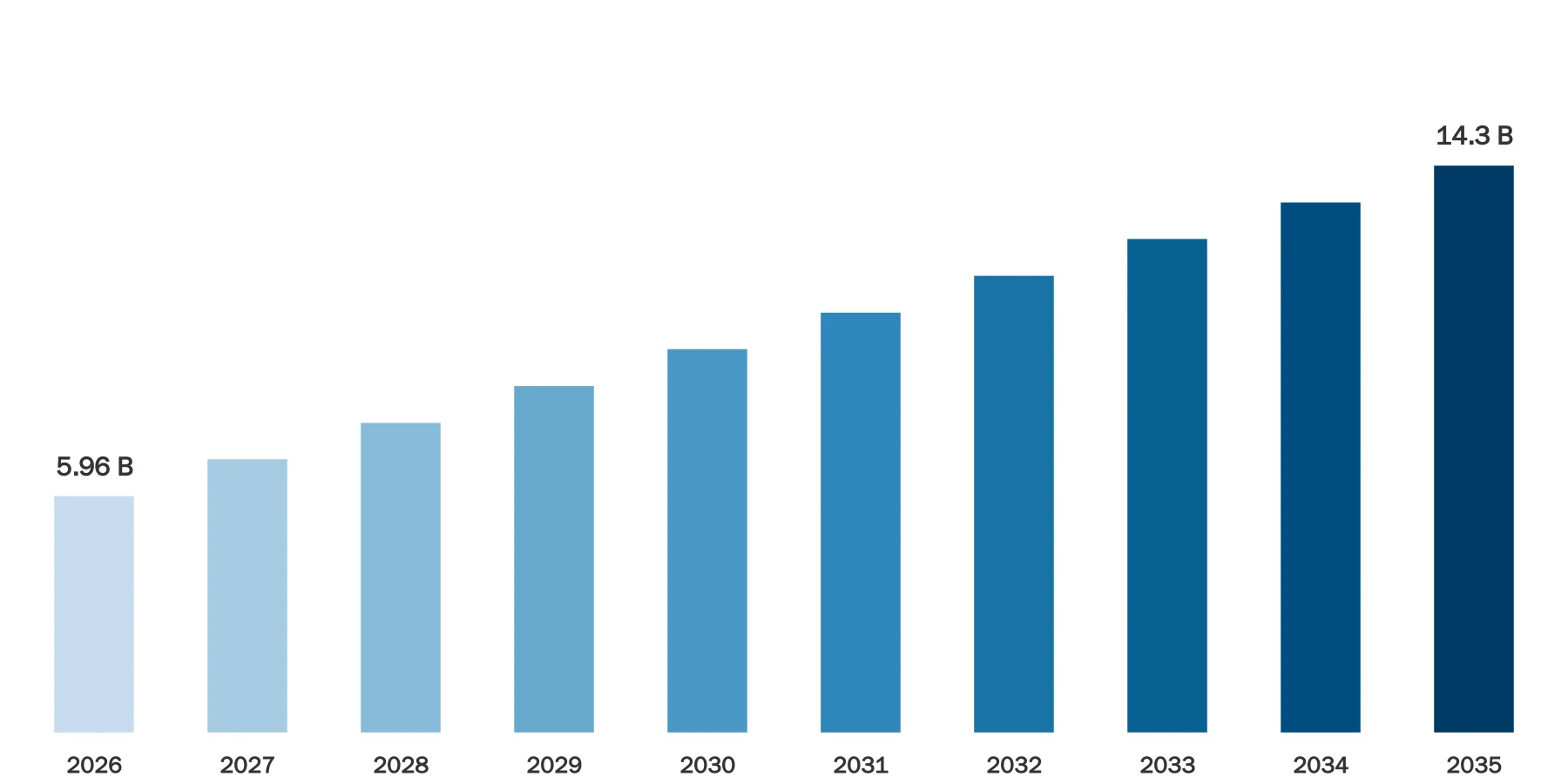
Source: Econ Market Research
SOC stands for 'shipper-owned container', and is a metal freight shipping container that is owned by an individual or business and used to ship cargo across long distances. The SOC (shipper-owned container) containers market refers to the industry that involves the conversion of shipping containers into various functional units such as accommodation units, offices, and workshops for use in offshore and remote locations. This type of conversion is done to provide a cost-effective and quick solution for the accommodation needs of offshore workers. SOC containers have been gaining popularity in the offshore oil &, gas, wind energy, and marine industries.
The increasing use of renewable energy sources such as wind energy is also driving the growth of the SOC container market. As wind energy projects are located in remote areas, SOC containers are a cost-effective solution for providing accommodation for workers.
The growth of the offshore oil &, gas industry is also a significant factor driving the growth of the SOC ',shipper-owned container', container market. The increasing number of offshore oil &, gas exploration and production activities has LED to a growing demand for accommodation solutions for workers. SOC containers provide an efficient and cost-effective solution for this need. The increasing population and urbanization, as well as the need for year-round production of fresh produce, are also driving the growth for SOC Container Market.
COVID-19 Impact
The COVID-19 pandemic has had a grave impact on the SOC container market. The outbreak has led to a slowdown in offshore exploration and production activities, which in turn has affected demand for SOC containers. The lockdowns and travel restrictions imposed by governments around the world have led to a slowdown in exploration and production activities, affecting demand for SOC containers. The decrease in oil prices has also impacted the demand for SOC containers in the oil and gas industry.
Additionally, the pandemic has disrupted supply chains, leading to delays in the delivery of SOC containers. The shortage of raw materials and components, as well as the reduced capacity of manufacturers, has also impacted the production of SOC containers. The pandemic has also affected wind energy industry, leading to delays in the construction and commissioning of wind energy projects. This also affected the demand for SOC containers in the wind energy sector.
The COVID-19 has had a negative impact on the SOC container market, leading to a slowdown in the demand for SOC containers and disruptions in the supply chain. However, it is important to note that the market is expected to recover as the world economies recover from the pandemic and exploration and production activities resume.
Segment Analysis
The SOC container market is segmented by application, end-use, and region. By application, the market is segmented into accommodations, offices, and workshops. By end-use, the market is segmented into oil and gas, wind energy, marine, and other industries. By region, the market is segmented into North America, Europe, Asia-Pacific, and the rest of the world.
By Size, the market is segmented into:
20-foot container: This is the most common size of SOC container and is commonly used for accommodations and offices.
40-foot container: This is the larger size of SOC container and is commonly used for accommodations and offices, as well as workshops and other functional units.
SOC containers can also be modified to create larger and more complex structures, such as:
Double-wide SOC container: This is two 20-foot SOC containers that are joined together to create a larger unit of container.
Triple-wide SOC container: This is three 20-foot SOC containers that are joined together to create a larger unit of container.
Custom SOC container: This is a SOC container that is built to specific dimensions and specifications to meet the unique needs of a particular application or end-use of customer.
By Application, the market is segmented into:
Accommodation: SOC containers are used to provide accommodations for workers in remote locations. They are equipped with the basics, such as beds, bathrooms, and kitchens etc.
Offices: SOC containers are also used in offshore and remote locations as offices. They include basic amenities such as desks, chairs, and internet access.
Workshops: Offshore and remote locations use SOC containers as workshops. They have basic amenities such as tools and equipment.
By End-use, the market is segmented into:
Oil &, Gas: SOC containers are used in the offshore oil &, gas industry to provide accommodation and other functional units for workers.
Wind Energy: SOC containers are used in the wind energy industry to provide accommodation and other functional units for workers.
Marine: SOC containers are used in the marine industry to provide accommodation and other functional units for workers.
Other Industries: Other industries, such as mining, construction, and the military, use SOC containers to provide accommodation and other functional units for workers in remote locations.
By Geography, the market is segmented into:
North America: The market in North America is driven by the presence of a large number of oil &, gas and wind energy companies in the region.
Europe: The market in Europe is driven by the increasing exploration and production activities and the growing demand for cost-effective and quick accommodations solutions for workers in the region.
Asia-Pacific: The market in Asia-Pacific is driven by the increasing exploration and production activities, particularly in China, Australia, and India, as well as the increasing adoption of renewable energy sources such as wind energy in the region.
Rest of the World: The market in the Rest of the World is driven by the increasing exploration and production activities in countries such as Brazil and Africa.
The SOC container market is expected to grow at a CAGR of 10.6% during the forecast period from 2023 to 2031, driven by the increasing exploration and production activities and the growing demand for cost-effective and quick accommodation solutions for offshore workers.
Regional Analysis
North America is expected to contribute to the global SOC container market, due to the presence of a large number of oil and gas and wind energy companies in the region. Europe is also expected to witness significant growth in the SOC container market, due to the increasing exploration and production activities and the growing demand for cost-effective and quick accommodation solutions for workers.
The Asia-Pacific region is also expected to witness significant growth in the SOC containers market, due to the increasing exploration and production activities, particularly in China, Australia, and India. The increasing adoption of renewable energy sources such as wind energy in the region is also driving the market growth.
The market in Europe is driven by the increasing exploration and production activities and the growing demand for cost-effective and quick accommodation solutions for workers in the region.
The SOC containers market is a growing industry, with a lot of potential for future growth and development. The increasing exploration and production activities and the growing demand for cost-effective and quick accommodation solutions for workers are expected to drive the market growth in the coming years.
Competitive Landscape
The major key players in the SOC market include:
DNV GL
Container xChange
CEVA Logistics
APL Logistic
JB Hunt
Suttons International
DB Schenker
Maersk Container Industry
SeaCube Container Leasing
Textainer Group Holdings
Seaco Global
These companies are involved in the leasing, manufacturing, and management of shipper-owned containers. They have a large market share and are well-established in the industry. They offer a wide range of services and solutions to support the use of shipper-owned containers, such as container management, leasing, and maintenance services. They offer a wide range of services and solutions to support the use of shipper-owned containers, such as container management, leasing, and maintenance services. These companies work closely with shipping companies and logistics providers to ensure that their containers meet the demands of the market and are in good condition. These companies have a strong reputation in the industry and are well recognised as reliable partners in supply chain management.
Recent developments in the SOC Container market include:
Rising demand for intermodal transportation: With the growing need for more efficient and sustainable supply chain management, there has been an increase in the use of intermodal transportation, which involves use of different modes of transport, such as ships, trains, and trucks, and move to cargo. This is driving demand for shipper-owned containers, as they can be easily moved between different modes of transport.
Advancements in container tracking and management technology: With the increasing use of shipper-owned containers, there is a growing need for technology to help track and manage them. This includes the development of new container tracking systems, such as GPS and RFID, as well as the use of digital platforms to manage container tracking, inventory and maintenance.
Growing emphasis on sustainability: There is a growing focus on sustainability in the shipping industry, and this is reflected in the development of new container designs and materials that have a lower impact on environment.
Increasing use of containers for e-commerce: The growing popularity of e-commerce is driving demand for shipping containers, as they are used to transport goods between warehouses and distribution centers.
Development of new regulations and standards: With the growing use of SOC (shipper-owned containers) containers, there is an increasing need for new regulations and standards to ensure safety and compliance. This includes the development of new guidelines and codes for container inspection and maintenance.
SOC Containers Market Report Scope & Segmentation
| Attributes | Details |
|---|---|
Market Size (Current) | US$ 5.96 Billion in 2026 |
Market Size (Forecast) | US$ 14.3 Billion in 2035 |
Growth Rate | CAGR of 10.29% from 2026 to 2035 |
Forecast Period | 2026 – 2035 |
Base Year | 2025 |
Historical Data Available | Yes |
Regional Scope | Global |
Segments Covered | Based on Size
Based on Application
Based on End-Use
|
Frequently Asked Questions
Common questions about this report
The study period covers historical insights and forecast projections for the period 2026-2035.
About the Author
Market research expert with years of industry experience

Dipali Bhingare serves as the Market Research Director at Econ Market Research. With a focus on translating complex global economic shifts into actionable business intelligence, she oversees the strategic direction of comprehensive market studies. Her work empowers organizations to navigate volatile industries through data-driven forecasting and deep-dive competitive analysis.
Related Reports
Explore more market insights from the same category