

Experiential Marketing Market
Experiential Marketing Market Size, Share, Trends, Growth, and Industry Analysis, By Type (Competitions, Interactive Exhibits, Product Sampling), By End User (Retail, Automotive, Media & Entertainment, BFSI, Technology, Others), By Organization Size (Large Enterprises, SMEs), Regional Analysis and Forecast Period 2026-2035
Market Overview
As per Econ Market Research analysis, the Global Experiential Marketing Market valuation stood at US$ 55.53 Billion in 2026 and is expected to reach US$ 71.22 Billion by 2035, growing at a steady CAGR of 3.16% from 2026 to 2035. 2025 serves as the base year.
Experiential Marketing Market Size 2025-2035 (USD Billion)

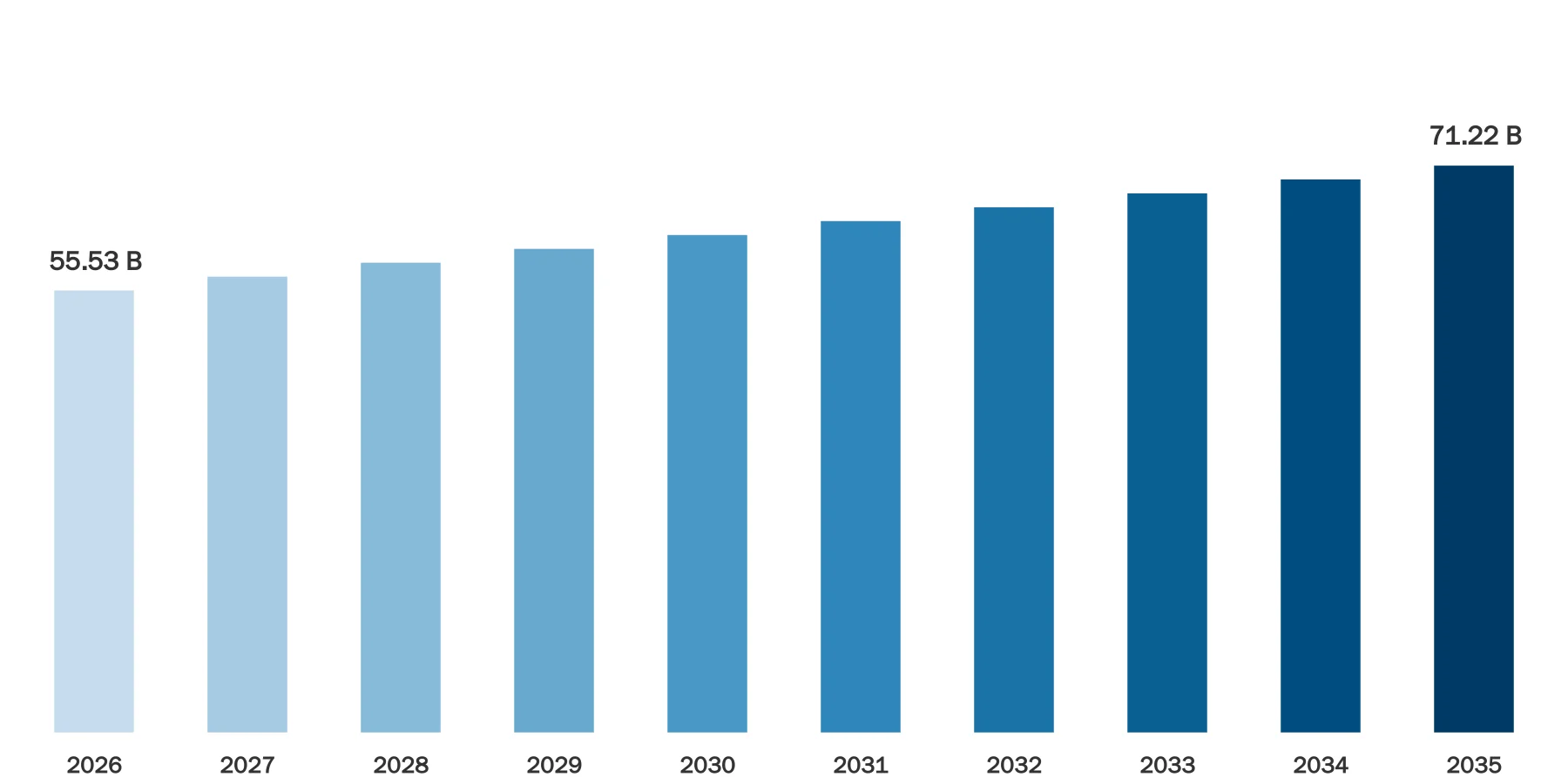
Source: Econ Market Research
The global Experiential Marketing market continues to transform brand communication strategies through immersive consumer engagement, live activations, hybrid events, digital installations, and interactive product showcases. Consumer behavior patterns indicate that 81% of participants are more likely to purchase products after attending immersive brand experiences, while 85% of attendees share event interactions on social media platforms within 24 hours. The market has shifted from traditional advertising toward sensory-driven campaigns involving Augmented Reality, mixed reality, holographic projections, gamified retail displays, and experiential pop-up stores. Retail, automotive, entertainment, food and beverage, and technology sectors remain primary adopters of experiential campaigns.
Data-driven personalization tools now influence audience segmentation, event analytics, and engagement tracking. In-person engagement remains highly influential, with 72% of marketers identifying live events as the most effective communication channel for customer acquisition and retention. Sustainability initiatives are also shaping the market through recyclable booth materials, energy-efficient installations, and paperless event operations across international trade exhibitions and promotional campaigns.
The United States experiential marketing market maintains a dominant position due to advanced advertising infrastructure, extensive corporate sponsorship activities, and high consumer participation in live brand experiences. U.S. companies allocate substantial portions of promotional budgets toward experiential campaigns involving music festivals, sports partnerships, retail activations, product launches, and immersive technology demonstrations. Research findings indicate that 84% of beauty and skincare brands in the United States increased spending on experiential engagement initiatives focused on influencer interactions, live-streamed events, and in-store sensory experiences.
Corporate marketers increasingly integrate AI-powered audience analytics and QR-enabled customer tracking systems to measure participation and engagement. Technology hubs including California, New York, Texas, and Illinois support large-scale activation campaigns through convention centers, entertainment venues, and digital production facilities. Consumer preference for memorable experiences rather than conventional advertising continues to strengthen market penetration. Major sports leagues, entertainment franchises, and multinational retail companies actively deploy mobile experiential tours and interactive consumer campaigns to strengthen customer loyalty and social media amplification throughout the United States market.
The European experiential marketing market demonstrates strong adoption across automotive exhibitions, luxury retail campaigns, sports sponsorships, tourism promotions, and sustainability-focused consumer activations. Germany, the United Kingdom, France, Italy, and Spain represent major operational hubs for experiential agencies and event production companies. European consumers display strong engagement with interactive installations, eco-conscious event concepts, and digital participation technologies integrated into physical events. Hybrid brand experiences combining virtual and physical engagement channels have gained widespread implementation across trade fairs and cultural festivals.
Luxury automotive manufacturers in Germany and Italy frequently utilize immersive product reveal campaigns featuring augmented reality displays and real-time customization demonstrations. Retail brands throughout Western Europe increasingly deploy experiential storefront concepts to improve customer dwell time and product interaction rates. Sustainability regulations across the European Union also encourage reusable event materials, carbon tracking systems, and waste reduction practices within experiential campaigns. Cross-border tourism growth and international sports sponsorship activities continue to support regional demand for large-scale live marketing activations and audience engagement solutions.
Experiential Marketing Market Latest Trends
The experiential marketing market is witnessing accelerated integration of immersive technologies, Artificial Intelligence, and hybrid engagement formats. Brands increasingly combine digital interactivity with physical events to maximize customer retention and audience participation. Industry surveys indicate that 62% of experiential campaigns incorporated digital technologies such as augmented reality, projection mapping, and virtual reality experiences during 2024. Interactive exhibits using gesture recognition, facial analytics, and personalized content delivery systems are becoming common across retail stores, exhibitions, and promotional roadshows.
Social media amplification has emerged as a central trend in the experiential marketing market. Research data shows that 88% of experiential events now include integrated social media campaigns involving influencer participation, live streaming, user-generated content, and interactive hashtags. Marketers increasingly prioritize experiences that generate online engagement alongside physical attendance. Event organizers use real-time analytics dashboards to monitor audience reactions, engagement duration, and conversion metrics during activations.
Another major trend involves the rapid adoption of AI-driven personalization tools. Companies utilize predictive analytics and behavioral segmentation to customize event interactions according to attendee preferences. AI chatbots, facial recognition check-ins, and automated engagement scoring systems are now integrated into experiential campaigns across retail, entertainment, and technology sectors.
Sustainability-focused experiential campaigns are also expanding rapidly. Event production companies increasingly use biodegradable materials, reusable exhibition structures, solar-powered installations, and digital ticketing systems. Environmental accountability has become a major purchasing factor among consumers participating in branded events.
Hybrid event models continue to reshape the market landscape. Virtual attendance capabilities, live-stream integrations, and digital networking tools now complement physical experiences. This trend allows brands to expand audience reach while reducing geographic limitations. Interactive gaming activations, esports sponsorships, and metaverse-linked experiential campaigns are further redefining consumer engagement strategies across global markets.
Experiential Marketing Market Dynamics
The experiential marketing market is driven by changing consumer preferences favoring personalized and interactive brand engagement over passive advertising. Increasing digital saturation has reduced the effectiveness of conventional promotional channels, prompting organizations to invest in immersive experiences that generate emotional connections and measurable audience interaction. Technological advancements including augmented reality, AI-based analytics, virtual reality, and interactive displays continue to strengthen campaign effectiveness.
Social media integration significantly amplifies event visibility, while hybrid event models improve accessibility and audience participation rates. However, operational complexity, logistical coordination, and high execution costs create barriers for smaller agencies and regional firms. Data privacy regulations and inconsistent performance measurement standards also influence campaign planning and implementation strategies. Retail, automotive, technology, entertainment, and BFSI sectors remain major adopters of experiential campaigns due to their focus on customer engagement and brand differentiation.
DRIVER
Increasing Consumer Preference for Immersive Brand Engagement
Consumer demand for participatory brand experiences represents the primary driver of the experiential marketing market. Research indicates that 72% of consumers develop stronger emotional connections with brands after participating in immersive experiences. Traditional advertising formats face declining engagement due to digital advertising fatigue and increased content saturation across online platforms. Consumers now prioritize interaction, personalization, and entertainment within marketing campaigns.
Brands increasingly invest in product demonstrations, pop-up activations, live entertainment partnerships, and interactive retail installations to improve customer loyalty and social media visibility. Event participation also influences purchasing behavior significantly. Studies show that 81% of consumers are more likely to purchase products after engaging with experiential campaigns. This behavioral shift encourages companies to allocate larger portions of promotional strategies toward experience-driven marketing formats.
Generation Z and millennial audiences particularly favor experiential interactions over static advertisements. Technology integration further supports market expansion through immersive storytelling, holographic displays, gamified experiences, and AI-based personalization. The rise of creator economies and influencer marketing also enhances experiential campaign visibility across social media platforms. As customer expectations continue evolving toward meaningful engagement, experiential marketing remains a strategic priority for global brands seeking audience retention and differentiation.
RESTRAINT
High Operational Complexity and Event Execution Costs
Operational complexity and high implementation costs remain significant restraints affecting the experiential marketing market. Large-scale activations require extensive planning involving venue management, logistics coordination, staffing, technical infrastructure, transportation, security compliance, and audience engagement systems. Small and medium-sized enterprises frequently face limitations in managing these operational requirements.
Experiential campaigns often involve sophisticated production technologies including projection mapping, augmented reality platforms, interactive kiosks, and customized digital installations. Equipment procurement, technical maintenance, and software integration contribute to elevated operational expenditures. Weather disruptions, venue restrictions, and regulatory compliance issues further increase execution risks for outdoor activations and public events.
Measuring campaign effectiveness also presents challenges for marketers. Despite technological advancements in analytics, many organizations struggle to establish standardized performance metrics for emotional engagement and long-term brand influence. Reddit marketing discussions frequently highlight difficulties in demonstrating measurable returns from experiential campaigns compared with digital advertising channels.
Data privacy regulations in North America and Europe also affect attendee tracking systems and behavioral analytics. Compliance with regional privacy frameworks increases administrative responsibilities for event organizers. These factors collectively create barriers for smaller agencies and limit rapid market penetration in cost-sensitive industries.
OPPORTUNITY
Expansion of Hybrid and Technology-Integrated Experiences
The growing adoption of hybrid experiences and immersive technologies presents substantial opportunities for the experiential marketing market. Brands increasingly combine physical activations with digital participation channels to expand audience accessibility and engagement. Hybrid campaigns enable remote attendance through live-streaming platforms, virtual event spaces, and interactive mobile applications.
Research findings show that immersive technologies such as AR, VR, and mixed reality recorded 45% adoption growth since 2021 within experiential campaigns. Technology-driven experiences improve personalization, real-time interaction, and consumer participation rates. Interactive product customization, virtual try-ons, AI-generated recommendations, and gamified experiences are creating new opportunities for retailers and consumer brands.
The rapid expansion of esports, gaming communities, and metaverse platforms also creates favorable conditions for immersive brand engagement. Technology companies increasingly sponsor virtual concerts, digital exhibitions, and interactive online communities linked to physical activations. Tourism and hospitality industries are additionally leveraging experiential campaigns to enhance destination branding and visitor engagement.
Emerging markets in Asia-Pacific, Latin America, and the Middle East provide untapped opportunities due to expanding urban populations, rising smartphone penetration, and growing social media engagement. Companies capable of integrating data analytics, sustainability practices, and immersive storytelling into scalable campaigns are expected to gain substantial competitive advantages within the evolving market environment.
CHALLENGES
Difficulty in Standardizing Performance Measurement
One of the major challenges in the experiential marketing market involves inconsistent performance measurement frameworks. Unlike digital advertising channels that provide immediate metrics such as click-through rates and conversion tracking, experiential campaigns often focus on emotional impact, customer sentiment, and long-term brand perception. Quantifying these outcomes remains difficult for marketers and event organizers.
Although AI analytics, QR code tracking, mobile applications, and facial recognition systems improve data collection capabilities, organizations still face difficulties connecting event participation directly to purchasing decisions. Many businesses rely on surveys, engagement duration metrics, and social media impressions, which may not fully capture campaign influence on consumer behavior.
Budget justification also becomes challenging when financial departments require quantifiable performance indicators. Reddit industry discussions reveal that leadership teams frequently question the measurable impact of experiential campaigns compared with performance-driven digital advertising.
Cross-platform integration adds another layer of complexity. Hybrid events generate fragmented data from physical attendance, virtual participation, social engagement, and influencer amplification. Consolidating this information into unified performance dashboards remains technically demanding. Furthermore, data privacy regulations restrict the use of biometric tracking and behavioral analytics in several countries. The absence of universal reporting standards continues to challenge market transparency and campaign benchmarking across global experiential marketing operations.
SWOT Analysis
Strengths
High consumer engagement through immersive and interactive brand experiences.
Strong emotional connection generation compared with conventional advertising channels.
High social media amplification rates driven by attendee-generated content.
Effective integration of augmented reality, AI, and virtual reality technologies.
Strong adoption across retail, automotive, entertainment, and technology sectors.
Improved product recall and customer retention through live participation.
Hybrid event capabilities expanding audience reach beyond physical attendance.
Enhanced personalization through AI-driven audience analytics.
Weaknesses
High operational costs related to logistics, staffing, and technical infrastructure.
Limited standardization in campaign performance measurement.
Dependence on venue availability and event execution capabilities.
Complex compliance requirements regarding data privacy and attendee tracking.
Significant planning timelines compared with digital advertising campaigns.
Limited scalability for small and medium-sized businesses.
Weather-related risks affecting outdoor activations and public events.
Technical failures can disrupt audience engagement during live campaigns.
Opportunities
Expansion of hybrid event models combining virtual and physical engagement.
Growing adoption of immersive technologies including AR, VR, and mixed reality.
Rising consumer demand for personalized experiences and participatory marketing.
Increasing use of experiential strategies in emerging economies.
Expansion of esports and gaming-based brand activations.
Growth in sustainability-focused event production and eco-friendly activations.
Integration of AI-powered audience segmentation and predictive analytics.
Increasing partnerships between brands, influencers, and entertainment companies.
Threats
Economic instability reducing discretionary corporate marketing budgets.
Increasing competition from low-cost digital advertising platforms.
Data privacy restrictions limiting behavioral tracking capabilities.
Rapid technology changes increasing infrastructure replacement requirements.
Event cancellation risks caused by geopolitical instability or public health concerns.
Audience fatigue from repetitive activation formats.
Cybersecurity threats affecting hybrid and digitally connected events.
Rising labor and logistics costs impacting campaign profitability.
Segmentation Analysis
The experiential marketing market is segmented by application, type, end user, and organization size. Application segmentation includes live events, product launches, retail activations, mobile tours, corporate exhibitions, sponsorship campaigns, and hybrid experiences. Installation methods include physical experiential setups, digital interactive installations, virtual environments, and mixed-format activations. Physical installations continue to dominate due to stronger emotional engagement and direct consumer participation. However, hybrid and virtual formats are rapidly expanding due to accessibility benefits and technological integration.
Retail brands utilize experiential marketing for in-store engagement and product demonstrations, while automotive companies focus on immersive vehicle showcases and test-drive campaigns. Entertainment firms deploy experiential campaigns during music festivals, sports events, and streaming platform promotions. BFSI organizations increasingly use interactive financial literacy experiences and digital engagement zones. Technology firms emphasize AI demonstrations, gaming activations, and smart-device showcases. Large enterprises maintain higher adoption rates due to broader promotional budgets and global operational capabilities, although SMEs are increasingly adopting modular and mobile experiential formats.
By Type
Interactive exhibits hold the largest market share within the experiential marketing market due to their ability to combine technology, storytelling, and consumer participation into a single engagement environment. Interactive installations account for 46% of experiential campaign deployments globally because brands prioritize immersive engagement and real-time customer interaction. These exhibits frequently involve augmented reality mirrors, motion-sensitive displays, touch-screen kiosks, and gamified participation systems.
Product sampling represents 34% of the market and remains highly effective in food and beverage, cosmetics, and consumer electronics sectors. Sampling campaigns allow direct product interaction, enabling consumers to evaluate product quality before purchasing decisions. Retail chains and shopping centers frequently host large-scale sampling events linked with influencer campaigns and digital coupon distribution.
Competitions account for 20% of market activity and continue gaining popularity due to high audience participation rates and social media amplification potential. Brands increasingly organize gaming tournaments, live contests, talent-based competitions, and digital scavenger hunts to improve engagement metrics. Competitive activations are especially popular among Generation Z consumers due to their alignment with gamification trends and creator-driven content ecosystems. Integration of QR code participation systems and mobile engagement platforms further supports the growth of competition-based experiential campaigns.
By End User
Retail remains the largest end-user segment in the experiential marketing market with a 31% market share. Retailers increasingly utilize pop-up stores, immersive product launches, interactive fitting rooms, and personalized shopping experiences to improve consumer engagement and dwell time. Luxury fashion and cosmetics brands are particularly active in deploying immersive retail campaigns.
Media and entertainment account for 24% of market participation due to extensive use of experiential promotions during movie launches, music festivals, streaming service campaigns, esports tournaments, and sports sponsorships. Entertainment companies rely heavily on live fan engagement and interactive audience experiences to strengthen brand loyalty.
Technology companies hold 18% of market share, driven by demand for product demonstrations, AI showcases, gaming activations, and smart-device experiences. Automotive companies account for 14% through vehicle launch events, immersive test-drive campaigns, and virtual showroom experiences integrating mixed reality technologies.
BFSI organizations represent 8% of market demand as banks and financial institutions increasingly deploy experiential campaigns focused on financial education, digital banking adoption, and customer trust-building initiatives. The remaining 5% includes healthcare, tourism, education, and telecommunications sectors utilizing experiential campaigns for awareness building and customer acquisition.
By Organization Size
Large enterprises dominate the experiential marketing market with 72% share due to substantial advertising budgets, global brand presence, and advanced technological capabilities. Multinational corporations frequently organize international product launches, immersive retail experiences, sports sponsorships, and hybrid conventions involving thousands of participants. These organizations possess dedicated marketing teams capable of managing complex event logistics, AI analytics integration, and cross-platform engagement strategies.
Large enterprises also invest heavily in data-driven personalization systems, augmented reality installations, holographic displays, and live-streaming infrastructure. Retail conglomerates, automotive manufacturers, and technology firms represent major contributors within this segment.
Small and medium-sized enterprises account for 28% of market participation and increasingly adopt modular experiential solutions to compete with larger brands. SMEs prioritize localized activations, mobile promotional tours, interactive kiosks, and influencer-led events to maximize customer engagement within limited operational budgets. Cloud-based event management tools and affordable digital engagement platforms are enabling smaller businesses to deploy scalable experiential campaigns.
Franchise businesses, regional retailers, and emerging consumer brands are increasingly collaborating with specialized experiential agencies to improve audience visibility. Social media amplification and user-generated content strategies help SMEs achieve broad exposure without requiring extensive infrastructure investments.
Regional Analysis
North America maintains leadership through advanced advertising infrastructure and strong corporate event culture.
Europe demonstrates strong adoption of sustainable experiential campaigns and luxury brand activations.
Asia-Pacific shows rapid expansion driven by urbanization, digital engagement, and youth-focused campaigns.
Middle East & Africa experience increasing demand through tourism projects, sports sponsorships, and retail development.
Hybrid event technologies and immersive installations are expanding across all regions.
Retail, automotive, entertainment, and technology sectors remain dominant regional contributors.
North America
North America accounts for 38% of the experiential marketing market, supported by strong corporate sponsorship activities, entertainment infrastructure, and advanced digital engagement technologies. The United States remains the largest contributor due to extensive adoption across retail, automotive, sports, entertainment, and technology sectors. Major cities including New York, Los Angeles, Chicago, Las Vegas, and Austin host large-scale experiential campaigns involving global consumer brands and international audiences.
Consumer engagement trends strongly favor live experiences in North America. Surveys indicate that 72% of marketers identify events as the most effective marketing channel for audience engagement and conversion. Sports sponsorships, music festivals, esports competitions, and interactive retail activations continue driving market demand. Entertainment companies increasingly integrate AI-powered personalization, facial recognition check-ins, and immersive projection technologies into promotional events.
Canada also demonstrates strong growth through tourism marketing campaigns, cultural festivals, and hybrid business conferences. Sustainability initiatives influence regional operations through carbon-neutral event planning and recyclable installation materials. Technology companies in Silicon Valley and Austin frequently deploy mixed reality demonstrations and immersive product launches.
Retail experiential campaigns involving pop-up stores, influencer collaborations, and interactive product showcases remain highly influential across North America. Social media amplification strategies and user-generated content continue strengthening campaign visibility throughout the region.
Europe
Europe holds 29% of the experiential marketing market and demonstrates strong adoption across automotive, fashion, tourism, luxury retail, and entertainment sectors. Germany, the United Kingdom, France, Italy, and Spain represent primary operational hubs for experiential agencies and event production firms. European consumers display high engagement with sustainable and technologically integrated experiences.
The automotive industry significantly contributes to regional demand through immersive vehicle exhibitions, mobility showcases, and virtual test-drive experiences. Germany remains a major center for automotive experiential campaigns involving augmented reality customization systems and interactive showroom technologies. Luxury fashion houses in France and Italy increasingly deploy sensory-driven retail experiences and influencer-focused brand activations.
Sustainability regulations strongly influence the European market. Event organizers prioritize reusable booth materials, low-emission logistics, paperless ticketing systems, and waste reduction initiatives. Hybrid business conferences and trade exhibitions are increasingly common across the region due to cross-border accessibility benefits.
The United Kingdom maintains strong market participation through music festivals, sports sponsorships, and entertainment-driven campaigns. Tourism authorities across Southern Europe also utilize experiential marketing to attract international travelers through cultural festivals and destination-based immersive events. Interactive museum exhibitions and heritage tourism experiences contribute additional market demand throughout Europe.
Asia-Pacific
Asia-Pacific accounts for 24% of the experiential marketing market and demonstrates the fastest expansion in audience participation and digital integration. China, Japan, India, South Korea, Singapore, and Australia represent major regional markets due to increasing urbanization, smartphone penetration, and social media engagement.
Youth-driven consumer behavior strongly supports experiential campaign adoption across Asia-Pacific. Gaming activations, esports tournaments, anime conventions, and influencer-led retail experiences attract substantial participation among younger audiences. Interactive mobile technologies and QR-code engagement systems are widely integrated into regional campaigns.
India has emerged as a major experiential marketing destination due to rapid growth in live entertainment and cultural events. Reports indicate that 78% of Indian consumers prioritize experiences over products, reflecting significant behavioral shifts toward immersive brand engagement. Retail brands and entertainment companies increasingly sponsor music festivals, cricket tournaments, and interactive product showcases throughout metropolitan cities.
China remains a leader in digital integration through AI-powered event management, livestream commerce experiences, and mixed reality installations. South Korea and Japan emphasize technologically advanced experiential campaigns linked with gaming, electronics, and entertainment industries. Australia continues expanding experiential tourism campaigns and sports-based sponsorship activities. Regional market expansion is further supported by rising middle-class populations and increasing investment in digital infrastructure.
Middle East & Africa
The Middle East & Africa region holds 9% of the experiential marketing market and demonstrates growing adoption through tourism initiatives, retail expansion, sports events, and entertainment infrastructure development. Gulf countries including the United Arab Emirates and Saudi Arabia lead regional activity due to extensive investment in international exhibitions, cultural festivals, and destination branding projects.
Dubai remains a central hub for experiential campaigns involving luxury retail, automotive showcases, technology exhibitions, and tourism promotions. Interactive installations, immersive shopping experiences, and AI-powered visitor engagement systems are increasingly integrated into regional events. Saudi Arabia continues expanding large-scale entertainment initiatives linked with tourism diversification programs and global sports sponsorships.
Sports events significantly contribute to experiential marketing demand across the Middle East. Formula racing events, football tournaments, esports championships, and international exhibitions attract multinational brand partnerships and audience engagement campaigns. Retail developers also prioritize immersive shopping mall experiences involving digital entertainment zones and interactive product showcases.
Africa demonstrates emerging market potential through urban retail growth, music festivals, and mobile-based engagement campaigns. South Africa, Kenya, and Nigeria represent major developing markets for experiential activations. Telecommunications companies and beverage brands frequently organize promotional roadshows and live music sponsorships targeting young urban consumers. Increasing smartphone penetration and expanding digital payment ecosystems continue supporting experiential marketing adoption throughout African markets.

Competitive Landscape
The experiential marketing market remains highly competitive with global agencies, event production companies, digital engagement firms, and creative marketing specialists competing across multiple industry verticals. Competition focuses on technological innovation, creative storytelling, hybrid event capabilities, data analytics integration, and global operational capacity. Large multinational agencies maintain advantages through extensive client networks, cross-border execution capabilities, and advanced immersive technology infrastructure.
Companies increasingly invest in augmented reality installations, AI-driven audience analytics, projection mapping systems, and virtual participation platforms to differentiate service offerings. Strategic partnerships between experiential agencies and technology providers continue expanding due to rising demand for immersive engagement solutions. Event management software integration and real-time engagement tracking have become important competitive factors.
The market also demonstrates strong consolidation activity as larger firms acquire specialized agencies focused on gaming activations, influencer campaigns, and digital production capabilities. Competitive intensity remains particularly strong in North America and Europe due to high corporate advertising expenditure and extensive entertainment infrastructure.
Retail, automotive, entertainment, and technology sectors represent primary competitive battlegrounds for experiential agencies. Companies compete aggressively for sponsorship campaigns, product launch contracts, sports activations, and hybrid business conference management projects. Sustainability practices also influence competition, with clients increasingly prioritizing agencies capable of delivering environmentally responsible event operations.
Creative differentiation remains essential in maintaining market position. Agencies capable of combining emotional storytelling, technological immersion, and measurable audience engagement continue strengthening their competitive presence within the evolving experiential marketing landscape.
List of Top Experiential Marketing Companies
George P. Johnson Experience Marketing
Freeman Company
Jack Morton Worldwide
George P. Johnson
Eventive Marketing
Impact XM
Cramer
GES (Global Experience Specialists)
Momentum Worldwide
RedPeg Marketing
Investment Trends & Opportunities
Investment activity within the experiential marketing market increasingly targets immersive technologies, AI-based engagement platforms, hybrid event infrastructure, and sustainable event production systems. Private equity firms and corporate investors continue supporting experiential agencies capable of integrating digital analytics with physical consumer engagement. Technology partnerships involving augmented reality, mixed reality, and projection mapping systems are attracting substantial investment attention.
Brands increasingly allocate investment toward measurable engagement tools including real-time audience tracking, behavioral analytics, and mobile participation systems. Event management platforms featuring AI personalization, automated registration systems, and predictive audience segmentation continue gaining investor interest. Companies specializing in hybrid event production and livestream integration are also experiencing strong investment activity.
Retail and entertainment sectors remain major investment contributors due to increasing demand for immersive consumer experiences. Shopping malls, entertainment venues, and sports arenas continue expanding digital engagement infrastructure to support branded activations and interactive audience participation.
Emerging markets in Asia-Pacific and the Middle East present significant investment opportunities due to expanding urban populations and increasing consumer spending on entertainment experiences. Governments in Gulf countries are heavily investing in tourism-linked experiential campaigns and international event infrastructure.
Sustainability-focused investment is another important trend shaping the market. Investors increasingly support agencies implementing low-carbon logistics, reusable installation systems, energy-efficient technologies, and environmentally responsible event production practices. Gaming activations, esports partnerships, and creator-economy collaborations also represent expanding investment categories within the experiential marketing ecosystem.
Product Innovation & Development
Product innovation within the experiential marketing market focuses heavily on immersive technologies, personalized engagement systems, and hybrid event solutions. Companies are increasingly developing AI-powered event platforms capable of analyzing attendee behavior, engagement duration, and interaction patterns in real time. Facial recognition systems and biometric analytics are also becoming integrated into premium experiential campaigns.
Augmented reality and virtual reality technologies represent major innovation categories. Brands deploy virtual product demonstrations, digital fitting rooms, holographic presentations, and immersive storytelling experiences to strengthen customer interaction. Projection mapping and spatial audio systems continue transforming physical venues into multi-sensory engagement environments.
Interactive retail technologies are also evolving rapidly. Smart mirrors, touchless engagement systems, RFID-enabled experiences, and gesture-controlled installations are increasingly used in luxury retail and consumer electronics campaigns. Hybrid event software integrating live streaming, virtual networking, and audience gamification has become a major product development area.
Sustainability innovation continues influencing experiential product development. Event agencies increasingly design modular exhibition structures, recyclable activation kits, and solar-powered display systems. Digital ticketing and cloud-based event coordination platforms reduce paper consumption and operational waste.
Wearable technologies including smart wristbands and NFC-enabled badges are improving attendee tracking and personalized interaction capabilities. Gaming-based experiential platforms and metaverse-linked activations are further expanding innovation opportunities within the market. Companies capable of combining immersive technology, operational efficiency, and data-driven personalization remain at the forefront of experiential marketing product development.
Five Recent Developments (2023–2026)
Mastercard allocated 70% of its marketing activities toward experiential activations integrated with AI-driven engagement systems during 2024.
Experiential campaigns integrating AR, VR, and mixed reality technologies increased by 45% globally between 2021 and 2024, accelerating immersive event deployment across retail and entertainment sectors.
Indian live events linked with experiential marketing expanded significantly in 2026, supported by rising consumer preference for immersive participation and branded entertainment experiences.
Beauty and skincare companies in the United States increased experiential engagement investments during 2024, focusing on live streams, in-retail rituals, and influencer-led activations.
Hybrid experiential campaigns involving digital participation and physical engagement generated billions of social media impressions during 2024 through integrated influencer and livestream strategies.
Scope of the Experiential Marketing Market Report
The experiential marketing market report provides comprehensive analysis of industry structure, operational trends, technological developments, competitive positioning, and regional market performance. The report evaluates major market segments including interactive exhibits, competitions, product sampling campaigns, hybrid events, immersive retail activations, and digital experiential platforms. It examines deployment patterns across retail, automotive, media and entertainment, BFSI, technology, tourism, and healthcare sectors.
The report includes detailed segmentation analysis based on type, end user, organization size, and regional distribution. Market performance evaluation covers North America, Europe, Asia-Pacific, and Middle East & Africa, highlighting consumer engagement patterns, technological adoption rates, and operational infrastructure developments across each region.
Technological assessment within the report focuses on augmented reality, virtual reality, mixed reality, AI-based personalization systems, projection mapping, real-time analytics, and hybrid event management platforms. Sustainability trends involving recyclable materials, low-emission logistics, and environmentally responsible event production are also analyzed extensively.
The report further examines competitive strategies including mergers, partnerships, product innovation initiatives, and digital transformation investments implemented by leading experiential marketing agencies. Operational challenges related to logistics, campaign measurement, regulatory compliance, and data privacy are also covered.
Additionally, the report evaluates evolving consumer preferences favoring immersive engagement over traditional advertising channels. It provides strategic insights into investment opportunities, technological integration, audience participation trends, and future demand patterns influencing the global experiential marketing industry.
Experiential Marketing Market Report Scope & Segmentation
| Attributes | Details |
|---|---|
Market Size (Current) | US$ 55.53 Billion in 2026 |
Market Size (Forecast) | US$ 71.22 Billion in 2035 |
Growth Rate | CAGR of 3.16% from 2026 to 2035 |
Forecast Period | 2026 – 2035 |
Base Year | 2025 |
Historical Data Available | Yes |
Regional Scope | Global |
Segments Covered | By Type
By End User
By Organization Size
|
Frequently Asked Questions
Common questions about this report
The study period covers historical insights and forecast projections for the period 2026-2035.
About the Author
Market research expert with years of industry experience

Dipali Bhingare serves as the Market Research Director at Econ Market Research. With a focus on translating complex global economic shifts into actionable business intelligence, she oversees the strategic direction of comprehensive market studies. Her work empowers organizations to navigate volatile industries through data-driven forecasting and deep-dive competitive analysis.
Related Reports
Explore more market insights from the same category