Drone Light Show Market Overview
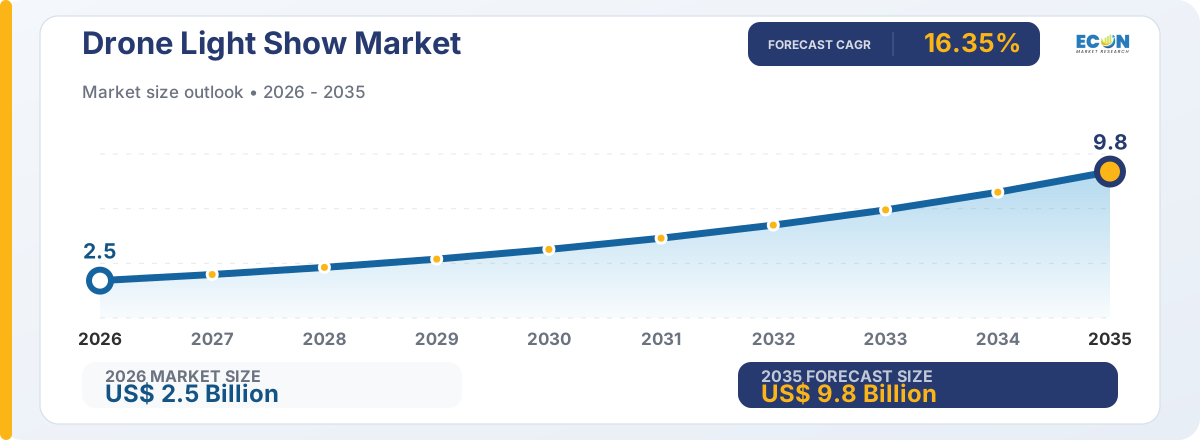
As per Econ Market Research analysis, the Global Drone Light Show Market generated revenue of US$ 2.5 Billion in 2026 and is forecast to achieve US$ 9.8 Billion by 2035, at a CAGR of 16.35% during the study period 2026–2035. The base year considered is 2025.
Drones in light shows are increasingly used for entertainment purposes in concerts, festivals, corporate gatherings, and even large public celebrations. Drones fly in specific patterns and reflect or emit bright, impressive light shows in the night sky. Drones are environmentally friendly as they do not create any pollution, the noise level is lower, and more controlled compared to fireworks.
The market for drone light shows has been growing rapidly as the demand for innovative entertainment experiences increases. Technological advancements in drone design, battery life, and software have enabled more complex and impressive performances. Moreover, regulatory changes in the use of drones for entertainment, especially in urban areas, have made it easier for companies to organize these shows. The use of drones allows for creativity, scalability, and reusability, making them a popular choice for companies seeking unique ways to capture the audience',s attention.
Dynamic Insights
Advances in drone technology-the latest improvements have been about enhanced battery life, precision control systems, and advanced LED lighting capabilities-have significantly expanded the possibilities for drone light shows. Innovations such as increased complexity, larger-scale productions, and more visually striking shows drive demand across disparate industries like entertainment, tourism, and corporate events.
With growing environmental issues, many companies are now using drone light shows because it is an environmentally friendly alternative to aerial fireworks, which always create air pollution and noise. The increasing number of regulatory frames that regulate drone deployment, however, further increases the preference for this mode of entertainment. In addition, the increasing use of drones in promotional events and marketing as a unique channel for the engagement of the audience is increasing market growth.
However, high initial installation costs and non-conducive regulatory policies in a few regions might be a hindrance to the entry of new players. Despite these challenges, the market is expected to continue growing based on a mix of technological innovation, increasing environmental awareness, and the rising demand for unforgettable visual experiences.
Drivers Insights
Technological Advancements in Drone Capabilities
Continuous improvement in drone technology has been the main impetus for growth in the drone light show market. Advances include longer battery life, more accurate GPS navigation systems, and the creation of complex LED lighting that enable drones to make complex, choreographed patterns across the sky. This helps to bring a better display, more flexible displays, to an array of different industries: from entertainment to corporate promotions. Because drones become stronger and less expensive, barriers of entry fall and the world increasingly adopts this technology for entertainment.
Sustainability and Environmental Benefits
Environmental concerns regarding the use of conventional fireworks, which emit air pollution, noise, and waste, have driven a new wave toward greener forms of entertainment. Drone light shows do not emit poisonous chemicals into the air nor make much noise, which makes them more eco-friendly. This green appeal is important at a time when environmental regulations are becoming increasingly stricter and consumers and businesses alike demand more sustainable solutions. The increasing awareness of climate change and the need for more environmentally friendly alternatives is driving the demand for drone light shows, especially in urban areas where fireworks are often banned for environmental and safety reasons.
Restraints Insights
High Initial Setup Costs
One of the significant barriers to widespread adoption of drone light shows is the high initial investment required for the technology. Setting up a drone light show involves purchasing multiple high-performance drones, specialized software for choreography, and skilled operators for precise execution. For small businesses or event organizers with limited budgets, these upfront costs can be prohibitive. Although the cost of drone technology has decreased over time, the expenses for professional-grade drones and safety measures still represent a challenge for smaller market players.
Regulatory Restrictions and Safety Concerns
Drone light shows must adhere to strict regulatory guidelines, particularly in urban areas and airspace with heavy air traffic. Governments worldwide are working to create frameworks to ensure drones are flown safely, with regulations covering aspects such as altitude restrictions, no-fly zones, and operator certification. Safety concerns, such as the risk of drone malfunctions or crashes, also pose challenges. Such regulatory constraints could make the normal widespread implementation of drone light shows sometimes impossible in countries or regions whose laws are more restrictive or are still under development.
Opportunities Insights
Expanding Use in Corporate and Brand Marketing
As companies try to stand out in a crowded market, drone light shows are a unique and engaging way to capture consumer attention. The ability to create personalized, high-impact displays for product launches, advertising campaigns, and brand activations presents significant growth opportunities in the corporate sector. Major brands are increasingly using drone light shows to enhance customer experiences at events or to create viral marketing campaigns. As demand for innovative promotional strategies continues to increase, the market for drone light shows in the corporate sector is surely expanding.
Segment Analysis
By Mode of Operation:
The Mode of Operation segment in the global drone light show market consists of three distinct categories: Remotely Operated, Semi-Autonomous, and Autonomous drones. Remotely operated drones are controlled by a human operator in real-time, offering flexibility and the ability to quickly adjust the show based on conditions. Semi-autonomous drones work with a combination of human input and automated functions, giving the best of control and efficiency while reducing the workload for the operators.
Autonomous drones are completely programmed to perform pre-set light show patterns with minimal human intervention, using advanced software and algorithms to perform intricate choreography. As the drone technology is improving, autonomous drones are being preferred because of their precision, scalability, and ability to manage more complex large-scale light shows with minimal human involvement.
By Type:
In the Type segment, the market is categorized into several creative forms of drone light shows, including Drone Formations, Drone-launched Fireworks, Drone Paintings, and Animated Sculptures. Drone Formations are the most common type, where drones fly in precise patterns to create dynamic light displays in the sky. Drone-launched Fireworks combine traditional fireworks with drone light technology, creating a hybrid visual experience that blends aerial lighting with pyrotechnics.
Drone Paintings involve drones flying in patterns that mimic brushstrokes or artwork, providing a unique way to display images and scenes in the sky. Animated Sculptures use drones to form three-dimensional structures that move and change shape, offering an interactive and artistic experience. Each of these types appeals to different audiences, offering versatile options for various events, from large-scale festivals to private gatherings.
By Application:
The Application segment deals with the major applications of drone light shows in different sectors, such as Exhibitions, Tourist Attractions, Cultural Performances, and Teaching Research. In Exhibitions, drone light shows are used to enhance trade shows, product launches, and tech expos, providing a visually stunning display that captures attendees', attention. Tourist Attractions utilize drone light shows to create memorable experiences at landmark sites, boosting tourism and engagement.
Cultural Performances often feature drones in festivals, traditional celebrations, and other forms of public arts where modernity would highlight ancient rituals or performances. Here, in the case of Teaching Research, drones are used for light shows in academic setups and experimental demonstration where they are tools for innovation in robot development, engineering, and digital art. These applications are on the expansion trend as the market grows, and drone light shows come out to be an increasingly popular choice for a range of events and activities.
Regional Analysis
The leading market is North America due to established tech companies, strong investments in innovation within drones, and a demand for unique large entertainment experiences. This is most highly seen in the United States as the technology spreads widely to cover public events, festivals, and corporate promotions as the favorable regulations and good infrastructures remain the backbone.
Another critical region is Europe, which hosts the UK, Germany, and France among other countries in front of using drone light shows in cultural performances, exhibitions, and tourism. Strong regulations exist here that favor safe use in public spaces while sustainability is increasing. The demand for drone light shows is increased by the preference of this show to be a firework show in an environmentally friendly manner. The Middle East and Asia-Pacific are emerging markets, with places like China, Japan, and the UAE having invested in innovative drone technology for high-profile celebrations and global expositions. Therefore, the requirement for innovative visual entertainment in those regions is also fueling very rapid market expansion.
Latin America and Africa are at the nascent stage of embracing drone light shows, with market growth primarily fueled by growing interest in novel entertainment experiences. The regions are, however, plagued by regulatory challenges and infrastructure deficits, but they are expected to see slow market development as drone technology becomes more affordable and accessible.
Competitive Landscape
Major players in this market are specialized drone manufacturers, entertainment companies, and technology firms that have developed advanced drone systems specifically designed for light shows. Major players such as Intel, which was the first company to introduce large-scale drone light shows with its ",Shooting Star", drones, have raised the bar in the industry with their spectacular drone-based performances at some of the world',s biggest events like the Super Bowl and Olympics. Other prominent companies are Verity Studios, the leader in creating drone choreography for live events, and Fancam, majorly providing their services in aerial light shows for corporate events and exhibitions.
The competition is getting fiercer as smaller, innovative companies come up with unique offerings and localized solutions targeting regional markets with cost-effective and customized drone light shows. For example, Sky Magic offers large-scale drone light shows for entertainment and advertising, while Dronisos focuses on high-quality drone performances in Europe. Their competitive advantage is found in the fact that they are able to innovate with the most advanced drone technologies, offer scalable designs for light shows, and manage complex operations. Key partnerships have been forged with event organizers, tourism boards, and entertainment companies to help expand their markets.
As the market grows, the competition will likely shift towards enhancing the customer experience through technology integration, such as Augmented Reality (AR) or interactive light shows. New players entering the market must focus on cost-effective solutions, ease of use, and regulatory compliance to establish a foothold in this evolving industry. Collaboration and innovation will remain critical factors for success, especially as the global demand for sustainable, memorable entertainment experiences continues to rise.
List of Key Players:
Drone Light Show Company
Zerotech
Geoscan
SPH Engineering Limited
Skymagic
Verge Aero
Dronisos
CollMot Entertainment
Intel Corporation
Global Drone Light Show Report Segmentation
Drone Light Show Market Report Scope & Segmentation
| Attributes | Details |
|---|---|
| Market Size (Current)Current market valuation | US$ 2.5 Billion in 2026 |
| Market Size (Forecast)Projected market valuation | US$ 9.8 Billion in 2035 |
| Growth RateCompound Annual Growth Rate | CAGR of 16.35% from 2026 to 2035 |
| Forecast PeriodAnalysis timeline | 2026 – 2035 |
| Base YearReference year for analysis | 2025 |
| Historical Data AvailablePast market data availability | Yes |
| Regional ScopeGeographical coverage | Global |
| Segments CoveredMarket segments analyzed | By Type
By Application
|
Leading companies covered in this report
- Intel Corporation
- Verge Aero
- Sky Elements
- Dronisos
- Nova Sky Stories
- Firefly Drone Show
- BotLab Dynamics
Frequently Asked Questions
Common questions about this report
The study period covers historical insights and forecast projections for the period 2026-2035.
About the Author
Market research expert with years of industry experience

Dipali Bhingare serves as the Market Research Director at Econ Market Research. With a focus on translating complex global economic shifts into actionable business intelligence, she oversees the strategic direction of comprehensive market studies. Her work empowers organizations to navigate volatile industries through data-driven forecasting and deep-dive competitive analysis.