

Executive Search Headhunting Market
Executive Search Headhunting Market Size, Share, Trends, Growth, and Industry Analysis, By Service Type (Retained Search, Contingency Search), By Application (IT and Telecom, Healthcare, BFSI, Manufacturing, Retail), Regional Analysis and Forecast Period 2026-2035
Market Overview
As per Econ Market Research analysis, the Global Executive Search Headhunting Market was valued at US$ 23.1 Billion in 2026 and is expected to reach US$ 42.2 Billion by 2035, registering a CAGR of 6.94% during the forecast period 2026–2035. The base year considered is 2025.
Executive Search Headhunting Market Size 2025-2035 (USD Billion)

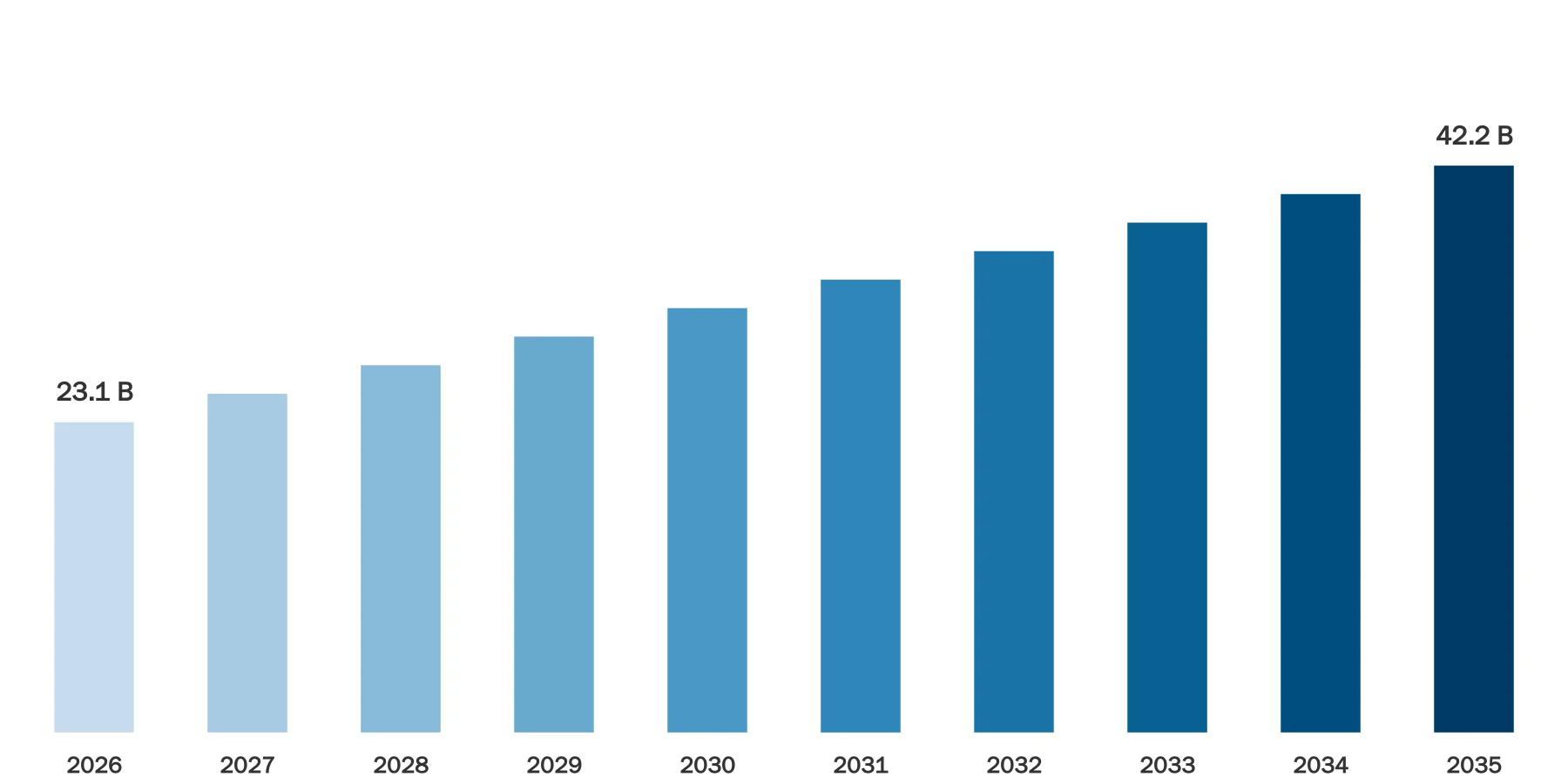
Source: Econ Market Research
The Executive Search (Headhunting) Market has become a critical component of global leadership hiring, with more than 78% of executive searches requiring between 3 and 6 months for completion across multinational enterprises. Around 65% of successful placements involve passive candidates who are not actively applying for jobs, while nearly 44% of external CEO appointments in major listed corporations were sourced through executive search firms during 2024. The Executive Search (Headhunting) Market Report indicates that over 71% of retained executive searches result in long-term placements lasting more than 24 months. Approximately 59% of newly appointed board directors in large corporations are former CEOs or retired executives with over 20 years of leadership experience. Digital transformation has also influenced the Executive Search (Headhunting) Industry Analysis, with nearly 65% of firms integrating AI-based candidate mapping systems and talent analytics tools. Diversity-focused leadership hiring has increased significantly, as 43% of organizations now use structured diversity scorecards during executive selection processes.
The USA Executive Search (Headhunting) Market remains the largest regional segment, supported by more than 2,000 annual CEO transitions across public and private enterprises. About 67% of Fortune-level companies still prefer internal promotions for CEO succession, but external appointments increased to 44% among S&P 1500 companies in 2024. The average executive search timeline in the United States stands near 123 days for senior leadership roles, while board-level searches often exceed 180 days. Nearly 38% of new board appointments in leading corporations involve female executives, and 17% involve ethnic minority candidates.
The BFSI and technology sectors collectively account for over 46% of executive search mandates in the country. AI adoption is also reshaping the Executive Search (Headhunting) Market Research Report landscape, with more than 55% of recruiting firms reporting measurable productivity improvements after implementing AI-driven sourcing tools. Around 80% of leadership vacancies remain confidential and unadvertised, increasing dependency on specialized executive recruiters.
The European Executive Search (Headhunting) Market demonstrates strong demand across Germany, the UK, France, Switzerland, and the Nordic countries, where cross-border leadership hiring expanded by approximately 29% between 2022 and 2025. More than 52% of executive search assignments in Europe involve digital transformation leadership, sustainability management, or AI governance expertise. The UK market alone recorded executive hiring confidence growth of 15 percentage points entering 2026. In European board recruitment, the average age of newly appointed directors reached 59 years, reflecting increasing preference for experienced leaders during economic uncertainty.
Manufacturing, automotive, healthcare, and financial services contribute nearly 61% of total executive search engagements across the region. Around 48% of multinational corporations operating in Europe now request multilingual leadership candidates with experience across at least 3 international markets. ESG-linked executive evaluations also increased significantly, with nearly 10% of executive compensation packages tied to sustainability and governance targets in 2025.
Executive Search (Headhunting) Market Latest Trends
The Executive Search (Headhunting) Market Trends are increasingly shaped by AI-driven recruitment systems, leadership diversification, and hybrid workforce strategies. More than 65% of executive recruitment firms now deploy AI-assisted sourcing platforms capable of scanning over 850 million professional profiles globally. AI-based matching tools reduced candidate identification time by nearly 40% between 2023 and 2025, while executive search productivity improved by over 25% in firms using automation technologies. Executive Search (Headhunting) Market Analysis also highlights that approximately 80% of C-suite positions remain part of the hidden job market and are filled through confidential networking and direct outreach rather than public advertisements.
Board governance transformation is another major trend influencing the Executive Search (Headhunting) Industry Report. Nearly 30% of new board directors in large enterprises possess prior CEO experience, while organizations increasingly prioritize Cyber Security, AI governance, and ESG competencies. Demand for Chief AI Officers, Chief Sustainability Officers, and Digital Transformation Executives expanded by more than 35% from 2023 to 2025 across global enterprises.
Remote leadership hiring has accelerated significantly, with over 54% of multinational organizations considering cross-border remote executives for strategic positions. Asia-Pacific technology companies increased international executive hiring activity by nearly 32%, while North American healthcare organizations expanded executive leadership recruitment by approximately 27%.
Diversity, equity, and inclusion initiatives continue to influence the Executive Search (Headhunting) Market Outlook. Around 43% of organizations now require diverse candidate shortlists for every executive mandate, compared with 28% in 2021. Female representation in senior leadership hiring increased by nearly 11 percentage points during the last 4 years. The Executive Search (Headhunting) Market Forecast further indicates growing preference for leadership assessment tools, psychometric evaluations, and succession planning analytics, with more than 58% of enterprises integrating predictive workforce intelligence into executive hiring strategies.
Executive Search (Headhunting) Market Dynamics
The Executive Search (Headhunting) Market Growth is influenced by rising executive turnover, digital business transformation, and increasing global competition for specialized leadership talent. More than 2,032 CEO exits were recorded in US companies during 2025, creating sustained demand for executive recruitment firms. Approximately 62% of manufacturing-sector executive hires in India were external appointments, reflecting the growing preference for outside leadership expertise. The Executive Search (Headhunting) Market Insights also show that organizations now prioritize executives with AI, ESG, and international operational expertise. Around 71% of retained searches lead to successful long-term placements, while 78% of searches require structured multistage evaluation processes. Healthcare, BFSI, IT, and industrial manufacturing collectively account for over 60% of executive search assignments worldwide.
DRIVER
Increasing Demand for Digital and Transformational Leadership
The primary driver of the Executive Search (Headhunting) Market Size is the rising requirement for leaders capable of managing digital transformation, AI integration, sustainability transitions, and geopolitical risk. More than 52% of global executive search mandates now include technology transformation responsibilities. Organizations undergoing cloud migration, cybersecurity expansion, and AI deployment are actively recruiting executives with at least 15 to 20 years of leadership experience. In 2025, approximately 44% of S&P 1500 CEO appointments came from external talent pools, highlighting increasing openness toward transformational leaders recruited through executive search firms.
Technology-focused leadership hiring has expanded significantly in sectors such as healthcare, fintech, Semiconductor manufacturing, and renewable energy. Nearly 35% of all executive placements during 2024 involved digital strategy expertise. Executive Search (Headhunting) Market Opportunities are also supported by rising succession planning activity, with over 58% of large corporations preparing formal CEO succession pipelines. Additionally, hybrid work models increased cross-border executive recruitment by nearly 29%, allowing organizations to source strategic leadership talent globally rather than locally. AI-focused recruitment analytics now help firms evaluate more than 100 passive candidates per assignment, significantly improving leadership matching efficiency.
RESTRAINT
High Placement Costs and Long Hiring Cycles
One of the major restraints in the Executive Search (Headhunting) Industry Analysis is the prolonged executive hiring cycle combined with high operational complexity. Approximately 78% of executive searches require between 3 and 6 months for completion, while board-level and CEO mandates may extend beyond 12 months. Organizations often conduct 3 to 5 rounds of interviews involving board members, investors, and external consultants, increasing administrative burden and decision-making delays.
Another restraint involves limited availability of qualified executive talent. Nearly 80% of senior leadership positions are unadvertised, restricting visibility into the candidate pool. Many industries face shortages of leaders with AI governance, cybersecurity, and sustainability expertise. The Executive Search (Headhunting) Market Research Report also identifies increasing executive reluctance toward highly regulated board roles. In the UK financial sector, several board chair appointments remained vacant for extended periods due to regulatory scrutiny and heavy governance obligations.
Smaller enterprises face additional barriers because retained executive search models are often optimized for large corporations with structured HR budgets. Around 40% of executive searches fail to achieve intended organizational outcomes due to poor cultural fit, delayed onboarding, or strategic misalignment. These challenges continue to limit market penetration among emerging businesses and nonprofit organizations.
OPPORTUNITY
Expansion of AI-Enabled Talent Intelligence Platforms
The Executive Search (Headhunting) Market Opportunities are expanding rapidly due to AI-powered candidate intelligence systems, predictive analytics, and global digital networking ecosystems. More than 65% of executive recruitment firms already use AI for sourcing, candidate ranking, and leadership profiling. AI systems can analyze over 850 million digital professional records, reducing manual sourcing time by nearly 50%.
Executive Search (Headhunting) Market Trends indicate growing adoption of relationship-mapping technologies capable of identifying passive executives across multiple industries. Startups specializing in AI-driven executive recruitment secured multimillion-dollar investments during 2024 and 2025 to accelerate platform innovation. Organizations increasingly demand data-driven leadership evaluation tools that assess adaptability, strategic thinking, and cultural alignment.
Emerging economies also present strong opportunities for executive search providers. India, Southeast Asia, the Middle East, and Africa are experiencing rapid industrialization and digitalization, increasing demand for external leadership hiring. In India’s manufacturing sector, external executive appointments reached 62%, while Middle Eastern sovereign investment projects expanded demand for infrastructure and energy leadership specialists. Cross-border executive mobility increased by approximately 31% after 2023 as remote leadership management became more acceptable among multinational organizations. Executive Search (Headhunting) Market Forecast models also indicate growing demand for interim executives, turnaround specialists, and AI governance leaders across global enterprises.
CHALLENGES
Talent Scarcity and Leadership Retention Risks
The Executive Search (Headhunting) Market faces significant challenges associated with executive talent scarcity, rising competition, and leadership retention uncertainty. More than 18% executive turnover was reported during 2023 in several global industries, increasing pressure on organizations to secure stable leadership pipelines. Executive roles often attract hundreds of applications, but only a limited number of candidates possess the required operational, strategic, and governance expertise.
The Executive Search (Headhunting) Industry Report identifies AI-related hiring distortion as another challenge. Recruiters increasingly report difficulties distinguishing authentic leadership capabilities from AI-optimized executive profiles and resumes. Approximately 55% of executive recruiters believe AI-generated applications have reduced initial screening accuracy. Furthermore, organizations face difficulties retaining newly hired leaders beyond the first 24 months due to cultural integration issues, strategic disagreements, and compensation expectations.
Board-level searches are particularly difficult because the pool of experienced candidates remains extremely limited. Nearly 59% of newly appointed directors are retired executives or former CEOs, demonstrating narrow talent availability. Global economic uncertainty, regulatory scrutiny, and geopolitical risks also discourage executive mobility. The Executive Search (Headhunting) Market Outlook further highlights increasing candidate expectations for flexible work structures, ESG-focused corporate cultures, and long-term leadership autonomy, creating additional complexity for recruitment firms and employers.
SWOT Analysis
Strengths
Executive Search (Headhunting) Market Share remains strong in C-suite hiring, with nearly 80% of confidential executive vacancies managed through specialized firms.
More than 71% of retained executive searches result in successful placements lasting over 24 months, demonstrating high placement stability.
AI-driven sourcing platforms now process over 850 million professional profiles, increasing candidate identification efficiency by approximately 40%.
Around 65% of successful executive hires involve passive candidates, providing organizations access to experienced leaders unavailable through conventional recruitment channels.
Cross-border executive recruitment increased by nearly 29% after 2023, expanding global leadership access for multinational corporations.
Weaknesses
Approximately 78% of executive searches require 3 to 6 months for completion, limiting hiring speed for urgent leadership needs.
Nearly 40% of executive searches fail to achieve long-term strategic alignment due to cultural mismatch or onboarding issues.
Executive recruitment remains highly dependent on human relationships and personal networks, reducing scalability in fragmented regions.
Small and medium enterprises represent less than 35% of retained search engagements because of cost-related constraints.
Board-level candidate pools remain limited, with nearly 59% of new directors sourced from retired executive groups.
Opportunities
AI governance and digital transformation leadership demand increased by more than 35% between 2023 and 2025.
Emerging markets in Asia-Pacific and the Middle East recorded over 30% growth in cross-border executive hiring mandates.
Female representation in executive hiring increased by approximately 11 percentage points during the past 4 years.
More than 58% of corporations now maintain formal succession planning programs, increasing demand for leadership consulting services.
ESG-linked executive compensation structures expanded to nearly 10% of executive packages in major enterprises.
Threats
Rising AI-generated applications are reducing recruiter screening efficiency, according to over 55% of executive recruiters.
Global economic volatility and regulatory scrutiny are delaying board-level hiring decisions across BFSI and manufacturing sectors.
Nearly 18% executive turnover increases leadership instability and replacement frequency.
Competition from internal talent acquisition teams and AI recruiting platforms is intensifying market fragmentation.
Increasing preference for interim executives and fractional leadership models may reduce long-term retained search assignments in some sectors.
Segmentation Analysis
The Executive Search (Headhunting) Market segmentation reflects the increasing specialization of leadership recruitment across service categories, organization size, industry verticals, and position levels. By application and installation method, executive search solutions are increasingly delivered through cloud-based talent intelligence platforms and hybrid consulting models. More than 65% of executive recruiters now integrate cloud-enabled AI sourcing systems into daily operations. Large enterprises account for nearly 58% of executive search demand due to global succession planning requirements and board governance obligations.
BFSI, healthcare, manufacturing, and IT collectively contribute over 60% of market assignments. C-level executives remain the dominant position category, accounting for approximately 41% of total executive placements globally. Corporate organizations represent the leading end-user segment with more than 74% market participation, while government and nonprofit sectors increasingly demand specialized leadership recruitment for digital transformation and policy modernization initiatives.
By Service Type
Retained Executive Search remains the dominant segment in the Executive Search (Headhunting) Market, representing nearly 52% of strategic leadership mandates due to confidentiality requirements and comprehensive candidate evaluation processes. Retained search assignments generally involve 3 to 5 interview stages and leadership assessment frameworks. Contingency Recruitment accounts for approximately 21% of assignments, primarily within mid-management and specialized professional hiring.
Board & C-Suite Search contributes around 18% of market activity, supported by rising CEO turnover and governance modernization initiatives. Nearly 44% of S&P 1500 CEO appointments involved external candidates during 2024, increasing demand for confidential executive sourcing. Leadership Consulting services account for nearly 6% of the market and include succession planning, organizational restructuring, and leadership assessment. Talent Mapping services contribute approximately 3% but are expanding rapidly due to AI-powered analytics and workforce planning tools.
The Executive Search (Headhunting) Market Report also indicates that over 58% of large enterprises maintain formal succession planning programs, increasing demand for leadership advisory services integrated with executive recruitment. Healthcare and technology sectors demonstrate the highest demand for retained search and board-level recruitment solutions.
By Organization Size and Industry Vertical
Large Enterprises dominate the Executive Search (Headhunting) Market Share with nearly 58% participation due to global operations, board governance complexity, and multinational workforce structures. Medium Enterprises account for approximately 29% of market demand, particularly in technology, healthcare, and manufacturing sectors. Small Enterprises contribute close to 13%, primarily through contingency-based leadership hiring.
By industry vertical, BFSI represents approximately 19% of executive search mandates because of regulatory oversight and digital banking transformation. Healthcare contributes nearly 16%, supported by Biotechnology expansion, hospital consolidation, and pharmaceutical innovation. IT & Telecommunications account for around 21% of market activity due to AI, cybersecurity, and cloud transformation leadership demand.
Manufacturing contributes approximately 14%, with external leadership appointments increasing significantly across automotive and industrial sectors. Retail and Consumer Goods collectively represent about 12% due to omnichannel transformation and supply chain modernization. Energy & Utilities contribute roughly 8%, driven by renewable energy transitions and sustainability mandates. Other sectors, including education, logistics, and government organizations, collectively account for nearly 10% of market demand. Executive Search (Headhunting) Market Insights show that technology-focused leadership hiring increased by more than 35% from 2023 to 2025 across all major sectors.
By Position Level
C-Level Executives represent the largest segment in the Executive Search (Headhunting) Industry Analysis, accounting for nearly 41% of total executive placements globally. CEO, CFO, CIO, CTO, and CHRO appointments dominate this category due to rising strategic transformation requirements. Senior Management positions contribute around 33% of placements and include vice presidents, regional directors, and business unit heads.
Mid-Level Management accounts for approximately 17% of executive recruitment activity, especially within high-growth technology, healthcare, and industrial organizations. Specialized Professionals contribute nearly 9% and include cybersecurity leaders, AI strategists, ESG officers, and digital transformation specialists.
The Executive Search (Headhunting) Market Forecast highlights rising demand for AI-native executives and sustainability leaders. Around 52% of executive search assignments now require digital transformation expertise, while nearly 10% of executive compensation structures involve ESG-linked performance indicators. External executive hiring has also expanded significantly, with 62% of manufacturing leadership appointments in India sourced externally during the past year. Leadership mobility across international markets increased by approximately 31%, particularly for technology and financial services executives.
By End User
Corporate Organizations dominate the Executive Search (Headhunting) Market Size with nearly 74% share due to continuous demand for C-suite succession planning, digital transformation leadership, and board modernization initiatives. Large publicly listed corporations account for the majority of confidential executive mandates.
Government Organizations contribute approximately 16% of executive search activity, particularly in infrastructure modernization, public healthcare transformation, and digital governance projects. Governments increasingly recruit executives with cybersecurity, AI governance, and sustainability expertise. Non-Profit Organizations account for around 10% of market participation and are increasingly seeking leaders with fundraising, operational scaling, and international development experience.
The Executive Search (Headhunting) Market Research Report also shows that more than 43% of organizations require diverse executive candidate slates during hiring processes. Around 38% of board appointments involve women executives, while minority representation reached approximately 17% among major corporate boards. End users are increasingly prioritizing leadership agility, stakeholder management, and crisis-response capabilities in executive selection criteria. Healthcare, BFSI, and technology organizations collectively generate over 50% of all executive search mandates globally.
Regional Analysis
The Executive Search (Headhunting) Market demonstrates regional variation based on industrial maturity, governance standards, digital transformation investment, and executive mobility. North America maintains the leading market share due to high CEO turnover and strong board governance frameworks. Europe emphasizes ESG leadership and cross-border executive hiring. Asia-Pacific remains the fastest-expanding regional market due to industrialization and technology growth, while the Middle East & Africa region benefits from infrastructure investment and sovereign economic diversification programs.
North America
North America accounts for approximately 39% of the global Executive Search (Headhunting) Market Share, led primarily by the United States and Canada. The region recorded more than 2,032 CEO exits during 2025, creating sustained demand for executive leadership replacement and succession planning services. BFSI, healthcare, technology, and private equity sectors collectively contribute over 63% of executive search assignments in North America.
The Executive Search (Headhunting) Market Analysis for North America highlights strong demand for AI governance leaders, cybersecurity executives, and digital transformation specialists. Nearly 44% of S&P 1500 CEO appointments during 2024 involved external candidates sourced through executive search firms. Around 67% of CEO appointments still originate internally, but external recruitment continues expanding among mid-cap organizations.
Board recruitment also remains a major growth area. Approximately 38% of newly appointed directors in major corporations were women during 2025, while minority representation reached around 17%. The average age of newly appointed directors increased to nearly 59 years as organizations prioritized operational experience during economic uncertainty.
AI adoption among executive recruiters in North America exceeded 65%, with firms reporting more than 25% improvement in sourcing efficiency. Approximately 80% of executive positions remain confidential and unadvertised, reinforcing the strategic role of executive search firms. Technology startups and private equity-backed firms increasingly use retained search services to recruit turnaround executives, AI leaders, and operational scaling specialists.
Europe
Europe represents approximately 30% of the Executive Search (Headhunting) Market Size and remains highly competitive due to multinational corporate headquarters and complex regulatory structures. Germany, the UK, France, Switzerland, and the Netherlands account for more than 68% of regional executive search activity.
The Executive Search (Headhunting) Industry Report in Europe highlights increasing demand for ESG-focused executives, sustainability officers, and digital transformation specialists. Nearly 52% of executive search mandates involve AI governance, automation strategy, or sustainability leadership capabilities. Manufacturing, automotive, pharmaceuticals, and financial services collectively generate over 61% of executive search demand across the region.
Cross-border recruitment activity increased by approximately 29% between 2022 and 2025, with multinational organizations seeking executives experienced in at least 3 international markets. The UK market experienced a 15-point rise in executive hiring confidence entering 2026, particularly within infrastructure, finance, and information technology sectors.
Board-level recruitment challenges are also significant across Europe. Several listed companies experienced extended chairperson succession cycles due to limited candidate availability and increased governance obligations. Nearly 59% of newly appointed board directors are retired executives or former CEOs. Executive compensation structures increasingly incorporate ESG-linked performance metrics, accounting for approximately 10% of leadership incentive frameworks in major European corporations.
Asia-Pacific
Asia-Pacific accounts for approximately 22% of the Executive Search (Headhunting) Market Outlook and demonstrates strong expansion across China, India, Japan, Singapore, South Korea, and Australia. Technology modernization, industrial growth, and foreign investment continue driving executive recruitment demand across the region.
India and Southeast Asia represent major opportunities within the Executive Search (Headhunting) Market Forecast. In India’s manufacturing sector, nearly 62% of executive appointments during the past year involved external candidates rather than internal promotions. Technology, pharmaceuticals, renewable energy, and digital banking sectors collectively contribute over 57% of executive search assignments in Asia-Pacific.
Cross-border executive mobility increased by approximately 31% after 2023 as multinational corporations expanded regional operations. Organizations increasingly seek executives with multilingual capabilities and experience managing operations across multiple Asian economies. Around 54% of multinational firms operating in Asia-Pacific now consider hybrid or remote executive leadership structures.
China and Singapore remain key hubs for AI and semiconductor leadership recruitment, while Australia demonstrates strong demand for ESG and mining-sector executives. Japan continues emphasizing succession planning due to aging leadership demographics, with over 28% of senior executives nearing retirement age in several industrial sectors.
AI-powered executive search platforms gained significant traction in Asia-Pacific, with more than 60% of major recruitment firms integrating predictive analytics and digital candidate mapping technologies into executive hiring workflows.
Middle East & Africa
The Middle East & Africa Executive Search (Headhunting) Market contributes approximately 9% of global market activity and is supported by infrastructure expansion, sovereign investment initiatives, and digital economic diversification programs. The Gulf Cooperation Council countries account for nearly 72% of regional executive recruitment demand.
Energy, infrastructure, logistics, and financial services dominate executive hiring across the Middle East. Governments and sovereign investment entities increasingly recruit global executives with expertise in AI governance, renewable energy, smart city development, and transportation modernization. Around 41% of executive appointments in Gulf economies during 2024 involved expatriate leadership talent.
Saudi Arabia and the UAE remain primary growth centers due to large-scale industrial transformation projects. Financial technology, tourism, and clean energy sectors collectively increased executive search demand by approximately 26% between 2023 and 2025. African markets, including South Africa, Kenya, and Nigeria, are also expanding demand for telecommunications and banking executives.
The Executive Search (Headhunting) Market Research Report highlights growing preference for internationally experienced leaders capable of managing geopolitical complexity and cross-border operations. Approximately 48% of regional organizations now prioritize executives with multilingual and multicultural management experience.
Digital transformation is rapidly influencing recruitment practices in the region. More than 57% of executive recruitment firms in the Middle East integrated AI-enabled sourcing systems by 2025. Leadership diversification initiatives are also increasing, with female participation in executive management rising steadily across banking, healthcare, and government institutions.

Competitive Landscape
The Executive Search (Headhunting) Market is highly consolidated among global leadership recruitment firms with extensive international networks, sector specialization, and board-level advisory capabilities. The top 10 executive search firms collectively manage a significant portion of multinational retained search assignments, particularly across BFSI, healthcare, technology, manufacturing, and private equity sectors.
Competition within the Executive Search (Headhunting) Industry Analysis increasingly focuses on AI integration, global talent access, diversity recruitment capabilities, and leadership assessment methodologies. More than 65% of leading executive search firms now use AI-driven sourcing systems, while approximately 55% report measurable productivity improvements through automation. Firms are also expanding talent intelligence divisions that provide succession planning, organizational restructuring, and leadership analytics.
Board and CEO recruitment remain highly competitive due to the limited supply of experienced leadership candidates. Nearly 59% of newly appointed board directors are retired executives or former CEOs, creating strong rivalry among search firms for access to elite talent networks. Diversity recruitment also represents a major competitive differentiator, with approximately 43% of organizations now requiring diverse executive candidate slates.
The Executive Search (Headhunting) Market Share is increasingly influenced by sector expertise. Technology-focused search firms benefit from rising demand for AI-native executives, cybersecurity leaders, and digital transformation specialists. Healthcare-focused recruiters are expanding rapidly because of pharmaceutical innovation and healthcare consolidation activities.
Regional boutique firms are also gaining traction by specializing in niche industries such as renewable energy, fintech, and infrastructure leadership recruitment. Cross-border executive hiring increased by nearly 29% after 2023, encouraging firms to expand international partnerships and multilingual candidate databases.
List of Top Executive Search (Headhunting) Companies
Korn Ferry
Heidrick & Struggles
Spencer Stuart
Russell Reynolds Associates
Egon Zehnder
Odgers Berndtson
Boyden
AlixPartners
Stanton Chase
N2Growth
Leading Companies by Market Share
Korn Ferry holds one of the highest shares in the Executive Search (Headhunting) Market due to operations across more than 50 countries and extensive leadership advisory capabilities. The company manages thousands of executive placements annually across BFSI, healthcare, industrial, and technology sectors.
Heidrick & Struggles maintains a leading market position through strong board advisory services, CEO succession consulting, and AI-enabled talent analytics. The firm demonstrates significant influence in North American and European board-level recruitment activities.
Investment Trends & Opportunities
The Executive Search (Headhunting) Market Opportunities are attracting increased investment due to rising executive turnover, AI adoption, and global leadership transformation initiatives. Venture capital and private equity investments in AI-enabled recruitment technology increased substantially between 2023 and 2025. AI recruitment startups focusing on executive candidate intelligence, predictive analytics, and relationship mapping secured multimillion-dollar funding rounds to scale operations globally.
Approximately 65% of executive search firms now invest in AI-driven sourcing systems, while over 58% of multinational organizations maintain structured succession planning programs requiring ongoing leadership advisory services. Investment activity is particularly strong in sectors such as healthcare, fintech, cybersecurity, renewable energy, and semiconductor manufacturing.
Cross-border executive hiring expansion also presents strong opportunities for market participants. Global executive mobility increased by approximately 31% after 2023 as remote leadership structures became more widely accepted. Asia-Pacific and Middle Eastern economies continue investing heavily in infrastructure modernization and digital transformation, increasing demand for experienced global executives.
The Executive Search (Headhunting) Market Forecast indicates growing investor interest in leadership assessment platforms capable of evaluating behavioral competencies, adaptability, and ESG leadership performance. Around 43% of organizations now use diversity scorecards during executive hiring, creating opportunities for specialized diversity recruitment consultancies.
Private equity-backed organizations represent another major investment segment. PE firms increasingly require turnaround executives, operational scaling leaders, and digital transformation specialists for portfolio companies. Approximately 27% of executive mandates in North America during 2025 involved private equity-sponsored enterprises seeking rapid operational optimization.
Product Innovation & Development
Product innovation in the Executive Search (Headhunting) Market is increasingly centered around AI-driven candidate intelligence, predictive analytics, psychometric evaluation, and leadership benchmarking systems. More than 65% of executive recruitment firms implemented AI-assisted sourcing technologies by 2025, enabling analysis of hundreds of millions of professional profiles across global labor markets.
Advanced executive search platforms now integrate relationship mapping, behavioral analytics, and organizational compatibility scoring. AI systems reduce candidate sourcing timelines by nearly 40% and improve recruiter productivity by approximately 25%. These innovations are particularly valuable in confidential C-suite hiring where passive candidate engagement is critical.
The Executive Search (Headhunting) Market Research Report also highlights increased adoption of leadership assessment dashboards capable of evaluating emotional intelligence, decision-making under pressure, and strategic adaptability. Around 58% of multinational corporations now use predictive leadership analytics within succession planning frameworks.
Cloud-based executive recruitment platforms have expanded significantly due to hybrid work adoption. More than 54% of global enterprises now consider remote or cross-border executives for strategic positions, increasing demand for digital onboarding and virtual leadership evaluation tools.
Diversity analytics products are also evolving rapidly. Approximately 43% of organizations require structured diversity reporting during executive recruitment processes. Executive search firms are developing dashboards capable of measuring representation metrics, leadership pipeline diversity, and inclusion performance indicators.
Cybersecurity-focused executive vetting systems gained traction after 2023, particularly in BFSI, healthcare, and government sectors. These tools evaluate digital risk exposure, public reputation indicators, and governance track records of senior leadership candidates.
Recent Developments
In 2025, more than 44% of S&P 1500 CEO appointments involved external candidates, marking one of the highest external leadership recruitment levels in nearly 25 years.
During 2025, approximately 65% of executive search firms implemented AI-powered sourcing and candidate intelligence tools, improving recruitment productivity by over 25%.
India’s manufacturing sector reported that 62% of executive leadership appointments during 2024 were external hires rather than internal promotions.
In 2025, female representation among newly appointed directors in major US corporations reached approximately 38%, while minority representation stood near 17%.
Executive recruitment technology startup investments accelerated during 2024 and 2025, including AI-based executive sourcing platforms trained on data from more than 700 executive search users.
Scope of the Executive Search (Headhunting) Market Report
The Executive Search (Headhunting) Market Report provides extensive coverage of global leadership recruitment trends, market segmentation, technological developments, and competitive positioning across multiple industries. The report evaluates executive recruitment activity across North America, Europe, Asia-Pacific, and the Middle East & Africa, covering more than 20 industry verticals including BFSI, healthcare, manufacturing, technology, retail, and energy.
The Executive Search (Headhunting) Industry Analysis includes detailed segmentation by service type, organization size, position level, and end-user category. The report assesses retained executive search, contingency recruitment, board & C-suite search, leadership consulting, and talent mapping services. More than 65% of leading firms now integrate AI-powered sourcing technologies, making digital transformation a core analytical focus area.
The Executive Search (Headhunting) Market Insights section examines CEO succession trends, board modernization initiatives, diversity hiring patterns, and cross-border leadership mobility. Around 80% of executive positions remain confidential and unadvertised, highlighting the importance of relationship-based recruitment ecosystems.
The report also evaluates competitive strategies among major executive search firms operating across over 50 countries. AI adoption, leadership assessment methodologies, succession planning services, and ESG-focused recruitment frameworks are examined in detail.
Regional analysis within the Executive Search (Headhunting) Market Outlook identifies sector-specific recruitment demand patterns, including technology leadership growth in Asia-Pacific, sustainability-focused hiring in Europe, and digital governance recruitment in the Middle East. The report further analyzes executive turnover statistics, board diversity trends, and emerging opportunities associated with AI governance, cybersecurity leadership, and renewable energy transformation initiatives.
Executive Search Headhunting Market Report Scope & Segmentation
| Attributes | Details |
|---|---|
Market Size (Current) | US$ 23.1 Billion in 2026 |
Market Size (Forecast) | US$ 42.2 Billion in 2035 |
Growth Rate | CAGR of 6.94% from 2026 to 2035 |
Forecast Period | 2026 – 2035 |
Base Year | 2025 |
Historical Data Available | Yes |
Regional Scope | Global |
Segments Covered | By Service Type
By Application
|
Frequently Asked Questions
Common questions about this report
The study period covers historical insights and forecast projections for the period 2026-2035.
About the Author
Market research expert with years of industry experience

Dipali Bhingare serves as the Market Research Director at Econ Market Research. With a focus on translating complex global economic shifts into actionable business intelligence, she oversees the strategic direction of comprehensive market studies. Her work empowers organizations to navigate volatile industries through data-driven forecasting and deep-dive competitive analysis.
Related Reports
Explore more market insights from the same category