Fancy Yarn Market Overview
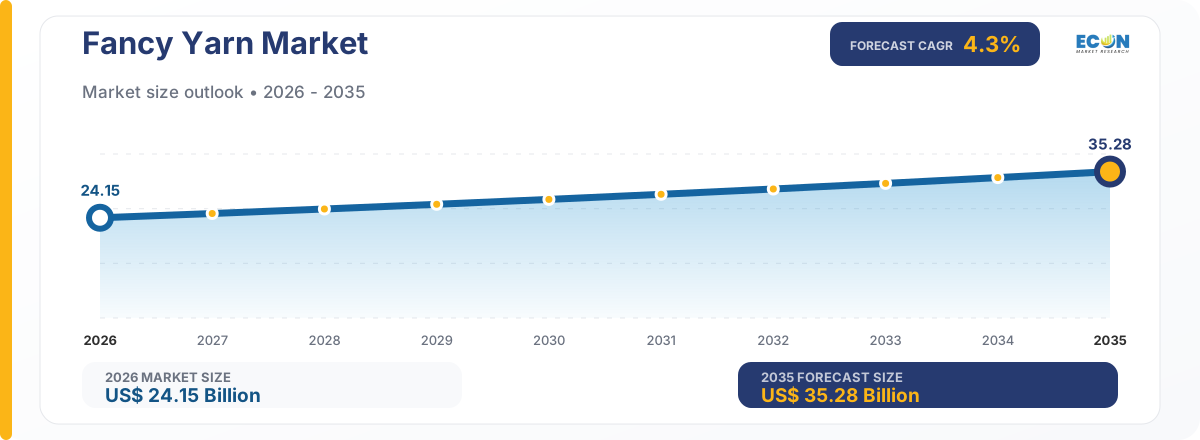
As per Econ Market Research analysis, the Global Fancy Yarn Market reached a valuation of US$ 24.15 Billion in 2026 and is anticipated to grow to US$ 35.28 Billion by 2035, at a CAGR of 4.3% during the forecast timeline 2026–2035. The base year considered is 2025.
The Fancy Yarn refer to complex network of threads, including different yarns that are made with special effects to make fabrics look more beautiful. Fancy yarns stand out because of their interesting textures, colours, and patterns, which make textiles look and feel better. These yarns are made to meet the changing needs of the fashion and Textile industries, where being creative and coming up with new ideas is really important. Fancy yarns give designers and makers a lot of choices, from bouclé, to chenille, to make clothes, furniture, and home textiles that are really attractive.
Over the past few years, the Global Fancy Yarn market has experienced steady growth due to an increasing consumer inclination towards unique and trendy products. This shift is partly driven by the significant impact of social media in spreading trends quickly, encouraging consumers to look for distinctive and appealing designs. Moreover, the availability of fancy yarn products through various online retail platforms has broadened the global reach, giving consumers access to a wide range of choices. With the rising importance of sustainability, manufacturers are now more focused on utilizing eco-friendly materials and production methods to meet the growing demand for ethically sourced and environmentally friendly goods. Even though the Global Fancy Yarn market faces obstacles like changing raw material costs and shifting consumer tastes, it is set to keep growing due to advancements and inventiveness in the textile sector.
Fancy Yarn Dynamics
The Global Fancy Yarn market is constantly changing due to various factors such as consumer preferences, technological improvements, and economic changes. Consumer tastes and fashion trends dictate the demand for fancy yarns, as people look for special and attractive fabrics to showcase their individual style. There is also a rising emphasis on sustainability and ethical practices in the market, leading manufacturers to use eco-friendly materials and methods to meet the changing demands of consumers.
Modern advancements in technology, like improved spinning methods and digital printing for yarn, are changing the fancy yarn sector by allowing companies to make more detailed and unique designs with better accuracy and efficiency. This not only improves the quality of products but also makes production faster and cheaper. Economic elements such as material costs, currency changes, and global conflicts also play a role in the industry, affecting the way supply chains work and how prices are set. Even with these difficulties, the Global Fancy Yarn market is growing due to ongoing efforts to be creative, innovative, and sustainable in the textile field.
Fancy Yarn Drivers
Increasing Consumer Demand for Unique Textiles
The increasing demand for unique and stylish products is a key factor driving the Global Fancy Yarn market. Consumers in the fashion and home decor industries are looking for textiles that are different and showcase their personal style choices. Fancy yarns, which come in a variety of textures, colours, and patterns, allow designers and manufacturers to create visually appealing products that meet these needs. With social media platforms influencing consumer preferences, there is a growing desire for distinctive textiles that will continue to fuel growth in the fancy yarn market.
Technological Advancements in Yarn Manufacturing
The Global Fancy Yarn market is experiencing growth due to advancements in yarn manufacturing processes. Techniques like air-jet spinning and compact spinning are enhancing the quality and efficiency of fancy yarn production. Digital yarn printing technology is allowing for precise and intricate designs to be printed on yarns, giving designers more creative options. These technological improvements are not only enhancing product quality but also boosting production capabilities, leading to reduced lead times and costs.
Fancy Yarn Restraints:
Fluctuating Raw Material Prices
The Global Fancy Yarn market faces challenges due to fluctuations in raw material prices like cotton, wool, and synthetic fibres. Factors such as supply and demand shifts, weather conditions, and geopolitical tensions can lead to unstable prices, affecting production costs and profits for manufacturers.
High Manufacturing Costs and Limited Scalability
The high manufacturing costs associated with fancy yarn production, coupled with limited scalability compared to conventional yarns, present challenges for market growth. The intricate designs and specialty effects characteristic of fancy yarns require complex manufacturing processes and specialized equipment, which can drive up production costs. Additionally, the customization and small-batch production often associated with fancy yarns can limit scalability and hinder economies of scale.
Fancy Yarn Opportunities:
Growing Demand for Sustainable and Eco-Friendly Yarns
The rising awareness among consumers about environmental issues and sustainability is creating a big chance for the Global Fancy Yarn market. With more people looking for ethically sourced and eco-friendly products, there is a higher need for fancy yarns made from sustainable materials and produced using environmentally conscious methods. Manufacturers can take advantage of this opportunity by using eco-friendly fibres like organic cotton, recycled polyester, and biodegradable materials, and integrating sustainable production practices into their supply chain.
Segment Overview
By Raw Material
By raw materials, is segmented into synthetic fibres such as polyester, nylon, and acrylic, offer manufacturers versatility in terms of colour, texture, and performance characteristics. Synthetic fibres can imitate natural fibres in appearance and texture, often at a lower cost and with less maintenance. However, natural fibres like cotton, wool, and silk are favoured for their luxurious feel and eco-friendly appeal. Additionally, natural fibres have properties like moisture-wicking and temperature regulation, making them perfect for various high-end yarn uses.
By Product Type
By product types, the market is segmented into loop yarns feature loops along their length, creating a textured and three-dimensional surface that adds visual interest to fabrics. Knop yarns have unique irregularly shaped protrusions known as ',knops', along the yarn strand, giving textiles a whimsical and playful touch. Chenille yarns are soft and fuzzy in texture, commonly used for upholstery and decorative trims due to their luxurious look. Gimp yarns have a coiled or twisted construction that adds structure and embellishment to fabrics, especially in Embroidery and decorative stitching.
By Application
By applications, the market is segmented into home furnishing represents a significant market section for fancy yarns, including upholstery fabrics, curtains, carpets, and decorative pillows. The unique textures and vibrant colours of fancy yarns have the power to elevate simple home decor into stunning pieces that elevate the visual charm of living areas. Within the textile industry, fancy yarns are a key component in clothing and fashion accessories, spanning from cozy sweaters and chic Scarves to trendy handbags and stylish hats.
The flexibility of fancy yarns grants designers the ability to craft unique and cutting-edge attire that catches the eye in a saturated market. Moreover, fancy yarns serve a variety of purposes in diverse fields such as automotive interiors, industrial textiles, and crafts, where their decorative and practical attributes are highly sought after.
Fancy Yarn Overview by Region
In the fancy yarn industry, North America and Europe are considered mature markets due to high demand for quality and stylish textiles. These regions have a strong textile industry, refined consumer tastes, and a focus on innovation and sustainability. On the other hand, Asia Pacific countries like China, India, and Japan are becoming key players in the fancy yarn market. This growth is driven by industrialization, urbanization, and a growing middle-class population with more disposable income.
The region boasts a large manufacturing base, ample raw materials, and a skilled workforce, positioning it as a centre for textile production and exports. Latin America, such as Brazil and Mexico, plays a significant role in the global fancy yarn market due to its dynamic fashion industry and increasing interest in distinctive and stylish textiles. The Middle East and Africa also have a growing market for fancy yarns, driven by factors like rising investments in textile production, higher consumer spending on luxury items, and a preference for high-quality fabrics.
Fancy Yarn Market Competitive Landscape
Major companies in the market include yarn manufacturers such as Coats Group plc, Unifi, Inc., Indorama Ventures Public Company Limited, and Nilit Ltd., among others. These companies compete based on factors such as price, product range, distribution network, and brand reputation. Additionally, strategic partnerships, mergers, and acquisitions are common strategies employed by players to expand their market presence and gain a competitive edge. With a focus on meeting evolving consumer preferences and sustainability requirements, companies are investing in research and development to develop eco-friendly fibres and production processes. Furthermore, collaborations with fashion designers and textile manufacturers are facilitating the creation of innovative and trendsetting fancy yarn products.
Fancy Yarn Market Leading Companies:
Coats Group plc
Unifi, Inc.
Indorama Ventures Public Company Limited
Nilit Ltd.
Toray Industries, Inc.
Shandong Shengrui Group Co., Ltd.
Huvis Corporation
Filatura C4 S.p.A.
Supreme Corporation
Koninklijke Ten Cate BV
Fancy Yarn Report Segmentation
Fancy Yarn Market Report Scope & Segmentation
| Attributes | Details |
|---|---|
| Market Size (Current)Current market valuation | US$ 24.15 Billion in 2026 |
| Market Size (Forecast)Projected market valuation | US$ 35.28 Billion in 2035 |
| Growth RateCompound Annual Growth Rate | CAGR of 4.3% from 2026 to 2035 |
| Forecast PeriodAnalysis timeline | 2026 – 2035 |
| Base YearReference year for analysis | 2025 |
| Historical Data AvailablePast market data availability | Yes |
| Regional ScopeGeographical coverage | Global |
| Segments CoveredMarket segments analyzed | By Type
By Application
|
Frequently Asked Questions
Common questions about this report
The study period covers historical insights and forecast projections for the period 2026-2035.
About the Author
Market research expert with years of industry experience

Dipali Bhingare serves as the Market Research Director at Econ Market Research. With a focus on translating complex global economic shifts into actionable business intelligence, she oversees the strategic direction of comprehensive market studies. Her work empowers organizations to navigate volatile industries through data-driven forecasting and deep-dive competitive analysis.