

Drone Logistics and Transportation Market
Drone Logistics and Transportation Market Size, Share, Trends, Growth, and Industry Analysis, By Solution (Warehousing, Shipping, Infrastructure, Software), By Sector (Commercial, Military), By Drone Type (Freight Drones, Passenger Drones, Ambulance Drones), Regional Analysis and Forecast Period 2026-2035
Market Overview
As per Econ Market Research analysis, the Global Drone Logistics and Transportation Market was estimated at US$ 3.66 Billion in 2026 and is forecast to attain US$ 147.27 Billion by 2035, expanding at a CAGR of 50.2% between 2026 and 2035. The base year for the study is 2025.
Drone Logistics and Transportation Market Size 2025-2035 (USD Billion)

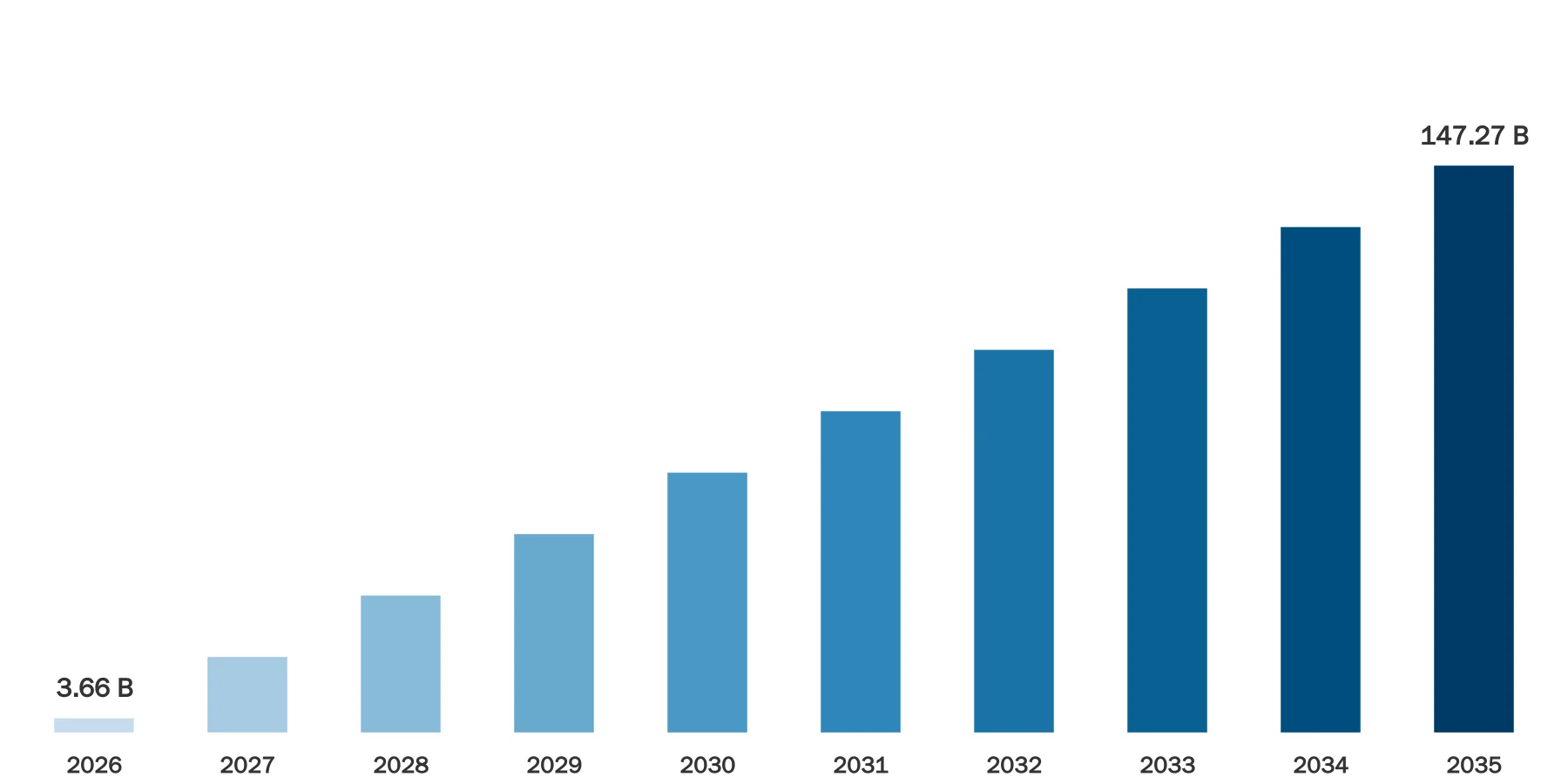
Source: Econ Market Research
Drone technology is revolutionizing the transfer of goods and services in the rapidly evolving field of drone logistics and transportation. Unmanned aerial vehicles (UAVs) offer several advantages compared to traditional transportation methods, including speed, cost-effectiveness, and accessibility. Drones can reach remote locations that are often challenging for conventional vehicles to access, and they can navigate through crowded areas with ease. In the logistics industry, drones are being utilized for last-mile deliveries, enabling businesses to enhance efficiency and customer satisfaction. Additionally, drones play a critical role in emergency response scenarios by facilitating the delivery of relief and medical supplies to disaster-affected areas.
Drone Logistics and Transportation Market Dynamics
The increasing demand for faster and more efficient delivery services is a significant driver in the growth of the drone logistics industry. Drones offer the advantage of swift and reliable deliveries, particularly for last-mile logistics, resulting in reduced transit times and increased customer satisfaction. Moreover, the need for cost-effective transportation solutions has contributed to the expansion of the industry, as drones require less infrastructure investment compared to traditional forms of transportation. Advancements in drone technology, such as improved payload capacity and longer flight times, have further unlocked the potential of drones for various logistical applications. Additionally, favorable regulatory frameworks and government initiatives supporting the commercial use of drones have facilitated the industry's growth and adoption of drone-based logistics solutions.
Drone Logistics & Transportation Market Drivers
Technological Advancements
Advances in drone technology, including improved battery life, payload capacity, and autonomous navigation systems, have expanded the capabilities of drones for logistics and transportation. These advancements have made drones more reliable, safe, and capable of carrying heavier payloads over longer distances.
Restraints
Limited Payload Capacity
Drones have limitations in terms of the payload they can carry. While small packages and lightweight items can be delivered efficiently, transporting bulky or heavy goods remains a challenge. This restricts the scope of drone logistics to certain industries and limits its overall market potential.
Opportunities
Healthcare and Emergency Services
Drones have the potential to revolutionize healthcare logistics by enabling the rapid delivery of medical supplies, Vaccines, and organs for transplantation. In emergency situations, drones can provide critical support by delivering life-saving equipment and supplies to remote or inaccessible areas.
Segment Overview
By Component
Based on the component, the global drone logistics &, transportation market is divided into hardware, software, and services. The hardware category dominates the market with the largest revenue share of around 52.5% in 2022. Drone hardware components such as drones, batteries, propulsion systems, sensors, and cameras are required for physical functioning. As drone technology advances, so does the demand for high-quality gear with greater performance and capabilities. Longer flight periods, better cargo capacity, and improved navigation systems are examples of how hardware innovation fosters the development and acceptance of new drone technology.
By Application
Based on application, the global drone logistics &, transportation market is divided into warehouse &, storage management and transportation management. The transportation management dominates the market with the largest revenue share of around 32.5% in 2022. As drone technology is used more widely, there will be a larger demand for effective drone Fleet Management and coordination. Route optimization, delivery tracking, and regulatory compliance will all be greatly helped by transportation management technologies.
By End-Use
Based on end-use, the global drone logistics &, transportation market is divided into commercial and military. The military category dominates the market with the largest revenue share of around 62.5% in 2022. Military organizations throughout the world were among the first to use drone technology for a variety of purposes, including surveillance, reconnaissance, and combat operations. The military industry has made enormous investments in the development and deployment of sophisticated drones, propelling it to market domination over the forecast period.
Drone Logistics & Transportation Market Overview by Region
By Region the global drone logistics & transportation market has been segmented into North America, Europe, Asia-Pacific, and the Rest of the World. North America holds the largest market share, accounting for approximately 43.5% of the global drone logistics & transportation market in 2022. The region boasts numerous influential companies and technological innovators in the drone industry, driving the development and adoption of advanced drone logistics solutions. With a well-established e-commerce ecosystem, there is a high demand for efficient and prompt delivery services in North America. The region also benefits from a robust regulatory framework that enables the integration of drones into commercial operations. Supported by a large consumer base, favorable infrastructure, and strong logistics capabilities, North America provides an ideal environment for the expansion of drone logistics and transportation services. These factors collectively position North America as a prominent market leader in the drone logistics & transportation industry.
Drone Logistics & Transportation Market Competitive Landscape
In the global drone logistics & transportation market, several key players dominate the industry and hold a strong regional presence. These influential companies are dedicated to continuous research and development efforts and actively engage in strategic growth initiatives such as product creation, launches, partnerships, and joint ventures. By pursuing these tactics, they aim to enhance their market position and expand their customer base, securing a significant portion of the market share.
Key Players
Zipline International Inc.
Deutsche Post DHL Group
Workhorse Group Incorporated
Hardis Group
Flytrex Inc.
PINC Solutions
FedEx Corporation
Drone Delivery Canada
Amazon.com Inc.
Wing Aviation LLC
United Parcel Service of America, Inc.
Drone Logistics & Transportation Market Recent Developments
In March 2023, Zipline has introduced its latest aircraft, known as the P2 Zip or Platform 2, aimed at making swift airborne deliveries a convenient and commonplace service for consumers throughout the United States, including densely populated urban areas. The P2 Zip drone is designed to transport payloads weighing up to eight pounds, covering distances of up to ten miles, and delivering items to specific destinations, such as a table or porch, even in compact locations.
Drone Logistics and Transportation Market Report Scope & Segmentation
| Attributes | Details |
|---|---|
Market Size (Current) | US$ 3.66 Billion in 2026 |
Market Size (Forecast) | US$ 147.27 Billion in 2035 |
Growth Rate | CAGR of 50.2% from 2026 to 2035 |
Forecast Period | 2026 – 2035 |
Base Year | 2025 |
Historical Data Available | Yes |
Regional Scope | Global |
Segments Covered | By Solution
By Sector
By Drone Type
|
Frequently Asked Questions
Common questions about this report
The study period covers historical insights and forecast projections for the period 2026-2035.
About the Author
Market research expert with years of industry experience

Dipali Bhingare serves as the Market Research Director at Econ Market Research. With a focus on translating complex global economic shifts into actionable business intelligence, she oversees the strategic direction of comprehensive market studies. Her work empowers organizations to navigate volatile industries through data-driven forecasting and deep-dive competitive analysis.
Related Reports
Explore more market insights from the same category