

Defence Electronic Market
Defence Electronic Market Size, Share, Trends, Growth, and Industry Analysis, By System Type (Radar andamp; Sensors, Electronic Warfare, C4ISR, Optronics), By Platform (Airborne, Land, Naval, Space), By Component (Hardware, Software), Regional Analysis and Forecast Period 2026-2035
Market Overview
As per Econ Market Research analysis, the Global Defence Electronic Market size amounted to US$ 195.38 Billion in 2026 and is anticipated to grow to US$ 303.54 Billion by 2035, recording a CAGR of 5.02% during 2026–2035. The base year taken for analysis is 2025.
Defence Electronic Market Size 2025-2035 (USD Billion)

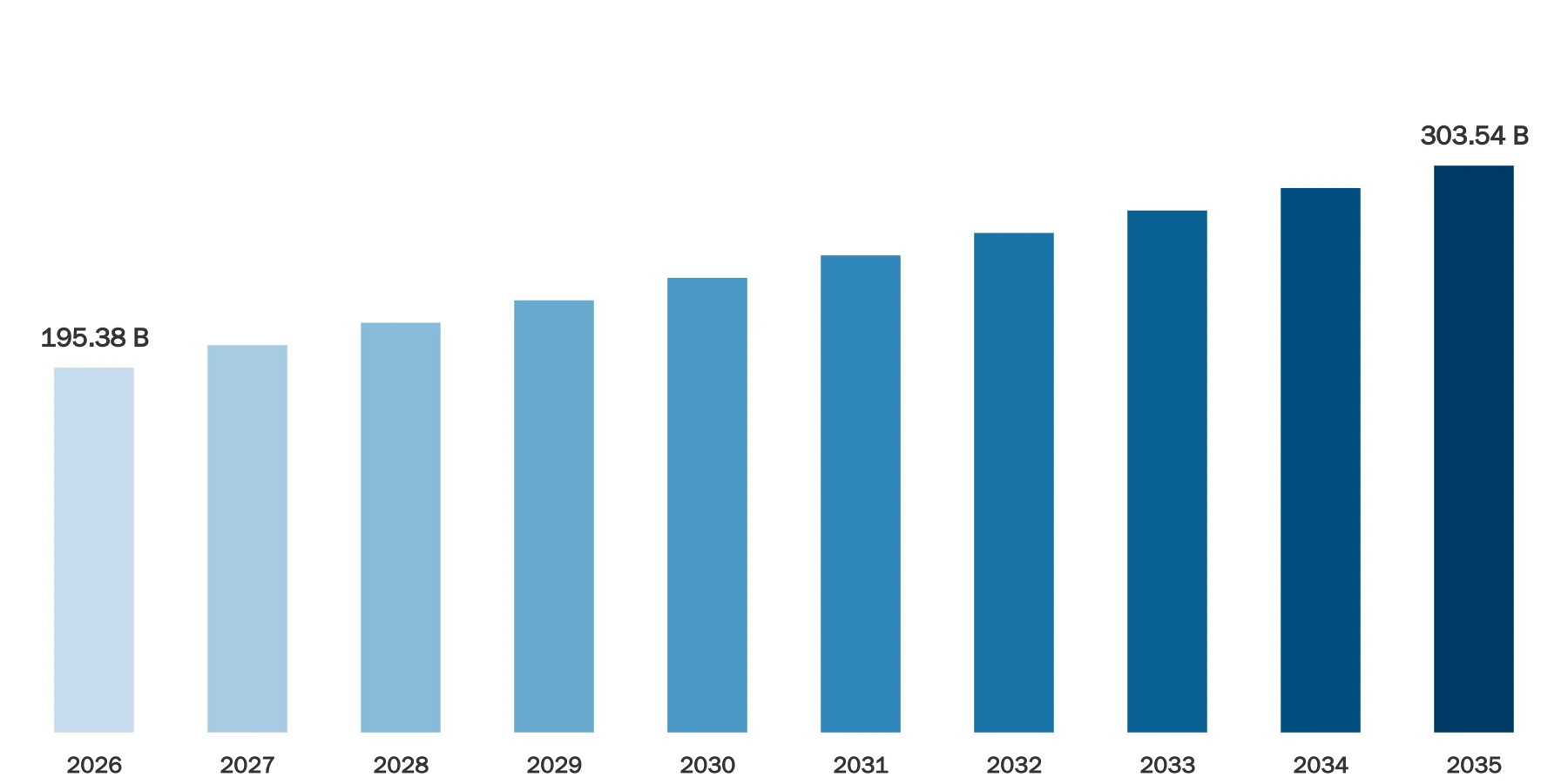
Source: Econ Market Research
Defense electronics refers to electronic components and systems that are specifically designed for technological superiority in defense setup. It provides robust, high performance electronic detection, electronic protection, and electronic attack capabilities to support the success of missions and minimize casualties. Furthermore, the electronic solutions are developed by multi-disciplinary teams of engineers, in collaboration with commercial and academic counterparts.
Defence Electronic Drivers
Increasing adoption of integrated defense electronic technologies
Increasing adoption of integrated defense electronic technologies for the electrical circuit is used by the military and police for defence purposes. In addition, the use of integrated defense electronics products provides multiple advantages, such as real-time decision-making, remote operations, and reprogramming of systems for defense against new and emerging threats. Armies, navies and air forces have conducted radar electronic warfare to deny, protect against and/or exploit the adversary use of radar systems. Thus, driving demand of the global defense electronic market.
Opportunities
Growing Artificial Intelligence (AI) Investment Activities
Militaries around the world are increasingly viewing AI as a critical component of their long-term tactics and planning. The largest military firms are one of the most important channels for integrating emerging technologies such as AI-enabled technology into defense systems and platforms. With tech behemoths like Amazon and Google at the forefront of AI innovation, big military firms are under pressure to increase their innovation-related operations in order to keep up with the larger commercial sector. In the defense electronics sector, AI investment activities primarily focus on autonomous systems, Cyber Security, data analysis and intelligence, training and simulation, predictive maintenance, and communication and networking. Therefore, will create growth opportunities for the target market.
Restraints
Effects of Geopolitical Uncertainties on the Defense Electronics Industry
Uncertainties in geopolitics have a direct impact on defense spending, international trade, and technology transfer. They put a pressure on international defense partnership programs. Diverging national interests and concerns about technology sharing provide a variety of problems for international defense cooperation. Trade wars and political sanctions have the potential to disrupt the global supply chain for defense electronics components and supplies. The reliance on suppliers involved in geopolitical crises results in possible supply constraints and increased shortages. This is expected hamper the growth of the target market.
Segment Overview
By Vertical
Based on vertical, the global defence electronic market is divided into navigation, communication, display, c4isr, electronic warfare, radar, and optronics. The communication segment dominated the global defence electronic market in 2022. This is attributed to communication systems include radio communication, satellite communication, and secure data networks, are critical for permitting real-time information sharing between military people and units. It is key for rising awareness about the situation and self-defense. During the forecast period, the radar segment is expected to increase rapidly.
By Component
Based on component, the global defence electronic market is divided into hardware, software. The hardware segment dominated the defence electronic market with the largest revenue share in 2022. This due to the hardware includes several equipment and systems, which are significant to the development &, operation of electric defense. The hardware component facilitates the development of advanced defense systems and enable capabilities including commutations, surveillance, detection and control. Therefore, increasing demand of this segment in the global market.
By System
Based on system, the global defence electronic market is fragmented into airborne, marine, land, space. The airborne segment dominated the defence electronic market in 2022, owing to the avionics systems are important components of the segment, which includes flight control systems for aircraft control, navigation, communications and tracking. In addition, the MIL-STD-461 specification is widely used as a general basis for testing defence electronics. Voltage spike tests with 150 ns duration as defined in MIL-STD-461C are still relevant for testing airborne power systems. This is expected to fuel growth of this segment target market.
Defence Electronic Overview by Region
North America dominated the defence electronic market in 2022. This is attributed to increasing demand of the US defense electronics in this region. In response to the government and its partners operating in an increasingly complicated security environment, defense technology is rapidly evolving. The defense information systems agency and the department of defense information network are working to repurpose cutting-edge technologies including artificial intelligence, development, security, and operations, as well as zero-trust assets, to defend the Defense Department',s global network. These all factor affecting the growth of the defence electronic market in this region.
Defence Electronic Competitive Landscape
In the global defence electronic market, a few major players exert significant market dominance and have established a strong regional presence. These leading companies remain committed to continuous research and development endeavors and actively engage in strategic growth initiatives, including product development, launches, joint ventures, and partnerships. By pursuing these strategies, these companies aim to strengthen their market position, expand their customer base, and capture a substantial share of the market.
Key Players:
Lockheed Martin Corporation
Northrop Grumman Corporation
Raytheon Technologies Corporation
BAE Systems plc
Thales Group
General Dynamics Corporation
Elbit Systems Ltd.
Airbus SE
Honeywell International Inc.
L3Harris Technologies, Inc.
Saab AB
Curtiss-Wright Corporation
Bharat Electronics Limited
Defence Electronic Recent Developments
In November 2023, BAE Systems has created specialized microelectronics tailored for advanced radar, electronic warfare, and communication applications in the next generation.
Defence Electronic Market Report Scope & Segmentation
| Attributes | Details |
|---|---|
Market Size (Current) | US$ 195.38 Billion in 2026 |
Market Size (Forecast) | US$ 303.54 Billion in 2035 |
Growth Rate | CAGR of 5.02% from 2026 to 2035 |
Forecast Period | 2026 – 2035 |
Base Year | 2025 |
Historical Data Available | Yes |
Regional Scope | Global |
Segments Covered | By System Type
By Platform
By Component
|
Frequently Asked Questions
Common questions about this report
The study period covers historical insights and forecast projections for the period 2026-2035.
About the Author
Market research expert with years of industry experience

Dipali Bhingare serves as the Market Research Director at Econ Market Research. With a focus on translating complex global economic shifts into actionable business intelligence, she oversees the strategic direction of comprehensive market studies. Her work empowers organizations to navigate volatile industries through data-driven forecasting and deep-dive competitive analysis.
Related Reports
Explore more market insights from the same category