

Animal Disinfectants Market
Animal Disinfectants Market Size, Share, Trends, Growth, and Industry Analysis, By Type (Iodine Compounds, Chlorine-based, Hydrogen Peroxide, Peracetic Acid), By Form (Liquid, Powder, Foam), By Application (Dairy, Poultry, Swine, Aquaculture), By End-User (Livestock Farms, Veterinary Clinics), Regional Analysis and Forecast Period 2026-2035
Animal Disinfectants Market Overview
As per Econ Market Research analysis, the Global Animal Disinfectants Market generated revenue of US$ 4.48 Billion in 2026 and is forecast to achieve US$ 8.67 Billion by 2035, at a CAGR of 7.63% during the study period 2026–2035. The base year considered is 2025.
Animal Disinfectants Market Size 2025-2035 (USD Billion)

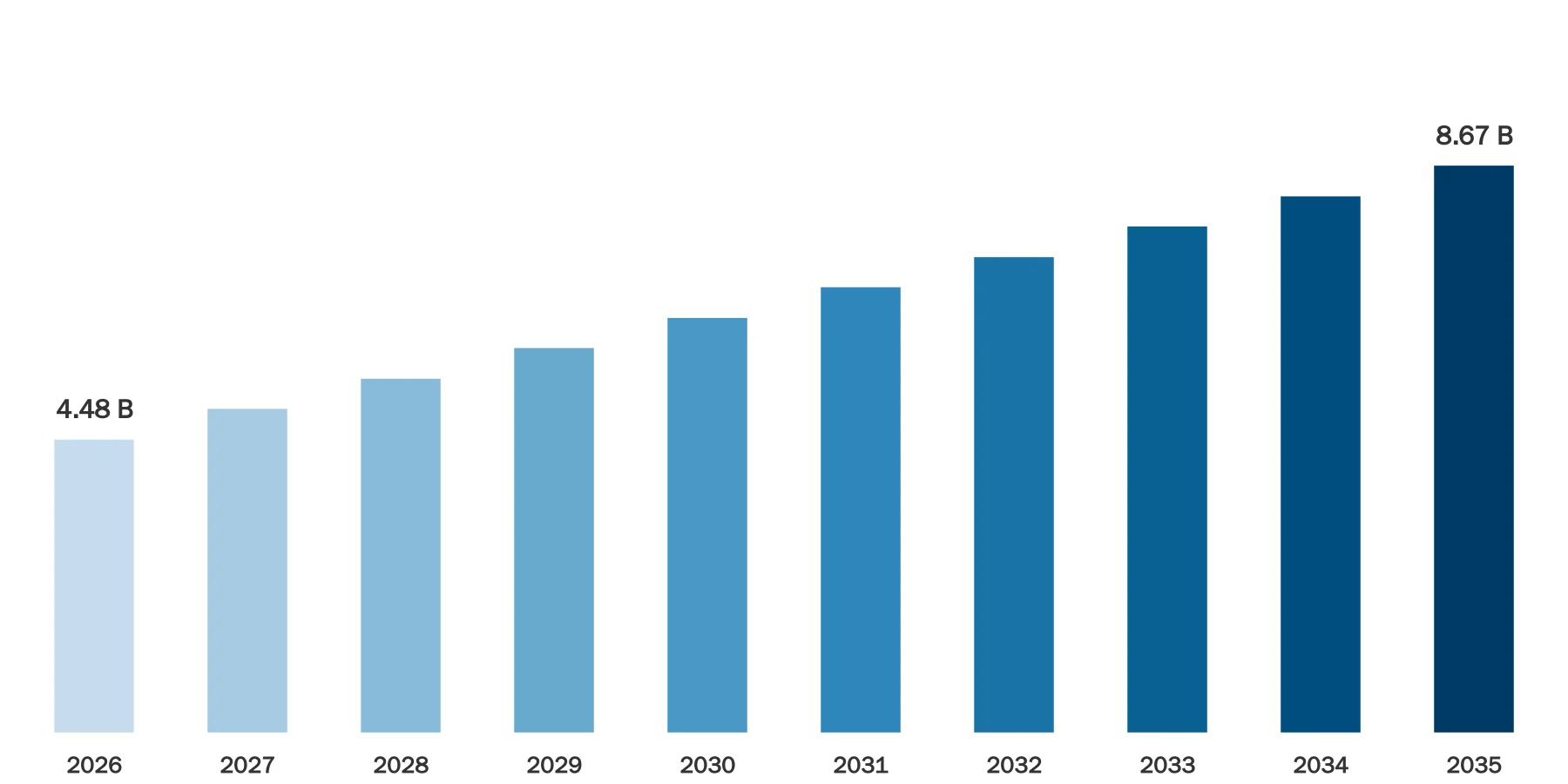
Source: Econ Market Research
Animal disinfectants are critical for maintaining hygiene and minimizing the risk of infection in livestock, poultry, and other animals in a variety of settings, including farms, veterinary clinics, and food processing plants. The market for animal disinfectants has expanded significantly as a result of growing worries about animal health, increased awareness of zoonotic illnesses (diseases passed from animals to people), and stronger government rules on biosecurity and sanitation in animal-rearing environments. Iodine, phenols, and chlorine-based disinfectants are among the most important product types in this market, as they are used to clean surfaces, water systems, and Animal Feed. Major players always create new formulas that are more effective and environmentally friendly.
Dynamic Insights
With growing concerns about disease outbreaks like avian flu, swine flu, and African swine fever, the cattle industry has realized the importance of adequate disinfection measures. This has resulted in stricter biosecurity measures, which are reinforced by government rules requiring good sanitation in animal-rearing facilities. As a result, the need for animal disinfectants continues to increase.
In addition to regulatory challenges, the expansion of the livestock industry and expanding worldwide demand for animal products including meat, dairy, and eggs are major growth drivers. This trend is particularly significant in emerging economies, where animal production is quickly increasing to fulfil the demands of growing populations. However, the market faces challenges such as fluctuating raw material prices and the potential for the development of chemical resistance in pathogens, which could impact the effectiveness of disinfectants over time. Moreover, environmental concerns related to the use of certain disinfectant chemicals are pushing manufacturers to develop eco-friendly alternatives.
Drivers Insights
Growing Awareness of Zoonotic Diseases and Biosecurity Measures
The rising incidence of zoonotic illnesses (those that can be transmitted from animals to humans) has raised global concerns about animal health and welfare. Disease outbreaks such as avian flu, swine flu, and African swine fever have raised awareness among livestock owners and industry stakeholders about the significance of adequate hygiene and sanitation practices. This has resulted in tougher biosecurity measures on farms, veterinary clinics, and food processing plants, increasing the demand for effective animal disinfectants. Governments and international organizations are also playing a crucial role by creating legislation requiring the use of disinfectants in animal-rearing areas to avoid disease outbreaks and assure food safety.
Expansion of the Livestock Industry and Rising Demand for Animal Products
The livestock industry is experiencing significant growth globally, driven by increasing demand for animal products such as meat, dairy, and eggs. This expansion is particularly strong in emerging markets, where rising incomes and population growth are leading to higher consumption of animal-based foods. As livestock production scales up to meet this demand, maintaining animal health becomes increasingly important, further fuelling the need for disinfectants. The use of disinfectants helps reduce the risk of disease outbreaks, ensuring the health and productivity of animals, which is essential for sustaining high levels of production and meeting market demands.
Restraints Insights
Fluctuating Raw Material Costs
The cost of raw materials used in animal disinfection manufacture, such as chemicals and active components, can be quite volatile. Variations in the prices of these materials can have a major impact on overall manufacturing costs, making it difficult for manufacturers to maintain consistent pricing for their products. This volatility can have an impact on profit margins, especially for smaller firms who may struggle to absorb cost rises. Furthermore, growing raw material costs can result in higher pricing for end users, thus limiting market expansion if farmers and animal owners cannot afford more expensive disinfection treatments.
Development of Chemical Resistance in Pathogens
Over time, repeated use of certain disinfectants might cause microorganisms to develop chemical resistance, making them less efficient at managing disease outbreaks. This phenomena presents a substantial challenge to the animal disinfection business, necessitating the development of new, more effective formulations to tackle resistant types of bacteria and viruses. The constant demand for research and innovation in this field can be expensive and time-consuming, thereby impeding industry growth. Furthermore, the potential of chemical resistance may inhibit some farmers and industry stakeholders from relying excessively on disinfectants, preferring instead alternative ways of disease control.
Opportunities Insights
Innovation in Eco-Friendly and Sustainable Disinfectant Solutions
Growing environmental concerns about the usage of traditional chemical disinfectants are driving manufacturers to create more environmentally friendly and sustainable alternatives. There is an increasing demand for disinfectants that are not only effective but also have a low environmental impact, such as those derived from natural or biodegradable sources. This trend creates a substantial potential for businesses who can invent and introduce green disinfection products that meet both regulatory requirements and consumer desires. Furthermore, such items may appeal to markets with severe environmental regulations, opening up new growth opportunities for businesses focusing on sustainability.
Segment Analysis
By Product
The Product segment of the Global Animal Disinfectants market includes a variety of disinfectants used to maintain hygiene in animal environments. Alcohol-based disinfectants are commonly used due to their quick action and effectiveness against a broad spectrum of microorganisms. Iodine-containing disinfectants are favoured for their potent antimicrobial properties and are widely used in veterinary and agricultural settings.
Aldehyde disinfectants, known for their ability to inactivate viruses, bacteria, and fungi, are often utilized in environments where comprehensive disinfection is critical. Peroxide disinfectants are gaining popularity due to their strong oxidizing properties, which make them highly effective in eliminating pathogens. Quaternary ammonium compounds are commonly used for their low toxicity and effectiveness in a variety of applications. Lactic acid disinfectants, which are biodegradable and less corrosive, are seen as a safer alternative, particularly in sensitive environments.
By Animal Type
The Animal Type segment categorizes the market based on the type of animals for which the disinfectants are used. Livestock animals, including cattle, poultry, swine, and sheep, are a primary focus, as maintaining hygiene in large-scale farming operations is crucial to prevent disease outbreaks and ensure productivity. Disinfectants in this segment are used to clean animal housing, equipment, and feed areas, ensuring that the animals remain healthy.
Companion animals, such as dogs, cats, and horses, also require disinfectants, particularly in veterinary clinics, pet boarding facilities, and homes, to protect them from infections. The rising trend of pet ownership globally and the increasing emphasis on pet health are driving demand in this segment. Both livestock and companion animals require specialized disinfectants to address their unique needs and environments.
By Form
The Form segment includes different forms in which disinfectants are available, catering to the varying needs of users. Liquid disinfectants are the most commonly used form due to their ease of application and versatility across various surfaces and environments. They are particularly effective in covering large areas and are widely used in both livestock and companion animal settings. Powder disinfectants, on the other hand, are favoured for their longer shelf life and ease of storage. They are often used in situations where liquids might not be practical, such as in large storage areas or when treating water systems.
By Application
Application segment highlights the various settings in which animal disinfectants are used. Dairy farming is a major application area, as maintaining hygiene in milking parlors and animal housing is essential to prevent mastitis and other infections in cattle. Poultry farms also require rigorous disinfection to control diseases like avian flu and salmonella, which can spread rapidly in densely populated environments.
Aquaculture is another important application, where disinfectants are used to maintain water quality and prevent the spread of diseases among fish and other aquatic animals. Swine farming involves the use of disinfectants to control diseases like African swine fever, which can have devastating effects on pig populations. Equine facilities, including stables and riding schools, use disinfectants to protect horses from infections and maintain overall hygiene.
Regional Analysis
North America and Europe dominate the market due to their well-established agriculture sectors and strong biosecurity rules. In these places, an emphasis on disease prevention in cattle, along with government sanitation laws, has resulted in extensive disinfectant use. Furthermore, the existence of key industry players and excellent technological capabilities fuels market expansion in these domains.
Meanwhile, Asia-Pacific is emerging as a big growth zone as animal production expands rapidly and zoonotic illnesses become more widely known. Countries with major agricultural sectors, such as China and India, are increasing demand for animal disinfectants in order to assure food safety and meet rising animal product demand. Government initiatives to upgrade farming practices and improve biosecurity controls also contribute to market expansion in this region.
In Latin America and the Middle East &, Africa, the market is also witnessing growth, although at a relatively slower pace. These regions are experiencing increasing investments in livestock farming, particularly in Brazil and South Africa. However, challenges such as limited awareness and inconsistent regulatory enforcement may hinder faster adoption of disinfectants. Nonetheless, as these regions continue to develop their agricultural sectors and improve animal health standards, the demand for disinfectants is expected to rise steadily.
Competitive Landscape
Leading firms such as Neogen Corporation, Zoetis Inc., and Kersia lead the industry due to their wide product portfolios, powerful distribution networks, and ongoing investment in R&,D. These main firms prioritize innovation, developing new disinfection formulations that are not only effective against a wide range of infections but also ecologically benign. Furthermore, they use strategic partnerships, mergers, and acquisitions to grow their global market presence, particularly in emerging markets where demand for animal disinfectants is increasing.
In contrast, regional firms are gaining traction by providing low-cost solutions suited to local demands. These enterprises frequently concentrate on specialized geographies or animal species, enabling them to effectively compete in niche markets. For example, in Asia-Pacific and Latin America, smaller companies are capitalizing on the growing livestock industry by providing affordable and accessible disinfectants that meet local regulatory standards. Furthermore, regional players often emphasize customer service and customization, enabling them to build strong relationships with local farmers and veterinary clinics.
The market is also witnessing increasing competition from new entrants who are focusing on eco-friendly and sustainable disinfectant solutions. With rising environmental concerns, companies offering biodegradable or non-toxic disinfectants are gaining popularity, especially in markets with stringent environmental regulations like Europe and North America. However, the high costs associated with research, development, and compliance with regulatory standards pose challenges for smaller companies trying to compete with established giants.
List of Key Players:
Zoetis Inc.
PCC Group
Kersia Group
Steroplast Healthcare Limited
GEA Group
Fink Tech GmbH
Sanosil Ag
Neogen Corporation
Delaval Inc
Albert Kerbel GMBH
Stepan Company
G Sheperdanimal Health
Solvay Group
Recent Developments:
Jan 2023, Planet Pets, a company specializing in pet-care products, introduced Zap Kennel Wash, India',s first disinfectant specifically designed for pet owners. This product addresses odour issues and helps prevent the spread of deadly viruses among pets, making it ideal for use in veterinary clinics, hospitals, and pet-friendly households.
Global Animal Disinfectants Report Segmentation:
Animal Disinfectants Market Report Scope & Segmentation
| Attributes | Details |
|---|---|
Market Size (Current) | US$ 4.48 Billion in 2026 |
Market Size (Forecast) | US$ 8.67 Billion in 2035 |
Growth Rate | CAGR of 7.63% from 2026 to 2035 |
Forecast Period | 2026 – 2035 |
Base Year | 2025 |
Historical Data Available | Yes |
Regional Scope | Global |
Segments Covered | By Type
By Form
By Application
By End-User
|
Frequently Asked Questions
Common questions about this report
The study period covers historical insights and forecast projections for the period 2026-2035.
About the Author
Market research expert with years of industry experience

Related Reports
Explore more market insights from the same category