

Lubricants Market
Lubricants Market Size, Share, Trends, Growth, and Industry Analysis, By Base Oil (Mineral Oil, Synthetic Oil, Bio-based Oil), By Product Type (Engine Oil, Hydraulic Fluid, Metalworking Fluid, Gear Oil, Grease), By End-Use Industry (Automotive, Industrial, Construction, Marine), Regional Analysis and Forecast Period 2026-2035
Lubricants Market Overview
As per Econ Market Research analysis, the Global Lubricants Market generated revenue of US$ 173.81 Billion in 2026 and is forecast to achieve US$ 229.46 Billion by 2035, at a CAGR of 3.1% during the study period 2026–2035. The base year considered is 2025.
Lubricants Market Size 2025-2035 (USD Billion)

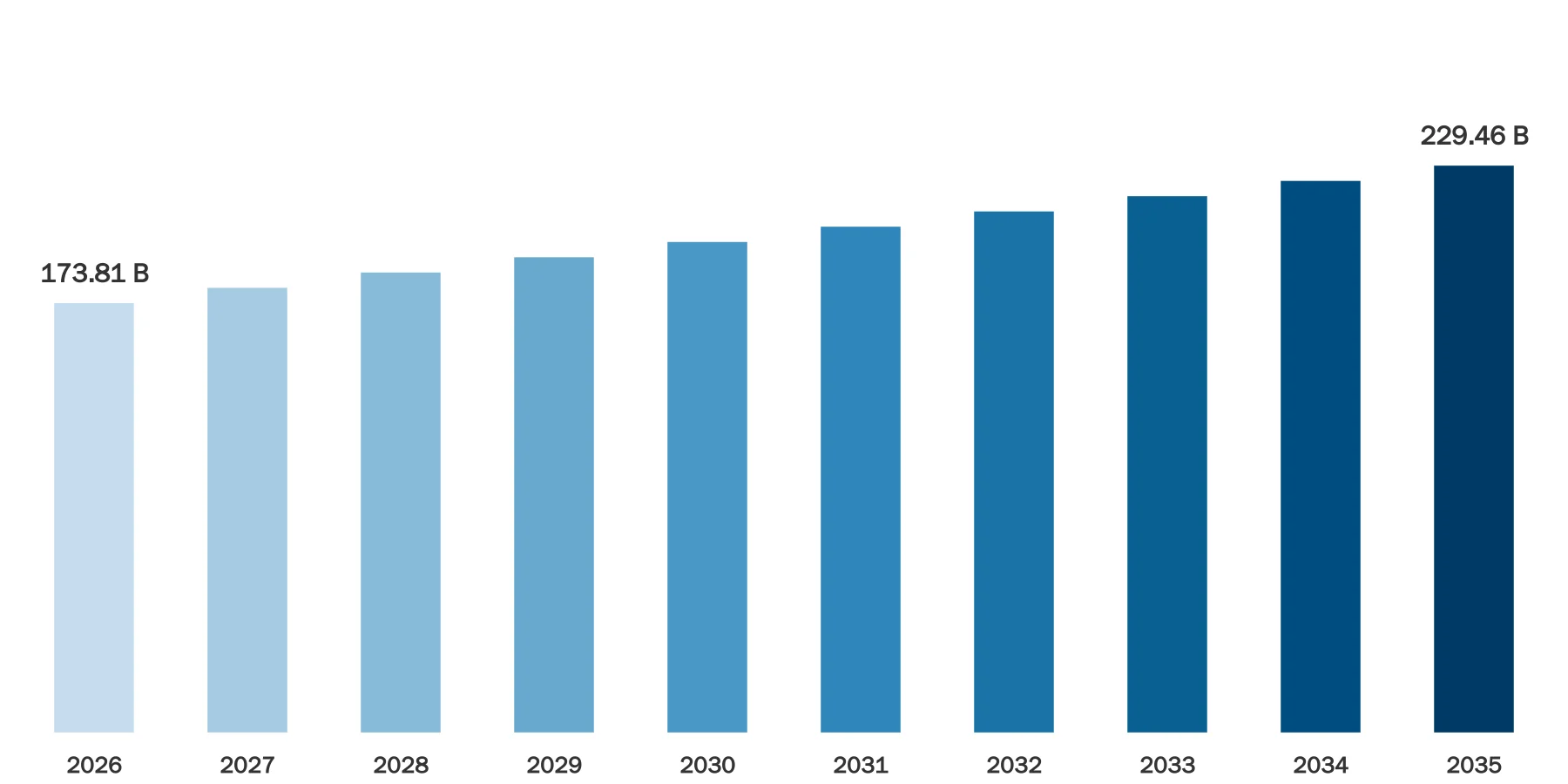
Source: Econ Market Research
Lubricants come in various forms such as oils, greases, and solid lubricants, and they play a crucial role in maintaining the efficiency and durability of mechanical systems across diverse sectors including automotive, industrial, marine, and aerospace. This market is driven by factors like increasing industrialization, growing automotive production, and rising demand for energy-efficient solutions. Additionally, stringent regulations regarding emissions and environmental concerns are pushing manufacturers towards developing eco-friendly lubricants.
The market is characterized by intense competition among key players who constantly innovate to introduce advanced lubricant formulations catering to evolving industry needs. Emerging trends like the adoption of synthetic and bio-based lubricants, along with the integration of IoT and digital technologies for predictive maintenance, are reshaping the landscape of the lubricants market.
Lubricants Dynamics
One key driver is the ever-expanding industrial sector, particularly in emerging economies, which generates high demand for lubricants across various applications such as manufacturing, construction, and transportation. Additionally, the booming automotive industry, fuelled by increasing vehicle production and sales worldwide, serves as a major catalyst for lubricant consumption. Moreover, the growing emphasis on energy efficiency and machinery optimization drives the adoption of advanced lubricant formulations designed to enhance performance and reduce friction-related losses.
However, because the petroleum business is intimately linked to the manufacture of lubricants, the market confronts issues including unpredictable crude oil prices. Changes in the price of oil can have a major effect on the cost of raw materials, which can have an impact on lubricant producers', pricing and profitability. Additionally, the market is changing due to sustainability issues and environmental restrictions, which is pushing producers to create environmentally friendly lubricant solutions. Furthermore, as electric drivetrains require less lubrication than internal combustion engines, the popularity of electric vehicles presents a long-term threat to the demand for conventional lubricants.
Lubricants Drivers
Rapid Industrialization in Emerging Economies
Rapid industrialization is occurring in emerging economies like China, India, and Brazil, which is causing an expansion in production across a range of industries. The increased demand for lubricants for machinery maintenance and optimization is a result of this industrialization boom. The necessity for effective lubrication to lower friction and wear increases as industries grow and update their machinery. As a result, lubricant producers stand to gain from this development by meeting the increasing need for high-performance lubricants designed for certain industrial uses.
Expanding Automotive Industry
The global automotive industry is experiencing robust growth, driven by factors such as rising disposable incomes, urbanization, and technological advancements. With the proliferation of vehicles on roads, there is a corresponding surge in demand for lubricants to ensure smooth operation and longevity of Automotive Components. Lubricants play a critical role in automotive applications, lubricating engines, transmissions, and other moving parts to minimize friction and wear.
Moreover, the automotive sector',s increasing focus on fuel efficiency and emissions reduction necessitates the development of specialized lubricants with advanced formulations to meet stringent performance requirements. Therefore, the expanding automotive industry presents a significant growth opportunity for lubricant manufacturers to innovate and supply products tailored to the evolving needs of vehicle manufacturers and consumers.
Lubricants Restraints:
Volatility in Crude Oil Prices
Crude oil serves as the main raw material used by the lubricants industry to make base oils and additives. Price fluctuations for crude oil can have a big effect on lubricant producers', cost of production, which can affect pricing and profitability. Furthermore, sudden fluctuations in oil prices can cause supply chains and procurement plans to break, which makes it difficult for businesses to control their operating expenses and profit margins. Lubricant makers may use hedging techniques, diversity of raw material suppliers, or strategic sourcing to lessen the negative effects of fluctuating oil prices.
Environmental Regulations and Sustainability Concerns
The lubricants market is facing challenges from the growing environmental rules that attempt to minimize the environmental impact of industrial activities and reduce emissions. Stricter guidelines are being imposed by regulatory authorities globally on the usage and composition of lubricants in an effort to lessen their negative effects on the quality of air and water. In addition, the market is demanding sustainable lubricant solutions with lower toxicity and biodegradability due to rising consumer awareness of environmental issues and preferences for eco-friendly products. Thus, there is pressure on lubricant makers to innovate and provide eco-friendly formulas while maintaining regulatory compliance.
Lubricants Opportunities:
Innovation in Synthetic and Bio-based Lubricants
The increasing focus on sustainability and environmental responsibility presents an opportunity for lubricant manufacturers to innovate and expand their product portfolios with synthetic and bio-based lubricants. These alternatives offer several advantages over conventional mineral-based lubricants, including superior performance, extended equipment life, and reduced environmental impact.
By investing in research and development, companies can develop innovative formulations that meet the evolving needs of end-users while aligning with sustainability goals and regulatory requirements. Moreover, the growing demand for bio-based lubricants derived from renewable sources such as plant oils and animal fats presents an opportunity for market differentiation and competitive advantage.
Segment Overview
By Type
By type, the market encompasses various categories catering to specific needs across different sectors. Automotive oils are tailored for lubricating engines, transmissions, and other automotive components, ensuring smooth operation and longevity. Industrial oils, including hydraulic oils, industrial gear oils, metalworking fluids, greases, and others, are crucial for machinery maintenance and optimization in manufacturing, construction, and other industrial applications.
Marine oils are designed to meet the demanding requirements of marine engines and equipment, providing protection against corrosion and wear in harsh marine environments. Process oils serve as raw materials or additives in various industrial processes, such as rubber and tire manufacturing, plastics processing, and Textile production, facilitating processing and enhancing product performance.
By Grade
Grade segmentation distinguishes lubricants based on their composition and manufacturing processes. Mineral lubricants are derived from crude oil through refining processes and are widely used due to their cost-effectiveness and availability. Synthetic lubricants are chemically synthesized from high-quality base stocks and offer superior performance in terms of temperature stability, oxidation resistance, and extended drain intervals, making them suitable for high-performance applications. Semi-synthetic lubricants combine mineral and synthetic base oils to achieve a balance between performance and cost-effectiveness, offering enhanced lubrication properties compared to pure mineral oils.
By Application
Application segmentation categorizes lubricants based on their intended usage across different industries. Automotive applications encompass lubrication needs in vehicles, including passenger cars, commercial vehicles, and off-highway equipment. Industrial applications span a wide range of sectors such as manufacturing, construction, mining, and agriculture, where lubricants are essential for equipment maintenance and operation. The ",others", category may include specialized applications in sectors such as aviation, rail, energy, and food processing, each with unique lubrication requirements tailored to their specific operating conditions and regulatory standards.
Lubricants Overview by Region
In mature markets such as North America and Europe, steady demand for lubricants is driven by established industrial sectors and a large automotive fleet. These regions also witness a growing preference for high-performance lubricants, including synthetic and bio-based formulations, driven by stringent environmental regulations and a focus on sustainability. Meanwhile, the Asia-Pacific region emerges as a key growth engine for the lubricants market, fuelled by rapid industrialization, urbanization, and a burgeoning automotive industry.
Countries like China and India, with their expanding manufacturing sectors and increasing vehicle ownership rates, represent significant opportunities for lubricant manufacturers. Moreover, rising disposable incomes and infrastructure development initiatives in the region further boost lubricant consumption across diverse applications. In regions such as Latin America, the Middle East, and Africa, demand for lubricants is driven by infrastructure projects, construction activities, and the growing transportation sector. Additionally, the presence of oil-producing nations in these regions ensures a steady supply of base oils and raw materials for lubricant production. However, market dynamics vary across regions, with factors like geopolitical tensions, currency fluctuations, and trade policies influencing market growth and investment decisions.
Lubricants Market Competitive Landscape
Major multinational corporations such as ExxonMobil, Shell, BP, Chevron, and Total dominate the market with extensive product portfolios, global distribution networks, and strong brand recognition. These industry giants invest heavily in research and development to develop advanced lubricant formulations that meet evolving industry standards and regulatory requirements. Additionally, they focus on expanding their presence in emerging markets through partnerships, acquisitions, and investments in local production facilities.
Alongside these industry leaders, a multitude of regional and niche players operate in the market, catering to specific market segments and niche applications. These companies frequently set themselves apart by providing specialty lubricant solutions designed for particular markets including renewable energy, food processing, and aerospace. Furthermore, technological developments are changing the competitive landscape by creating chances for creative start-ups and technology-driven disruptors to enter the market. Examples of these include the integration of IoT and digital technologies for predictive maintenance.
Lubricants Market Leading Companies:
Shell Royal Dutch Plc.
PetroChina Company Limited
BP plc
ExxonMobil Corporation
Total Group
Chevron Corporation
Valvoline LLC
ENEOS Corporation
The FUCHS Group
Global Lubricant Industry LLC
Shield Lubricants
AMALIE Oil Co.
Lubricants Recent Developments
Oct 2023, Hindustan Petroleum Corporation Limited (HPCL), a subsidiary of Chevron and state-LED enterprise, officially introduced Chevron',s lubricant brand, Caltex, into the Indian market. Under a long-term agreement with Chevron Brands International LLC, a Chevron subsidiary, HPCL gains the rights to license, market, produce, and distribute Caltex-branded lubricants across India.
March 2023, ExxonMobil announced its commitment to invest close to INR 900 crore (equivalent to USD $110 million) in the construction of a lubricant manufacturing facility at the Maharashtra Industrial Development Corporation&rsquo,s Isambe Industrial Area in Raigad.
Lubricants Report Segmentation
Lubricants Market Report Scope & Segmentation
| Attributes | Details |
|---|---|
Market Size (Current) | US$ 173.81 Billion in 2026 |
Market Size (Forecast) | US$ 229.46 Billion in 2035 |
Growth Rate | CAGR of 3.1% from 2026 to 2035 |
Forecast Period | 2026 – 2035 |
Base Year | 2025 |
Historical Data Available | Yes |
Regional Scope | Global |
Segments Covered | By Base Oil
By Product Type
By End-Use Industry
|
Frequently Asked Questions
Common questions about this report
The study period covers historical insights and forecast projections for the period 2026-2035.
About the Author
Market research expert with years of industry experience

Dipali Bhingare serves as the Market Research Director at Econ Market Research. With a focus on translating complex global economic shifts into actionable business intelligence, she oversees the strategic direction of comprehensive market studies. Her work empowers organizations to navigate volatile industries through data-driven forecasting and deep-dive competitive analysis.
Related Reports
Explore more market insights from the same category