


Top Companies in Connected Medical Devices Transforming Healthcare
The top connected medical devices companies are advancing remote monitoring, smart diagnostics, digital healthcare, and real-time patient care worldwide.
Introduction
Overview of the Global Connected Medical Devices Industry
The global connected medical devices industry is transforming healthcare through digitally enabled equipment that collects, exchanges, and analyzes patient information across hospitals, clinics, laboratories, and home-care environments. These devices include continuous glucose monitors, connected cardiac implants, smart infusion pumps, wearable electrocardiogram monitors, pulse oximeters, ventilators, imaging equipment, and remote patient monitoring platforms.
In 2024, the global population aged 65 years and older reached hundreds of millions, while noncommunicable diseases accounted for approximately 41 million deaths annually. Connected medical devices address this clinical burden by enabling 24-hour monitoring, automated alerts, longitudinal data collection, and earlier intervention for patients with diabetes, cardiovascular disease, respiratory disorders, and neurological conditions.
Market Evolution and Growth Drivers
Connected medical devices have evolved from standalone diagnostic equipment into interoperable systems supported by Bluetooth, Wi-Fi, cellular networks, cloud computing, artificial intelligence, and electronic health records. During the last 10 years, wearable sensors have become smaller, battery efficiency has improved, and data transmission has shifted from periodic uploads to continuous monitoring. In the United States, healthcare organizations began facing specific statutory cybersecurity obligations for certain connected devices in 2023, strengthening demand for secure-by-design products. Population aging, rising chronic disease prevalence, expanding smartphone usage, 4G and 5G availability, and increasing pressure on hospital capacity are major growth drivers. Remote monitoring can also reduce unnecessary clinical visits by allowing physicians to review implanted-device and vital-sign data between scheduled appointments.
Top 5 Latest Trends in the Connected Medical Devices
1. Expansion of Remote Patient Monitoring
Remote patient monitoring has become 1 of the most important trends in the connected medical devices industry because it allows healthcare professionals to follow patients beyond traditional clinical settings. Connected blood pressure monitors, pulse oximeters, electrocardiogram patches, glucose sensors, weighing scales, and implantable cardiac devices can transmit readings directly to clinical dashboards. A retrospective analysis involving approximately 37,000 cardiac-device patients associated remote monitoring with a 19% reduction in all-cause hospitalizations and a 33% reduction in mortality risk. These systems are particularly relevant for patients requiring long-term management of hypertension, diabetes, heart failure, chronic obstructive pulmonary disease, and arrhythmias. Automated notifications also help clinical teams prioritize high-risk readings instead of manually reviewing every measurement.
Remote patient monitoring is additionally supporting decentralized clinical pathways in rural and underserved communities. In 1 rural digital-care study involving 221 participants, the average participant age was 54.6 years, 49.8% had diabetes, 19.9% had hypertension, and 30.3% had both conditions. After 6 months, participants with hypertension recorded a mean systolic blood-pressure reduction of 20.24 mmHg. Connected medical devices therefore provide value beyond convenience by supporting measurable clinical improvements, medication management, post-discharge supervision, and earlier identification of deterioration. Successful programs combine medical-grade devices with patient education, multilingual support, clinician-defined alert thresholds, and structured escalation protocols rather than relying on hardware alone.
2. Integration of Artificial Intelligence and Predictive Analytics
Artificial intelligence is changing connected medical devices from passive data collectors into decision-support systems capable of identifying patterns across thousands of measurements. An AI-enabled patient monitor can evaluate heart rate, oxygen saturation, respiratory rate, temperature, blood pressure, and movement data simultaneously. Instead of generating 1 alert for each abnormal parameter, advanced systems can calculate a combined early-warning score and highlight patients who require immediate evaluation. This approach can reduce alarm fatigue, which remains a significant issue in intensive care environments where a single patient may generate hundreds of alerts during a 24-hour period.
Predictive analytics is also being integrated into continuous glucose monitors, cardiac rhythm devices, diagnostic imaging systems, and connected respiratory equipment. Algorithms can recognize 3 important categories of information: immediate physiological abnormalities, gradual deterioration over several days, and deviations from an individual patient’s baseline. Connected medical devices using AI may identify atrial fibrillation, nocturnal hypoglycemia, respiratory decline, or changes in physical activity before symptoms become severe. However, manufacturers must validate algorithms across diverse age groups, sexes, skin tones, disease stages, and clinical settings. A model tested using 1 limited patient population may produce less reliable outcomes when deployed across millions of users with different physiological characteristics.
3. Greater Focus on Medical Device Cybersecurity
Cybersecurity has become a central design requirement because connected medical devices communicate with smartphones, hospital networks, cloud platforms, home routers, and electronic health records. A security weakness can expose patient data, disrupt clinical workflows, or interfere with device availability. In September 2023, United States regulators issued final guidance addressing cybersecurity design, labeling, quality-system considerations, and premarket documentation. Updated recommendations published in February 2026 continued to emphasize cybersecurity risk management throughout the device lifecycle. These changes encourage manufacturers to maintain software inventories, evaluate third-party components, plan security updates, document threat models, and monitor vulnerabilities after commercialization.
The operational consequences of weak security became more visible in January 2025 when regulators identified 3 cybersecurity risks affecting certain internet-connected patient monitors. Potential consequences included unauthorized access, remote manipulation, network compromise, and the export of identifiable patient information. No related injuries or deaths had been reported at the time of the warning, but the case demonstrated why hospitals must segment device networks, change default passwords, restrict unnecessary internet connections, and maintain accurate asset inventories. Modern connected medical devices increasingly include encrypted communications, multi-factor authentication, signed software updates, access controls, audit logs, and coordinated vulnerability-disclosure processes.
4. Growth of Connected Wearables and Continuous Sensors
Connected wearables are moving medical observation from occasional measurements toward continuous, longitudinal data collection. Conventional clinical testing may capture 1 blood-pressure reading, 1 electrocardiogram, or 1 glucose measurement during an appointment, while connected sensors can record hundreds or thousands of data points over 7, 14, or 30 days. Continuous glucose monitors, adhesive cardiac patches, wearable temperature sensors, smart rings, ambulatory blood-pressure monitors, and connected rehabilitation devices help physicians understand how patient conditions change during sleep, exercise, meals, medication use, and daily activities.
Continuous glucose monitoring represents 1 of the most established connected-wearable applications. In 2024, 2 over-the-counter glucose-monitoring systems received regulatory clearance for specific consumer and type 2 diabetes applications. One system was designed for adults with type 2 diabetes who were not using insulin, addressing a potential United States population of 24.5 million people, while another focused on metabolic insights for consumers. Connected sensors can provide trend arrows, threshold alerts, daily patterns, and historical reports that are difficult to obtain through isolated finger-stick tests. Wider adoption will depend on sensor accuracy, affordability, interoperability, skin tolerance, data privacy, and clear clinical guidance.
5. Interoperability with Electronic Health Records
Interoperability is becoming essential as healthcare organizations attempt to connect hundreds or thousands of medical devices with electronic health records and central monitoring systems. Without integration, nurses may need to manually enter blood pressure, oxygen saturation, temperature, glucose, and infusion data into patient records. Each additional manual step increases documentation time and creates an opportunity for transcription errors. Connected medical devices can automate this process by transmitting standardized data to the correct patient record, improving both workflow efficiency and data availability.
Modern interoperability strategies use standardized messaging, application programming interfaces, device identifiers, clinical terminology, and patient-matching procedures. A hospital may operate equipment from 10 or more manufacturers across emergency departments, operating rooms, intensive care units, laboratories, and general wards. Effective integration must therefore support multiple communication protocols while maintaining accurate timestamps, measurement units, user permissions, and audit trails. Connected medical devices that share live streaming information can give clinicians a broader view of patient status across bedside, transport, central-station, mobile, and remote-monitoring environments.
Top 5 Companies in the Connected Medical Devices
1. Medtronic
Company Overview: Medtronic is a global medical technology company with operations covering cardiovascular care, neuroscience, surgical technologies, diabetes management, and patient monitoring. Founded in 1949, the company has accumulated more than 75 years of experience in medical-device engineering. Its connected-care strategy combines implantable devices, home monitors, mobile applications, cloud platforms, and clinician-facing management systems.
Headquarters: The company maintains its principal executive headquarters in Dublin, Ireland, while major operational activities are conducted from the United States and other global locations across more than 150 countries.
Core Connected Medical Devices Expertise: Medtronic has extensive expertise in remote cardiac monitoring, connected pacemakers, implantable defibrillators, insulin-delivery systems, continuous glucose monitoring partnerships, pulse oximetry, respiratory monitoring, and digitally supported surgical technologies. Remote monitoring has been used within its cardiac rhythm operations for multiple decades, with Bluetooth-enabled devices allowing clinicians to identify potentially dangerous rhythm changes without requiring every assessment to occur during an office visit.
Major Products and Services: Major connected solutions include the CareLink network, MyCareLink monitoring equipment, Bluetooth-enabled cardiac implants, MiniMed insulin-pump technologies, Guardian glucose-monitoring products, Nellcor pulse oximetry systems, and remote patient-management services. These technologies connect 2 important sides of care: patient-generated measurements at home and clinical decision-making within hospitals or specialist practices.
2. Abbott
Company Overview: Abbott is a diversified healthcare technology company founded in 1888, giving it more than 135 years of operating history. The organization develops diagnostic equipment, cardiovascular devices, diabetes-care technology, neuromodulation systems, and nutritional products. Its connected medical devices portfolio is particularly influential in continuous glucose monitoring and implantable cardiac rhythm management.
Headquarters: Abbott is headquartered in Abbott Park, Illinois, United States, and operates manufacturing, research, clinical, and commercial facilities across more than 160 countries.
Core Connected Medical Devices Expertise: Abbott specializes in sensor-based glucose monitoring, smartphone-connected diabetes management, remotely monitored pacemakers, implantable cardiac monitors, electrophysiology systems, and connected neuromodulation. Its expertise combines miniaturized sensors, low-power wireless communication, mobile applications, cloud-based reports, and clinician-accessible patient data.
Major Products and Services: Major offerings include FreeStyle Libre continuous glucose monitors, LibreLink mobile applications, LibreView data-management tools, Confirm Rx insertable cardiac monitors, Gallant implantable cardioverter-defibrillators, Aveir leadless pacemaker technologies, and NeuroSphere Virtual Clinic services. Connected glucose systems can capture readings throughout a 24-hour day and present trend information through compatible smartphones, reducing dependence on isolated manual measurements.
3. Royal Philips
Company Overview: Royal Philips is a health-technology company with more than 130 years of innovation experience. The organization has shifted its strategic focus toward diagnosis, treatment, patient monitoring, connected care, image-guided therapy, sleep care, and personal health. Its connected ecosystem links bedside devices, central monitoring systems, clinical applications, and remote-care platforms.
Headquarters: Philips is headquartered in Amsterdam, Netherlands, with research, manufacturing, service, and commercial operations across more than 100 countries.
Core Connected Medical Devices Expertise: Philips specializes in hospital patient monitoring, ambulatory monitoring, diagnostic cardiology, respiratory care, sleep therapy, telehealth, clinical informatics, and enterprise device integration. Its connected patient-monitoring architecture collects live streaming data from bedside, transport, fetal, maternal, and remote devices, helping clinicians view patient information across several care locations.
Major Products and Services: Key products include IntelliVue patient monitors, the Patient Information Center iX, wearable biosensors, Mobile Cardiac Outpatient Telemetry services, connected sleep-therapy devices, HealthSuite digital infrastructure, and remote-monitoring applications. The IntelliVue 6000 Series supports operating rooms, intensive care units, step-down wards, general-care units, and in-hospital patient transport through 1 coordinated monitoring environment.
4. GE HealthCare
Company Overview: GE HealthCare became an independent public company in January 2023 after operating for decades within a larger industrial organization. Its installed base includes more than 4 million medical equipment units, and its technologies serve over 1 billion patients annually. The company develops imaging systems, ultrasound equipment, patient monitors, diagnostic solutions, and digital healthcare platforms.
Headquarters: GE HealthCare is headquartered in Chicago, Illinois, United States, and operates across approximately 160 countries through research, production, distribution, and service networks.
Core Connected Medical Devices Expertise: GE HealthCare focuses on networked patient monitoring, connected imaging, ultrasound systems, command-center solutions, clinical workflow software, device data management, and AI-enabled diagnostic platforms. Its expertise includes connecting equipment across intensive care, emergency, anesthesia, maternal-infant, and general-care environments.
Major Products and Services: Major connected offerings include CARESCAPE patient monitors, central monitoring stations, Mural virtual-care solutions, Edison digital platforms, Venue ultrasound systems, and remotely serviceable imaging equipment. These systems help combine device measurements, clinical information, alarms, and workflow data within 1 environment, enabling care teams to monitor multiple patients across several hospital departments.
5. Boston Scientific
Company Overview: Boston Scientific was founded in 1979 and has more than 45 years of experience developing technologies for cardiology, electrophysiology, endoscopy, urology, neuromodulation, and peripheral interventions. Connected cardiac devices represent an important part of its digital-care capabilities.
Headquarters: The company is headquartered in Marlborough, Massachusetts, United States, and supplies medical technologies to healthcare systems in more than 100 countries.
Core Connected Medical Devices Expertise: Boston Scientific specializes in remote monitoring for pacemakers, implantable cardioverter-defibrillators, cardiac resynchronization devices, subcutaneous defibrillators, and heart-failure management. Its connected systems transmit implanted-device information through a home communicator to a secure clinician platform.
Major Products and Services: The LATITUDE NXT Patient Management System combines a communicator, secure clinical website, optional weight scale, and blood-pressure cuff. The platform can present implant information alongside respiratory rate, heart rate, activity, heart-rate variability, atrial-arrhythmia burden, weight, and blood pressure. Early operational data included the first 15,000 remotely monitored patients, while later analyses examined approximately 37,000 patients.
Regional Outlook
North America
North America remains a major center for connected medical devices because of its advanced hospital infrastructure, high prevalence of chronic diseases, established reimbursement pathways, and strong medical-technology ecosystem. The United States population includes tens of millions of adults living with diabetes, hypertension, cardiovascular disease, and chronic respiratory conditions. More than 38 million Americans have diabetes, while hypertension affects over 100 million adults when current clinical thresholds are applied. These conditions require repeated monitoring, making connected glucose sensors, blood-pressure monitors, cardiac implants, pulse oximeters, and weight scales increasingly relevant.
The United States also has 2 important regulatory forces shaping adoption: digital-health authorization and cybersecurity oversight. Since October 1, 2023, certain manufacturers submitting connected-device applications have been required to provide cybersecurity-related information under federal medical-device provisions. The region’s hospitals are consequently evaluating products based not only on clinical performance but also on software-update policies, encryption, network controls, third-party software inventories, and post-market monitoring.
Canada is strengthening virtual-care programs across its 10 provinces and 3 territories, particularly for remote communities and aging populations. North American connected medical device adoption is also supported by widespread smartphone ownership, electronic health records, cloud infrastructure, and 4G or 5G connectivity. Nevertheless, unequal broadband access, device affordability, clinician workload, and complex reimbursement rules continue to affect implementation. Successful regional programs generally combine 1 connected platform with patient onboarding, technical assistance, defined clinical thresholds, and rapid escalation procedures.
Europe
Europe represents a highly regulated connected medical devices environment encompassing 27 European Union member states along with major non-EU healthcare systems. The region has a rapidly aging population, with people aged 65 years and older accounting for more than 20% of the European Union population. This demographic structure is increasing demand for home monitoring, connected cardiac care, fall detection, diabetes management, respiratory devices, medication adherence tools, and virtual rehabilitation.
Connected medical devices placed in European markets must operate within several overlapping regulatory frameworks. Medical-device regulations, data-protection requirements, cybersecurity legislation, artificial-intelligence rules, and national healthcare policies influence product design and deployment. Manufacturers must demonstrate clinical safety while addressing software updates, personal-data processing, incident reporting, risk classification, and post-market surveillance. The presence of 24 official European Union languages also creates practical requirements for labeling, interfaces, patient instructions, and technical support.
Countries including Germany, France, the Netherlands, Sweden, Denmark, Spain, Italy, and the United Kingdom are advancing remote care at different speeds. Several European systems support digital prescriptions, national health records, teleconsultations, and home-based chronic disease programs. However, procurement remains fragmented because 1 device may face different reimbursement, data-hosting, and integration expectations across multiple countries. Future adoption will depend on interoperability with national health infrastructure, compliance with privacy rules, evidence from diverse populations, and the ability to reduce avoidable hospital use without increasing clinician alert burdens.
Asia-Pacific
Asia-Pacific offers substantial opportunities for connected medical devices because the region contains more than 4 billion people and includes some of the world’s largest diabetes, hypertension, and aging populations. China, India, Japan, South Korea, Australia, Singapore, and Southeast Asian countries are expanding digital health infrastructure while addressing large differences in healthcare access between metropolitan and rural locations. Mobile-based monitoring is especially important because smartphones can act as gateways connecting sensors with cloud platforms even where specialist facilities are limited.
Japan has one of the world’s oldest populations, with approximately 29% of residents aged 65 years or older. This demographic profile supports demand for connected cardiac monitoring, home respiratory care, rehabilitation devices, fall-detection systems, and medication-management technology. China has expanded 5G infrastructure across major urban areas, while India has developed national digital-health programs capable of supporting electronic health identities and connected-care services for a population exceeding 1.4 billion.
Regional manufacturers are developing lower-cost wearables, portable diagnostic systems, smartphone-compatible electrocardiogram devices, connected blood-pressure monitors, and cloud-enabled imaging platforms. However, adoption varies across more than 40 Asia-Pacific markets due to differences in regulation, reimbursement, network coverage, clinical capacity, and household income. Product success often depends on multilingual applications, low-bandwidth operating modes, long battery life, affordable sensors, and compatibility with Android devices. Connected medical devices designed for Asia-Pacific must therefore balance advanced functionality with durability, accessibility, and simplified user experience.
Middle East & Africa
The Middle East and Africa connected medical devices landscape includes more than 70 countries with widely differing healthcare resources, digital infrastructure, disease profiles, and regulatory systems. Wealthier Gulf countries are investing in smart hospitals, virtual-care platforms, connected intensive-care equipment, remote cardiac monitoring, and AI-supported diagnostics. Saudi Arabia and the United Arab Emirates are using national transformation programs to digitize patient records and extend healthcare services beyond conventional facilities.
Across Africa, connected devices can help address severe shortages of physicians, specialists, diagnostic laboratories, and hospital beds. The continent has a population exceeding 1.4 billion people distributed across 54 countries, including large rural and remote communities. Portable connected ultrasound systems, digital stethoscopes, pulse oximeters, blood-pressure monitors, electrocardiogram devices, and maternal-health sensors can support frontline health workers by transmitting information to regional specialists.
The region nevertheless faces practical constraints, including inconsistent electricity supply, limited broadband availability, device-maintenance challenges, and restricted technical training. Products intended for these environments may need 12-hour or longer battery performance, offline data storage, cellular rather than Wi-Fi transmission, rugged housings, and simplified interfaces. Partnerships among governments, hospitals, telecommunications providers, medical-device manufacturers, and local distributors will be essential. Connected medical devices that function reliably under low-resource conditions can expand screening, support infectious-disease surveillance, improve maternal care, and reduce the need for patients to travel hundreds of kilometers for specialist evaluation.
Future Opportunities in the Connected Medical Devices
Future opportunities in connected medical devices will emerge from the integration of sensors, AI, edge computing, robotics, cloud platforms, digital therapeutics, and personalized care pathways. A connected device will increasingly perform 4 coordinated functions: capture physiological data, verify data quality, identify clinically meaningful changes, and communicate recommended actions to patients or professionals. Edge computing can process selected information directly on the device, reducing transmission delays and limiting the amount of sensitive data sent to external servers.
Preventive healthcare represents another significant opportunity. Instead of waiting for 1 acute event, connected medical devices can analyze changes across 7, 30, or 90 days and identify early signs of heart failure, infection, glucose instability, reduced mobility, or respiratory decline. Digital biomarkers created from movement, sleep, heart rate, oxygen saturation, temperature, and patient-reported outcomes can support more individualized treatment plans. Researchers are already evaluating wearable and smartphone data across conditions including multiple sclerosis, epilepsy, Alzheimer’s disease, attention-deficit disorders, autism, depression, and lung diseases.
Connected implants are also expected to expand beyond cardiac rhythm management. Orthopedic implants, neurostimulators, drug-delivery devices, and surgical products can collect post-procedure information and help physicians evaluate healing or device performance. Future systems may provide 2-way communication, although remote programming and therapeutic adjustments will require strict authorization, authentication, and fail-safe controls.
Cybersecurity services, interoperability platforms, and lifecycle management will become major innovation areas as healthcare providers manage thousands of networked assets. Each connected device may remain in clinical service for 5, 10, or 15 years, making long-term software support essential. Companies that provide secure updates, transparent component inventories, standardized data exchange, and measurable clinical outcomes will be better positioned to build trust. Opportunities will therefore extend beyond device manufacturing into analytics, integration, maintenance, training, data governance, and managed remote-care services.
Conclusion
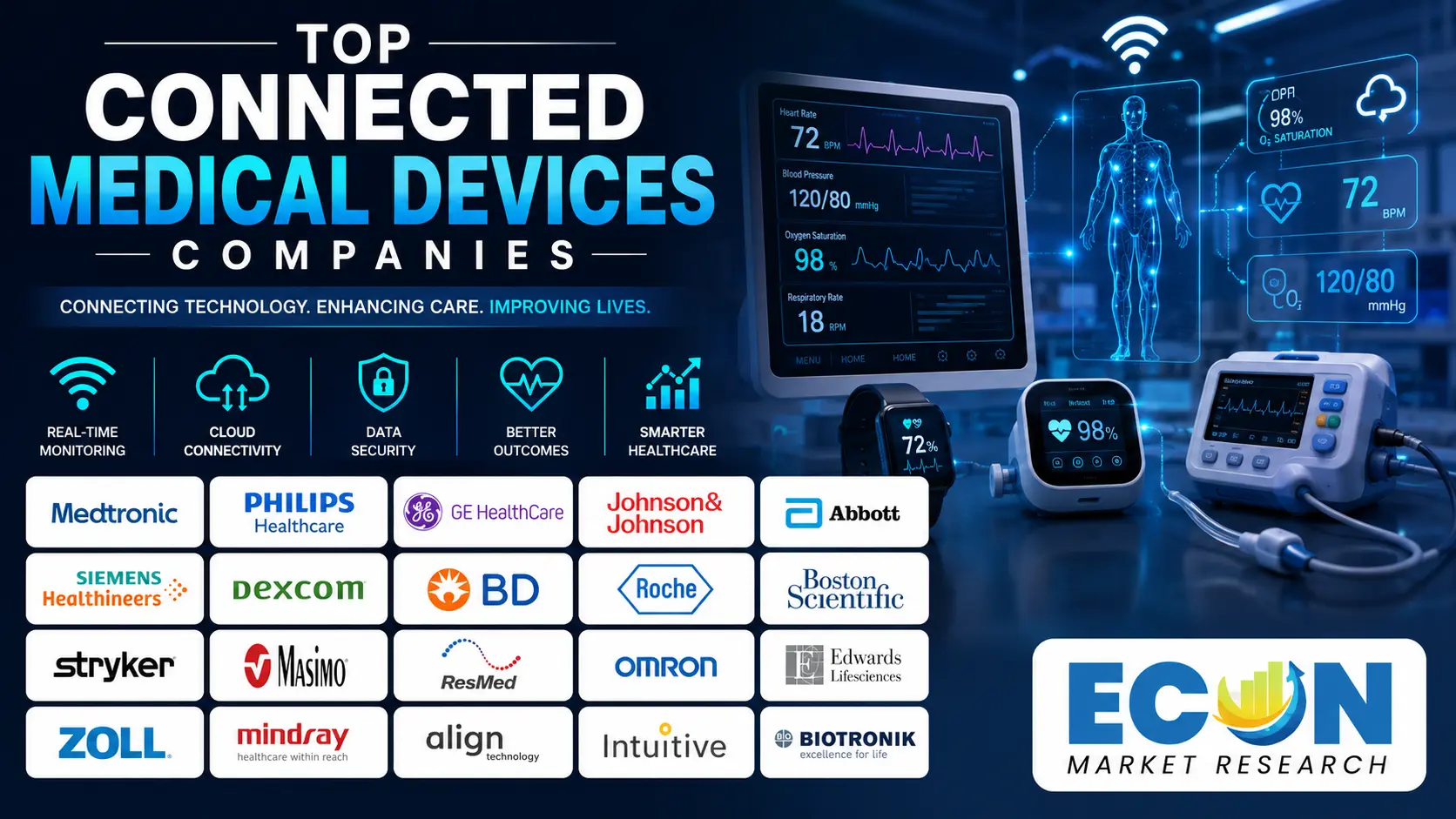
The connected medical devices industry is reshaping healthcare by linking physical equipment with software, communication networks, clinical platforms, and real-time patient information. The leading connected medical devices companies—Medtronic, Abbott, Royal Philips, GE HealthCare, and Boston Scientific—have developed portfolios spanning cardiac implants, glucose sensors, patient monitors, imaging systems, respiratory products, mobile applications, and remote-management platforms. Each company brings at least 1 distinctive strength, ranging from implantable-device monitoring to continuous sensing and hospital-wide interoperability.
Over the next 5 to 10 years, connected medical devices will become increasingly important for managing aging populations, chronic diseases, workforce shortages, and rising demand for care outside hospitals. Regional opportunities will differ: North America will emphasize reimbursement and cybersecurity, Europe will prioritize regulation and privacy, Asia-Pacific will focus on scale and affordability, while the Middle East and Africa will require resilient solutions for varied infrastructure conditions.
The long-term success of connected medical devices will depend on more than connectivity alone. Manufacturers must deliver accurate sensors, secure communications, reliable software updates, interoperable data, intuitive interfaces, and clinically validated alerts. Healthcare organizations must also establish 24-hour governance procedures, staff responsibilities, patient training, and escalation pathways. When these elements are combined effectively, connected medical devices can improve early detection, strengthen continuity of care, reduce unnecessary visits, and support safer treatment for millions of patients worldwide.