


Personalized Healthcare Companies Shaping Precision Medicine
The personalized healthcare industry is advancing through genomics, liquid biopsy, companion diagnostics, AI-driven insights, and precision treatment strategies
Introduction
Overview of the Global Personalized Healthcare Industry
The global personalized healthcare industry is moving medical decision-making away from uniform treatment pathways toward approaches based on an individual’s genomic profile, tumor biology, inherited risk, biomarkers, clinical history and real-time health data. The commercial ecosystem now encompasses next-generation sequencing, companion diagnostics, liquid biopsy, pharmacogenomics, molecular residual disease testing, hereditary risk assessment and AI-supported clinical intelligence. In the United States, the FDA’s companion diagnostic list continued to add new oncology indications during 2026, including authorizations linked to ESR1, EGFR, ERBB2/HER2, BRAF and homologous-recombination-repair biomarkers. The NIH All of Us Research Program has also expanded its research dataset to include information from more than 633,000 participants, creating a substantial evidence base for studying individualized disease prevention and treatment.
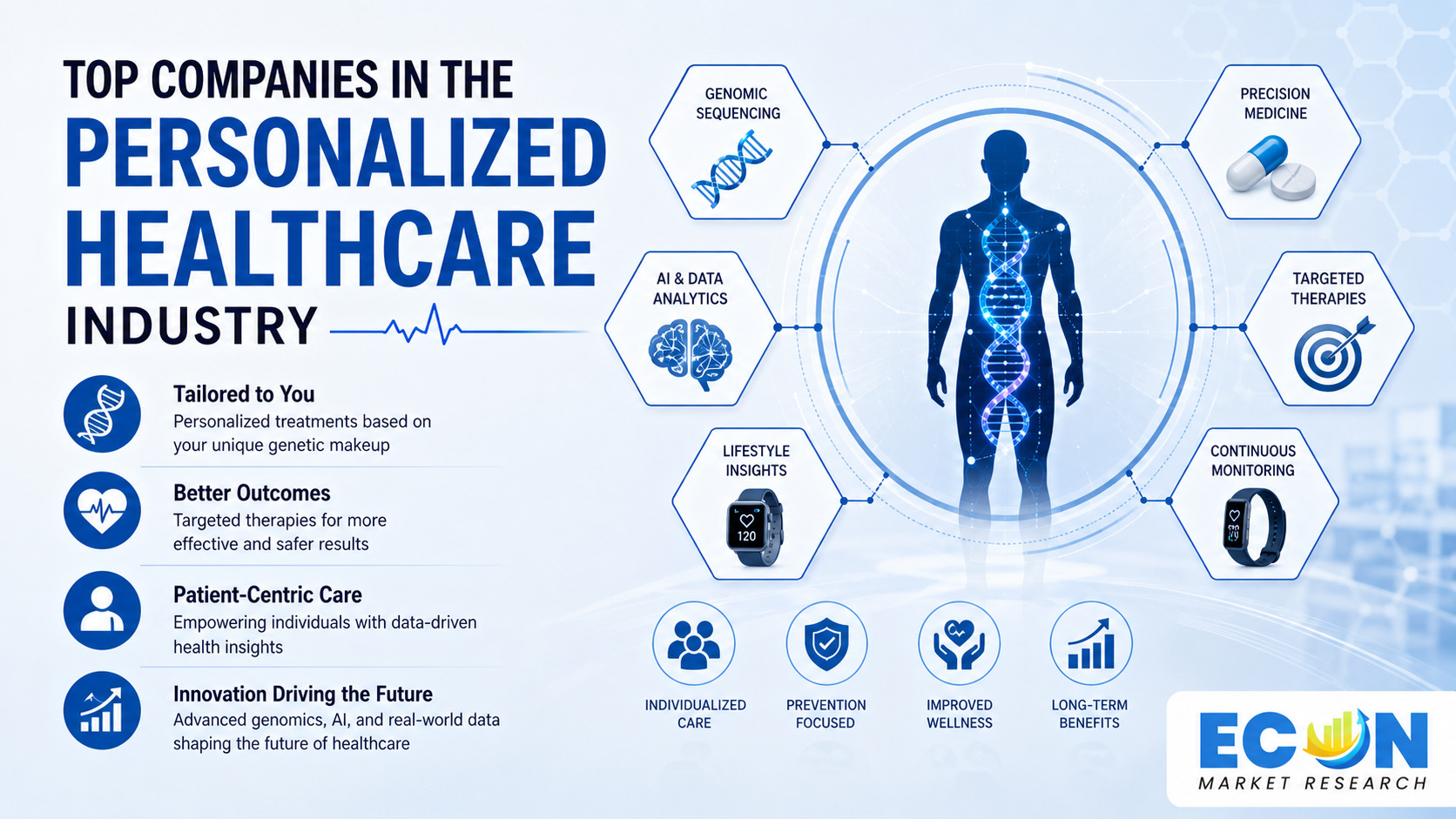
Operational scale is expanding across both population genomics and commercial diagnostics. Illumina maintains an active installed base of approximately 21,000 sequencing systems across 165 countries, while SOPHiA GENETICS has analyzed over 2.5 million genomic profiles through a network of more than 990 healthcare institutions in over 75 countries. Natera has processed over 16 million molecular tests, and Guardant Health reports more than 1 million blood-based tests performed through 12,000 physicians. These figures show that personalized healthcare is no longer confined to experimental academic programs. It is increasingly embedded in oncology clinics, reference laboratories, reproductive medicine, transplant monitoring, hereditary disease assessment and population-health programs where molecular information can alter screening, therapy selection or follow-up strategies.
Market Evolution and Growth Drivers
Personalized healthcare has evolved rapidly since the completion of the Human Genome Project in 2003 and the subsequent reduction in sequencing time, expansion of actionable biomarkers and introduction of targeted therapies. Illumina reported that its platforms were processing the equivalent of over 10 human genomes per minute during 2025, enabling genomic information to move into larger clinical and population programs. The United Kingdom’s 100,000 Genomes Project sequenced more than 100,000 genomes from over 85,000 NHS participants and produced actionable findings from 18.5% of project data. Singapore completed whole-genome sequencing for 100,000 participants and launched a subsequent phase designed to add another 400,000 to 450,000 people, demonstrating how national health systems are beginning to operationalize personalized medicine beyond specialist cancer centers.
Regulatory and clinical infrastructure is also maturing. FDA companion diagnostic authorizations added multiple new indications during the first 5 months of 2026, while Singapore’s pharmacogenomics research found that approximately 1 in 4 residents carries a genetic variant associated with increased risk of an adverse response to at least 1 medicine. India has released genomic data covering 10,000 participants through the GenomeIndia Project, and the European 1+ Million Genomes initiative continues to establish cross-border standards for genomic data access and healthcare implementation. Growth is therefore being driven not only by sequencing technology but by validated biomarkers, national datasets, digital interpretation tools, drug-diagnostic co-development and the ability to integrate genetic results directly into clinical pathways.
Top 5 Latest Trends in the Personalized Healthcare Industry
Multi-omics and whole-genome profiling at clinical scale
Personalized liquid biopsy and molecular residual disease monitoring
Expansion of companion diagnostics and pharmacogenomics
AI-driven interpretation of multimodal patient data
Population genomics moving into preventive healthcare
Trend 1: Multi-Omics and Whole-Genome Profiling at Clinical Scale
Multi-omics profiling is becoming an important trend among the Top Companies in the Personalized Healthcare Industry because treatment decisions increasingly require more than a single DNA mutation result. Current platforms can combine DNA sequencing, RNA expression, methylation, pathology images and longitudinal clinical information. Tempus operates a multimodal dataset containing over 8.5 million de-identified longitudinal patient records, while its xE whole-exome platform analyzes more than 19,000 genes. Illumina introduced a distributed whole-genome molecular-residual-disease research workflow in May 2026, extending whole-genome sequencing into applications that previously depended mainly on targeted panels. This transition matters because whole-genome and multimodal systems can detect resistance mechanisms, uncommon alterations and disease patterns that may not appear within limited gene panels, although larger datasets also increase interpretation and storage requirements.
Trend 2: Personalized Liquid Biopsy and Molecular Residual Disease Monitoring
Liquid biopsy has progressed from advanced-cancer mutation profiling into longitudinal monitoring of residual disease and treatment response. Natera’s Signatera platform creates a tumor-informed assay based on mutations specific to an individual patient, while the company processed 258,900 oncology tests during the first quarter of 2026. Guardant Health has performed over 1 million blood tests and offers liquid-based testing across advanced cancer, recurrence monitoring and screening applications. Its Guardant360 Liquid CDx provides results within 7 days and received additional FDA companion-diagnostic indications during 2026. Personalized MRD testing changes the care model because clinicians can monitor molecular evidence of disease repeatedly after surgery or systemic therapy rather than depending only on periodic imaging. The commercial challenge is generating prospective evidence showing precisely when a molecular result should alter treatment.
Trend 3: Expansion of Companion Diagnostics and Pharmacogenomics
Companion diagnostics are linking an expanding number of molecular biomarkers with specific therapies. The FDA’s 2026 authorization list includes new indications involving BRAF, ESR1, EGFR, HER2 and homologous-recombination-repair alterations. QIAGEN’s therascreen KRAS assay detects 7 clinically relevant KRAS mutations, while its PIK3CA test can provide results within 2 working days for targeted breast-cancer treatment selection. Myriad’s myChoice CDx received an additional FDA approval in March 2026 for use with niraparib in advanced ovarian cancer. Beyond oncology, pharmacogenomics is becoming more important for avoiding adverse drug reactions. Singapore found that approximately 25% of participants carry a variant affecting response to at least 1 medication, suggesting that pre-emptive genetic testing could eventually become part of routine prescribing in selected healthcare systems.
Trend 4: AI-Driven Interpretation of Multimodal Patient Data
Artificial intelligence is increasingly necessary because genomic and clinical datasets have reached a scale that cannot be interpreted manually for every patient. SOPHiA DDM has processed over 2.5 million genomic profiles through more than 990 healthcare institutions, while Tempus manages over 8.5 million longitudinal records linked to molecular, clinical and imaging information. Tempus expanded its Next platform in May 2026 to cover 6 additional clinical scenarios involving breast, colorectal, ovarian, prostate and urothelial cancers. AI systems can identify missing biomarker tests, match mutations with treatments, assemble clinical-trial cohorts and prioritize relevant evidence. Their value depends on data quality, explainability and clinical validation; an algorithm that identifies 100 potential associations is useful only when clinicians can determine which findings are actionable for the individual patient.
Trend 5: Population Genomics Moving into Preventive Healthcare
Population-scale genomics is extending personalized healthcare beyond patients who already have disease. Singapore completed the SG100K program and has launched Phase III with plans to sequence another 400,000 to 450,000 participants, bringing the eventual total above 500,000. The NIH All of Us dataset now incorporates information from more than 633,000 participants, while India’s GenomeIndia Project released genomic information from 10,000 individuals for research access. The UAE made comprehensive genetic testing part of premarital screening for Emiratis beginning in January 2025, with its panel covering 570 genes associated with over 840 genetic disorders. These programs can support population-specific risk estimates and prevention strategies, but they also require strict governance around consent, privacy, genetic discrimination and the return of clinically meaningful results.
Top 10 Companies in the Personalized Healthcare Industry
The following 10 companies are presented according to their direct involvement in genomics, precision oncology, molecular diagnostics, personalized monitoring, pharmacogenomics, AI-supported clinical interpretation and companion-diagnostic development. The order does not represent a strict ranking.
1. Roche
Company Overview: Roche was founded in 1896 and has built more than 25 years of dedicated experience in precision and personalized diagnostics. Its Personalized Healthcare Solutions organization has collaborated with over 200 pharmaceutical and biotechnology companies and maintains commercial access in more than 100 countries. Headquarters: Basel, Switzerland. Core Personalized Healthcare Expertise: Roche combines immunohistochemistry, in-situ hybridization, PCR, next-generation sequencing, digital pathology and clinical decision support to connect biomarkers with targeted therapies. Major Products and Services: Its VENTANA companion diagnostics cover biomarkers including HER2 and mismatch-repair proteins. In June 2026, the VENTANA MMR RxDx Panel obtained expanded European IVDR authorization covering 5 cancer types and 6 treatment indications. Roche is also expanding AI-supported pathology through its 2026 agreement to acquire PathAI, connecting image analysis with biomarker discovery and personalized treatment development.
2. Illumina
Company Overview: Illumina was founded in 1998 and, as of 2025, employed approximately 8,600 people while supporting an active installed base of roughly 21,000 sequencing systems across 165 countries. The company holds more than 9,000 patents. Headquarters: San Diego, California, United States. Core Personalized Healthcare Expertise: Illumina develops sequencing instruments, microarrays, library-preparation systems and bioinformatics infrastructure used for oncology, inherited disease, reproductive health and population genomics. Major Products and Services: NovaSeq X and other sequencing platforms support whole-genome, exome and targeted testing. During 2025, Illumina systems were processing the equivalent of over 10 human genomes per minute. In May 2026, the company introduced a distributed whole-genome MRD research solution, and in March 2026 it expanded its Labcorp collaboration to improve access to precision-oncology biomarker testing.
3. Thermo Fisher Scientific
Company Overview: Thermo Fisher Scientific was formed on November 9, 2006 through the combination of Thermo Electron and Fisher Scientific. The company employs more than 26,000 people across the United States and Canada alone, working through over 400 offices, manufacturing locations and distribution sites. Headquarters: Waltham, Massachusetts, United States. Core Personalized Healthcare Expertise: Thermo Fisher develops NGS, PCR and digital-PCR technologies used to identify actionable biomarkers and stratify patients for targeted therapy. Major Products and Services: Its Ion Torrent Genexus systems and Oncomine assays support precision oncology and companion-diagnostic development. In the NCI myeloMATCH initiative, the Ion Torrent Genexus workflow can generate molecular results within 72 hours for trial assignment. Thermo Fisher also provides end-to-end CDx development using NGS, real-time PCR and dPCR platforms for pharmaceutical partners developing targeted treatments.
4. QIAGEN
Company Overview: QIAGEN operates 35 subsidiaries across more than 25 countries and employs over 5,700 people, supported by distribution partners across more than 60 countries. Headquarters: Venlo, Netherlands, with major operational activities in Hilden, Germany. Core Personalized Healthcare Expertise: QIAGEN develops sample-preparation technologies, PCR assays, companion diagnostics and genomic interpretation tools for oncology and inherited disease. Major Products and Services: Its therascreen solid-tumor portfolio contains 12 listed assay products covering genes including KRAS, EGFR, PIK3CA, BRAF and PDGFRA. The KRAS RGQ PCR assay detects 7 mutations, while the PIK3CA assay can provide actionable results within 2 working days. QIAGEN also operates a dedicated companion-diagnostics center of excellence in the United Kingdom and uses QIAGEN Digital Insights software to interpret complex genomic datasets.
5. Tempus AI
Company Overview: Tempus was founded in August 2015 and built its original precision-medicine platform around oncology before expanding into cardiology, neuropsychiatry and radiology. Headquarters: Chicago, Illinois, United States. Core Personalized Healthcare Expertise: Tempus combines molecular testing, longitudinal clinical data, AI and clinical-decision software. Its data infrastructure contains more than 8.5 million de-identified longitudinal records linked to clinical, molecular and imaging modalities. Major Products and Services: xT CDx is a 648-gene FDA-approved solid-tumor assay, while xF and xF+ liquid-biopsy panels analyze 105 and 523 genes respectively. In May 2026, the FDA expanded xT CDx to include a tumor-only workflow, and Tempus Next added 6 new clinical scenarios designed to identify precision-care gaps in real time. Its xE whole-exome service evaluates more than 19,000 genes.
6. Guardant Health
Company Overview: Guardant Health was founded in 2012 and has developed a precision-oncology platform centered on blood-based genomic testing. Its commercially available blood tests have been used more than 1 million times by approximately 12,000 physicians. Headquarters: Palo Alto, California, United States. Core Personalized Healthcare Expertise: Guardant analyzes circulating tumor DNA for therapy selection, molecular residual disease, recurrence monitoring and cancer screening. Major Products and Services: Guardant360 Liquid CDx is an FDA-authorized comprehensive liquid-biopsy platform capable of returning results within 7 days. The portfolio also includes Guardant Reveal for recurrence monitoring and Shield for colorectal-cancer screening. During 2026, Guardant360 received additional companion-diagnostic indications covering BRAF-mutated colorectal cancer, ESR1-mutated breast cancer and selected EGFR, HER2 and KRAS alterations in non-small-cell lung cancer.
7. Exact Sciences
Company Overview: Exact Sciences was founded in 1995 and employs more than 6,500 people. Its laboratory and commercial network serves over 120 countries, and the company reported testing more than 4 million people during 2023. Headquarters: Madison, Wisconsin, United States. Core Personalized Healthcare Expertise: Exact Sciences combines cancer screening with genomic treatment guidance, hereditary-risk testing, comprehensive genomic profiling and molecular residual disease assessment. Major Products and Services: The Oncotype DX Breast Recurrence Score has been used by more than 2 million patients to inform treatment decisions. Its broader Exact Oncology portfolio includes Oncodetect for tumor-informed ctDNA monitoring, OncoExTra for therapy selection and Riskguard for hereditary cancer assessment. The TAILORx clinical-validation program for Oncotype DX involved over 10,000 patients across 7 countries, providing extensive evidence for individualized chemotherapy decisions in early-stage breast cancer.
8. Natera
Company Overview: Natera was established to apply cell-free DNA technologies across oncology, women’s health and organ transplantation. Its tests have been evaluated in more than 400 peer-reviewed publications involving over 3 million patients, and the company has processed more than 16 million tests. Headquarters: Austin, Texas, United States. Core Personalized Healthcare Expertise: Natera specializes in personalized ctDNA monitoring, prenatal genomics, hereditary disease and transplant surveillance. Major Products and Services: Signatera creates a patient-specific assay using an individual tumor’s mutation profile, while Altera provides tumor genomic profiling and Prospera monitors organ-transplant injury. During the first quarter of 2026, Natera processed 1,013,600 total tests, including 258,900 oncology tests. The company also announced expanded sequencing capacity in Austin in May 2026 to support increasing personalized oncology volumes.
9. SOPHiA GENETICS
Company Overview: SOPHiA GENETICS was founded in 2011 at the EPFL Innovation Park in Switzerland. Its SOPHiA DDM platform connects more than 990 healthcare institutions across over 75 countries and has analyzed more than 2.5 million genomic profiles. Headquarters: Rolle, Switzerland. Core Personalized Healthcare Expertise: The company applies AI to genomic and multimodal information for cancer, rare inherited disorders and clinical research. Major Products and Services: SOPHiA DDM supports local sequencing while standardizing interpretation and data management across institutions. Hospitals can use the platform for hereditary cancer, hematology, solid tumors and homologous-recombination-deficiency analysis. Thousands of patient profiles are processed through the network each week, allowing institutions to compare findings against a broader collective dataset while retaining control over local information. The company’s model is particularly relevant to personalized healthcare organizations that want advanced analytics without centralizing all laboratory testing in 1 reference facility.
10. Myriad Genetics
Company Overview: Myriad Genetics was founded in May 1991 and has developed molecular diagnostics for hereditary disease risk, oncology and pharmacogenomics. Headquarters: Salt Lake City, Utah, United States. Core Personalized Healthcare Expertise: Myriad combines germline genetics, tumor profiling, companion diagnostics, recurrence assessment and medication-response testing. Major Products and Services: The MyRisk Hereditary Cancer Test evaluates 63 genes associated with more than 11 cancer types and reports analytical accuracy above 99%. Its RiskScore methodology incorporates approximately 150 genetic markers with personal and family history to estimate individualized breast-cancer risk. MyChoice CDx identifies homologous-recombination deficiency and obtained an additional FDA companion-diagnostic approval in March 2026 for niraparib in advanced ovarian cancer. GeneSight extends the company’s personalization capabilities into mental-health medication selection.
Regional Outlook
North America
North America has one of the deepest personalized-healthcare infrastructures because the region combines large genomic cohorts, FDA-regulated companion diagnostics, reference laboratories and precision-oncology companies. The NIH All of Us Research Program has expanded its researcher dataset to more than 633,000 participants and continues toward its objective of engaging at least 1 million people. The FDA authorized multiple new companion-diagnostic indications in 2026, including products from Guardant Health, Foundation Medicine and Myriad Genetics. United States companies profiled in this article include Illumina, Thermo Fisher Scientific, Tempus AI, Guardant Health, Exact Sciences, Natera and Myriad Genetics, demonstrating substantial domestic capability across sequencing, liquid biopsy, AI and clinical genomics.
Canada maintains genomic research programs and regulated molecular diagnostics within provincial healthcare systems, while Mexico offers expanding opportunities through oncology hospitals, private laboratories and multinational diagnostics networks. Illumina already serves 165 countries globally and operates a dedicated Canadian commercial presence, giving sequencing suppliers established regional distribution. North American growth is increasingly focused on moving genomics from tertiary academic centers into community oncology and routine preventive care. Challenges include insurance coverage, genetic counseling capacity, privacy, inconsistent biomarker-testing rates and population representation. The All of Us program addresses one aspect of this problem by deliberately creating a diverse cohort, while commercially deployed liquid biopsies can return results within 7 days, helping reduce dependence on tissue collection in selected advanced-cancer cases.
Europe
Europe combines established diagnostics manufacturers with coordinated genomic-health initiatives. The 1+ Million Genomes program continues developing secure cross-border genomic access standards, with its roadmap covering healthcare implementation, pharmacogenomics, rare diseases and common complex diseases. The United Kingdom’s 100,000 Genomes Project sequenced more than 100,000 genomes from over 85,000 NHS participants and generated actionable findings from 18.5% of project data. Germany, Switzerland and the Netherlands host major personalized-healthcare technology providers including QIAGEN, Roche and SOPHiA GENETICS, while the European Union’s 27 member states operate under IVDR requirements for clinical diagnostic products.
Recent regulatory activity demonstrates that personalized diagnostics are expanding beyond single-gene tests. Roche received IVDR approval in June 2026 for VENTANA MMR RxDx indications spanning 5 cancer types and 6 treatment uses. SOPHiA GENETICS connects more than 990 institutions in over 75 countries, enabling European hospitals to perform local genomic testing with standardized AI-based interpretation. Europe’s strengths include genomic research networks, integrated health systems and specialist diagnostic manufacturing, but implementation differs between Germany, France, Italy, Spain, the Netherlands, Nordic countries and the United Kingdom. The principal challenges are harmonizing evidence requirements, health-data governance and reimbursement while ensuring that molecular tests become available quickly enough to influence therapy decisions.
Asia-Pacific
Asia-Pacific is becoming increasingly important to personalized healthcare because population-scale genomic programs are correcting the historical underrepresentation of Asian ancestry in biomedical databases. Singapore completed whole-genome sequencing for 100,000 participants and launched a new phase designed to add 400,000 to 450,000 additional individuals, equivalent to roughly 10% of its resident population when the expanded program is complete. The country previously found that approximately 1 in 4 residents carries a genetic variant linked to increased risk from at least 1 medication. India’s GenomeIndia Project has released genomic information from 10,000 participants, creating another population-specific reference for disease and pharmacogenomic research.
Japan, South Korea, Australia, China and Taiwan contribute advanced sequencing, semiconductor, diagnostics and clinical-research ecosystems, while India and Singapore provide growing bioinformatics and population-health capabilities. Guardant Health operates locations in Singapore, Japan, China and India, illustrating how precision-oncology companies are establishing direct regional infrastructure rather than serving Asia solely from the United States. Singapore’s Phase III precision-medicine program is also working with all 3 public healthcare clusters to integrate genomics into routine clinical care. Regional challenges include diverse regulatory systems, fragmented reimbursement and uneven genetic-counseling capacity. The opportunity lies in developing Asian-specific reference datasets so variants and polygenic scores are interpreted against populations that better match local patients.
Middle East & Africa
The Middle East is developing personalized healthcare through national genomics, preventive screening and pharmacogenomic programs. The United Arab Emirates introduced mandatory genetic testing into premarital screening for Emiratis in January 2025; the expanded panel covers 570 genes associated with more than 840 inherited disorders. UAE Federal Decree-Law No. 49 of 2023 established a legal framework governing human-genome data, including consent, confidentiality and a national genomic database. In June 2026, Abu Dhabi also launched the UAE’s first genomics-driven clinical trial related to Alzheimer’s disease, using population-scale data from the Emirati Genome Program to identify potential participants before symptoms appear.
Saudi Arabia and the 5 other Gulf Cooperation Council countries are expanding molecular diagnostics and genomic infrastructure through hospital modernization and national health strategies. QIAGEN established a regional headquarters in Riyadh in 2024, reflecting increased commercial demand for molecular testing across the Middle East. Africa has a different adoption profile because genomic laboratories and specialist personnel remain concentrated in South Africa, Egypt, Kenya, Nigeria and selected academic centers. The strongest near-term opportunities involve hereditary disease testing, infectious-disease genomics, oncology biomarkers and pharmacogenomics rather than population-wide sequencing. Sustainable expansion requires local laboratory capacity, representative African genomic datasets and trained genetic counselors so precision-health results can translate into clinically meaningful action.
Future Opportunities in the Personalized Healthcare Industry
Future opportunities for the Top Companies in the Personalized Healthcare Industry will increasingly involve combining multiple layers of patient information instead of relying on a single genomic test. Tempus already manages over 8.5 million longitudinal records and offers assays ranging from 105-gene liquid biopsy to more than 19,000-gene whole-exome analysis, showing how molecular depth can be linked with clinical context. Analytical expectations point toward integrated systems combining genome, transcriptome, epigenome, imaging, pathology and electronic health-record information. Such platforms could identify treatment resistance, inherited risk and recurrence earlier, but every additional data layer increases validation requirements. The strongest commercial systems will therefore be those that convert complex information into a limited number of clinically actionable recommendations rather than simply producing larger reports.
Preventive genomics is another substantial opportunity. Singapore intends to add 400,000 to 450,000 participants to its national precision-medicine program, the NIH All of Us initiative continues toward at least 1 million participants, and the European 1+ Million Genomes initiative is building infrastructure for cross-border genomic access. These programs can support polygenic risk assessment, pharmacogenomics and earlier screening when clinical validity is established. The UAE’s 570-gene premarital test demonstrates how genetic information can already be incorporated into national preventive policy. Future adoption will depend on whether health systems can demonstrate improved outcomes from testing rather than simply increasing the number of people sequenced.
Personalized monitoring will also extend beyond cancer. Natera already applies cell-free DNA across 3 major areas—oncology, women’s health and organ health—while Myriad combines hereditary cancer, tumor profiling and medication-response testing. AI systems can connect these molecular results with longitudinal data and automatically identify changes that require clinical review. Regulatory deadlines and data-governance standards will remain central because genetic information can affect both patients and biological relatives. Companies that integrate testing, interpretation, counseling, cybersecurity and clinical workflow support are therefore positioned to capture a wider role than suppliers offering sequencing alone. Partnerships between diagnostics companies, hospitals and pharmaceutical developers will remain important as new targeted therapies create additional biomarker-defined patient populations.
Conclusion
The personalized healthcare industry now operates at measurable clinical scale. Illumina maintains approximately 21,000 active sequencing systems across 165 countries, Guardant Health has completed over 1 million blood tests, Natera has processed more than 16 million molecular tests and SOPHiA GENETICS has analyzed over 2.5 million genomic profiles. The 5 defining trends—multi-omics profiling, personalized liquid biopsy, companion diagnostics, AI-enabled interpretation and population genomics—are shifting healthcare toward more individualized prevention, diagnosis and treatment. Roche, Illumina, Thermo Fisher Scientific, QIAGEN, Tempus AI, Guardant Health, Exact Sciences, Natera, SOPHiA GENETICS and Myriad Genetics contribute distinct capabilities across the personalized-care pathway.
Regional strategies remain different: the United States is building a research cohort targeting at least 1 million people, the United Kingdom has sequenced over 100,000 genomes through its flagship project, Singapore plans to expand beyond 500,000 sequenced participants and the UAE now screens 570 genes through its national premarital program. The strongest opportunities for the Top Companies in the Personalized Healthcare Industry will come from connecting genomic information with clinical, imaging, digital and longitudinal data while maintaining privacy and clinical validity. Competitive differentiation will increasingly depend on actionable interpretation, regulatory evidence, representative datasets and the ability to demonstrate that a personalized decision improves care compared with a conventional one-size-fits-all pathway.