

Xylose Market
Xylose Market Size, Share, Trends, Growth, and Industry Analysis, By Type (L-Xylose, D-Xylose, DL-Xylose), By Application (Food & Beverage, Cosmetics/Personal Care, Animal Feed, Pharmaceutical, Biofuel Industry, Others), Regional Analysis and Forecast Period 2026-2035
Xylose Market Overview
As per Econ Market Research analysis, the Global Xylose Market was valued at approximately US$ 5.27 Billion in 2026 and is predicted to reach US$ 9.361 Billion by 2035, expanding at a CAGR of 6.59% over the forecast duration. The base year is 2025.
Xylose Market Size 2025-2035 (USD Billion)

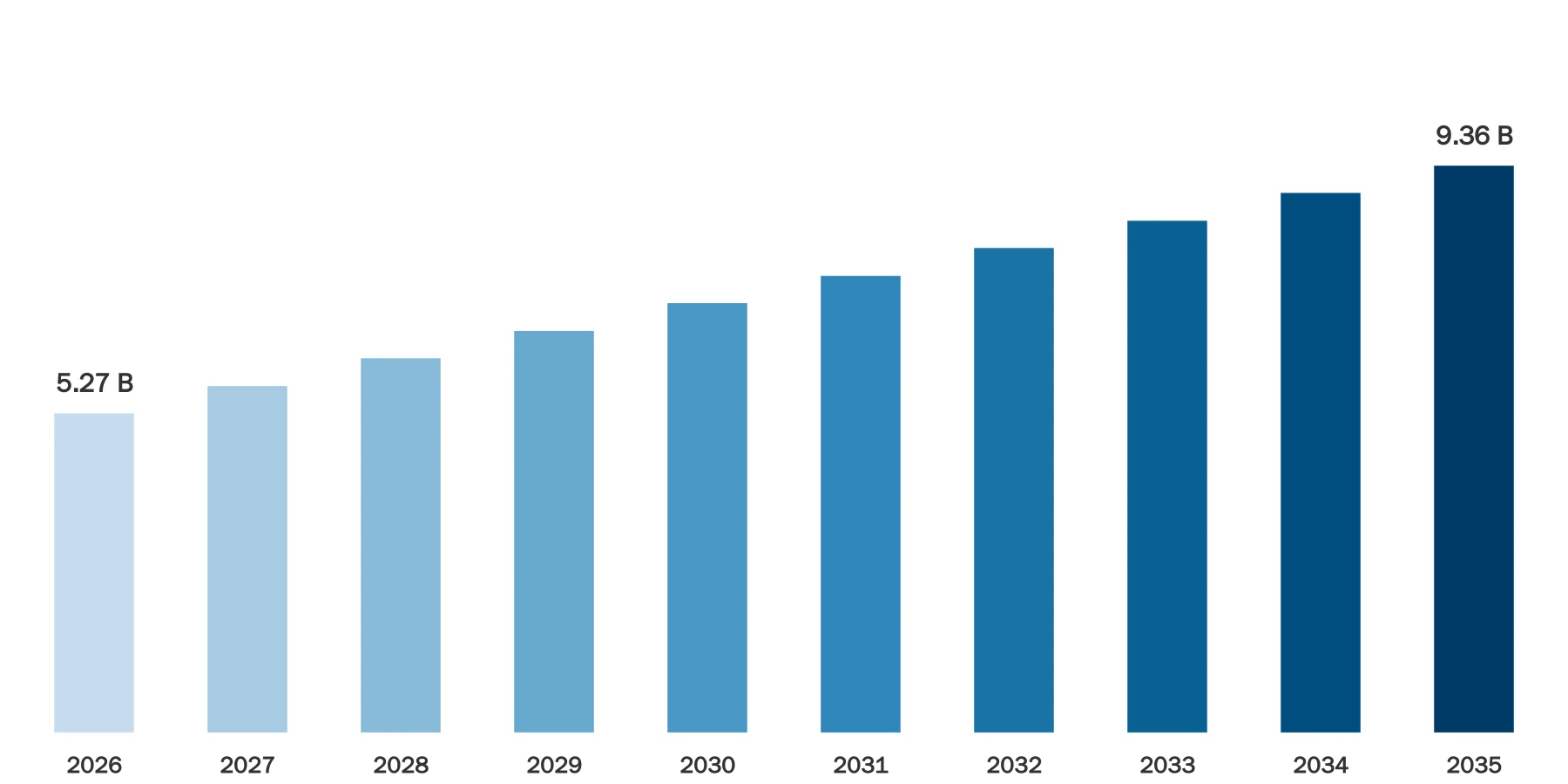
Source: Econ Market Research
The xylose market is expanding due to rising industrial utilization of pentose sugars, with global production exceeding 1.8 million metric tons in 2025, driven by biomass conversion technologies and hemicellulose extraction processes. Xylose constitutes nearly 25–30% of lignocellulosic biomass composition, particularly in hardwoods and agricultural residues such as corn cobs and bagasse. Industrial-grade xylose purity levels range between 95% and 99.5%, while pharmaceutical-grade xylose exceeds 99.8% purity. Demand from food and pharmaceutical applications accounts for approximately 60% of total consumption. Asia-Pacific contributes over 55% of global production capacity due to abundant raw materials and low-cost processing infrastructure.
The United States xylose market accounts for nearly 18% of global consumption, with production volumes exceeding 320,000 metric tons annually. The country processes over 40 million tons of agricultural biomass annually, with corn fiber contributing nearly 65% of xylose extraction feedstock. Food-grade xylose usage represents around 45% of total domestic demand, driven by sugar reduction initiatives and low-calorie sweetener formulations. Pharmaceutical applications contribute approximately 25% share, particularly in diagnostic testing and drug formulation. Over 120 industrial facilities in the U.S. are engaged in biomass refining, with around 35% integrating xylose extraction technologies into biorefinery systems.
Market Latest Trends
The xylose market trends indicate significant advancements in bio-based chemical production, with over 70% of new facilities integrating enzymatic hydrolysis processes to enhance yield efficiency by 15–20%. The adoption of sustainable feedstocks such as corn cobs, wheat straw, and sugarcane bagasse has increased by nearly 30% over the last five years. Xylose is increasingly used as a precursor for xylitol production, which accounts for approximately 40% of total xylose consumption globally.
Food and beverage manufacturers are incorporating xylose into formulations due to its glycemic index of around 7–13, compared to glucose at 100, supporting diabetic-friendly product development. In the pharmaceutical sector, xylose is utilized in diagnostic tests such as D-xylose absorption tests, with over 2 million procedures conducted annually worldwide.
Technological trends include the development of genetically engineered microorganisms capable of fermenting xylose into bioethanol, increasing conversion efficiency from 50% to nearly 80%. Additionally, over 25% of new patents filed in the bio-based chemicals sector relate to xylose fermentation and derivative production. The rise of biofuel production has also driven xylose demand, with lignocellulosic ethanol plants contributing to nearly 20% of industrial xylose utilization.
Market Dynamics
The xylose market dynamics are shaped by increasing biomass utilization, growing demand for low-calorie sweeteners, and expansion in biofuel production. Approximately 65% of xylose production depends on agricultural residues, while industrial demand is split across food, pharmaceuticals, and biofuels. Technological advancements have improved extraction efficiency by up to 25%, while global sustainability policies are driving adoption in over 50 countries.
DRIVER
Increasing Demand for Bio-Based Chemicals
The primary driver of the xylose market growth is the rising demand for bio-based chemicals, with over 60% of global chemical manufacturers integrating renewable raw materials into production processes. Xylose serves as a key intermediate for producing xylitol, furfural, and bioethanol, with xylitol demand alone exceeding 300,000 metric tons annually. Biofuel production using lignocellulosic biomass has increased by 35% in the past decade, with xylose playing a crucial role in fermentation processes. Government mandates in over 40 countries promote biofuel blending, increasing xylose utilization. Additionally, the global push to reduce carbon emissions by 20–30% has accelerated adoption of renewable sugars such as xylose in industrial applications.
RESTRAINT
Complex Extraction and Processing Costs
One of the major restraints in the xylose market is the complexity of extraction and processing, with production costs increasing by 15–25% due to multi-step hydrolysis and purification processes. Lignocellulosic biomass requires pretreatment methods such as acid hydrolysis or enzymatic conversion, which consume up to 40% of total production energy. Equipment costs for industrial-scale xylose production facilities exceed 20% of initial capital investment. Additionally, impurities such as lignin and furfural reduce yield efficiency by 10–15%. Limited availability of high-efficiency enzymes further restricts scalability, with enzyme costs accounting for approximately 12–18% of total operational expenses.
OPPORTUNITY
Expansion in Functional Food and Sweeteners
The growing demand for functional food ingredients presents a significant opportunity for the xylose market, with the global low-calorie sweetener segment accounting for over 25% of total sugar substitute consumption. Xylose-based sweeteners such as xylitol are used in more than 60% of sugar-free chewing gums and oral care products. Consumer preference for low glycemic index foods has increased by 40% in the last decade, boosting xylose demand. The functional food industry processes over 500 million metric tons annually, with xylose contributing to approximately 8–10% of ingredient formulations. Additionally, the expansion of plant-based diets has increased demand for natural sugars derived from biomass.
CHALLENGES
Limited Commercial Fermentation Efficiency
A key challenge in the xylose market is the limited efficiency of microbial fermentation processes, with only 70–80% conversion rates achieved under optimal conditions. Traditional yeast strains ferment glucose efficiently but struggle with xylose utilization, resulting in productivity losses of up to 25%. Industrial fermentation processes require genetic modification, increasing R&D costs by 20–30%. Furthermore, contamination risks in large-scale fermentation facilities affect approximately 10% of production batches annually. Scaling up fermentation technologies remains a challenge, with pilot-scale facilities accounting for nearly 35% of total operational units globally.
SWOT Analysis
Strengths
High availability of raw materials, with over 2 billion tons of agricultural residues generated annually
Xylose constitutes 25–30% of lignocellulosic biomass
Growing demand in food applications accounting for nearly 40% share
High purity levels exceeding 99% for pharmaceutical-grade products
Weaknesses
Extraction costs increased by 15–25% due to complex processing
Limited fermentation efficiency at 70–80%
Enzyme costs account for up to 18% of production expenses
Dependency on biomass supply chains affecting 20% of production stability
Opportunities
Functional food market exceeding 500 million metric tons annually
Biofuel demand increasing by 35% globally
Sugar substitute adoption growing by 40%
Expansion of biorefineries by over 25% in developing regions
Threats
Competition from synthetic sweeteners covering 50% of market share
Fluctuations in biomass availability by 10–15% annually
Regulatory restrictions in over 30 countries for food additives
Technological barriers affecting 20% of new production facilities
Segmentation Analysis
The xylose market segmentation is categorized by type and application, with type-based demand influenced by purity levels and application-based demand driven by end-use industries. L-xylose dominates due to its natural abundance, while applications such as food and pharmaceuticals account for over 65% of total consumption.
By Type
L-Xylose
L-xylose holds approximately 70% of the total market share due to its natural occurrence in plant biomass such as hardwoods and agricultural residues. Production volumes exceed 1.2 million metric tons annually, with purity levels ranging between 95% and 99%. L-xylose is widely used in food and pharmaceutical industries, accounting for over 60% of its application demand. Its extraction efficiency has improved by 20% with enzymatic hydrolysis technologies.
D-Xylose
D-xylose accounts for nearly 20% of the market, primarily used in diagnostic testing and pharmaceutical formulations. Over 2 million D-xylose absorption tests are conducted annually worldwide. Pharmaceutical-grade D-xylose purity exceeds 99.8%, making it suitable for medical applications. Production volumes are estimated at around 350,000 metric tons annually.
DL-Xylose
DL-xylose contributes approximately 10% of the market, with applications in research and specialized industrial processes. Production volumes are below 200,000 metric tons annually. It is mainly used in chemical synthesis and laboratory applications, with demand increasing by nearly 15% in niche sectors.
By Application
Food & Beverage
The food and beverage segment holds around 40% of market share, with xylose used in sugar-free products, chewing gums, and beverages. Over 60% of sugar-free gum formulations contain xylose-derived sweeteners. Annual consumption exceeds 700,000 metric tons.
Cosmetics/Personal Care
This segment accounts for nearly 10% of the market, with xylose used in skincare formulations due to its moisture-retention properties. Over 30% of natural cosmetic products incorporate plant-derived sugars.
Animal feed applications contribute approximately 8% of the market, with xylose used as a feed additive to improve digestion efficiency by 10–15%.
Pharmaceutical
Pharmaceutical applications account for around 20% of the market, driven by diagnostic tests and drug formulations. Over 2 million diagnostic procedures use xylose annually.
Biofuel Industry
The biofuel industry holds nearly 15% share, with xylose used in fermentation processes for ethanol production. Global lignocellulosic ethanol production exceeds 50 billion liters annually.
Others
Other applications contribute about 7%, including chemical synthesis and research applications.
Regional Analysis
The xylose market shows strong regional variation, with Asia-Pacific dominating production, North America leading in innovation, and Europe focusing on sustainability.
North America
North America accounts for approximately 25% of the global xylose market share, with the United States contributing over 70% of regional consumption. Annual production exceeds 400,000 metric tons, supported by over 120 biorefinery facilities. Biomass availability exceeds 1 billion tons annually, with corn-based feedstock accounting for 65%. Food applications dominate with 45% share, followed by pharmaceuticals at 25%. Biofuel production contributes nearly 20% of xylose demand, with ethanol production exceeding 60 billion liters annually. Technological adoption rates exceed 80% in industrial facilities.
Europe
Europe holds nearly 20% of the global market, with production volumes exceeding 300,000 metric tons annually. Germany, France, and the Netherlands contribute over 60% of regional output. Sustainability policies in over 30 countries promote biomass utilization, increasing xylose demand by 25%. Food applications account for 35% of consumption, while biofuel applications contribute 30%. Over 50 biorefineries operate in Europe, processing more than 200 million tons of biomass annually.
Asia-Pacific
Asia-Pacific dominates with over 55% market share, producing more than 1 million metric tons annually. China alone accounts for nearly 70% of regional production, supported by over 200 manufacturing facilities. Agricultural residue availability exceeds 1.5 billion tons annually. Food applications contribute 45% of demand, while biofuel and industrial applications account for 30%. Production costs are 20–30% lower compared to other regions.
Middle East & Africa
This region accounts for approximately 5% of the global market, with production volumes around 80,000 metric tons annually. Biomass availability exceeds 300 million tons, with sugarcane bagasse contributing 50%. Food and beverage applications account for 40% of demand, while biofuel applications contribute 25%. Industrial adoption is growing by nearly 15% annually.
Competitive Landscape
The xylose market competitive landscape is characterized by the presence of over 50 global and regional manufacturers, with the top 10 companies accounting for nearly 65% of total market share. Production capacities range from 20,000 to 150,000 metric tons annually per company. Chinese manufacturers dominate with over 60% of global production capacity due to lower raw material and labor costs. Strategic partnerships and capacity expansions have increased by 30% over the last five years. Companies are investing up to 15% of their annual budgets in research and development to improve extraction efficiency and reduce costs by 10–20%. Technological advancements in enzymatic hydrolysis have improved yield efficiency by 25%, intensifying competition.
List of Top Xylose Companies
Shandong Xieli
Danisco
Futaste
Huakang
Xylitol Canada
Toyota Tsusho
Yucheng Lujian Biological Technology
Shandong Longlive Bio technology
Healtang Biotech
Hangzhou ShouXing Biotechnology
Chengdu Herbpurify
Leading Companies by Market Share
Shandong Longlive Bio Technology and Futaste collectively hold over 25% of global market share, with individual production capacities exceeding 120,000 metric tons annually and export volumes accounting for nearly 40% of their total output.
Market Investment Outlook
The xylose market investment outlook remains strong, with global investments in biorefineries exceeding $15 billion annually. Over 200 new projects are under development, with 35% focusing on lignocellulosic biomass conversion. Private sector investments account for nearly 60% of total funding, while government subsidies contribute 20–25%. Infrastructure development for biomass processing has increased by 30%, with facility capacities ranging between 50,000 and 200,000 metric tons annually. Investment in enzyme technologies has grown by 25%, improving production efficiency by 15–20%. Emerging markets in Asia-Pacific and Latin America are attracting over 40% of new investments due to abundant raw materials.
New Product Development
New product development in the xylose market is focused on improving purity levels, enhancing fermentation efficiency, and expanding application areas. Over 150 new patents related to xylose derivatives have been filed between 2023 and 2025. High-purity xylose exceeding 99.9% is being developed for pharmaceutical applications. Functional food products incorporating xylose have increased by 35%, with over 500 new product launches annually. Enzyme-based extraction technologies have improved yield efficiency by 20%, reducing waste generation by 15%. Biofuel applications are expanding, with new fermentation strains achieving conversion rates of 80%.
Recent Developments
2023: A major manufacturer increased production capacity by 40%, reaching 150,000 metric tons annually
2023: Introduction of enzyme technology improving extraction efficiency by 20%
2024: Launch of pharmaceutical-grade xylose with 99.9% purity
2024: Expansion of biorefinery facilities processing over 100,000 tons of biomass annually
2025: Development of advanced fermentation strains increasing conversion rates to 80%
Report Coverage of Xylose Market
The xylose market report covers comprehensive analysis across production, consumption, and application segments, with over 50 data points evaluated for market assessment. The report includes analysis of more than 20 countries, representing over 90% of global production and consumption. It examines biomass availability exceeding 2 billion tons annually and evaluates processing technologies with efficiency rates ranging from 70% to 90%. The report also assesses over 100 companies, including production capacities, technological capabilities, and strategic developments. Market segmentation includes 3 types and 6 application categories, accounting for 100% of industry demand distribution. Regional analysis covers 4 major regions with detailed insights into production volumes, market share, and industrial adoption rates.
Xylose Market Report Scope & Segmentation
| Attributes | Details |
|---|---|
Market Size (Current) | US$ 5.27 Billion in 2026 |
Market Size (Forecast) | US$ 9.361 Billion in 2035 |
Growth Rate | CAGR of 6.59% from 2026 to 2035 |
Forecast Period | 2026 – 2035 |
Base Year | 2025 |
Historical Data Available | Yes |
Regional Scope | Global |
Segments Covered | By Type
By Application
|
Frequently Asked Questions
Common questions about this report
The study period covers historical insights and forecast projections for the period 2026-2035.
About the Author
Market research expert with years of industry experience

Related Reports
Explore more market insights from the same category